







Spring isn’t about picking a random date on the calendar and dumping bags of stuff on your lawn. I’ve seen too many yards turn into patchy disasters because folks rushed in with fertilizer before the grass was even awake. The secret? Work with your lawn’s natural rhythm, not against it.
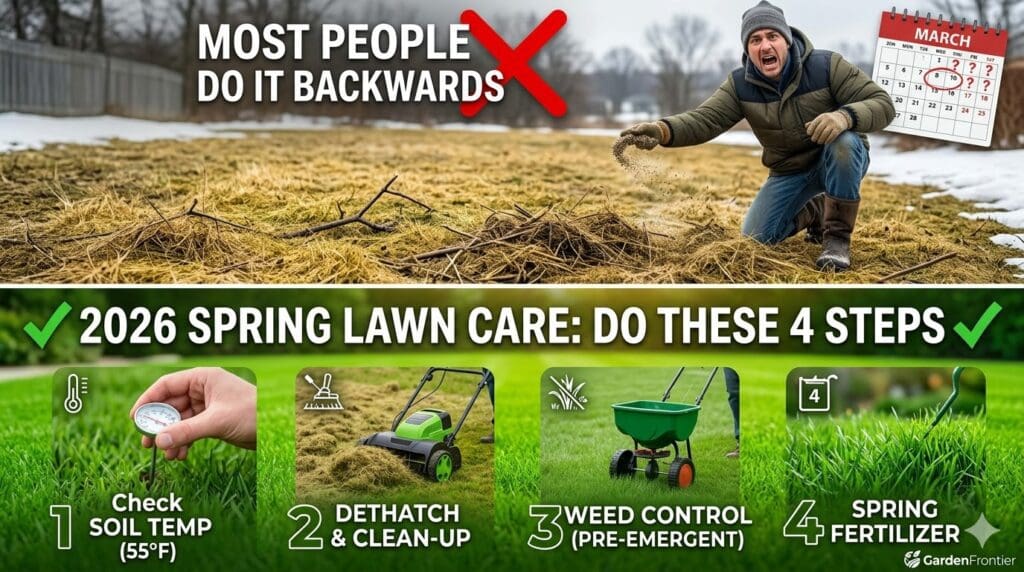
This is the exact 2026 schedule I follow (and what I tell every homeowner who wants thick, green grass without wasting money or killing their turf). Four straightforward steps, timed by soil temperature instead of the weather app. Do them in order and you’ll skip the usual spring headaches.
When to Start Spring Lawn Care? (It’s Not the Date on Your Calendar)
Forget “mid-March” or “the first weekend after the last frost.” That’s how you end up fertilizing dormant grass or spraying pre-emergent too late. The real trigger is soil temperature at 2–4 inches deep. Grab a cheap soil thermometer (or one of those fancy Bluetooth ones) and push it into a few spots in your yard.
- Cool-season grasses (Kentucky bluegrass, fescue, rye): Roots wake up around 50–55°F. That’s your green light.
- Warm-season grasses (Bermuda, zoysia, St. Augustine): Wait until soil hits 65–70°F consistently.
Why soil temp and not air temp? Air can swing 30 degrees in a day, but the soil reveals when roots are actually ready to grow and absorb nutrients. In 2026, with the weird early warm spells we’ve already seen in many regions, plenty of folks who followed the calendar got burned. Soil thermometer = no guesswork.
Start checking in late February/early March in the South and mid-March to April farther north. Once it hits the magic number for three straight days, you’re on.
Step 1: The Spring Clean-Up & Dethatching
Everybody wants to throw fertilizer first. Big mistake. Your lawn just spent winter under snow, leaves, and matted, dead grass. That layer of thatch (more than ½ inch thick) acts like a plastic bag over the soil—nothing gets through. Fertilizer sits on top and burns the grass or washes away. Weed seeds love it.
Do this first:
- Mow at the highest setting to knock down winter growth and pick up sticks, leaves, and debris.
- Dethatch. If you’ve got a small yard, a good thatch rake works. For anything bigger, rent or buy an electric dethatcher/scarifier.
After dethatching, rake up the mess (it looks like a haystack—that’s normal) and compost it or bag it. Your soil can finally breathe.
My 2026 Top Pick: Thousands are raving about this lightweight beast because it doesn’t tear up the lawn like old gas monsters.
Step 2: Soil Testing (Don’t Guess, Test)
Big fertilizer brands love skipping this step. They’d rather you just buy their bag and hope for the best. Here’s the truth: If your pH is off (most lawns want 6.0–7.0), your grass can’t use the fertilizer you’re about to throw down. You’ll waste money and still have yellow patches.
Do it right: Take samples from 5–6 spots in the yard (mix them together). Send for a full lab test or use a solid at-home kit that checks pH plus major nutrients. Adjust pH before you do anything else. This single step is why some lawns explode with growth in spring while others stay meh.
My go-to in 2026: The easiest mail-in option—dig, bag, mail, get exact recommendations in a week.
Step 3: Apply Pre-Emergent Weed Control
This is the one step lazy homeowners skip—and then spend all summer pulling crabgrass. Crabgrass and other summer weeds germinate when soil hits about 55°F. Apply the barrier before that happens and you block them for the whole season.
Timing: Right after dethatching and soil testing, as soon as your soil thermometer says 50–52°F. In 2026 that’s already happening in many zones right now. Spread it with a broadcast spreader (calibrate it!), water it in lightly, and you’re done. No crabgrass nightmares this summer.
Best crabgrass preventer for 2026: What the pros use for 12–16 weeks of protection.
Step 4: Overseeding and Spring Fertilizer (The Finishing Touch)
Now your lawn is clean, tested, and protected. Time to feed and fill in thin spots.
Overseeding first (if needed): Cool-season lawns that look thin? Hit the bare patches with fresh seed right after dethatching. Keep it moist for 2–3 weeks. Warm-season? Skip overseeding in spring—do it in late summer instead.
Then fertilize: Spring fertilizer is different from fall. Spring stuff is higher in nitrogen to push quick green-up and recovery after winter. Fall fertilizer loads up on potassium to build deep roots and winter hardiness. Using the wrong one at the wrong time is why people complain about “fertilizer burn” or weak grass.
My 2026 recommendation: Slow-release nitrogen, no filler junk, and it greens the lawn without stressing roots.
FAQ: Spring Lawn Care Questions People Always Ask
How early is too early to fertilize?
Way too early is when the soil is still under 50°F. The grass can’t use the nitrogen and you’ll just feed weeds or burn the lawn. Let the soil thermometer rule.
Do I really need to dethatch every year?
Only if thatch is thicker than ½ inch. Light raking is usually enough. Over-dethatching damages the lawn.
Can I put pre-emergent and fertilizer down at the same time?
Some combo products exist, but separate applications give better results. Pre-emergent first, wait a couple weeks, then fertilize.
What if my soil test says I need lime?
Apply pelletized lime now—spring is the perfect time. It takes weeks to work, so get it down early.
Is it too late if I missed pre-emergent?
Not completely. You can still use post-emergent spot treatments later, but prevention is 10x easier.
Follow this exact order and you’ll have the kind of lawn neighbors ask about. No magic products, no calendar roulette—just smart timing and the right sequence. Grab that soil thermometer today, get outside, and watch your yard come back stronger than last year. You’ve got this.