













After more than 15 years working with lawns, from small suburban yards to large estates and golf course roughs, I’ve seen grub damage destroy beautiful turf in a matter of weeks. I’ve also seen homeowners spend hundreds of dollars on the wrong product at the wrong time, only to end up with the same problem the following year.
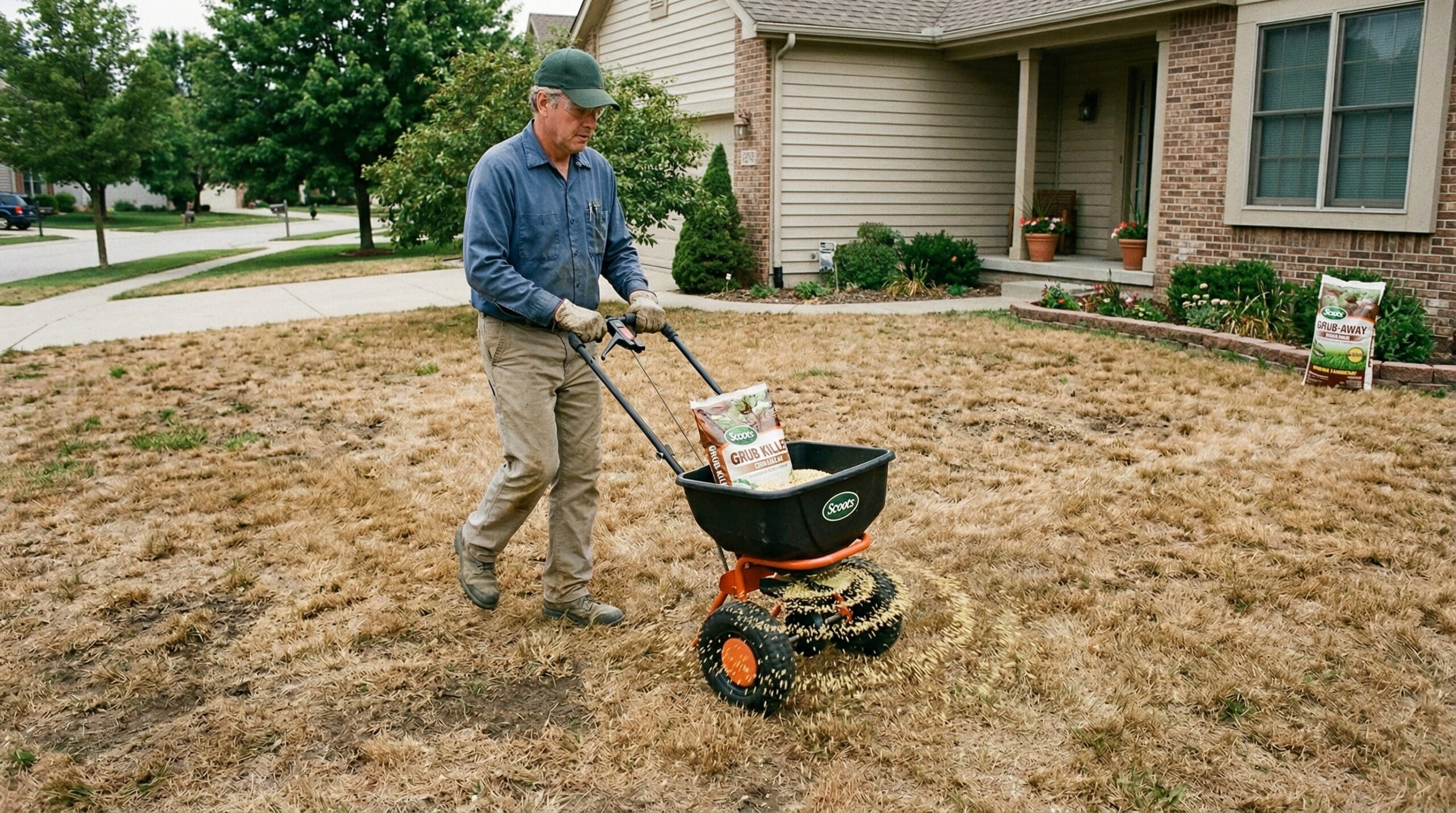
Grubs (the larvae of Japanese beetles, June bugs, European chafers, and other beetles) are one of the most common and frustrating lawn pests in North America. The good news is that with the right knowledge and timing, you can control them effectively and often prevent them from becoming a problem in the first place.
I’ll walk you through exactly what I do on client lawns and my own property. No fluff, no generic lists, just practical, experience-based advice on how to kill grubs in a lawn that actually works in 2026.
How to Know If You Have Grubs (The Signs Most People Miss)
The most obvious sign is brown, spongy patches that pull up like a loose rug. But by the time you see that, the damage is already done.
Earlier warning signs I look for:
- Increased animal activity: Skunks, raccoons, or birds digging in the lawn at night or early morning.
- Wilting or yellowing grass: Even when you’re watering properly.
- Spongy feel: When you walk on the lawn, the roots have been eaten.
- Easy lifting: If you can roll back a square foot of sod like a carpet, grubs are almost certainly the culprit.
Quick test I teach every client: Cut out a 1 sq ft section of turf in a suspect area. If you count 10 or more grubs per square foot, you have a serious infestation and need to apply a lawn grub killer immediately.
Understanding the Grub Life Cycle (This Is Why Timing Matters)
Grubs have a one-year life cycle in most regions. Understanding this is crucial for knowing exactly when to put grub killer on your lawn:
- Late summer/early fall: Adult beetles lay eggs in the soil.
- Late summer to fall: Tiny grubs hatch and start feeding near the surface.
- Winter: Grubs move deeper to survive the cold.
- Spring: Grubs move back up and feed heavily before pupating.
The most effective time to treat is when grubs are small and actively feeding near the surface—usually mid-July to mid-September for curative treatments, or late April to early June for preventives the following year.
Apply too early or too late, and you waste money and chemicals.
Preventive vs. Curative Treatments – My Real-World Approach
You cannot just buy any product off the shelf. You need to choose the best grub killer for lawns based on whether you are preventing future damage or stopping an active attack.
Preventive (Applied before damage appears)

Best for lawns with a history of grubs. Top choices in 2026:
- Acelepryn G or GrubEx (chlorantraniliprole): Very low toxicity to bees and mammals, long residual.
- Milky Spore: A biological option, but it takes 2–3 years to become effective and only works on Japanese beetle grubs.
Curative (Kills active grubs now)

Used when you already see damage.
- Dylox 6.2 (trichlorfon): Fastest kill (24–48 hours), but short residual.
- BioAdvanced 24 Hour Grub Killer Plus: A convenient granular option that many homeowners like.
- Beneficial nematodes: An organic cure that works well in warm, moist soil.
Step-by-Step Treatment Protocol I Use on Every Lawn
- Confirm the problem: Do the sod-pull test.
- Mow low and dethatch/aerate if needed: This helps the product reach the soil.
- Apply the product exactly as directed on the label: Over-application wastes money and can harm beneficial insects.
- Water in immediately: Most products need ¼–½ inch of water within 24 hours to move the active ingredient into the root zone.
- Keep the lawn moist for 7–10 days after application: This helps the product work and keeps the grubs active near the surface.
Prevention Strategies That Actually Work Long-Term
- Maintain healthy, thick turf (proper mowing, watering, fertilizing)—grubs prefer weak, thin grass.
- Apply preventive grub control in late spring/early summer if you had problems the previous year.
- Encourage natural predators—birds, skunks (yes, they eat grubs), and beneficial nematodes.
⚠️ Common Mistakes I See Homeowners Make Every Year
- Applying too late in the season when grubs are large and deep.
- Not watering the product in properly.
- Using the wrong product (e.g., Milky Spore on European chafer grubs—it doesn’t work).
- Expecting instant results from biological products.
If your lawn is already heavily damaged this year, treat curatively now and plan a preventive application for next spring/summer.
FAQ: Answering Your Biggest Grub Questions
How do you kill lawn grubs naturally?
If you prefer to avoid harsh chemicals, you can use beneficial nematodes (Heterorhabditis bacteriophora) or Milky Spore disease. Nematodes are microscopic worms that hunt and kill grubs, while Milky Spore is a bacteria specific to Japanese beetle grubs. Both take longer to establish but offer organic, long-term control.
When to put grub killer on lawn?
Apply preventative grub killer in late spring or early summer (April to June) before eggs hatch. Apply fast-acting curative grub killer in late summer or early fall (mid-July to September) when young grubs are actively eating your lawn’s roots.
Will grass grow back after grub damage?
It depends on the severity. If the roots are completely severed and the grass is dead, it will not grow back, and you will need to re-seed in the fall. However, if you catch the infestation early and apply a fast-acting curative grub lawn killer, the surviving grass can recover with proper watering and fall fertilization.