



















I was knee-deep in a backyard overhaul last spring. I wanted a large flagstone patio and eventually a pool, but the yard had a noticeable slope and several low spots that collected water. I tried the old-school method: wooden stakes, string lines, and a 4-foot bubble level. After two frustrating weekends of moving stakes, pulling strings tight, and still ending up with waves and dips, I gave up. A contractor friend laughed when he saw my setup and said one sentence that changed everything: “You need a rotary laser level.”
I bought a self leveling rotary laser level kit with a tripod and receiver. It took me one afternoon to grade the entire yard to within 1/8 inch over 800 square feet. The difference was night and day. No more guessing, no more redoing sections, and the final patio base was perfectly flat on the first try.
I am writing this guide as a fellow DIY homeowner who has now used rotary laser levels on three major outdoor projects. I will explain exactly how they work, why you need one for grading, the best models for 2026, and my step-by-step process so you can skip the frustration and get professional results on your first try.
Why I Threw Away My String Lines
String lines and bubble levels work fine for small decks or simple sheds, but when you are trying to create a large, dead-level pad for pavers or a pool base, they become a nightmare. The string sags, wind moves it, and a tiny error at one stake becomes inches of error 30 feet away. My backyard looked like a roller coaster after two weekends of work.
An outdoor rotary laser level creates a perfectly level 360-degree plane of light that you can see or detect anywhere on the job site. Once I set it up on a tripod, I could walk the entire yard with a grade rod and receiver and know instantly where the high and low spots were. It turned a multi-week headache into a single afternoon of productive grading. If you are doing any outdoor project bigger than 200 square feet that needs to be level or sloped at a precise grade, a rotary laser level is the tool that makes it possible for a regular homeowner.
How Does a Rotary Laser Level Work?
A rotary laser level is simple in concept but brilliant in execution. Inside the unit, a laser diode shoots a beam onto a rotating head that spins at hundreds or thousands of RPMs. This creates a continuous, invisible (or visible) level plane of light that extends in every direction.
The self leveling rotary laser level uses an internal pendulum and sensors to automatically level itself within a few degrees of true level. Once it finds a level, it locks and starts spinning. You no longer have to manually adjust bubble vials or spend time tweaking knobs. Most good units level themselves in under 30 seconds and will shut off or re-level if the tripod is bumped.
Red vs. Green Beam & Why You Need a Receiver
Red-beam rotary laser levels are cheaper and work fine indoors or on cloudy days. For outdoor grading in bright sunlight, however, a green beam rotary laser level is far superior because the human eye sees green much more clearly. Even then, you cannot see the beam reliably beyond 50–100 feet in full sun.
That is why every serious outdoor kit includes a rotary laser level with receiver (also called a detector). The receiver beeps or lights up when it crosses the laser plane, even in direct sunlight. Pair it with a grade rod and you can read exact elevations anywhere on the site. I never grade without the receiver and tripod because they turn the tool from a “nice-to-have” into a precise tool.
How to Use a Rotary Laser Level for Grading (Step-by-Step)
Here is the exact process I used to figure out how to use a rotary laser level for grading my backyard for the patio:
- Set up the rotary laser level with tripod in the approximate center of the area. Make it as stable as possible and roughly level by eye.
- Mount the rotary laser level on the tripod and turn it on. Wait for the self-leveling mechanism to finish (usually 10–30 seconds).
- Attach the receiver to a grade rod or a simple wooden stake marked at the desired finished height.
- Walk the site and mark high and low spots where the receiver beeps. I use spray paint or stakes to note “cut” (remove dirt) or “fill” (add dirt) areas.
- Move dirt with a shovel or skid-steer until the entire area reads the same elevation on the receiver.
For a gentle slope away from the house (recommended 1/4 inch per foot for drainage), I simply raise the receiver on the rod by the required amount as I move farther from the foundation. The whole process is fast, accurate, and repeatable.
The Best Rotary Laser Levels for 2026 (My Top Picks)
After testing several models on my own projects, these are the best rotary laser levels I recommend for homeowners and DIYers:
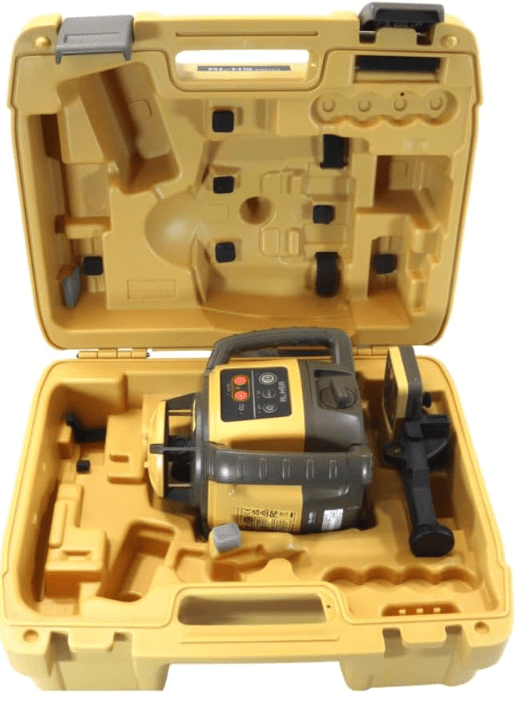
1. The Premium/Pro Pick: Topcon RL-H5A
The Topcon RL-H5A self leveling horizontal rotary laser is the gold standard for serious grading work. It is incredibly accurate (±1/16 inch at 100 feet), has a 2,000-foot working range with the receiver, and the build quality feels commercial. If you are doing large patios, driveways, or pool bases, this is the one that professionals reach for. It is expensive but will last a lifetime.
2. The Best Mid-Range Kits: DeWalt & Bosch
If you are looking for a highly reliable leveling rotary laser level, DeWalt and Bosch both offer excellent self-leveling kits with green beam options, long battery life, and durable cases. The DeWalt rotary laser level is my personal favorite for its intuitive controls and bright beam. The Bosch rotary laser level kit is equally impressive. These are perfect for most homeowners doing patios, decks, or landscaping.

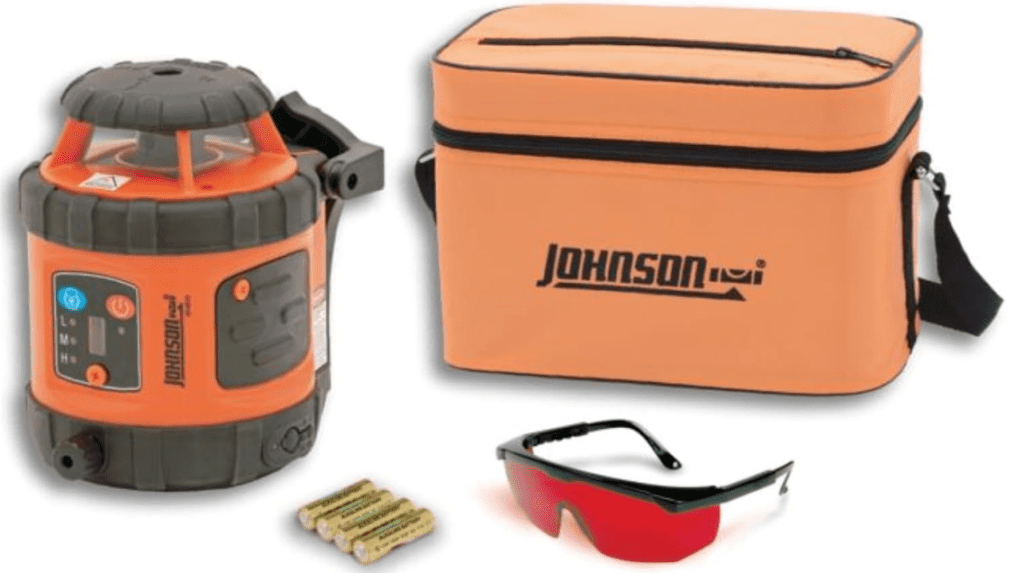
3. The Best Budget Rotary Laser Level: Johnson
If you are on a tight budget or only need the tool for one or two projects, the Johnson self leveling rotary laser level delivers surprising accuracy and reliability at a fraction of the price. It is not as rugged as the big brands, but for occasional DIY grading, it is more than capable.
Final Thoughts from a Real DIY Homeowner
Switching from string lines and bubble levels to a rotary laser level was one of the smartest tool purchases I have ever made. My backyard grading went from frustrating guesswork to precise, repeatable results. The patio base is dead level, water drains exactly where I want it, and I know the future pool will sit perfectly flat.
If you are planning any outdoor project that needs to be level or sloped correctly, stop fighting with strings and stakes. A good rotary laser level with tripod and receiver will save you time, frustration, and expensive mistakes.
Frequently Asked Questions
What is a rotary laser level used for?
A rotary laser level is used for grading land, pouring concrete slabs, installing drop ceilings, setting fence posts, and any large-scale leveling project where you need a perfectly level plane over long distances.
Are rotary laser levels more accurate?
Yes — especially over distance. A good rotary laser maintains an accuracy of ±1/8 inch or better at 100+ feet, while string lines and standard bubble levels lose precision very quickly.
How to use a DeWalt or Bosch rotary laser level?
Mount the unit on a tripod, unlock the pendulum, turn it on to let it self-level, and use the receiver on a grade rod to find elevations. The basic process is almost identical across all quality brands.
What is the best rotary laser level for grading?
The best option for grading is a self-leveling model that comes with a receiver and tripod. For most homeowners, DeWalt or Bosch mid-range kits offer the best balance of performance and price. For heavy professional use, the Topcon RL-H5A is the industry standard.
Want More DIY Backyard Hacks? 🛠️
Using the right tools completely changed how I tackle outdoor projects. If you want more step-by-step DIY guides, honest tool reviews, and real-world money-saving tips for your home and garden, head over to our homepage and join our free email newsletter!
You’ll get the smartest homeowner blueprints directly to your inbox—completely spam-free. Let’s build something great!