


















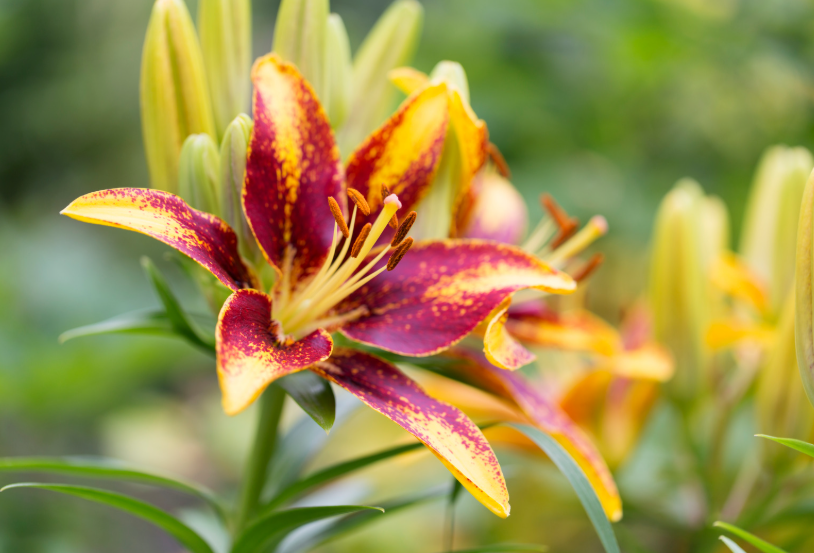
There’s something profoundly magical about stepping into a garden illuminated by the torch-like blooms of Asiatic lilies. I vividly recall my first encounter with these magnificent flowers, but it was at my grandmother’s cottage garden where clusters of orange and yellow lilies stood tall against the weathered fence, their petals catching the morning light like stained glass. That moment ignited a lifelong passion for these remarkable plants that has only deepened with each passing gardening season. Today, I’m delighted to share with you my journey with these botanical treasures and guide you through creating your own lily paradise.
The Magnificent Allure of Asiatic Lilies
Asiatic lilies (Lilium Asiatic hybrids) possess a quiet confidence in the garden landscape, combining bold presence with remarkable resilience. Unlike their cousins, the Oriental lilies with their heady fragrance, Asiatic lilies charm us with their clean lines, upward-facing blooms, and a stunning color palette ranging from the purest whites to the deepest burgundies. These perennial bulbs emerge with vigor in late spring, producing star-shaped flowers that span 4 to 6 inches wide with distinctive markings that make each variety unique.
What makes these lilies particularly special is their position in the gardening calendar. They step onto the garden stage in early to midsummer when many spring flowers have faded but before the full summer chorus begins, ensuring your garden never misses a beat in its seasonal symphony. Blooming for approximately a month, they provide a reliable burst of color that bridges important seasonal transitions.
Their versatility is another reason I’ve incorporated them throughout my various gardens over the years. Whether gracing formal borders, brightening woodland edges, or bringing life to containers on urban balconies, Asiatic lilies adapt to diverse settings with equal aplomb. They’re remarkably cold-hardy too, thriving in USDA zones 4 through 9, and with proper mulching, even surviving in zones as cold as 3.
The Essential Guide to Planting Asiatic Lily Bulbs
The foundation of spectacular lily displays begins with proper planting. Through both triumphs and instructive failures over decades of gardening, I’ve learned that these resilient plants have a few non-negotiable requirements that, when met, will reward you with years of stunning blooms.
Timing Your Planting
The question I’m asked most frequently at garden workshops is: “When should I plant lily bulbs?” While nurseries often sell them year-round, Asiatic lily bulbs establish themselves best when planted either in early autumn (a few weeks before your first expected frost) or in early spring once the ground has thawed and become workable.
Fall planting allows the bulbs to develop robust root systems during winter dormancy, setting the stage for vigorous growth when spring arrives. I’ve found this timing particularly beneficial in regions with hot summers, as the established root system helps the plants withstand heat stress. However, spring planting can be equally successful as long as you get them in the ground early enough- ideally when soil temperatures have warmed but before intense summer heat arrives.
[azonpress_comparison id=”4″]
Selecting the Perfect Location
Asiatic lilies have taught me the wisdom of that old gardener’s adage: “Head in the sun, feet in the shade.” These beauties require at least six hours of direct sunlight daily to produce their magnificent blooms. However, their bulbs and roots prefer to remain cool, a fascinating botanical contradiction that guides successful placement.
My solution has always been thoughtful companion planting-surrounding lily bulbs with lower-growing perennials or annuals that shade the soil while leaving the lily stems and blooms free to bask in the sunshine. This approach mimics their natural habitat conditions and significantly improves their performance.
When selecting your planting site, remember that good drainage is absolutely non-negotiable. In my early gardening days, I lost several precious lily bulbs to rot because I underestimated their dislike of soggy conditions. If your soil tends to retain water, consider creating raised beds or mounding the soil to ensure excess moisture drains away from the bulbs.
The Sacred Act of Planting
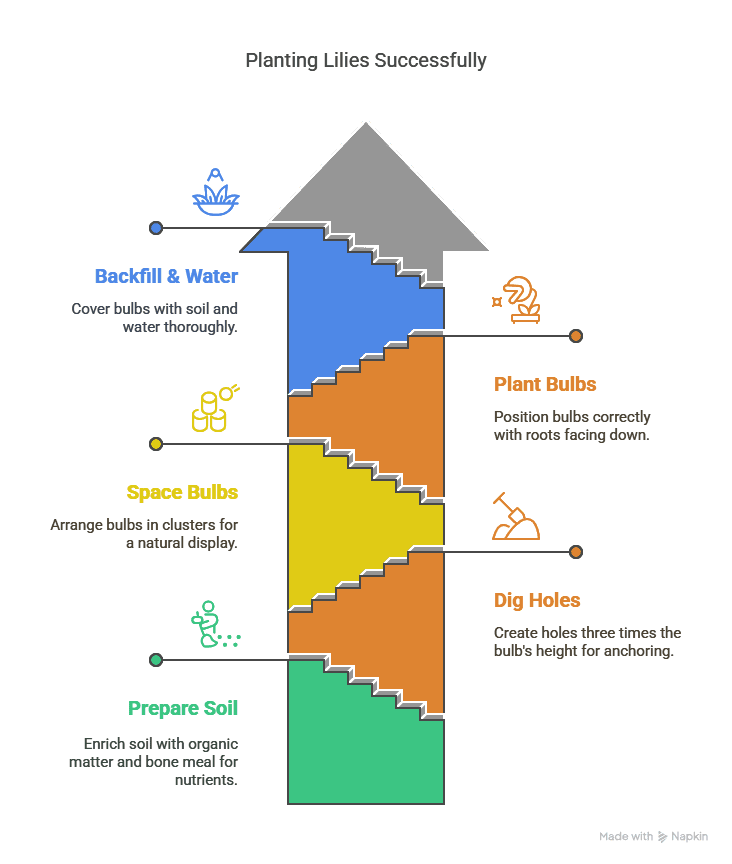
Now for the practical details of how to plant Asiatic lily bulbs. I approach this process almost as a meditation, knowing that the care taken during planting determines the quality of blooms for years to come:
-
Prepare the soil by incorporating organic matter such as well-rotted compost or leaf mold. I always add a handful of bone meal to each planting hole- my little gift to the bulb, providing slow-release phosphorus that encourages strong root development.
-
Dig holes approximately three times deeper than the height of the bulb. For most Asiatic lily bulbs, this means holes about 4-8 inches deep.
-
Space the bulbs 12-18 inches (30-40 cm) apart. I’ve learned that lilies actually appreciate being planted in groups of three or five rather than in straight rows- this creates a more natural, impactful display.
-
Place each bulb with the flat side (where roots emerge) facing downward and the pointed side facing upward. Handle the bulbs gently, as the scales can break easily.
-
Backfill with soil, water thoroughly, and add a light layer of mulch to retain moisture and suppress weeds.
One of my favorite planting tricks is to position lily bulbs slightly deeper than recommended if your area experiences temperature extremes. This provides additional insulation against both cold winters and hot summers, as well as giving the stem better support as it grows. I’ve found this particularly beneficial when growing lilies in containers, where temperature fluctuations can be more dramatic.
Creative Asiatic Lily Garden Ideas That Inspire
Asiatic lilies are not merely garden plants; they are transformative design elements that can elevate ordinary spaces into extraordinary landscapes. Over the years, I’ve experimented with countless ways to integrate these magnificent blooms into garden designs. Here are some approaches that have proven particularly successful:
The Tiger’s Eye Border: Framing Garden Spaces
One of the most effective ways to use Asiatic lilies is as border plants. I remember visiting a renowned botanical garden where tiger lilies created a perfect formal edge along winding garden paths. The strong vertical growth of lilies provided architectural interest, while their brilliant blooms created focal points that drew the eye through the landscape.
Creating your own Tiger’s Eye border is surprisingly simple. Plant Asiatic lilies 12-18 inches apart along walkways or at the edges of garden beds. The key to success with this design is choosing varieties of similar height so the border appears uniform. For a truly spectacular effect, select a single bold color-perhaps the orange-red of ‘Gran Paradiso’ or the lemon yellow of ‘Connecticut King ‘- and repeat it along the entire border.
The Flowing Feng Shui Garden: Creating Energy and Movement
The principles of feng shui can translate beautifully into garden design with Asiatic lilies as key elements. With their upright growth and radiant blooms representing the energy of yang, these lilies can activate certain areas of your garden and create beneficial energy flow.
Try arranging your lilies in graceful curves rather than straight lines- this creates a sense of movement and allows energy (or chi) to flow naturally through the space. Clusters of lilies in circular patterns or flowing designs can transform a static garden bed into one that feels dynamic and alive. In my own meditation garden, I’ve positioned Asiatic lilies in gentle arcs around seating areas to draw positive energy to these important spaces.
Container Treasures: Portable Lily Gardens
Not everyone has extensive garden space, which is why I’m particularly fond of growing Asiatic lilies in containers. Their relatively compact root systems make them ideal candidates for pot culture, and their dramatic blooms bring instant impact to patios, balconies, and entryways.
When planting Asiatic lilies in containers, choose deep pots (at least 12 inches) to accommodate the roots and provide stability. A high-quality, well-draining potting mix is essential, as is positioning the pot where it will receive adequate sunlight. The beauty of container planting is mobility, you can move your lily display to highlight blooms at their peak or to protect them during extreme weather.
For small containers, the shorter-growing Asiatic hybrids like the ‘Pixie’ series are perfect, reaching only about 18-20 inches in height. In larger containers, try creating a layered effect by planting taller lilies in the center surrounded by cascading annuals that will provide that crucial root shade we discussed earlier.
The Companion Planting Symphony: Harmonious Plant Partnerships
Creating thoughtful plant partnerships elevates Asiatic lilies from mere flowers to components of a living composition. I’ve spent countless hours observing how different plants interact with lilies, and I’ve discovered some magical combinations that enhance both partners.
For a classic pairing that never fails to delight, try combining orange or red Asiatic lilies with deep blue delphiniums or salvias- the complementary colors create a vibrant display that seems to make both plants glow more intensely. Pink lilies find perfect partners in the silvery foliage of artemisia or lamb’s ears, while yellow varieties sing against the deep purple of heucheras or the feathery texture of astilbes.
I’m particularly fond of interplanting Asiatic lilies with ornamental grasses like Hakonechloa macra or Festuca glauca. The structural rigidity of lily stems contrasts beautifully with the gentle movement of grasses, creating a garden vignette that engages with the slightest breeze.
The Front Yard Focal Point: Making a Statement
In suburban landscapes where front yards often lack distinction, Asiatic lilies can provide a much-needed focal point that transforms the entire property. I’ve worked with numerous clients to create dramatic lily displays that serve as the centerpiece of their front yard designs.
Position a generous grouping of at least five to seven lily bulbs in a prominent location visible from the street. Choose varieties in colors that complement your home’s exterior-perhaps deep burgundy lilies against a white facade or sunny yellows to brighten a gray exterior. The vertical accent of lily stems provides structure and visual interest even before the blooms appear, and their substantial presence draws attention in a way that smaller perennials cannot.
Nurturing Your Asiatic Lily Garden Through the Seasons
Growing beautiful Asiatic lilies isn’t just about proper planting-thoughtful ongoing care ensures years of spectacular blooms. I approach lily care as a relationship rather than a chore, observing and responding to the plants’ needs throughout the changing seasons.
Water Wisdom: Finding the Perfect Balance
Consistent moisture is key for Asiatic lilies, particularly during the growing and blooming season. I aim to provide about 1-2 inches of water weekly, adjusting for rainfall and temperature. Soaker hoses are my preferred method of irrigation as they deliver water directly to the soil without wetting the foliage, which can lead to fungal issues.
The critical period for watering is when the plants are actively growing and forming buds. Once established, Asiatic lilies show moderate drought tolerance, though extended dry spells will diminish their vigor and flowering potential. I’ve found that a good layer of mulch significantly reduces watering needs while keeping those roots cool-exactly what lilies prefer.
Feeding for Flourishing: The Right Nutrients at the Right Time
Like all flowering bulbs, Asiatic lilies appreciate proper nutrition timed to their growth cycle. I begin each growing season by applying a balanced, slow-release fertilizer as new growth emerges in spring. When flower buds begin to form, I switch to a phosphorus-rich fertilizer (like bone meal) to encourage abundant, long-lasting blooms.
One lesson I’ve learned through experience: over-fertilizing lilies can lead to lush foliage at the expense of flowers, or even worse, can burn their relatively sensitive root systems. A light hand with fertilizer and a focus on building rich, living soil through compost additions has proven the most successful approach in my garden.
Supporting Your Botanical Stars
Taller varieties of Asiatic lilies often need support to prevent them from toppling in summer storms or under the weight of their magnificent blooms. I prefer to place supports early in the season, allowing the plants to grow up through them naturally. This creates a more organic look than attempting to stake plants that are already leaning.
For individual stems, bamboo stakes worked in close to the bulb at planting time provide invisible support. For groups of lilies, I often use circular grid supports that can be raised as the plants grow. The goal is always to provide support that remains hidden beneath the foliage while preventing the heartbreak of broken stems during summer thunderstorms.
Post-Performance Care: The Crucial Resting Phase
After your Asiatic lilies have finished their glorious flowering performance, resist the temptation to cut them back immediately. The foliage continues to photosynthesize, storing energy in the bulbs for next year’s show. Allow the leaves to yellow and wither naturally before removing them- a practice that requires patience but ensures future blooms.
I mark the location of dormant bulbs with small garden stakes to avoid accidentally digging into them during fall planting. This simple step has saved many precious lily bulbs from the unfortunate encounter with my garden fork during autumn garden renovations.
The Joy of Multiplying Your Lily Treasures
One of the greatest rewards of growing Asiatic lilies is their tendency to multiply over time, increasing your garden’s beauty with minimal effort. After about three to four years, you may notice decreased flowering as the bulbs become crowded, this is your cue to divide and renew your lily collection.
In early fall or spring when the plants are dormant, carefully lift the bulb clusters with a garden fork, working well away from the bulbs to avoid damage. You’ll likely find numerous smaller bulblets alongside the main bulbs. Gently separate these, ensuring each division has adequate scales and roots. Replant the largest bulbs immediately at the same depth they were growing before, and pot up smaller bulblets to grow on for a season before adding them to your garden.
This simple process has allowed me to expand my lily collection throughout my garden and share the beauty with friends and family-truly one of the most satisfying aspects of growing these remarkable plants. There’s something profoundly hopeful about passing along plants that will continue to bloom for years to come, creating new gardening stories beyond our own.
Final Reflections from a Lily-Loving Gardener
As I walk through my garden on summer evenings, pausing to admire the perfect geometry of Asiatic lily blooms illuminated by the golden hour light, I’m reminded of why I garden. These magnificent plants connect us to cycles of growth, beauty, and renewal that transcend our busy modern lives. They teach patience, as we wait through seasons for their brief but spectacular performance, and resilience, as they return faithfully year after year despite climate challenges.
Whether you’re planning a grand border, a container garden for a small space, or simply adding a few lilies to an existing bed, I encourage you to welcome these extraordinary plants into your garden. The simple act of planting an unremarkable brown bulb that transforms months later into a beacon of color is nothing short of magical- a reminder of the miracles that unfold in gardens every day.
Plant with care, observe with wonder, and your Asiatic lilies will reward you with years of breathtaking beauty that enriches not just your landscape, but your spirit. Happy gardening, friends, and may your lilies always reach for the sky.
As your garden matures into late summer, the vibrant colors of Asiatic lilies, ranging from pure white flowers to deep reds and candy pinks, continue to captivate, making them an excellent choice for gardeners seeking a broad range of colors and reliable blossoms from early summer through June and beyond.
Whether you’re designing a tranquil seating area surrounded by lilies and ferns, or creating dynamic borders with LA hybrids and other types of lilies like Martagon or Easter lilies, these cultivars offer unmatched versatility for garden design ideas. Their upright stems, adorned with green leaves, striking freckles, stripes, and prominent stamens and anthers, make them a favorite for cut flowers and bouquets, while also attracting hummingbirds to your landscape.
For the best results, plant your bulbs in full sun or partial shade, ensuring well-drained, slightly acidic soil-though Martagon lilies, in particular, thrive in more alkaline conditions. Be mindful of pests such as red lily leaf beetles and their larvae, which can appear in June and threaten your lilies; regular inspection and prompt action are key to maintaining healthy plants and lush green leaves. Staking taller varieties, especially those with heavy blossoms, will keep your lilies upright and showcase their beauty throughout the season.
Pairing Asiatic lilies with companion plants like agastache, shrubs, or even groundcovers such as ferns not only shades their roots but also extends the visual appeal of your beds and borders. As a contributing member of Gardenia, you’ll find a wealth of inspiration and advice, and with an annual membership fee and your email address, you can stay updated on the latest cultivars, pest management tips, and garden design trends.
In every garden, lilies bring not just color but tranquility, whether arranged as centerpieces on tablecloths or as a living tapestry in your landscape, they are always an ideal choice for gardeners who value beauty, resilience, and a touch of magic in their outdoor spaces