













If you’ve already completed Step 1 of your spring schedule and used one of the best electric dethatchers to clear out dead grass, your lawn is finally breathing. But if the soil underneath is rock hard, water and nutrients still can’t reach the roots.
That’s where aeration comes in. But when is the best time to aerate your lawn in 2026? The answer depends entirely on your grass type and soil temperature.
🚨 Crucial 2026 Climate Update: Don’t Trust the Calendar
If you’re reading older gardening guides (like those written years ago), they will tell you to aerate based on specific calendar months. Throw that advice away.
With the unpredictable temperature swings and early thaws we are experiencing in Spring 2026, relying on a calendar is the fastest way to stress your lawn. The ground might thaw in early March, or it might remain frozen until late April.
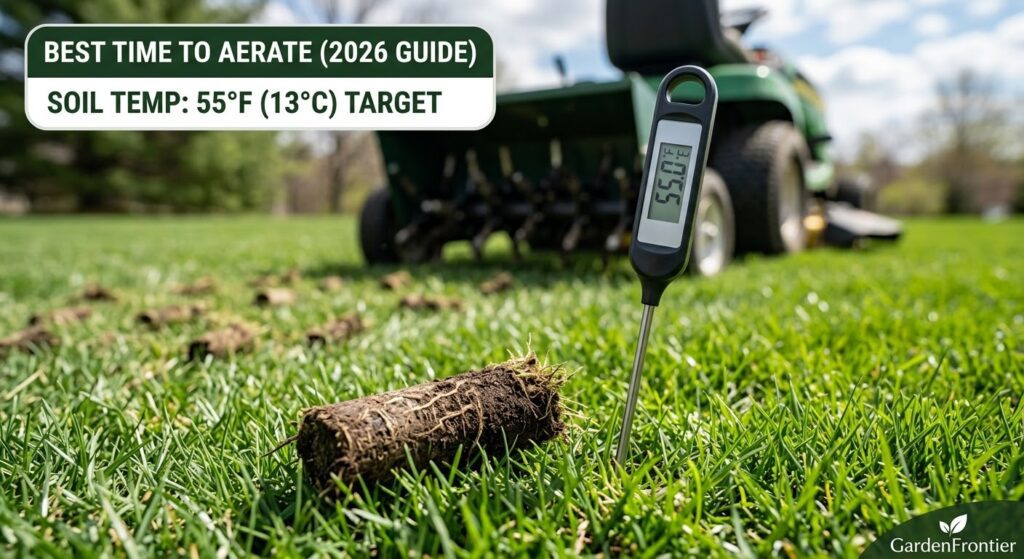
The New Rule for 2026: Only trust your soil thermometer. Do not aerate until your soil temperature is consistently 55°F (13°C) for at least 3 consecutive days, regardless of the month.
When Is the Best Time to Aerate? (By Grass Type)
Cool-Season Grasses (Fescue, Kentucky Bluegrass, Ryegrass)
If you live in the North or transition zones, your grass grows fastest in the cooler weather of spring and fall. The absolute best times to aerate are:
- Early Fall (September – October): The optimal time. The heat is breaking, but the soil is still warm enough for rapid root growth.
- Spring (March – May): The second-best time. Wait until the soil temperature consistently hits 55°F (13°C). Do not aerate while the ground is still frozen or muddy from winter.
Warm-Season Grasses (Bermuda, Zoysia, Centipede)
If you live in the South, your grass loves the heat. You should aerate when the grass is actively growing and can easily heal the holes you punch in the dirt.
- Late Spring to Early Summer (May – June): This is the golden window. Wait until your lawn has been fully green for at least a few weeks.
3 Signs Your Lawn Needs Aeration Now
Not sure if it’s time? Try the Screwdriver Test: Take a standard flathead screwdriver and push it into your lawn. If it won’t go in easily, your soil is compacted.
Other major signs include:
- Water pooling on the surface after rain.
- Thin, patchy grass even after fertilizing.
- Heavy foot traffic (kids, pets, or recent construction).
Step-by-Step: How to Aerate Your Lawn (2026 Method)
Follow these steps to ensure massive root growth:
- Prep the Lawn: Mow your grass slightly lower than normal and water it thoroughly 1-2 days before aerating. The soil should be moist, but not muddy.
- Flag Sprinklers: Mark all sprinkler heads, shallow pipes, and invisible dog fences so you don’t hit them.
- Make Your Passes: Using your core aerator, make one pass over the entire lawn. For heavily compacted areas, make a second pass perpendicular to the first (like a checkerboard pattern).
- Leave the Plugs: Let the soil plugs dry on the lawn. They will break down over the next week and return valuable microbes to the soil.
- Overseed and Fertilize: This is the most crucial step! Immediately spread grass seed and a starter fertilizer. The seeds will fall into the aeration holes, giving you incredible germination rates.
FAQ: Aeration Timing
Can I aerate my lawn in the summer?
No. Aerating during peak summer heat can cause severe stress on cool-season grasses and even kill your lawn by exposing roots to extreme temperatures and drought.
Should I dethatch or aerate first?
Always dethatch first. Removing the dead layer of thatch allows your aerator tines to penetrate deeper into the actual soil.