












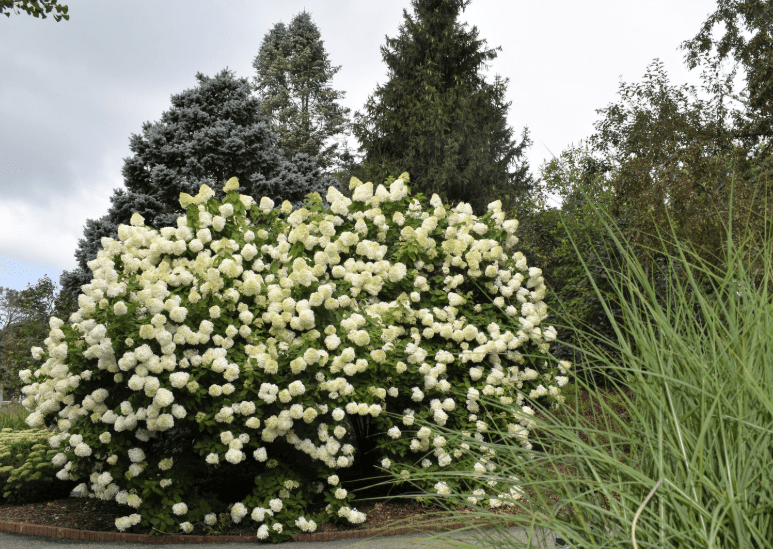
I’ve been designing, planting, and maintaining landscapes for over 15 years, and if there’s one plant I get asked about more than any other in late summer, it’s the hydrangea tree. Clients see those massive, cone-shaped flower heads floating above a clean, single trunk and immediately fall in love. They want that elegant, tree-form look in their front yard, backyard border, or as a focal point on a patio.
What most people don’t realize is that a “hydrangea tree” is not a separate species—it is almost always a Hydrangea paniculata (panicle hydrangea) that has been carefully pruned and trained into a tree form. The two most popular cultivars I work with are Limelight hydrangea tree and Vanilla Strawberry hydrangea tree. Both are incredibly reliable, but each has its own personality and best use case.
In this guide, I share everything I’ve learned from growing and pruning hundreds of these trees across different climates, soils, and garden styles. This is not theory from a label—it’s real, hands-on experience from someone who has watched these plants go from tiny whips to 12-foot showpieces season after season.
First, Let’s Clear Up the Biggest Myth: Soil pH Does NOT Change Flower Color
Unlike the bigleaf hydrangeas (Hydrangea macrophylla), which turn pink or blue depending on soil pH, panicle hydrangea trees do not change color based on acidity or alkalinity. Their flowers start white or cream and naturally develop pink, red, or burgundy tones as nights cool down in late summer and fall. This is a genetic response to temperature, not soil chemistry.
I’ve grown Limelight hydrangea trees in both acidic clay soil and alkaline sandy loam—the color shift in fall was identical. This makes them far more forgiving and predictable than bigleaf varieties. You don’t need to fuss with aluminum sulfate or lime to “force” a color. Nature does the work for you.
Limelight Hydrangea Tree vs Vanilla Strawberry Hydrangea Tree
Over the years, I’ve planted both extensively, and here’s my honest comparison from real gardens:
Limelight Hydrangea Tree
- Flower heads are large, lime-green when they open, then slowly turn pure white before taking on soft pink tones in fall.
- Strong, upright growth habit.
- Excellent for formal landscapes and areas where you want a clean, bright look.
- Blooms reliably even in partial shade.
My experience: This is the variety I recommend most often for first-time hydrangea tree owners because it is the most forgiving and has the strongest branches.
Vanilla Strawberry Hydrangea Tree
- Starts creamy white, quickly develops strawberry-pink tips, then deepens to rich red-burgundy in fall.
- Slightly more rounded flower heads and a bit more arching habit when young.
- Needs full sun for the best color change.
My experience: This one is the show-stopper in late summer and fall, but it can look a little softer and less formal than Limelight in early summer.
💡 My rule of thumb after 15 years: Choose Limelight if you want reliability, stronger structure, and versatility in light conditions. Choose Vanilla Strawberry if you want dramatic color change and are willing to give it full sun.
Planting a Hydrangea Tree – The Right Way
The biggest mistake I see is planting too deep or in heavy, compacted clay without improving the soil. Here’s exactly how I plant every hydrangea tree:
- Dig the hole twice as wide as the root ball but only as deep as the root ball (never deeper).
- Amend the soil with a chunky, well-draining mix: 40% native soil, 30% compost, 20% pine bark, 10% perlite or coarse sand.
- Position the tree so the top of the root ball sits 1–2 inches above ground level.
- Water deeply at planting and mulch with 2–3 inches of shredded hardwood mulch, keeping it away from the trunk.
I never plant in pure clay or pure sand without heavy amendment. These trees want consistent moisture but hate wet feet.
Watering Schedule That Actually Works
Young trees need consistent moisture while establishing. Water new plantings deeply every 3–4 days during the first growing season (more often in extreme heat). Once established (year 2+), they become quite drought-tolerant but still perform best with 1 inch of water per week during dry spells.
I always tell clients: “Water slowly and deeply rather than frequently and shallowly.” A soaker hose or drip line at the base is ideal.
The Most Important Skill: How to Prune a Hydrangea Tree
Panicle hydrangeas bloom on new wood, so the timing of pruning is critical. I prune every hydrangea tree I maintain between late February and early April, before new growth begins.
My exact pruning method (step-by-step):
- Remove all dead, damaged, or crossing branches first.
- Cut back the previous year’s growth to 2–3 strong buds on each main branch. This encourages larger flower heads.
- Maintain the tree form by removing any suckers or low branches that appear below the main canopy.
- Thin the interior slightly to improve air circulation and reduce disease risk.
- Shape for aesthetics—I aim for a balanced, rounded canopy that looks natural but tidy.
Pruning this way every year keeps the tree compact, prevents it from becoming leggy, and produces the biggest, most impressive flower heads. I have clients who skip pruning for a year and immediately notice smaller blooms and a more chaotic shape the following season.
After years of trial and error, these are the only tools I reach for when working on hydrangea trees:
I also use a sharp pruning saw for any thicker branches and a pair of long-reach loppers for taller trees.
Common Problems & How I Fix Them
- Small or few flowers: Usually caused by pruning at the wrong time or lack of sun. I increase the light and prune harder the following winter.
- Leaves turning yellow or brown: Overwatering or poor drainage is the most common culprit. I improve soil drainage and adjust watering.
- Powdery mildew: Common in humid summers. I increase air circulation by thinning and avoiding overhead watering.
- Leggy, weak growth: Not enough sun or the tree was not pruned properly the previous year. I move it to a brighter light and prune aggressively next spring.
Seasonal Care Calendar I Follow Every Year
- Late Winter/Early Spring: Hard prune, apply slow-release fertilizer.
- Spring: Monitor new growth, water consistently.
- Summer: Deep water during dry spells, watch for pests.
- Fall: Enjoy the color change, minimal care needed.
- Winter: Minimal pruning of damaged branches only.
A well-grown hydrangea tree is one of the most rewarding plants you can add to a landscape. It gives you months of massive blooms, beautiful fall color, and a striking architectural form in winter. With the right variety, proper planting, and annual pruning, these trees will give you decades of beauty with relatively little work.