










It was a cold night in early March when my furnace suddenly stopped working. I heard the familiar click of the inducer motor trying to start, but the burners never ignited. The house was dropping fast, and I was staring at a $300 emergency HVAC service call fee I really didn’t want to pay.
I grabbed my phone and FaceTimed my brother in Austin, Texas. He’s a licensed HVAC technician who has spent the last 12 years fixing furnaces, including during those brutal Texas winter freezes when every unit in the state seemed to fail at once. He’s the guy homeowners call when their heat is out, and the repair bill is climbing.
While we were on video, he made me grab my multimeter, walk down to the basement, and walk me through diagnosing the problem step by step. Within 45 minutes, we had identified a faulty furnace pressure switch, cleared the issue, and had heat running again. I’m sharing his exact professional blueprint here so you can do the same and avoid an expensive service call.
What a Furnace Pressure Switch Actually Does
The pressure switch is a small safety device mounted near the draft inducer motor. Its job is simple but critical: it ensures the inducer motor creates enough negative pressure (vacuum) to safely vent exhaust gases out of the house through the flue pipe.
If the switch does not detect proper vacuum, it keeps the gas valve closed so the burners never light. This prevents carbon monoxide from backing up into your home. In other words, it is one of the most important safety components on a modern high-efficiency furnace.
Where Is the Pressure Switch on a Furnace?
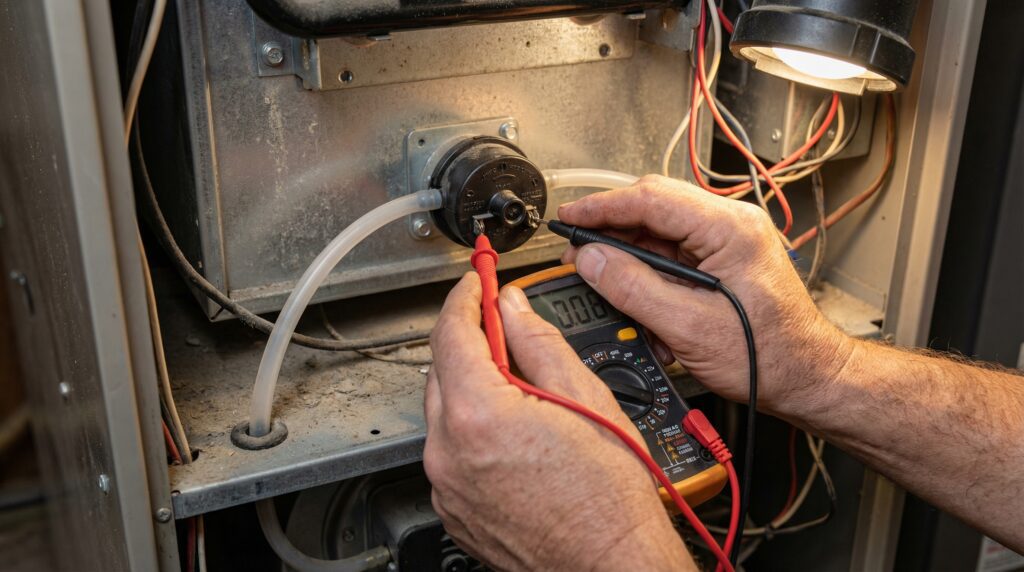
On almost every 80% and 90%+ efficiency gas furnace, the pressure switch is a small, round or square plastic box (usually white or gray) with two or three wires and a thin silicone or rubber vacuum hose attached to it. It is almost always located on the side or top of the furnace cabinet, right next to the draft inducer motor and the exhaust vent pipe.
Look for a small hose running from the inducer motor housing to the switch. That hose is how the switch “feels” the vacuum.
⚠️ The Most Common Problem: Furnace Pressure Switch Stuck Open
The error code you’ll most often see (or the symptom you’ll feel) is “pressure switch stuck open.” This means the switch is not closing when the inducer motor runs. Common causes my brother has seen over the years include:
- Blocked or restricted exhaust flue (leaves, bird nests, ice, or soot buildup).
- Clogged condensate drain line (very common on high-efficiency furnaces).
- Cracked, loose, or disconnected vacuum hose.
- Dirty or failed pressure switch itself.
- Weak or failing draft inducer motor.
Pro Tip: On cold nights, condensate lines freeze or flue pipes get blocked by wind-driven debris, causing the switch to stay open and prevent ignition.
How to Test a Furnace Pressure Switch (Exact Steps My Brother Gave Me)
Safety first: Turn off the furnace power at the breaker and the gas supply at the shut-off valve before you touch anything.
- Locate the switch: Find the pressure switch and the small vacuum hose connected to it.
- Disconnect wires: Disconnect the wires from the switch (note which terminal each wire connects to—usually labeled).
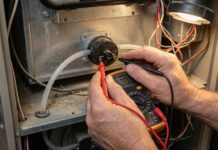
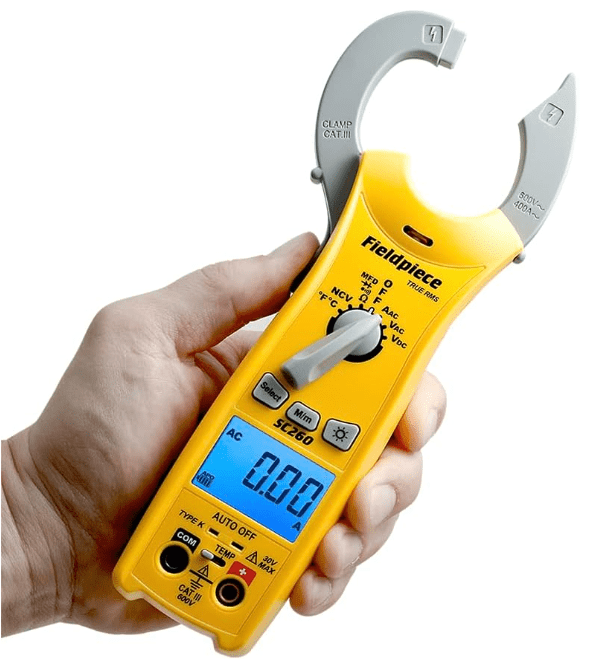
- Prep your meter: Set your digital multimeter to the continuity (beep) or ohms setting.
- Initial test: Touch the two probes to the two terminals on the switch. With no vacuum applied, you should get no continuity (no beep, infinite resistance).
- Apply vacuum: Gently suck on the vacuum hose port or use a small hand vacuum to create negative pressure.
- Listen for the beep: You should immediately hear the multimeter beep—that means the switch has closed and has continuity.
If the switch does not close when you apply vacuum, it is faulty and needs to be replaced. If it does close but the furnace still won’t ignite, the problem is usually upstream (a blocked flue or an inducer motor issue).
How to Reset a Furnace Pressure Switch
Most pressure switches do not have a manual reset button. The “reset” happens automatically once the problem that keeps the switch open is fixed. You clear the blockage, replace the cracked hose, or install a new switch, then cycle power to the furnace. The control board will attempt to run the inducer again and check the switch.
If the switch is truly bad, replacement is the only fix.
Furnace Pressure Switch Replacement – Step-by-Step
- Turn off the power and gas.
- Disconnect the wires and vacuum hose from the old switch.
- Remove the mounting screws and pull the old switch out.
- Install the new switch (exact match for your furnace model—they are not universal).
- Reconnect the hose and wires exactly as they were.
- Restore power and gas, then run a full heating cycle to test.

I always keep an extra vacuum hose on hand because it cracks over time from heat and age.
When You Should Call a Professional Instead of DIY
If you are not comfortable working with gas appliances or electricity, or if the problem turns out to be the draft inducer motor itself, call a licensed HVAC technician. Safety comes first—carbon monoxide is invisible and deadly.
Want More Pro Home Maintenance Blueprints? 🏡
That night my furnace pressure switch failed, my brother’s calm guidance over FaceTime saved me hundreds of dollars and hours of cold. If you want more insider repair tips and DIY guides delivered straight to you, head over to our homepage and join our free email newsletter!
You’ll get our best home improvement tricks and exclusive tool reviews—completely spam-free. Let’s fix it right the first time!