









Key Highlights
- Gloxinias are loved for their bright, bell-shaped flowers that can lighten up any indoor area.
- These tropical plants grow best in warm temperatures, with high humidity and indirect light.
- It is very important to water them properly. Keep the soil moist but not so wet that it causes root rot.
- To help them bloom, ensure they get enough light and apply fertilizer during the growing season.
- You can enjoy the lovely beauty of Gloxinias in your home by giving them some care.
Introduction
Gloxinias are becoming popular houseplants. They charm plant lovers with their bright colors and soft, bell-shaped flowers. You can see them in deep reds, purples, light pinks, and whites. These beautiful plants from Brazil add a touch of elegance to any room. They do need a little extra care, but anyone can grow these flowering plants with proper care. You can enjoy their beauty every year.
What Are Gloxinia Houseplants?

Gloxinia, or Sinningia speciosa, is part of the same family as the African violet and many other popular houseplants. This family is called Gesneriaceae. Gloxinia comes from tropical rainforests in Brazil. They prefer warm and humid environments with soft light. Unlike African violets, Gloxinias grow from tubers, which makes their growth different.
Gloxinias have big, soft leaves and bright, trumpet-shaped flowers in several colors. They usually bloom from late spring to summer. These plants like it best when the temperature is between 65-75°F (18-24°C) and enjoy bright, indirect light. This is why they are great for growing indoors.
The Origins and Characteristics of Gloxinia
Gloxinias are native to the dark and wet forests of Brazil. For many years, many plant lovers have found them fascinating. Their journey from the forest floor to homes worldwide shows how beautiful they can be. Gloxinias store energy in tubers, which are the parts that grow underground. This allows them to survive during dormancy.
These plants are famous for their lovely flowers and leaves. Many kinds of breeding have led to different Gloxinia varieties today. You can find Gloxinias with single or double flowers. Some of these flowers can be as big as 5 inches in diameter. They come in bright reds, purples, pure white, and two colors. The leaves are beautiful as well. It is deep green and velvety, creating a pleasant look next to the colorful flowers.
Whether you prefer the simple beauty of single flowers or the striking appearance of double blooms, there is a Gloxinia hybrid for you. With some care, you can enjoy these beautiful plants in your home.
Why Gloxinia is a Great Addition to Your Indoor Garden
Gloxinias are small plants that add beauty to bookshelves, tables, and windowsills. They produce bright flowers in various colors that stay lively for a long time. This helps make any dull spot feel cheerful and energetic. Whether you prefer bold colors or soft pastels, there is a Gloxinia that matches your taste.
Gloxinias are easy to care for. You can enjoy their lovely flowers even if you are a new gardener. They grow well in average room temperatures and normal humidity. This makes them a great option for any indoor garden.
Gloxinias are an excellent choice for your home. They bloom for a long time and can have a big number of blossoms. With proper care, these flowers can brighten up your space for weeks. They will bring a nice touch of color and a feel of the tropics to your home.
Getting Started with Gloxinia: What You Need
To grow beautiful Gloxinias at home, you need a few simple things. First, pick the right potting mix. You also need containers that have good drainage. A place with the right light and humidity is essential too. These factors help make a home that feels natural for them. This will help them grow healthy and have many flowers.
Choosing a healthy Gloxinia plant from a reliable nursery is very important. Look for plants that have bright foliage. Check that there are no pests or diseases present. The tubers should feel firm and plump. You can enjoy these beautiful flowers in your home with a good plant and some care tips.
Essential Supplies and Conditions for Thriving Gloxinias
Gloxinias thrive in light potting mix with a lot of organic matter. A good choice is a well-draining mix made for African violets. You can also create your own mix using peat moss, perlite, and vermiculite. Make sure the width of the mix suit their roots. Having good drainage is key to preventing root rot, which Gloxinias are prone to get.
These tropical plants enjoy high humidity. If your home is dry, you can place your Gloxinia on a humidity tray or use a humidifier. Good air circulation is also important, especially in humid conditions. This helps prevent fungal diseases.
Gloxinias need bright, indirect light. This is similar to what they would find on the forest floor. A window that faces north or east with morning sunlight works best. Avoid direct light because it can burn their delicate leaves.
Selecting the Right Flowering Gloxinia Variety for Your Home
With many kinds of Gloxinia to choose from, finding the right one for your home can be enjoyable. First, consider your current décor and the mood you want to set. If you want a bright touch, pick Gloxinias in colors like red, purple, or fuchsia.
If you prefer softer styles, choose flowers in gentle colors like pink, peach, or white. Think about the shapes of the flowers too. Some flowers have single rows of petals. Others have double or even triple rows, which makes them look fuller.
When you pick your Gloxinia, examine it closely. Check for healthy green leaves that are free of spots and pests. The tuber should stand above the soil line and feel firm and full. Avoid plants with droopy leaves, yellow leaves, or soft tubers. These signs could mean the plant has issues.
Step-by-Step Guide to Gloxinia Care

Taking care of your Gloxinia is key for it to bloom and show off its beautiful flowers. You should know its basic needs, like how much to water it. It also needs the right amount of light, good temperature, and humidity levels. You will have a better chance of success if you meet these needs.
This simple guide will help you gain the knowledge and confidence you need. Your Gloxinia will grow well and show you lovely, colorful flowers if you give proper care.
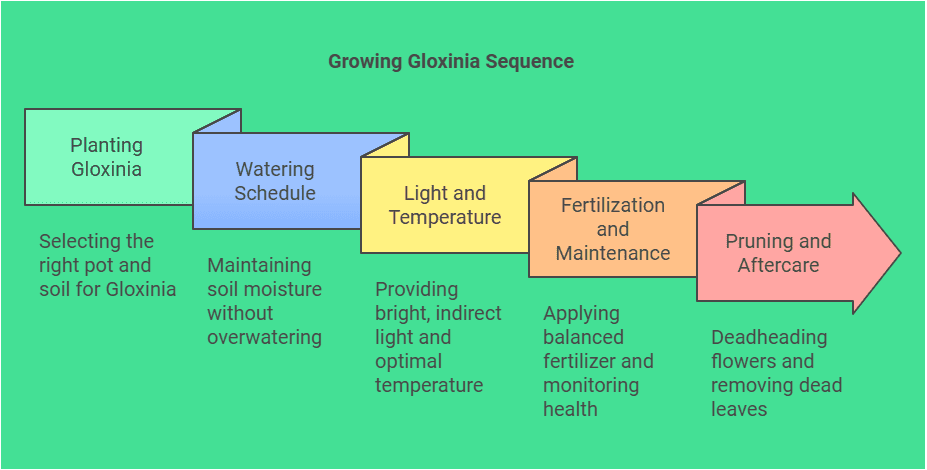
Step 1: Planting Your Gloxinia
When you are starting your Gloxinia from leaf cuttings or a tuber, it’s important to choose the right pot and soil. A good pot should be just a little larger than the tuber or roots of your Gloxinia. It’s also key to pick a pot that has good drainage holes. Don’t forget to include the leaf petiole when you plant.
Fill the pot with potting mix that drains well. Leave about an inch of space at the top. When you plant tubers, put them in with the hollow side facing up. Bury them about one inch under the soil surface. For leaf cuttings, push the cut end into the soil. Make sure the leaf blade stays above the soil line in October.
After you plant your Gloxinia, make sure to water it thoroughly. Allow the extra water to drain out. Place the plant in a warm location that gets bright, indirect light. Keep the soil moist but not overly wet. Be patient, as any new growth might take a few weeks to show up.
Step 2: Mastering the Watering Schedule
Watering Gloxinia properly is key to its care. Giving too much water or too little can damage the plant. Focus on keeping the soil moist, not soggy. It helps to let the top inch of soil dry a little before watering again.
To check if your Gloxinia needs water, put your finger in the soil up to your knuckle. If the soil feels dry, it’s time to water. When watering, be careful not to get the leaves or flowers wet. Doing this can lead to fungal diseases.
Water the plant thoroughly. This way, any extra water can flow out through the drainage holes. Be sure to remove any water that collects in the saucer. This helps keep the roots from sitting in stagnant water. It reduces the risk of root rot. Adjust your watering schedule according to the season. Water less when the plant is in winter dormancy.
Step 3: Ensuring Optimal Light and Temperature
To help your Gloxinia grow strong, copy the light and temperature of its rainforest home. They enjoy warmth and moisture. However, too much direct sunlight can damage their delicate leaves. Put your Gloxinia where it can get bright but indirect light. A good spot is near a window that faces east or west, with a light curtain.
Keep your Gloxinia away from strong direct sunlight. This is especially important in the afternoon when the sun is bright. If your sunny window gets a lot of bright light, you should move the plant a little further back. You can also use a sheer curtain to make the light softer.
Gloxinias grow well in average room temperatures of 65-75°F (18-24°C). Keep the seedlings away from cold drafts, air conditioning, and heat sources. These can cause sudden temperature changes. This may lead to leaves or buds falling off.
Step 4: Fertilization and Maintenance Tips
- Fertilize your Gloxinia plants carefully with a balanced solution. This helps them grow well.
- Keep the soil moist to prevent root rot.
- Make sure there is good air circulation to combat powdery mildew.
- Place your plant in a warm area with indirect light for the best results.
- Check the humidity levels. Use a humidity tray if needed.
- Look for signs of pests or diseases and deal with them quickly.
- Regularly remove dead or yellowing leaves to support new growth.
Step 5: Pruning and Aftercare for Gloxinia
Pruning and caring for your Gloxinias is crucial for their health and bright colors. Regularly cut off the old flowers to help the plant grow new flowers instead of seeds. This practice is called deadheading. When you see flowers wilting or losing color, gently cut the stem above the closest leaves. Doing this keeps your plant looking nice and helps it bloom longer.
After the flowers bloom, it’s time for your Gloxinia to rest, which is called dormancy. Reduce watering gradually and place your plant in a cool spot with indirect light. It’s normal for the leaves to die back during this period. Once dormancy is over, you can regularly water the plant and move it back to a bright and warm place.
This way, you give your Gloxinia the best chance to thrive in the next growing season. By caring for your Gloxinia well, you can enjoy its beautiful blooms year after year.
The Importance of Humidity for Gloxinia Growth
Humidity is very important for the health and beauty of Gloxinia houseplants. These tropical plants grow best in places with high humidity that feel like their natural home. If there isn’t enough humidity, the leaves can dry, and the plant may not grow well. This can make your Gloxinia less vibrant.
To help your plant get the moisture it needs, you can place it on a humidity tray filled with water and pebbles. A humidifier can also help raise the moisture in the air around the plant. Another good idea is to put your Gloxinia near other plants that like humidity. This can create a microclimate that helps all your plants thrive.
Keeping humidity levels just right helps your Gloxinia grow well and boosts flowering. This leads to more beautiful, bell-shaped blooms. By paying attention to the humidity needs of your Gloxinia, you can create a great place for these lovely plants to grow their best.
Propagation Techniques for Gloxinia
Propagation of Gloxinia can be a fun project for anyone who loves plants and wants to grow an indoor garden. There are a few easy ways to do this. You can use leaf cuttings or divide the tubers.
For leaf cuttings, pick a healthy leaf from the parent plant. Make sure it has no pests or diseases. Cut the leaf into sections, making sure each piece has a vein. Then, place these pieces in a moist potting mix. Covering the pot with plastic wrap helps keep the humidity high until you see new growth.
You can also propagate Gloxinia by dividing the tubers. When the plant is dormant, take the tuber out of the soil. Carefully split it into sections, ensuring each part has at least one eye. Plant each section in its pot with fresh potting mix. Give it warmth and indirect light to help with rooting.
No matter which way you choose to propagate, remember that patience and the right conditions are essential. This will let you enjoy even more lovely blooms from these amazing plants at home.
Addressing Gloxinia Toxicity Concerns
Addressing worries about Gloxinia toxicity is essential for keeping your family and pets safe. Gloxinia plants (Sinningia speciosa) are usually safe for humans and pets. This makes them a popular choice for indoor gardens. However, even though they are not harmful, eating any part of a plant can cause mild stomach issues. So, it is wise to watch pets and small children around Gloxinia to stop any unintentional eating.
If you see a pet nibbling on the leaves or flowers, gently guide them to safer toys or other plants. In short, Gloxinia houseplants are mostly safe. A few simple steps can help you create a happy home where everyone enjoys these colorful flowers’ beauty without worry.
Creating a Pollinator-Friendly Garden with Gloxinia
Creating a garden that welcomes pollinators is easy with Gloxinia. These plants add bright color and attract essential insects like bees and butterflies. Their trumpet-shaped flowers provide both nectar and pollen, making them a nice spot for these creatures. To make the most of this, plant Gloxinia alongside other flowers that bloom at various times. This way, there is always food available for the pollinators.
You can also group different Gloxinia colors for a more beautiful look, which draws in even more pollinators. Avoid using pesticides and choose organic gardening methods to keep the ecosystem healthy. This helps pollinators thrive while enjoying the lovely Gloxinia blooms. By placing these beautiful flowers in your garden, you create a charming space and support local pollinators.
Troubleshooting Common Gloxinia Problems
Gloxinias are simple to take care of if you understand their needs. But problems can still occur. It’s important to immediately notice any issues like pests, diseases, or stress. Acting quickly can help fix your plant and prevent further damage.
Keep an eye on your Gloxinia. Watch how it grows, the color of its leaves, and how it looks overall. This way, you can spot signs of stress before they become bigger problems. Tackling issues early helps keep your Gloxinia healthy and colorful, allowing it to bloom beautifully.
Dealing with Pests and Diseases
Like many houseplants, Gloxinias can attract some pests. Common pests are aphids, spider mites, and mealybugs. You should check your plant often for signs of these pests. Look for small bugs, webs, or sticky spots on the leaves. If you see any infested plants, keep them away from your other houseplants.
You can use insecticidal soap or neem oil. These are good and eco-friendly ways to treat pest issues. If the pests keep returning, you may want to try a systemic insecticide. Just make sure to follow the instructions on the product closely.
Gloxinias need high humidity, but too much can lead to fungal diseases. This includes problems like powdery mildew and botrytis blight. To prevent this, ensure good air circulation. Keep space between plants to avoid overcrowding. If you see fungal infections, use the right fungicide to treat them. Cutting off and throwing away any affected plant parts is also essential to stop the problem from spreading.
Addressing Over or Underwatering Issues
One common issue for Gloxinia owners is deciding how often to water. Underwatering and overwatering can both cause similar signs. You may notice that the leaves are wilting and drooping, and growth is slow. This makes it confusing to know what the problem is.
If your Gloxinia doesn’t get enough water, it’s easier to heal. However, it can stress the plant if it’s dry for too long. Check the moisture in the soil regularly. If the top inch is dry, water your Gloxinia well until water drains out of the holes. Do not let the soil dry completely. This can damage the soft roots.
Overwatering can be very harmful. It may cause root rot. Root rot is a big problem that can kill your plant if you don’t fix it. To prevent this, check that your potting mix drains well. Also, make sure your pot has enough drainage holes. If you notice root rot, move your Gloxinia to new, clean soil. Change how you water it after that.
Conclusion
Growing Gloxinia houseplants can be fun for plant lovers. Knowing where they come from and what they need to live well is good. By following our guide, you can take care of your Gloxinias. Look for problems like pests and diseases to help them grow strong in your home. Different types of Gloxinia may need exceptional care, so choose carefully.
Check our FAQ section if you want expert tips or answers to questions. Enjoy caring for these colorful plants and watch them bloom beautifully.
Frequently Asked Questions
How often should I water my Gloxinia Houseplants?
Water your Gloxinia when the top inch of soil feels dry. Keep the soil moderately moist. Let it dry out a bit between waterings. Change how you water if the humidity changes. Also, ensure there is good drainage to prevent the soil from getting too wet.
Can Gloxinias thrive in low light conditions?
Gloxinias grow best when they get bright, indirect light from a light source. They can survive in low light, but this can be harmful to their flowers and leaves. Without enough light, their growth can be weak and they may have fewer blooms. If needed, use a grow light to ensure they receive enough light.
What is the ideal temperature range for Gloxinia?
Gloxinias enjoy average room temperatures between 65-75°F (18-24°C). They thrive in warm places. They do not like cold air or sudden temperature changes. These can impact their bloom and might lead to dormancy.
How do I encourage my Gloxinia to bloom?
To help your Gloxinia bloom, place it where it can get bright, indirect sunlight. You should also fertilize it frequently during the growing season. Taking care of its dormancy is important as well. This involves watering it less and keeping it in cooler temperatures. By doing this, you can help the plant begin to bloom when it starts to grow again.
Are Gloxinias pet-friendly houseplants?
Gloxinias are generally safe for pets. However, keeping them out of the reach of pets that like to explore is a good idea. Eating any plant can make their stomach feel a bit upset. If you notice your pet trying to eat your Gloxinia, consider moving it to a more challenging place for them to get to.