
















Are you tired of lugging heavy cases of bottled water from the grocery store, or worrying about the chlorine and heavy metals lurking in your tap water? Upgrading your kitchen with an under sink water filter system is one of the smartest, most cost-effective home improvement projects you can tackle this year.
Many homeowners assume they need to hire an expensive plumber to get crisp, pure drinking water on demand. The truth? Learning how to install a water filter under the sink is incredibly simple. If you can turn a wrench, you can do this DIY weekend project in under an hour.
In this comprehensive guide, we will reveal the best systems on the market for every budget and walk you step-by-step through the installation process.
The Best Under Sink Water Filters (2026 Top Picks)
Before you grab your tools, you need the right system. Here are the top-performing filters currently dominating the market in terms of purity, flow rate, and ease of installation.
1. The Premium Choice: Reverse Osmosis (RO) System
If you want the absolute purest water possible, a Reverse Osmosis system is the gold standard. It removes up to 99% of contaminants, including fluoride, lead, and microplastics. It comes with its own dedicated drinking faucet.
2. The Budget-Friendly Option: Inline Water Filter
Don’t want to drill a hole for a second faucet? An inline high-capacity filter connects directly to your existing cold water line. It hides completely out of sight and delivers filtered water right through your main kitchen tap.
Tools You Will Need for the Job
- An adjustable wrench or two
- Plumber’s Teflon tape (usually included with the filter kit)
- A towel and a small bucket (to catch residual water)
- A power drill (ONLY if you are installing a separate RO faucet)
🎧 The DIY “Dirty Hands” Hack
Pro Tip: You’ll be under the sink for about 45 minutes, and your hands will be busy. I always pop in my earbuds and listen to an audiobook while doing under-sink plumbing or yard work. It makes the time fly by! You can grab a 30-day free trial of Audible here and get your first book completely free before you start wrenching.
Step-by-Step: How to Install a Water Filter Under the Sink
Note: These instructions cover the standard inline and direct-connect filtration systems. Always refer to your specific manufacturer’s manual for exact fitting sizes.
Step 1: Shut Off the Cold Water Supply
Clear out all the cleaning supplies from beneath your sink. Locate the cold water shut-off valve (usually on the right side) and turn it clockwise until it is completely tight. Turn on your kitchen faucet to release any remaining pressure and verify the water is actually off.
Step 2: Disconnect the Existing Hose
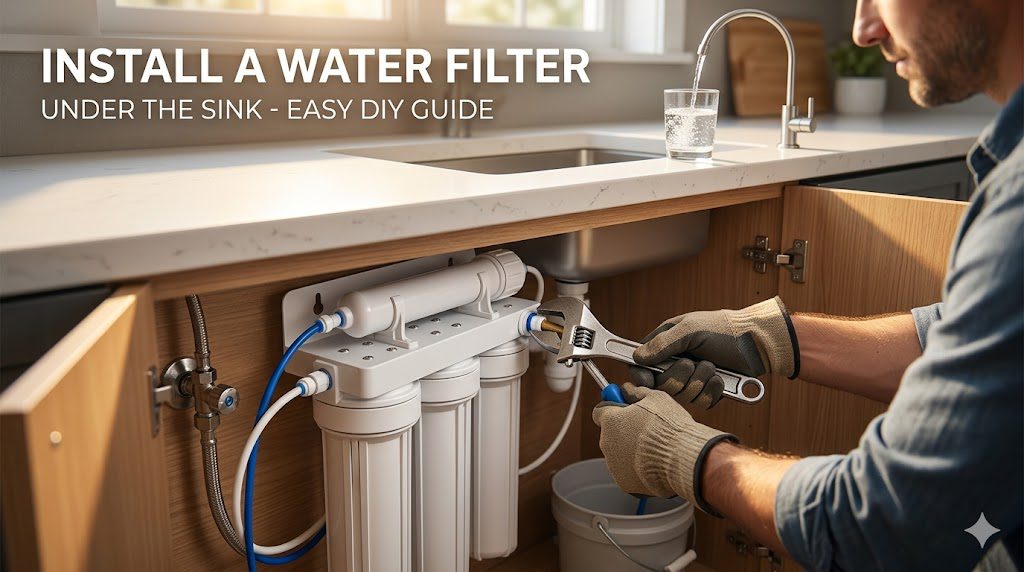
Place your towel and small bucket underneath the valve. Use your adjustable wrench to loosen and disconnect the cold water braided hose from the shut-off valve. A little bit of water will spill out—this is normal.
Step 3: Install the Feed Water Adapter (T-Valve)
Wrap the threads of your cold water valve with 2-3 layers of Teflon tape to prevent leaks. Screw the new T-valve (which came with your filter) onto the cold water shut-off valve and tighten it securely with your wrench. Next, reattach your original braided kitchen hose to the top of this new T-valve.
Step 4: Mount the Filter System
Find a convenient spot on the cabinet wall to mount the filter housing. Make sure it is high enough so you have room to easily twist off the filter cartridges when it is time to replace them. Use the provided screws to secure the bracket to the cabinet.
Step 5: Connect the Tubing
Push one end of the provided plastic tubing into the T-valve, and the other end into the “IN” port on your filter system. Take the second piece of tubing and connect it from the “OUT” port of the filter directly to your dedicated drinking faucet (or back into your main line, depending on your system).
Step 6: Flush the System and Check for Leaks
Slowly turn the cold water valve back on. Check all your connections with a dry paper towel to spot any micro-leaks. Finally, turn on the filtered water faucet and let it run for 5 to 10 minutes. The water might look cloudy or have black carbon dust at first—flushing the system clears this out completely.
Frequently Asked Questions
Do under sink water filters lower water pressure?
Standard inline filters may cause a very slight drop in pressure at your main tap, but it is rarely noticeable. Reverse Osmosis systems bypass this issue entirely by using a separate, dedicated faucet for drinking water and a pressurized storage tank.
How often do you need to change the filters?
For optimal health and taste, most under-sink carbon filters need to be replaced every 6 months, or after filtering roughly 500 gallons of water. RO membrane filters usually last 1 to 2 years.
Can I install a water filter if I rent my apartment?
Yes! Inline water filters are incredibly renter-friendly. Because they connect to your existing plumbing without requiring you to drill holes in the countertop or sink, you can easily uninstall the system and take it with you when you move.