













By The GardenFrontier Team
If you believe the internet, Pink Himalayan Salt is a magical cure-all that purifies the air and detoxes your soul.
If you believe the skeptics, it’s just overpriced table salt.
The truth, as usual, is somewhere in the dirt between them. At GardenFrontier, we don’t care about “detoxifying lamps.” We care about results. We use Himalayan salt not because it’s magic, but because it is chemically pure, structurally distinct, and incredibly useful for anyone who grows, cooks, or preserves their food.
From saving your cucumber harvest to scrubbing rust off your garden shears, here is why that pink rock belongs in your shed and your pantry.
1. The Fermentation Factor (Why Purity Matters)
The BHG article misses the most critical reason to swap your salt: iodine.
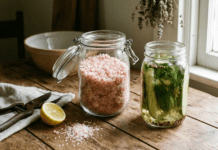
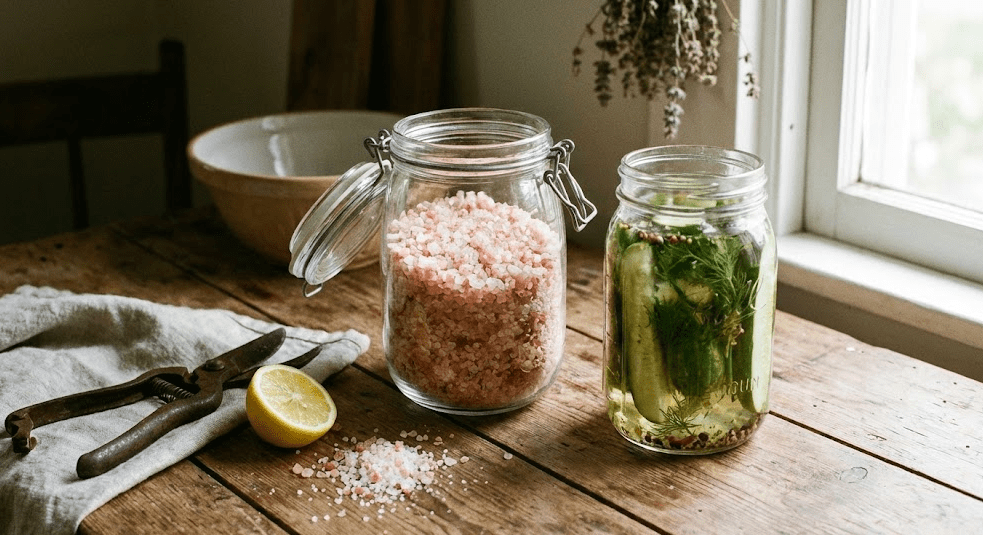
Standard table salt is iodized. While good for thyroids, iodine is the enemy of the preservationist. It creates cloudy brine in pickles and can turn your sauerkraut a muddy gray. It also contains anti-caking agents (sodium aluminosilicate), which settle at the bottom of your jars.
Himalayan Salt is the Preservationist’s Friend:
- 0% Additives: No anti-caking agents = crystal clear brine.
- Mineral Content: Trace amounts of magnesium and calcium (the stuff that makes it pink) can actually help keep pectin in vegetables firm, leading to crunchier pickles.
Pro Tip: Always weigh your salt for brine. Himalayan grains are large and irregular. One tablespoon of fine table salt is twice as salty as one tablespoon of coarse Himalayan salt. Use a scale, not a spoon.
2. The Salt Block: It’s Not a Plate, It’s a Pan
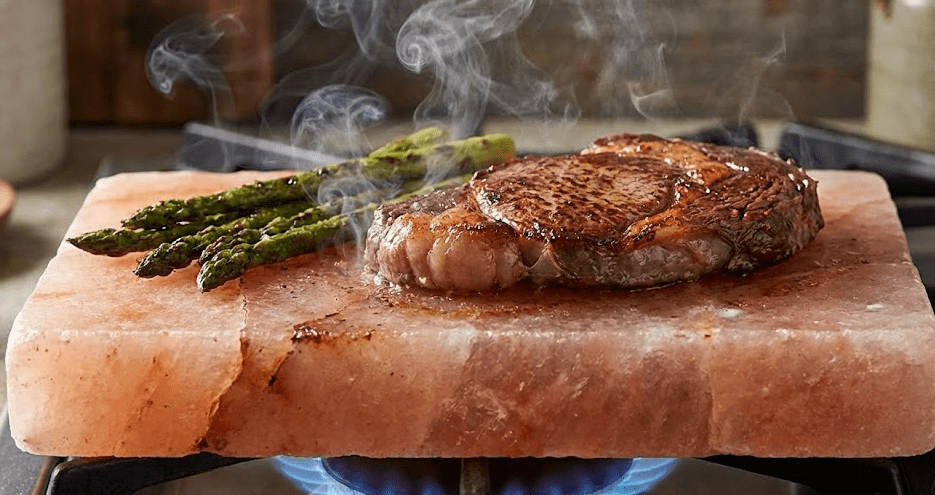
Most people buy a salt block, use it once as a serving platter, and shove it in a drawer. You are missing out on one of the best searing surfaces known to man.
How to actually use it:
- The “Slow Heat” Rule: Salt blocks explode if heated too fast. Place it on a cold gas burner. Low heat for 15 mins → Medium for 15 mins → High for 15 mins. It needs to reach 500°F.
- The Sear: Scallops, flank steak, and asparagus cooked on a salt block don’t just get salty; they get a mineral-rich crust that a cast-iron pan can’t replicate.
- The Clean-Up: NEVER use soap. Scrub with a stiff brush and water, then dry immediately.
3. Garden & Tool Maintenance (The Hidden Use)
Salt is an ancient tool in the garden, but you have to use it wisely.
- The “Paver Perfector”: Have weeds growing in the cracks of your driveway or stone path? Don’t spray glyphosate. Mix 1 cup of Himalayan salt (the cheaper “bath” grade works fine here) with 1 gallon of vinegar and a squirt of dish soap. Pour it only on the cracks. It kills weeds instantly and prevents regrowth. (Warning: Salt kills soil forever. Never use this in your garden beds!)
- The Rust Eraser: Neglected your shears? Make a thick paste of fine Himalayan salt and lemon juice. Scrub your rusty garden tools with it. The acidity eats the rust, and the salt acts as an abrasive scourer that won’t scratch the steel as deeply as sandpaper.
4. The “Texture” Advantage in Cooking
Why do chefs pay extra for this stuff? It’s not the taste—salt tastes like salt. It’s the crunch.
- Finishing, Not Cooking: Don’t dissolve expensive pink salt in pasta water. Waste of money.
- The Pop: Sprinkle coarse pink salt on soft foods (avocado toast, ripe tomatoes from the vine, chocolate ganache). The hard, dry crystal provides a “shatter” texture that contrasts perfectly with soft garden produce.
5. DIY Spa: The Gardener’s Hand Scrub
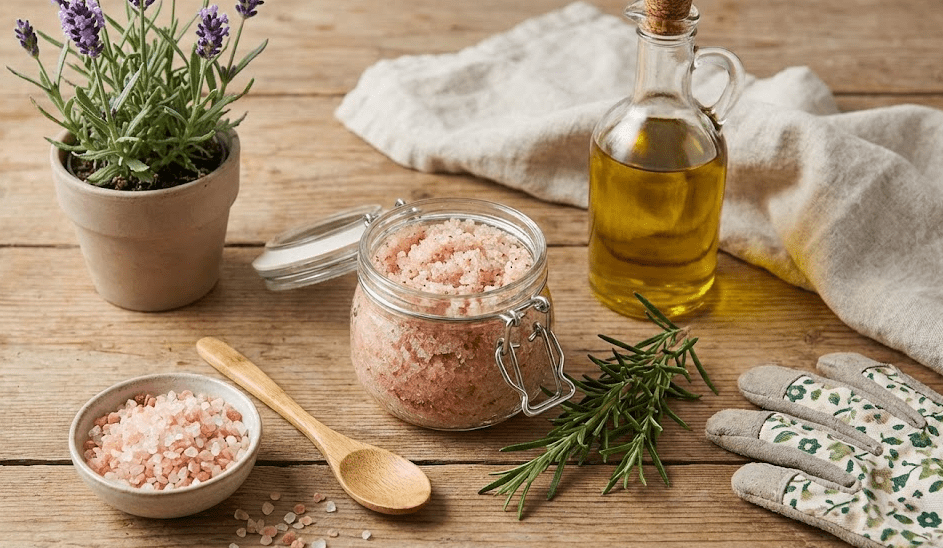
After a day of pulling weeds, your hands are likely stained and rough.
The “Rough Hands” Fix:
- Mix 1/2 cup Fine Himalayan Salt
- 1/4 cup Olive Oil (or Coconut Oil)
- 1 tsp Dried Rosemary (crushed)
- Why it works: The sharp edges of the salt exfoliate the dead skin and “ground-in” dirt, while the minerals act as a mild antiseptic for those tiny thorny scratches.
Key Takeaway
Stop treating Himalayan Salt like a health supplement. Treat it like a tool. Whether you are fermenting your fall harvest, searing a steak, or cleaning up the driveway, it is one of the most versatile minerals in your arsenal.