














By The GardenFrontier Team
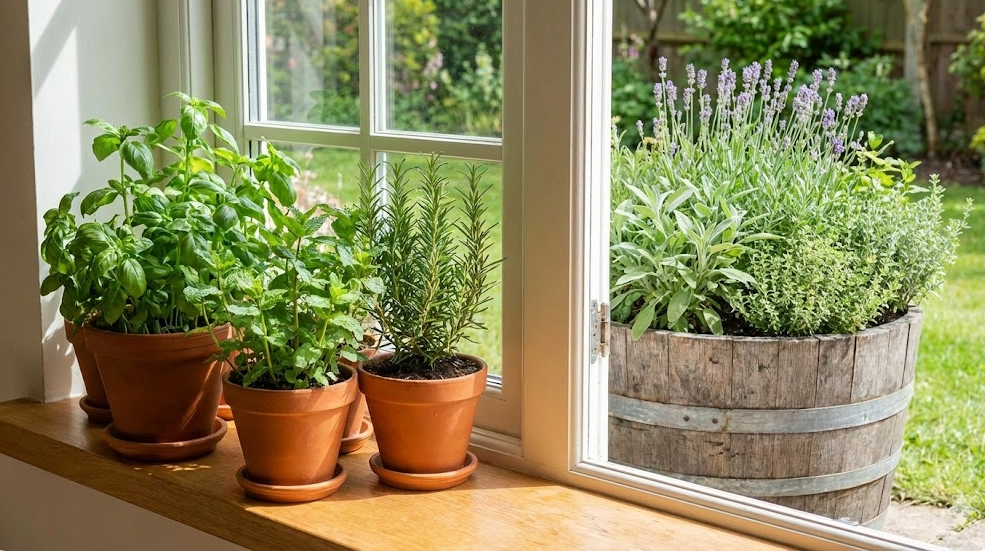
Herbs are the “gateway drug” of gardening. They are high-yield, fast-growing, and expensive to buy at the store but dirt cheap to grow.
However, most beginners fail for one reason: Grouping.
They buy a cute trough planter and shove moisture-loving Basil next to drought-loving Rosemary. One dies of thirst, or the other rots.
Whether you are gardening on a dark apartment windowsill or have a sprawling backyard, here is how to design, plant, and harvest a world-class herb garden—inspired by the masters.
Rule #1: The “Woody vs. Soft” Rule (Forget Families)
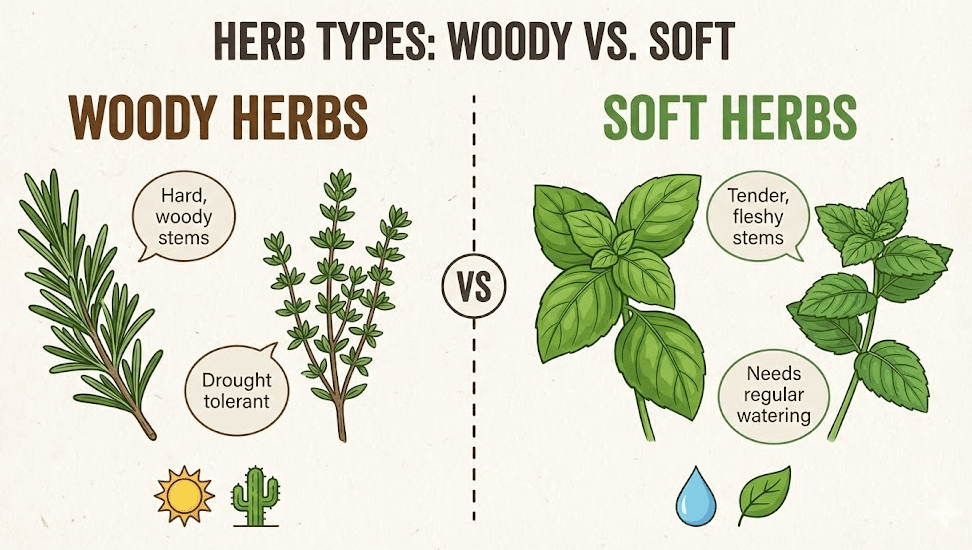
Botanists classify herbs by family. Gardeners should classify them by thirst.
Never mix these two groups in the same pot. They are enemies.
Group A: The “Mediterranean” (Woody & Dry)
- The Vibe: These plants love sun, grit, and neglect. They hate “wet feet.”
- The Plants: Rosemary, Thyme, Sage, Oregano, Lavender, Marjoram.
- The Soil: Mix 50% potting soil with 50% cactus mix (sand/perlite). They need rapid drainage.
- Watering: Let the soil dry out completely between waterings.
Group B: The “Riverbank” (Soft & Thirsty)
- The Vibe: These plants have soft green stems and wilt instantly if they get dry.
- The Plants: Basil, Parsley, Cilantro, Mint*, Chives, Dill.
- The Soil: Standard high-quality potting mix with compost.
- Watering: Keep soil consistently moist (like a wrung-out sponge).
- Warning: Mint is invasive. NEVER plant mint in the ground or shared pots. Give it its own “Solitary Confinement” pot.
The Indoor Herb Garden: Why They Usually Die
“Indoor herb garden” is a popular search term, but a difficult reality. Herbs need sun energy to create those essential oils (flavor).
- The Light Reality: A windowsill is rarely enough. Basil needs 6+ hours of direct sun. If your herbs look “leggy” (long stems, few leaves), they are starving for light.
- The Fix: Get a simple LED grow light. Even a cheap clamp light with a “Daylight” (5000K-6500K) bulb will double your harvest.
- The Airflow: Indoor air is stagnant. Fungal gnats love it. Run a small fan nearby to strengthen stems and dry out the soil surface.
Design Inspiration: The “Nunobiki” Effect
If you are looking for herb garden ideas that go beyond a simple wooden box, look to the masters: The Nunobiki Herb Garden in Kobe, Japan.
It is Japan’s largest herb garden, famous for cascading down a steep mountain slope. You might not have a mountain, but you can steal their design secrets:
- Verticality: Nunobiki uses gravity. Plant “creeping” herbs (Creeping Thyme, Prostrate Rosemary) at the edges of your raised beds or pots. Let them spill over the side like a green waterfall. This softens the hard edges of your garden.
- Scent Paths: In Nunobiki, herbs are planted right up to the walkway. Why? So you brush against them as you walk, releasing the scent. Plant your most fragrant herbs (Lavender, Lemon Balm) at the corners of your garden path or entryway.
- The “Theme” Pot: Don’t just plant random herbs. Create a “Pizza Pot” (Oregano, Basil, Thyme) or a “Tea Garden” (Chamomile, Mint, Lemon Verbena).
The Quick-Start Guide (Step-by-Step)
Ready to plant? Here is the GardenFrontier method.
- Choose Your Container: Ensure it has drainage holes. If it doesn’t, drill them. No exceptions.
- The “Lasagna” Fill:
- Bottom: A piece of broken pottery or mesh over the hole (keeps dirt in).
- Middle: Your soil mix (Customized for Woody or Soft herbs).
- Top: The plant.
- The Haircut: When you plant, pinch off the top inch of growth immediately. This hurts your feelings, but it forces the plant to branch out and become bushy, rather than tall and spindly.
Key Takeaway
You don’t need a degree in botany. You just need to respect the water. Keep your Woody herbs dry, your Soft herbs wet, and steal your design ideas from the slopes of Nunobiki.