






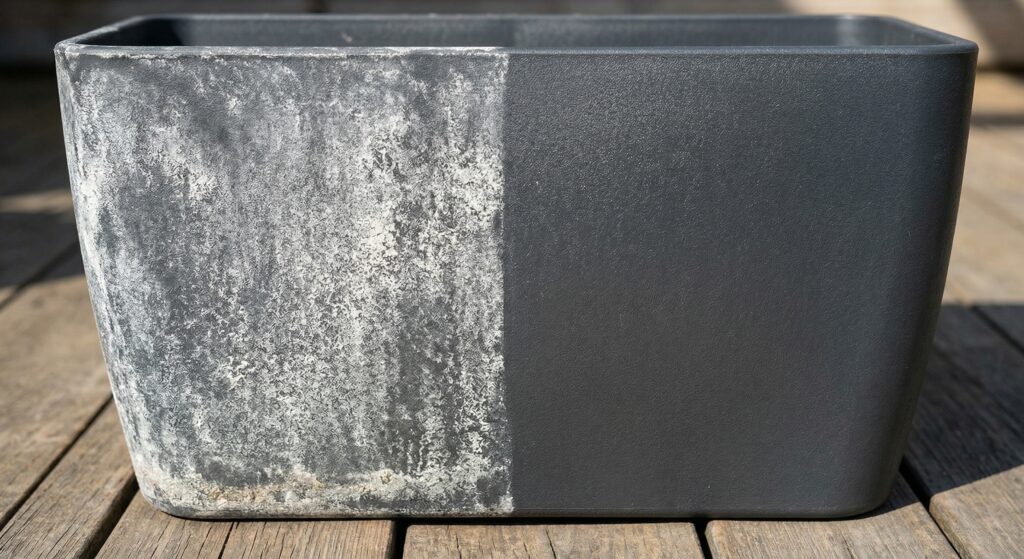
If you run a lawn sprinkler system or water your plants with hard well water, you already know the frustration. Over time, your dark plastic planters, PVC fencing, and expensive resin patio furniture accumulate a chalky, white crust.
Those aren’t ordinary dirt stains; they’re hard-water mineral deposits (mostly calcium and magnesium). Because outdoor plastic is slightly porous and expands in the sun, these minerals bake directly into the surface. Standard dish soap and a sponge won’t even make a dent in them.
Before you throw out your faded patio chairs or aggressively scrub them with wire brushes (which permanently scratch the plastic and make it hold more dirt), try these contractor-approved methods for removing hard-water stains from outdoor plastic.
The Science: Why Hard Water Destroys Outdoor Plastic
Unlike glass, plastic is not perfectly smooth. Under a microscope, patio chairs and resin planters have tiny ridges and valleys. When hard water comes into contact with these surfaces and evaporates in the hot sun, it leaves calcium crystals behind. The longer they sit, the more they bond with the plastic polymers.
To break this bond, you don’t need heavy scrubbing; you need a chemical reaction to dissolve the minerals safely without bleaching the color out of your patio furniture.
Top 3 Methods to Remove Mineral Stains from Plastic
Method 1: The Vinegar & Towel Trick (Safest)
Vinegar is a mild acetic acid that naturally breaks down calcium carbonate without eating into the plastic resins.
- Mix a 50/50 solution of standard white distilled vinegar and water in a spray bottle.
- Spray the affected plastic heavily.
- The Secret Trick: Don’t just wipe it! Drape paper towels over the wet plastic and spray the towels again. This keeps the vinegar from evaporating in the sun and allows the acid to work for 15-30 minutes.
- Remove the towels and wipe clean with a microfiber cloth. Rinse with fresh water.
Method 2: The Baking Soda Scrubber
If the hard water stain is on a textured plastic planter, vinegar might not be enough to get into the deep grooves. You need a mild abrasive.
- Mix 3 tablespoons of baking soda with 1 tablespoon of water to create a thick paste.
- Apply the paste directly to the hard water crust.
- Take a soft-bristled brush (an old toothbrush works perfectly) and scrub in circular motions. The baking soda acts as a micro-abrasive, grinding away the calcium without scratching the plastic.
How to Prevent Hard Water Stains on Outdoor Plastic
Once you get your plastic patio furniture and planters looking brand new again, you need to protect them. Stripped plastic is vulnerable to UV rays and new mineral deposits.
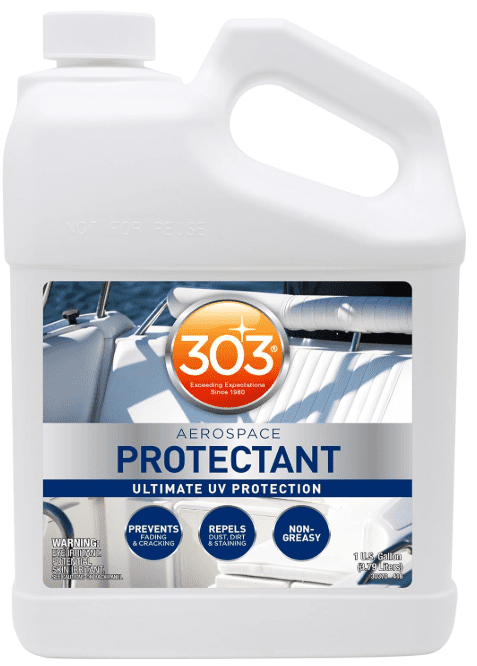
My absolute favorite contractor secret for this is 303 Aerospace Protectant. It was originally designed for aviation and boats, but it is a miracle worker for outdoor plastic. It acts like “SPF 40 sunscreen” for your chairs, adding a hydrophobic layer that forces hard sprinkler water to bead up and roll off before it can dry and stain.
A Quick Warning on Acetone: Never use nail polish remover or acetone on outdoor plastic patio furniture. While it might melt away the stain, it will instantly dissolve the top layer of the plastic polymer, leaving a permanently foggy, sticky mess.