












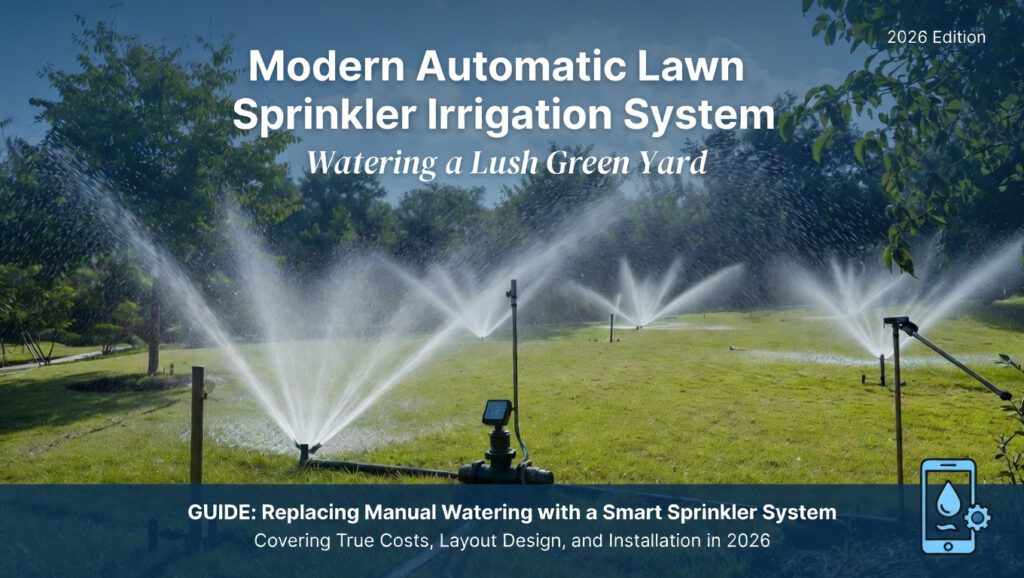
A lush, green lawn doesn’t happen by accident. It requires consistent, deep watering that simply cannot be achieved by dragging a heavy rubber hose across the yard every evening. Whether you are managing a small garden or a sprawling suburban lawn, upgrading to a dedicated sprinkler irrigation system is the smartest investment you can make for your landscaping.
With the rise of smart technology, modern automatic sprinkler irrigation systems not only save you hours of manual labor but also drastically reduce your monthly water bill by optimizing watering schedules.
In this comprehensive guide, we will break down the true cost of an upgrade, how to design the perfect layout, and the crucial steps for installing a sprinkler irrigation system.
Key Components of a Sprinkler Irrigation System
Before diving into the design, it is essential to understand the basic components of a sprinkler irrigation system. A standard setup consists of:
- The Controller (Timer): The “brain” of the operation. Modern controllers connect to Wi-Fi and adjust watering times based on local weather forecasts.
- Valves: These open and close to release water to specific zones in your yard.
- Pipes (PVC or Poly tubing): The underground network that delivers water from the mainline to the sprinkler heads.
- Sprinkler Heads: The delivery method. You can choose between pop-up rotors (for large areas) and fixed spray heads (for smaller patches and flower beds).
💧 Smart Upgrade: AIPER Automated Yard Tech
If you want to take your yard automation to the next level without digging up your entire lawn, consider integrating smart, wireless tech. Brands like AIPER offer top-tier automated solutions that keep your yard and outdoor spaces immaculate with zero manual effort.
Sprinkler Irrigation System Design and Layout
The success of your watering strategy relies entirely on a proper sprinkler irrigation system layout. Without a good design, you will end up with dry brown patches and flooded zones.
When drafting your design of a sprinkler irrigation system, follow these expert rules:
- Map Your Yard: Draw a precise diagram of your sprinkler irrigation system to scale. Mark obstacles like trees, patios, and sheds.
- Determine Your Water Pressure: Test your home’s PSI (Pounds per Square Inch) and GPM (Gallons Per Minute). You cannot put too many sprinkler heads on one zone, or they will not have enough pressure to pop up.
- Head-to-Head Coverage: Place sprinkler heads so that the spray from one head reaches the base of the neighboring head. This overlapping ensures no dry spots are left behind.
Types of Systems: Overhead vs. Drip
Not all plants thrive under a standard lawn sprinkler irrigation system. It is important to mix and match delivery methods based on your vegetation.
Installation of a Sprinkler Irrigation System
Installing a sprinkler irrigation system can be a rewarding DIY weekend project if you prepare properly. Here is a simplified step-by-step breakdown:
- Trenching: Use a trenching machine or a flat spade to dig trenches 6 to 12 inches deep along your planned layout lines.
- Laying Pipe: Connect your PVC or poly tubing inside the trenches. Use primer and PVC cement for secure, leak-free joints.
- Installing Valves & Manifold: Connect your valves to the main water line (ensure you have a backflow preventer installed to meet city codes).
- Flushing the Lines: Before attaching the sprinkler heads, turn on the water to flush out any dirt or debris that fell into the pipes during installation.
- Attaching Heads & Burying: Attach your pop-up rotors, ensure they are level with the ground surface, and carefully backfill the trenches with soil.
How Much Does a Sprinkler Irrigation System Cost?
The cost of a sprinkler irrigation system varies wildly depending on the size of your property and whether you hire a professional. For a standard 1/4 acre lot, a professional installation typically costs between $2,500 and $4,000. If you decide to go the DIY route, you can expect to spend between $800 and $1,500 on materials (pipes, valves, smart controller, and heads).
If you are exploring off-grid or eco-friendly options, a solar-powered sprinkler irrigation system (which uses solar panels to charge the pump and timer) will increase your initial setup cost but will save you significantly on electrical trenching and long-term utility bills.