
















Staring at a patchy, weed-infested, or muddy yard is incredibly frustrating. While seeding a new lawn is an option, it takes months of meticulous care, battling birds, and fighting off weeds before you see real results. If you want instant green gratification, laying fescue sod is the ultimate solution.
Fescue is one of the most popular cool-season grasses in the United States, especially in the transition zone. It is resilient, stays green year-round in many climates, and handles foot traffic beautifully. But before you rent a truck and head to the local garden center, you need to understand exactly what you are buying.
In this comprehensive 2026 guide, we will break down exactly how much fescue sod costs, why Turf-Type Tall Fescue is the king of lawns, and give you a step-by-step masterclass on how to install it yourself so it roots perfectly.
What is Fescue Sod? (Tall Fescue vs. Fine Fescue)
Not all fescue is created equal. When you go to buy sod, you will generally encounter two main categories, and choosing the right one is critical for your yard’s success.
- Tall Fescue (Turf-Type Tall Fescue or TTTF): This is the gold standard for home lawns. It has wider blades, a deep green color, and incredibly deep root systems (sometimes reaching 2 to 3 feet into the soil). This makes tall fescue sod highly drought-resistant and capable of handling heavy foot traffic from kids and dogs.
- Fine Fescue: As the name implies, the blades are needle-like and very fine. Fine fescue is often mixed into other sods because it has phenomenal shade tolerance. However, it does not handle high heat or heavy foot traffic well.
For 90% of homeowners, Turf-Type Tall Fescue (TTTF) sod is the clear winner for a durable, beautiful lawn.
How Much is a Pallet of Fescue Sod? (2026 Cost Breakdown)
This is the most common question homeowners have. The cost of a new lawn depends heavily on where you live and the farm producing it, but here are the industry standard numbers for 2026:
So, how much is a pallet of fescue sod? On average, a full pallet of tall fescue sod costs between $150 and $300.
- Coverage: One standard pallet typically contains 400 to 500 square feet of sod (usually 50 individual rolls or slabs measuring 2ft x 5ft).
- Price per Square Foot: This breaks down to roughly $0.35 to $0.85 per square foot.
- Delivery Fees: Most sod farms charge a flat delivery fee ranging from $75 to $150 per truckload. If you are picking it up yourself, be warned: a wet pallet of sod can weigh up to 3,000 lbs! You will need a heavy-duty truck or trailer.
Why Choose Tall Fescue Over Bermuda or Zoysia?
If you live in a region with hot summers and freezing winters, you might be debating between cool-season grasses (like Fescue) and warm-season grasses (like Bermuda or Zoysia). Here is why Tall Fescue often wins:
- Year-Round Green: Bermuda and Zoysia go completely dormant and turn a dead-looking brown after the first frost. Fescue stays green all winter long.
- Shade Tolerance: Bermuda grass requires full, baking sun to thrive. Tall fescue can easily handle partial shade under large oak or maple trees.
- Deep Roots: Because TTTF develops such a massive root system, it can survive periods of drought better than many other cool-season grasses like Kentucky Bluegrass.
How to Install Fescue Sod Like a Pro (Step-by-Step)
Buying the sod is the easy part. Proper installation and watering dictate whether your investment thrives or turns into expensive dead hay. Follow these steps meticulously.
Step 1: Soil Preparation (The Most Crucial Step)
Never lay sod over hard, compacted dirt or existing grass. You must till the soil to a depth of at least 4 to 6 inches. This allows the new sod roots to penetrate easily. Test your soil pH, and blend in a high-quality starter fertilizer.
Step 2: Laying the Turf (The Brick Pattern)
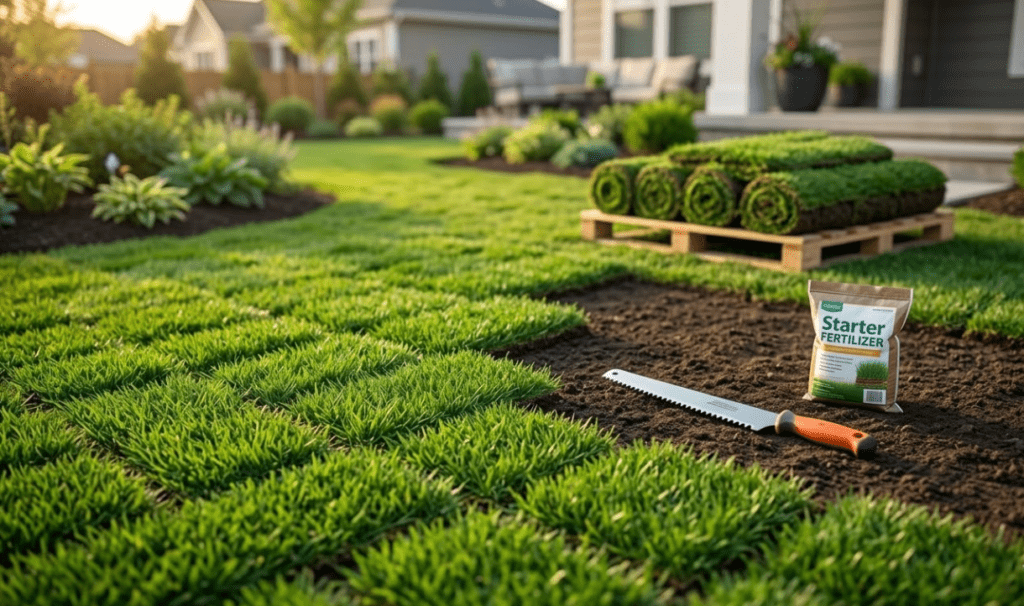
Start laying your sod along the longest straight edge in your yard (like a driveway or sidewalk). Lay the sod pieces end-to-end, pushing the edges tightly together without overlapping them.
When you start the second row, stagger the joints just like a bricklayer builds a wall. This prevents water from carving long trenches down the seams. When you reach a sprinkler head or a curved garden bed, you will need to cut the sod. Do not use a standard shovel. A proper serrated sod knife will make clean cuts without tearing the root system.
Step 3: Roll and Water (The Survival Phase)
Once the sod is down, use a water-filled lawn roller to press the sod firmly against the soil, removing any air pockets. Air pockets will kill the roots instantly.
Now, you must water. For the first two weeks, the sod must remain moist (but not flooded) at all times. This usually means watering 2 to 3 times a day for short intervals. Missing even one hot afternoon can dry out the shallow roots and kill the grass.
💧 Pro Watering Hack: Automate It!
Most of us have jobs and cannot stay home to turn the sprinklers on three times a day. If you are investing hundreds of dollars into new fescue sod, spend a little extra to protect it. Hook up a programmable smart hose timer to your spigot and let it handle the critical watering schedule automatically.
Frequently Asked Questions
Can you lay fescue sod over existing grass?
No, you should never lay new sod over old grass or weeds. The existing vegetation will decompose, creating heat and pockets of methane gas that will rot the roots of your new sod. Always strip the old lawn down to bare dirt.
When is the best time to lay fescue sod?
Because tall fescue is a cool-season grass, the absolute best time to lay it is in the early fall (September or October) or early spring. The cooler temperatures reduce stress on the plant while the roots establish themselves before the scorching summer heat arrives.
How long does it take for fescue sod to root?
If watered correctly and laid on well-prepared soil, fescue sod typically begins to grow shallow roots into the dirt within 10 to 14 days. You will know it has rooted when you gently tug on a corner of the sod and feel resistance. Wait at least 3 weeks before mowing for the first time.
Disclaimer: Sod prices fluctuate based on fuel costs, weather conditions, and regional availability. Contact your local sod farm for exact, up-to-date pricing.