














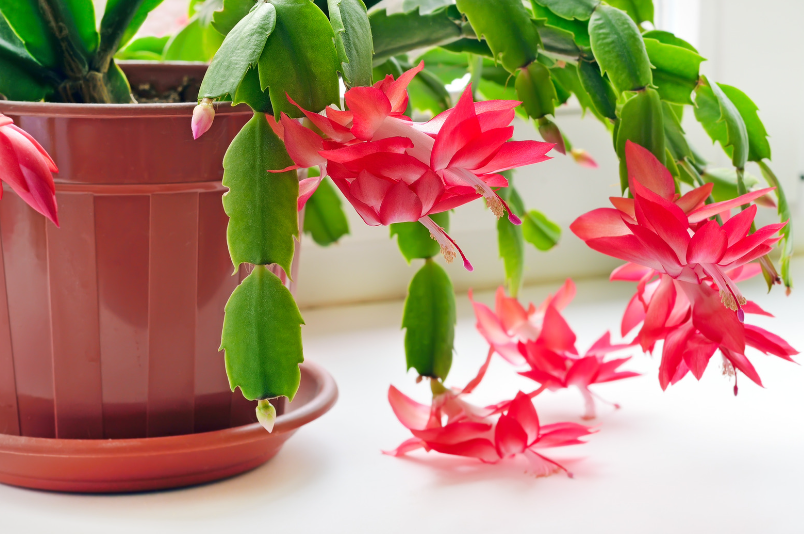
Have you ever wondered if your “Christmas cactus” is really a Christmas cactus? Here’s the deal: There are actually three types of holiday cacti—Thanksgiving, Christmas, and Easter. And yep, they are all different!
Christmas cacti (Schlumbergera x buckleyi) bloom in late December with smooth, scalloped leaves. Thanksgiving cacti (Schlumbergera truncata) show up in November with pointy, crab-like leaf edges. And Easter cacti (Rhipsalidopsis gaertneri) bloom around early spring with rounded leaves and star-shaped flowers.
Holiday Cacti: Quick Identification & Blooming Guide
| Cactus Type | Leaf Shape | Typical Bloom Time |
|---|---|---|
| Thanksgiving Cactus | Pointy, claw-like edges | Late November |
| Christmas Cactus | Smooth, scalloped, teardrop edges | Late December to January |
| Easter Cactus | Rounded with subtle bristles | March to April |
Exactly When Do Christmas Cactus Bloom?
The true Christmas cactus naturally sets its flower buds during the short days and cool nights of autumn, resulting in spectacular blooms between late December and early January.
However, the actual bloom time can shift slightly depending on temperature, light, and how you care for it. Most plants sold in big-box stores around the holidays are actually Thanksgiving cacti, which is why yours might be blooming a month earlier than you expected!
How to Force Your Christmas Cactus to Bloom
Christmas cacti are known for their gorgeous, vibrant blooms. But getting those blooms to stick around or return year after year requires triggering their natural dormancy cycle. Here are the 3 golden rules to make it happen:
- 1. The Darkness Rule: Being short-day plants, Christmas cacti require 12 to 14 hours of complete, uninterrupted darkness each day for at least six weeks starting in early fall. Even a streetlamp or a living room lamp can disrupt bud formation.
- 2. The Temperature Drop: They love cooler environments when preparing to set buds. Keep the temperature between 50-60°F (10-15°C) for a few weeks before you want flowers to appear.
- 3. The Watering Shift: Reduce watering in the fall while the plant prepares to bloom. Do not let the soil dry out completely to the point of shriveling, but keep it significantly drier than in the summer.
Troubleshooting: Why Is My Christmas Cactus Not Blooming?
If your Christmas cactus refuses to bloom, or if the buds form and suddenly fall off (a problem known as “bud drop”), check these common culprits:
- Light Pollution: If the plant is exposed to artificial indoor light during its 14-hour dark period, buds will not form.
- Drafts and Heat Sources: Keep your plant away from heating vents, radiators, or cold drafty doors. Sudden temperature shifts cause immediate bud drop.
- Overwatering: A waterlogged cactus won’t bloom and will quickly suffer from root rot.
Year-Round Care for Healthy Holiday Blooms
To keep your plant healthy enough to support massive winter blooms, you need to treat it like the tropical epiphyte it is.
Sunlight and Soil
Christmas cacti are forest cacti, meaning they naturally grow in tree branches under the rainforest canopy. They prefer bright, indirect sunlight. Direct afternoon sun will scorch their leaves, turning them red or purple. Plant them in a well-draining mix—a blend of potting soil, perlite, and a little orchid bark works perfectly.
Pruning and Propagation
The best time to prune a Christmas cactus is in late winter or early spring, shortly after it finishes blooming. Pruning encourages the plant to branch out, resulting in a fuller plant with double the blooms next year.
Don’t throw those pruned segments away! Let the 2-3 segment cuttings dry for a day, then stick them directly into moist potting soil to easily propagate brand new plants.
Repotting Wisdom
Christmas cacti actually bloom best when they are slightly rootbound. Do not repot them every year. Repotting every 3-4 years in the spring is generally sufficient. When you do repot, choose a container that is only 1-2 inches wider than the current one and ensure it has excellent drainage holes.
Conclusion
Knowing when your Christmas cactus will bloom—and giving it the proper care to trigger that cycle—is the difference between a frustratingly green houseplant and a breathtaking holiday display. By managing its light, temperature, and water in the fall, you can ensure your Christmas cactus blooms magnificently each and every winter season.