















When the garden is looking bleak and gray in the dead of winter, any sign of life feels like a miracle. Enter Winter Jasmine (Jasminum nudiflorum). Often bursting into bright, buttery-yellow blooms as early as January, this tough plant is the ultimate cure for a gardener’s cabin fever.
While it is incredibly easy to grow and quick to establish, it does have a few quirks—including a surprising lack of scent and a scrambling growth habit that requires a specific pruning approach. In this comprehensive guide, we will cover everything you need to know about winter jasmine care.
Winter Jasmine: Quick Care Guide
| Feature | Details |
|---|---|
| Botanical Name | Jasminum nudiflorum |
| Plant Type | Deciduous scrambling shrub / trailing vine |
| USDA Hardiness Zones | 6 – 9 (Marginal in Zone 5 with protection) |
| Sun Exposure | Full Sun to Partial Shade |
| Bloom Time | Late Winter to Early Spring (January – March) |
What is Winter Jasmine? (And Why Doesn’t it Smell?)
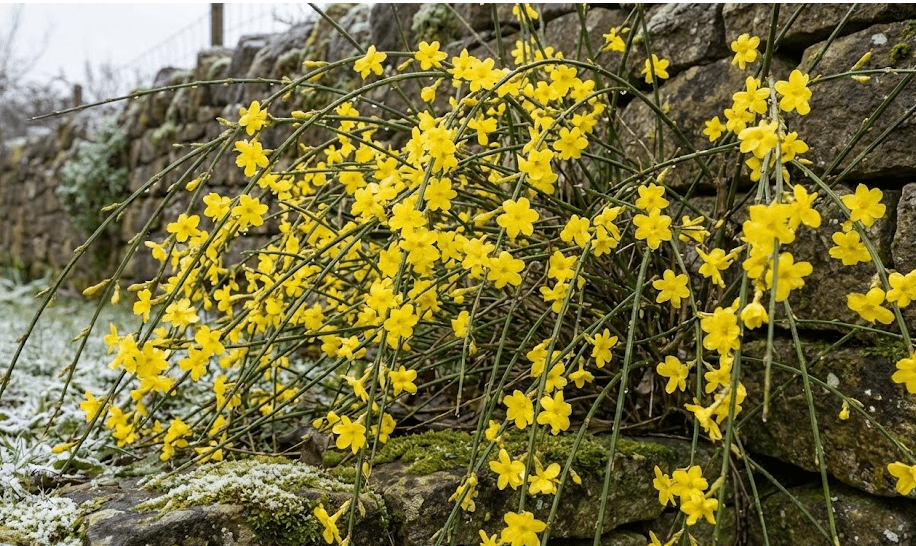
Introduced to the West from Shanghai, China, in 1844, Winter Jasmine belongs to the Olive family. It is by far the most cold-hardy of all jasmine species. The plant features slender, arching green stems that drop their glossy leaves in the fall. In late winter, before the new foliage emerges, 1-inch wide, five-petaled yellow flowers appear along the bare stems.
The Great Fragrance Myth: Many gardeners buy winter jasmine expecting the rich, intoxicating perfume associated with summer-blooming jasmines (like Star Jasmine or Arabian Jasmine). However, Jasminum nudiflorum has absolutely no scent. It relies entirely on its spectacular, off-season visual display to earn its keep in the garden.
How to Grow and Landscape with Winter Jasmine
One of the most important things to understand about this plant is its growth habit. Winter jasmine is not a true climbing vine. It does not have tendrils or aerial roots to cling to surfaces. Left to its own devices, it is a sprawling, scrabbly shrub that will root wherever its stems touch the ground.
Creative Landscaping Uses:
- As a Groundcover: Let it sprawl over banks, retaining walls, or slopes. Its ability to root at the internodes makes it excellent for erosion control.
- Trailing Over Walls: Plant it at the top of an ugly retaining wall and let the green stems cascade downwards like a floral waterfall.
- Trained on a Trellis: You can force it to grow vertically up to 15 feet tall, but you must manually tie the stems to a trellis, arbor, or fence using soft garden twine.
🎧 Pro Tip: Make Gardening & Chores More Enjoyable
Love spending hours in the garden or working around the house, but wish you had more time to read? Listen to audiobooks while you work!
Amazon is currently offering a FREE Trial of their Audible plan. You get unlimited ad-free listening to select originals and a free audiobook to keep forever.
Winter Jasmine Care & Maintenance
This plant is notoriously unfussy, making it a favorite for low-maintenance landscapes.
Sunlight and Soil
Winter jasmine adapts to almost any soil type, from sandy banks to heavy clay, as long as it is well-draining. While it will tolerate partial shade perfectly fine, planting it in full sun ensures the most spectacular and dense winter floral display.
Watering Requirements
During its first year, water the plant regularly to help establish a deep root system. Once established, it is reasonably drought-tolerant. However, providing regular moisture during the hot summer months will result in a healthier plant and better blooms the following winter. Applying a layer of mulch around the root zone helps retain moisture and suppress weeds.
Fertilizing
This is a vigorous grower that generally doesn’t need heavy feeding. If your soil is very poor, you can apply a balanced, slow-release fertilizer or a thick layer of organic compost in the spring after the blooms have completely faded.
How to Prune Winter Jasmine (Crucial Step)
If there is one maintenance task you cannot skip, it is pruning. Because winter jasmine grows rapidly and roots wherever stems touch the dirt, it can quickly turn into a tangled, weedy mess.
When to prune: Always prune in the spring, immediately after the yellow flowers fade. Do not prune in late summer or fall, or you will cut off the buds meant for winter.
How to prune:
- Routine Pruning: Remove dead, diseased, or crossing branches. If you are training it up a trellis, remove lateral (side) shoots to encourage upward growth.
- Rejuvenation Pruning: Every 3 to 5 years, the older stems will turn brown and stop producing as many flowers. When this happens, perform a “hard prune.” Cut the entire plant back to just 6 to 8 inches above the ground. It will rapidly regenerate fresh, green stems that will bloom profusely the next year.
Conclusion
If you want to banish the winter blues, Winter Jasmine is an incredibly rewarding addition to your yard. By understanding that it needs a little training to climb and a good haircut every few years, you can enjoy cascades of brilliant yellow flowers while the rest of the neighborhood is still buried in snow.