
















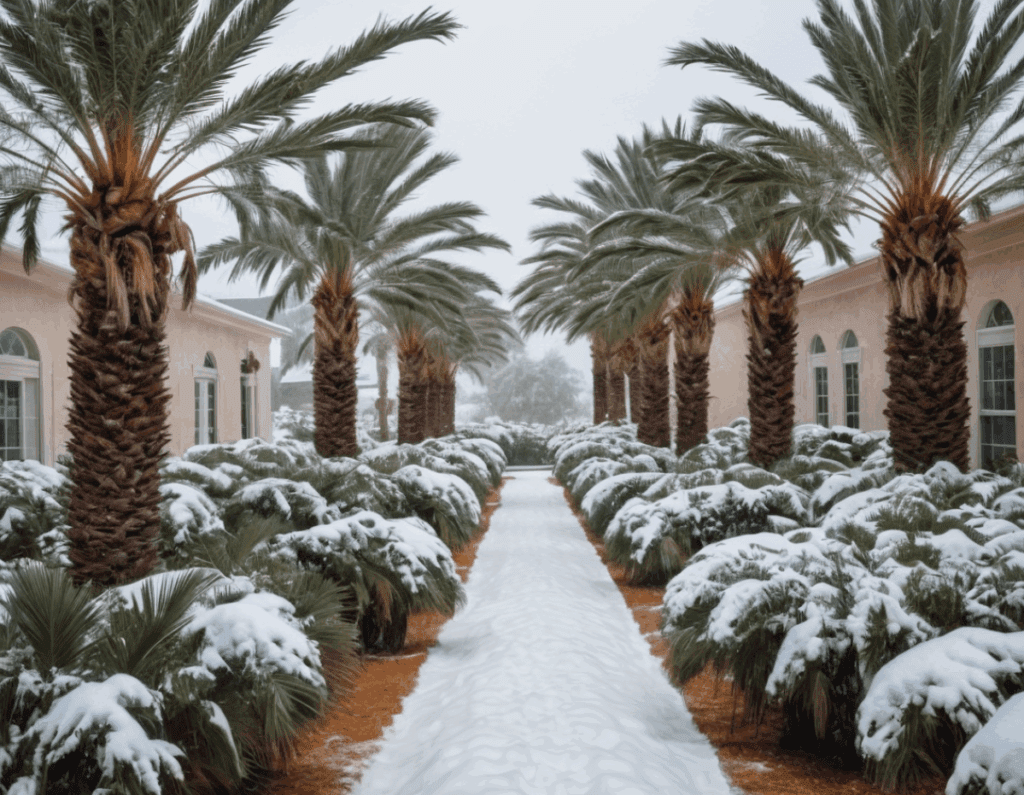
Palms bring a stunning touch of the tropics to any landscape, but their exotic allure doesn’t mean they are immune to freezing temperatures. While some varieties (like the Windmill Palm or Pindo Palm) are naturally cold-hardy, a sudden hard freeze can severely damage plant tissue and leave your tree vulnerable to fatal fungal diseases.
The golden rule of palm tree survival is simple: You must protect the “heart” or the crown bud. This is the center top of the trunk where all new fronds emerge. If the heart freezes and dies, the entire palm dies.
With the right winter care, you can protect your palm trees from frost, ice, and freezing winds. Here is your complete, contractor-approved guide to winterizing palm trees.
When to Winterize Your Palm Tree
Do not wrap your palm trees at the first sign of autumn. Wrapping a palm too early while the weather is still warm will trap moisture inside the wrapping, leading to severe crown rot and fungal infections.
You should only begin winterizing your palm trees when the weather forecast predicts a hard freeze (temperatures dropping below freezing for more than 24 hours) or when heavy snow and ice are imminent. Once the cold snap passes and temperatures rise above freezing, remove the wrapping immediately so the tree can breathe.
Step-by-Step Palm Tree Winter Protection
Creative Alternatives for Small Palms
- The Chicken Wire Basket: For very small or newly planted palms, drive four stakes into the ground around the tree. Wrap chicken wire around the stakes to form a cage, then fill it entirely with dry autumn leaves. This creates a highly effective, natural insulation barrier. Remove the leaves in early spring.
- Cardboard Boxes: If a sudden overnight frost is predicted, simply place a heavy cardboard box or a large plastic garbage can over a small palm, weighing it down with a rock. Remove it the next morning when the sun comes out.
Winter Care Mistakes to Avoid
1. Do Not Prune Before Winter
It is incredibly tempting to trim off yellowing or damaged fronds in late fall to make the tree look neat for the holidays. Do not do this. Even dead or dying fronds provide crucial insulation for the palm’s heart. Wait until late spring, when all danger of frost has passed, to prune your palm tree.
2. Do Not Fertilize in the Fall
Fertilizing a palm tree in late summer or fall triggers a flush of tender, new growth. This new growth is highly susceptible to cold damage and will be instantly killed by a frost. Stop fertilizing by late July so the tree can naturally slow down and prepare for winter dormancy.
3. Keep Them Hydrated
Believe it or not, watering your palm tree just before a hard freeze is actually beneficial. Moist soil holds heat much better and longer than dry, sandy soil. A well-hydrated tree is much more resilient against freezing, wind, and desiccation.