














When I upgraded my kitchen range hood from a weak 400 CFM unit to a powerful 800 CFM model, I thought the hard part was over. The new hood performed beautifully inside, but within days, I noticed freezing winter drafts blowing straight into the kitchen and wasps starting to explore the vent pipe in early summer. I stepped outside and saw the problem immediately: the cheap plastic builder-grade 6-inch wall vent that came with the house had completely disintegrated from years of UV exposure. The flapper was stuck wide open, letting cold air pour in and giving insects a direct highway into my attic and walls.
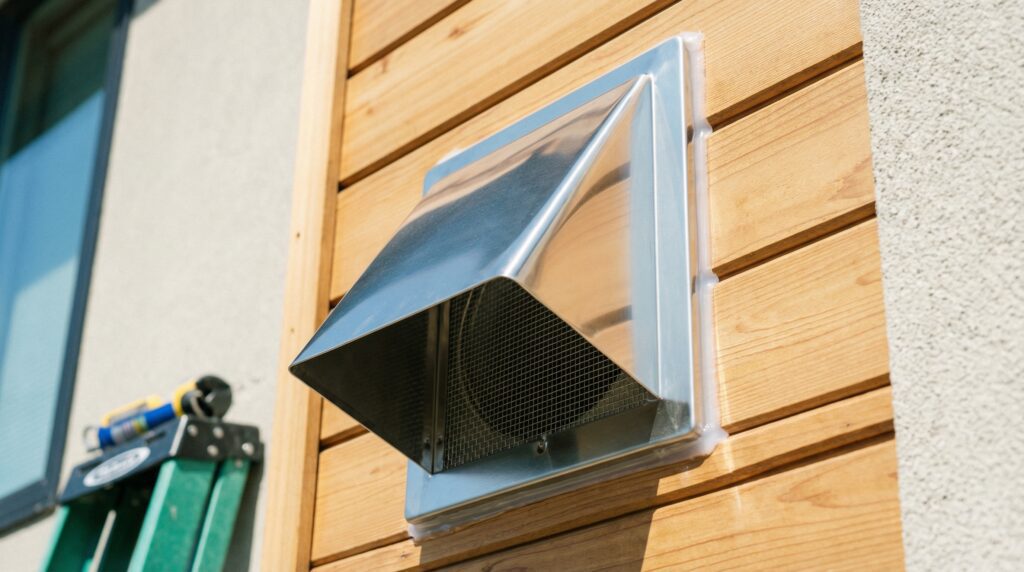
I had two choices: call a contractor or fix it myself. Since I had already done the range hood upgrade and the exterior wall replacement for the dryer vent on the other side of the house, I knew exactly what to do. I bought a heavy-duty metal 6-inch wall vent with a damper and screen, installed it in under an hour, and solved every issue permanently. I am sharing my exact blueprint here so you can stop cold drafts from the range hood, keep pests out, and protect your home without spending hundreds on a professional.
Why Builder-Grade Plastic Vents Fail So Quickly
Most homes built in the last 30 years came with thin plastic wall caps. They look fine when new, but plastic becomes brittle after just a few seasons of sun, rain, and freeze-thaw cycles. The flapper (the backdraft damper) warps, cracks, or sticks open. Once that happens, cold wind blows straight back into your house, your heating bills go up, and insects treat the pipe like a welcome mat.
I learned this the hard way on both my range hood wall cap and my dryer vent’s exterior wall. The plastic dryer vent had also disintegrated, letting lint blow back into the wall and creating a fire hazard. Plastic simply does not hold up outdoors in the long term.
The Real Solution: A Proper Backdraft Damper and Screen
A quality 6-inch wall vent with a damper and screen does two critical jobs:
- The backdraft damper is a hinged flap inside the vent that opens only when the fan is running and closes tightly when the fan stops. This single feature stops cold drafts from range hood and dryer vents, keeps heated or cooled air inside the house, and prevents reverse airflow that can spread odors or smoke.
- The screen keeps birds, mice, wasps, and bees out of your ductwork. For a kitchen range hood wall cap, the screen is non-negotiable because grease attracts insects. For a dryer vent installed in an exterior wall, I strongly prefer a vent with a removable screen so you can clean lint buildup every few months and reduce fire risk.
I chose a stainless-steel model with a spring-loaded damper and a heavy mesh screen. It costs about $35 and has already paid for itself in energy savings and peace of mind.
Materials: Steel Beats Plastic Every Time
Never reuse or install another plastic vent. Go with stainless steel or heavy-gauge galvanized steel. Stainless is the gold standard because it never rusts, even in coastal or high-humidity areas. Galvanized is a close second and slightly cheaper. Both are far more rigid than plastic, so the damper actually seals properly and the screen stays intact for decades.
My Exact Step-by-Step DIY Installation
Here is the exact process I used for both the range hood and the dryer vent. The whole job takes about 45 minutes per vent.
Tools needed: Cordless drill, caulk gun, utility knife, screwdriver, and a ladder (if high on the wall).
- Step 1: Remove the old vent. Unscrew the four corner screws holding the old cap. Gently pull it away from the wall. If the flange is sealed with old caulk, cut around the edges with a utility knife to release it cleanly. Inspect the duct pipe inside the wall and clear any debris or old sealant.
- Step 2: Clean the exterior siding. Wipe the siding around the hole with a damp cloth to remove dirt, old caulk, and any grease or lint. This ensures the new caulk bonds perfectly.
- Step 3: Apply exterior-grade silicone sealant. Run a generous bead of high-quality exterior silicone around the back of the new vent flange. This creates a watertight seal so rain and snow cannot get behind the siding.

- Step 4: Insert the new 6 inch wall vent. Slide the vent pipe into the existing duct (it should fit snugly). Press the flange firmly against the siding so the silicone squeezes out slightly around the entire perimeter.
- Step 5: Secure with rust-proof screws. Use four stainless-steel or coated deck screws in the pre-drilled holes. Do not overtighten—just snug them so the flange sits flat.
- Step 6: Wipe and test. Clean off excess caulk with a damp finger or tool. Turn on the range hood or dryer and confirm the damper opens smoothly and closes tightly when the fan stops. No more drafts, no more insects.

Why This Upgrade Matters for Both Range Hoods and Dryers
For a range hood wall cap, a proper damper and screen prevent cold air from entering during winter and stop grease-laden air from pulling insects or allowing backdraft when the hood is off. For a dryer vent installed in an exterior wall, the removable screen is especially important because lint buildup inside the pipe is a leading cause of house fires. Being able to pop the screen off and clean it every season keeps the dryer safe and efficient.
Common Mistakes I See Homeowners Make
- Reusing the old plastic vent because “it still kind of works.”
- Installing the new vent without fresh exterior caulk.
- Forgetting to check that the damper actually closes when the fan stops.
- Using flexible duct inside the wall instead of rigid—always use smooth rigid metal for both range hood and dryer vents.
Final Thoughts from Real DIY Experience
Replacing my old plastic 6-inch wall vent with a damper and screen was one of the cheapest and most effective upgrades I have made around the house. The kitchen stays warmer in winter, there are no more wasps in the walls, and the range hood now performs exactly as the manufacturer intended. The same vent style worked perfectly on my dryer vent exterior wall as well.
If you have drafts coming through your range hood or dryer vent, or you see insects around the exterior cap, do not wait. A heavy-duty metal vent is the permanent fix. It costs less than $40, installs in under an hour, and protects your home from energy loss and pests for decades.
Want More Pro Home Maintenance Hacks? 🏡
Replacing my exterior wall vents permanently stopped winter drafts and kept pests out of my kitchen. If you want more step-by-step DIY home improvement guides, money-saving repairs, and building code tips from my own renovations, head over to our homepage and join our free email newsletter!
You’ll get the smartest tutorials directly to your inbox—completely spam-free. Let’s build a safer, better home together!