









With their massive, fragrant, saucer-like blooms and glossy evergreen leaves, Magnolia trees are the crown jewels of southern landscapes. While most gardeners buy young grafted trees from a nursery, growing a magnolia tree from seed is a highly rewarding (though time-consuming) project.
Be warned: growing a magnolia from seed is a labor of love. It can take 10 to 15 years for a seed-grown magnolia to produce its first flower. Furthermore, magnolia seeds have a very short shelf life and require a specific process called “cold stratification” to break their dormancy.
If you are ready for the challenge, here is the exact, step-by-step horticultural method for harvesting, preparing, and germinating magnolia seeds.
1. Identifying and Harvesting Magnolia Seeds
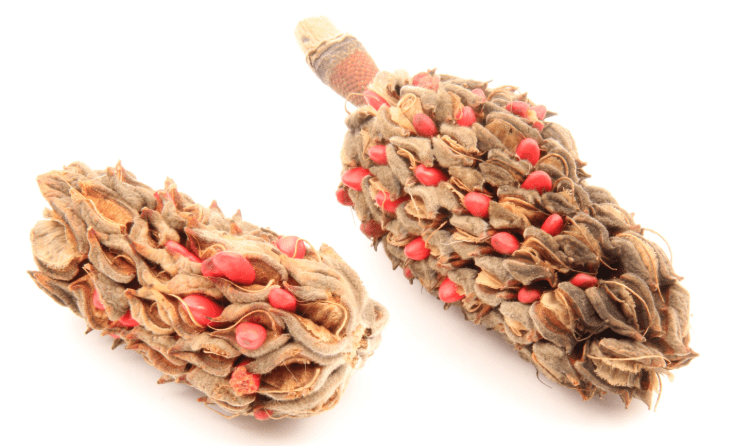
Unlike traditional fruit seeds, magnolia seeds develop inside large, cone-like structures called follicles. In early to mid-autumn (September through November), these green cones will dry out, turn brown, and crack open.
When the pods open, they reveal bright red or orange berries dangling by slender, silky threads. These are your seeds. Harvest them immediately. If you wait too long, birds and squirrels will eat them, or they will drop to the ground and dry out. Expert tip: Magnolia seeds lose their viability if they dry out completely. You must process them while they are still fresh.
2. Cleaning the Seeds (Removing the Aril)
The bright red, fleshy coating on the outside of the seed is called the aril. You must remove this coating before planting. The aril contains chemical inhibitors that naturally prevent the seed from germinating.
- Place the fresh red seeds in a bowl of warm water. Let them soak for 1 to 2 days to soften the fleshy coat.
- Add a drop of mild dish soap to the water to help break down the oily residue.
- Use your fingers or a piece of wire mesh to rub the red coating off.
- Once the hard, black inner seed is exposed, rinse it thoroughly in clean water.
3. Cold Stratification: Faking the Winter
In nature, a magnolia seed drops to the forest floor in autumn, gets buried under wet leaves, and endures a cold winter before sprouting in the spring. You must replicate this process in your refrigerator, a method known as cold stratification.
4. Planting the Magnolia Seeds
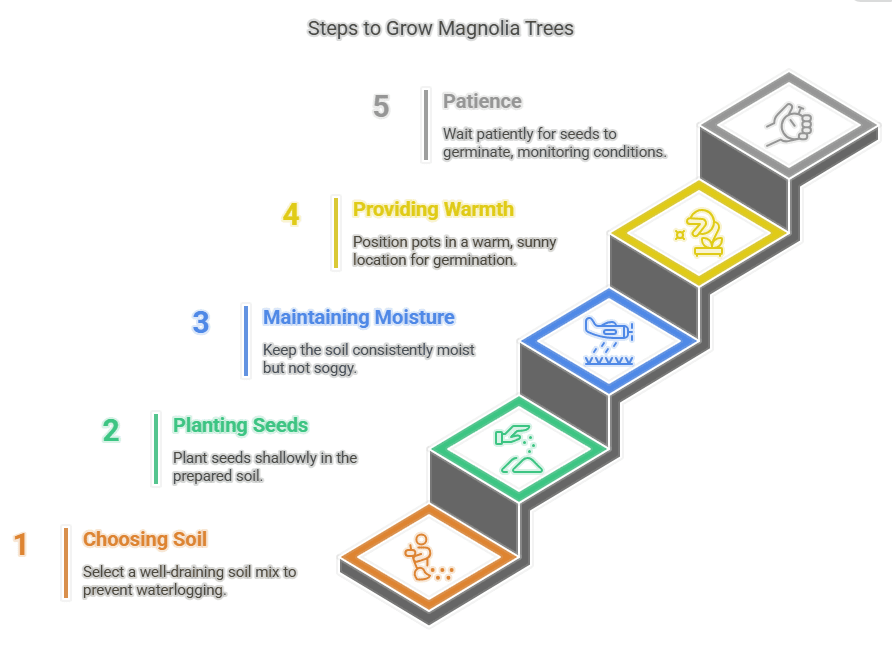
After 90 days of cold storage (usually arriving in early spring), remove the seeds from the fridge. Plant them immediately in small pots filled with a high-quality, well-draining seed-starting mix.
- Plant the seeds about 1/2 inch deep.
- Keep the soil consistently moist, but never waterlogged.
- Place the pots in a warm, brightly lit area, away from direct, scorching afternoon sun.
- Be patient. Germination can take anywhere from 3 to 6 weeks.
5. Caring for Magnolia Seedlings
Once your magnolia seeds sprout, protect them from harsh winds and direct sunlight for their first full year. When the seedlings are about 6 to 8 inches tall and have developed a strong set of true leaves, you can transplant them into larger individual pots.
Because young magnolias have delicate, fleshy root systems, be extremely gentle when transplanting. Keep the seedlings in a sheltered outdoor location during their first winter, moving them into their permanent landscape location the following spring.
While waiting a decade for a seed-grown magnolia to bloom requires immense patience, the satisfaction of raising such a majestic tree from a single pod is an unmatched gardening achievement.