



















Last summer, my electric bill hit $387 for one month. I walked out to the pool equipment pad, and the reason was obvious: the old mechanical pool pump timer had failed completely. The pump ran 24/7, circulating water even when the pool was crystal clear. Friends always ask me, “Does a pool pump run all the time?” and the answer is an absolute NO. Running it nonstop wastes hundreds of dollars and dramatically shortens the motor’s life.
Instead of paying a pool guy $200 just to show up and swap the timer, I decided to fix it myself. I researched the exact run time my pool actually needed, ripped out the broken box, and installed a brand-new heavy-duty pool digital timer (a weatherproof outdoor timer for the pool pump). The difference was immediate: my next bill dropped by more than 50%.
I am sharing my complete DIY blueprint here so you can calculate your own run time, install a new timer safely, and program it correctly—all in one weekend.
Does a Pool Pump Run All the Time? The Real Answer
No. A pool pump only needs to run long enough to turn over the entire volume of water once per day (sometimes twice in very hot climates or with heavy use). This is called the turnover rate. Running it 24/7 is wasteful, noisy, and hard on the motor. Most residential pools need only 8–12 hours of circulation per day. Anything more is throwing money away on electricity and wear.
Simple Pool Pump Run Time Calculator
You do not need fancy apps. Here is the exact pool pump run time calculator math I use:
Pool gallons ÷ Pump GPH (gallons per hour) = hours needed for one full turnover
Example from my pool:
- 18,000 gallons
- Pump rated at 60 GPM (60 gallons per minute × 60 minutes = 3,600 GPH)
- 18,000 ÷ 3,600 = 5 hours for one turnover
I run my pump 10 hours per day (two turnovers) because we swim almost every day in summer. That is the sweet spot for clarity without wasting power. Adjust based on your pool size, the pump rating (check the motor label), and local conditions. In cooler months, I drop to 6–8 hours.
When Is the Best Time to Run a Pool Pump?
When is the best time to run a pool pump? The answer is during daylight hours, ideally midday when the sun is strongest. Sunlight is the number one natural algae killer, so circulating water while the sun is out keeps algae from taking hold.
For electricity savings, I also consider my utility’s off-peak rates. I program the timer to run from 10 a.m. to 8 p.m. during peak summer—that captures the sun benefit while still hitting the cheapest electricity hours in my area. Avoid running the pump only at night; stagnant water overnight lets debris settle and algae start growing during the day.
Why I Upgraded from a Mechanical to a Pool Digital Timer
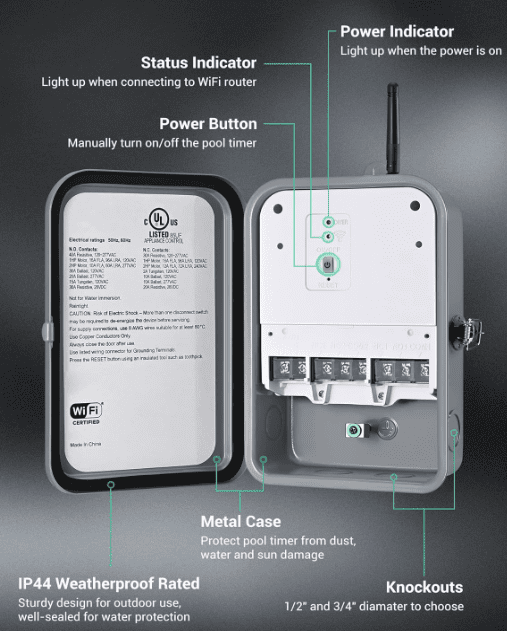
My old mechanical timer used little metal trippers that eventually corroded and stuck. It was loud, imprecise, and had no backup battery. A modern pool digital timer (or Wi-Fi outdoor timer for pool pump) is far superior:
- Precise to the minute.
- Battery backup to prevent power outages from resetting the schedule.
- Weatherproof (rated for outdoor use).
- Many models are Wi-Fi enabled, so you can control them from your phone.
I chose a heavy-duty 40-amp digital model rated specifically for pool pumps. It handles the high amperage of my 1.5 HP pump with zero issues.
Step-by-Step: How to Install a Pool Pump Timer
Safety first: Turn off the breaker that powers the pump. Use a non-contact voltage tester to confirm the power is dead before touching any wires.
Tools you need: Non-contact voltage tester, screwdriver set, wire strippers, and a drill (if mounting a new box).
- Remove the old timer box: Unscrew the cover, take a photo of the wiring for reference, then disconnect the wires from the old timer. Label them if they are not already marked (usually Line, Load, Ground).
- Mount the new timer box: Most digital timers come with their own weatherproof enclosure. I mounted mine on the same post as the old one using the existing holes or new lag screws.
- Wire it correctly: Connect the incoming power wires (Line) to the timer’s Line terminals. Connect the wires going to the pump (Load) to the Load terminals. The ground wire goes to the ground bar. Double-check every connection.
- Seal all conduits: Use outdoor-rated silicone or duct seal putty where wires enter the box so moisture cannot get inside.
- Restore power and test: Flip the breaker back on. The timer should power up. Do not start the pump yet.

How to Set Timer on Pool Pump
Setting an old mechanical timer was frustrating—you had to push little metal trippers on and off and hope they stayed put. Digital timers are dramatically easier. Here is how to set timer on pool pump if you upgraded to a digital model:
- Press the “Program” button.
- Choose the days (every day, weekdays only, etc.).
- Set the ON time (I use 10:00 a.m.).
- Set the OFF time (I use 8:00 p.m.).
- Save and exit.
Most models let you create multiple programs if you want different schedules for weekdays vs. weekends. Wi-Fi versions let me adjust everything from my phone while I’m at work. I set mine once and have not touched it since.
Final Tips from Real DIY Experience
- Always oversize the timer’s amperage rating (40 A is safe for most 1–2 HP pumps).
- Mount the timer in a shaded spot to extend the life of the electronics.
- Check the timer every spring and fall to make sure the schedule still matches your pool use.
- If you have a variable-speed pump, many new digital timers can control the speed as well as the on/off times.
Replacing my broken pool timer took less than two hours and paid for itself in the very next electric bill. The pump now runs exactly the hours it needs, the motor stays cooler, and I am no longer wasting money or risking equipment damage.
Want More Pro Home & Pool Maintenance Hacks? 🏡
Fixing my pool equipment myself saved me hundreds of dollars in contractor fees and electricity bills. If you want more step-by-step DIY guides, money-saving repairs, and honest tool reviews from my own backyard renovations, head over to our homepage and join our free email newsletter!
You’ll get the smartest tutorials directly to your inbox—completely spam-free. Let’s build a better home together!