











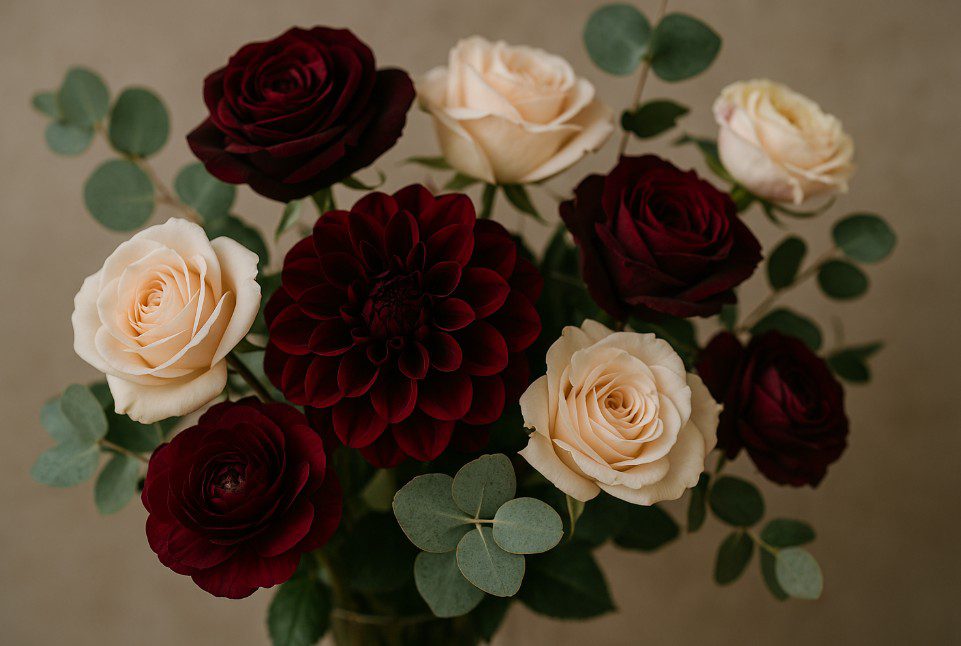
Burgundy flowers are like the floral version of a good red wine: deep, romantic, and a little bit dramatic. Whether you are planting a moody border in your garden, styling burgundy wedding flowers, or searching for burgundy and blush fake flowers for home decor, this color family can completely change the mood of a space.
Let’s explore:
-
What flowers are burgundy
-
The difference between burgundy and maroon flowers
-
What color flowers go with burgundy and with burgundy dresses
-
Real vs burgundy artificial flowers
-
How to dye sola flowers burgundy
-
Design ideas for your garden and arrangements
What Exactly Is Burgundy in Flowers?
Table of Contents
ToggleBurgundy sits between red and purple, with a hint of brown. Think wine, oxblood, merlot. It is darker and richer than classic red and usually deeper than most maroon flowers.
In floristry, people often use terms like:
-
Burgundy flowers
-
Maroon flowers
-
Wine-colored blooms
-
Dark colored flowers
The primary goal remains the same: to create depth, drama, and contrast.
Popular burgundy flowers that gardeners and florists love include:
-
Burgundy roses (including many “black” or “velvet” rose varieties)
-
Dahlias in wine, merlot, or “black” shades
-
Calla lilies in deep plum or burgundy tones
-
Ranunculus in wine and garnet shades
-
Chrysanthemums and asters in dark red
-
Tulips in near-black burgundy varieties
-
Hellebores in dusky plum-burgundy tones
What Flowers Are Burgundy?
If you have asked yourself, “What flowers are burgundy?”, here are some reliable choices for gardens, bouquets, and arrangements.
Burgundy Roses and Burgundy Rose Varieties
Burgundy roses are the classic choice for romantic arrangements and wedding work.
-
Ideal for burgundy wedding flowers, anniversaries, and dramatic bouquets
-
Many varieties are sold as “black,” “velvet” or “claret,” but in natural light they read as a deep burgundy rose
-
Pair beautifully with cream, blush, dusty pink, and eucalyptus foliage
Grow them in full sun with rich, well-drained soil and regular fertilization for optimal color and bloom production.
Dahlias in Wine and Maroon Tones
Dahlias are stars among dark colored flowers.
-
Dinner-plate dahlias in burgundy look incredible in late-summer borders
-
Ball and pompon dahlias add structure and texture to bouquets and burgundy wedding flowers
-
Colors range from maroon flowers to almost-black burgundy, often with velvety petals
They love full sun and fertile, well-drained soil. In cold climates, you may need to lift and store the tubers for winter.
Calla Lilies and Ranunculus
For a more refined look:
-
Calla lilies offer sleek, sculptural blooms in burgundy and deep plum
-
Ranunculus provide layered, ruffled petals in shades from blush to burgundy
Both are excellent cut flowers and combine beautifully with soft neutral tones in arrangements.
Tulips, Hellebores, and Other Early Burgundy Blooms
To bring rich color earlier in the year, try:
-
Burgundy tulips for elegant spring beds and containers
-
Hellebores with deep wine or maroon flowers in late winter and early spring
-
Anemones in jewel-toned burgundy and garnet shades
These early bloomers are perfect for moody spring bouquets and seasonal garden displays.
Garden Filler: Cosmos, Scabiosa, and More
Not every burgundy flower has to be a big statement bloom. Some quieter but very useful options include:
-
Cosmos in dark-red or wine tones
-
Scabiosa in plum and burgundy shades
-
Sweet William (Dianthus) in maroon and deep red
-
Chrysanthemums and zinnias in wine tones for late-season color
These all make excellent fillers in beds, borders, and cut-flower arrangements.
What Color Flowers Go With Burgundy?
One of the most common questions is “What color flowers go with burgundy?”
Because burgundy is so saturated and deep, it looks best with lighter or more muted tones that allow it to stand out. Beautiful combinations include:
-
Blush and dusty pink – soft, romantic, and perfect for weddings
-
Cream, ivory, and white – clean, classic contrast
-
Soft peach and apricot – warm up burgundy for a sunset-inspired palette
-
Mauve and dusty rose – ideal for a vintage or old-world feel
-
Sage and eucalyptus green – cool foliage that softens the richness of burgundy
-
Gold and mustard accents – especially nice for autumn and winter arrangements
What Color Flowers Go With Burgundy Dresses?
If you are styling bouquets or corsages and wondering what color flowers complement burgundy dresses, consider what will stand out against the dark fabric.
Great combinations include:
-
Blush, ivory, and champagne bouquets in front of burgundy dresses for an elegant, timeless look
-
A few burgundy roses or dahlias in the bouquet for cohesion, but let the lighter shades dominate so the flowers do not disappear against the dress
-
For a bolder style, mix dark colored flowers like maroon dahlias with metallic accents (gold, copper) and soft neutrals
The same logic applies to table arrangements paired with burgundy linens or napkins.
Burgundy Wedding Flowers: Ideas and Palettes
Burgundy has become a modern classic for weddings, especially in autumn and winter. Burgundy wedding flowers work well in rustic barn weddings, elegant evening receptions, and boho outdoor celebrations.
Palette 1: Burgundy, Blush, and Ivory
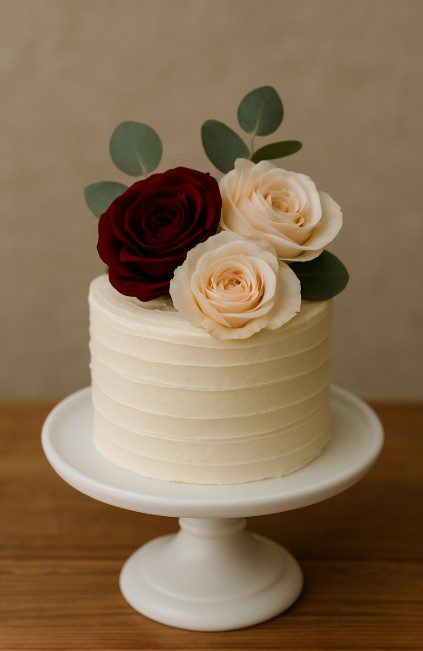
-
Burgundy roses and dahlias
-
Blush garden roses or ranunculus
-
Ivory spray roses or lisianthus
-
Eucalyptus, olive, or ruscus foliage
This palette is soft, romantic, and very versatile.
Palette 2: Burgundy, Mauve, and Dusty Blue
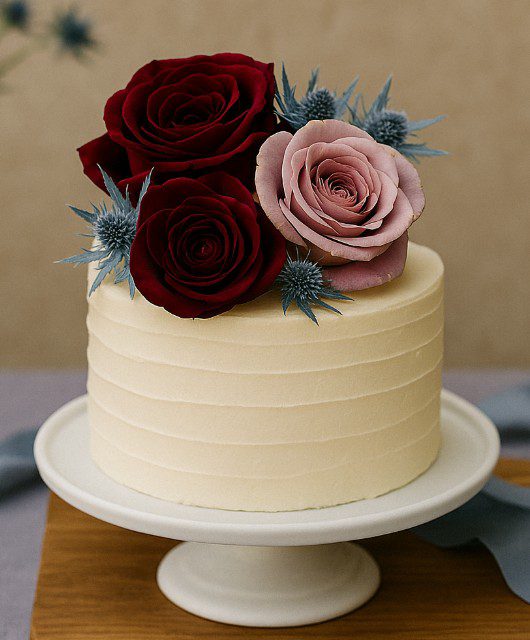
-
Wine-colored dahlias or ranunculus
-
Mauve roses
-
Dusty blue accents like eryngium (sea holly) or delphinium
-
Silvery foliage like dusty miller
A great choice for cooler seasons or vintage-inspired weddings.
Palette 3: Burgundy, Gold, and Green
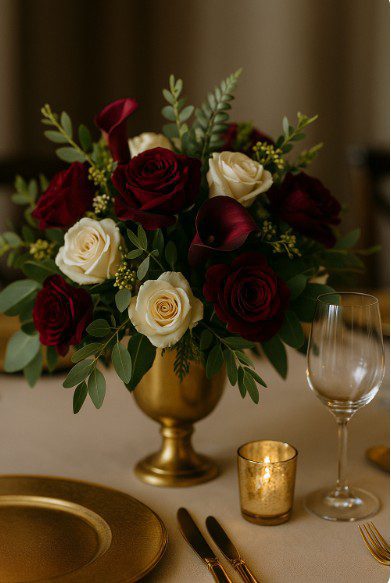
-
Burgundy calla lilies and roses
-
White or ivory accent blooms
-
Gold vases, candleholders, or chargers
-
Lush greenery garlands
Use burgundy flowers for bouquets, boutonnieres, and centerpieces, and incorporate burgundy artificial flowers for installations such as arches, chandeliers, or large backdrops where durability is crucial.
Real vs Faux: Burgundy Flowers Real and Burgundy Artificial Flowers
Not every situation is ideal for fresh flowers. Heat, budget, and logistics can all make faux blooms more practical.
When to Use Burgundy Flowers Real
Choose fresh flowers when:
-
Scent and texture are important, such as bridal bouquets and personal pieces
-
You want natural variation in color and petal shape
-
You are creating seasonal arrangements that match what is blooming in your garden
Excellent burgundy flowers for cutting include:
-
Roses, dahlias, ranunculus, and calla lilies
-
Hellebores, tulips, cosmos, and zinnias
-
Chrysanthemums and asters for late-season cutting
When to Use Burgundy Artificial Flowers
High-quality burgundy artificial flowers have undergone significant improvements.
They are ideal if:
-
You are decorating in strong sun, wind, or very dry indoor conditions
-
You need to set up arrangements several days in advance
-
You want to reuse decor at home after the event
Look for real-touch roses and peonies, velvet-textured artificial dahlias, and high-quality faux greenery. These work especially well in large arrangements and installations.
Burgundy and Blush Fake Flowers
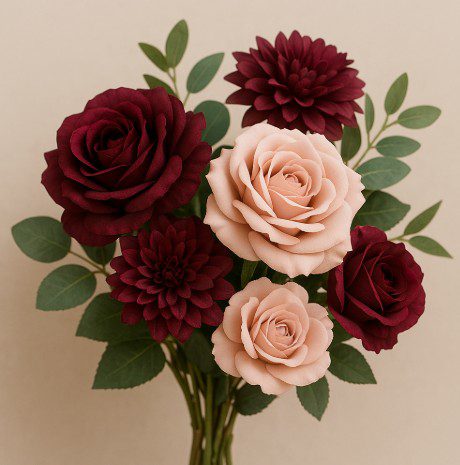
Burgundy and blush fake flowers are popular for:
-
DIY wedding arches and backdrops
-
Bridal party bouquets that can be kept as keepsakes
-
Centerpieces that can be rented or reused
Try mixing faux burgundy flowers with blush and ivory artificial blooms, along with realistic greenery, for a soft, romantic palette. Some people even combine fresh greenery with faux blooms to blend scent with durability.
How to Dye Sola Flowers Burgundy (DIY Guide)
If you enjoy crafting, you may want to search for instructions on how to dye sola flowers burgundy. Sola wood flowers are lightweight, long-lasting, and easy to customize.
Here is a simple DIY method:
1. Choose Your Paint
Use acrylic paint or fabric paint in burgundy, wine or maroon.
You can mix red, a small amount of blue, and a touch of brown to create your perfect shade.
2. Create the Dye Bath
In a disposable container, mix:
-
About 1 part paint
-
2 to 3 parts water
Stir until the mixture is smooth and free of lumps.
3. Dip the Sola Flowers
-
Hold each flower by the stem or base and dip it into the dye bath
-
Swirl gently so all petals are coated
-
Let the excess dye drip back into the container
4. Shape and Dry
-
Gently reshape petals while they are still damp if needed
-
Place flowers on a drying rack or parchment paper
-
Allow them to dry completely (from a few hours to overnight) before arranging
5. Adjust the Shade
-
For deeper burgundy flowers, add more paint or a tiny amount of black and re-dip
-
For softer maroon flowers, dilute the dye bath with more water or add a little white paint
These DIY blooms are perfect for wreaths, bouquets, centerpieces, and long-lasting decor that mimics the look of burgundy artificial flowers with a handmade touch.
Burgundy Flowers in the Garden: Design Tips
You do not need a wedding to enjoy burgundy blooms. In your garden, burgundy and maroon flowers can:
-
Add depth to pastel borders
-
Anchor bright, mixed-color plantings
-
Create moody, romantic focal points
Simple Design Ideas
-
Pair burgundy roses with pale lavender and blush perennials
-
Mix dark colored flowers like burgundy dahlias with lime-green foliage, chartreuse heuchera, or golden grasses for strong contrast
-
In containers, combine burgundy geraniums or coleus with silver foliage and white trailing plants
Very dark blooms can disappear in deep shade, so give your burgundy flowers at least partial sun and plant them near lighter companions so their color really shows.
Quick FAQ About Burgundy Flowers
What flowers are burgundy?
Popular burgundy flowers include roses, dahlias, calla lilies, ranunculus, tulips, hellebores, chrysanthemums, cosmos, zinnias, and some varieties of scabiosa and Sweet William.
What color flowers go with burgundy?
Blush, ivory, cream, dusty pink, mauve, peach, sage green, and dusty blue all pair beautifully with burgundy. Metallic accents in gold or copper also look stunning in arrangements.
What color flowers go with burgundy dresses?
Light bouquets work best with burgundy dresses: think blush, champagne, ivory and a few burgundy roses or dahlias to tie everything together. This keeps the flowers visible against dark fabric.
Are maroon flowers the same as burgundy flowers?
They are not exactly the same, but are very similar. Maroon usually leans more brown-red, while burgundy often has a hint of purple. In practice, both are used together in the same color palette.