










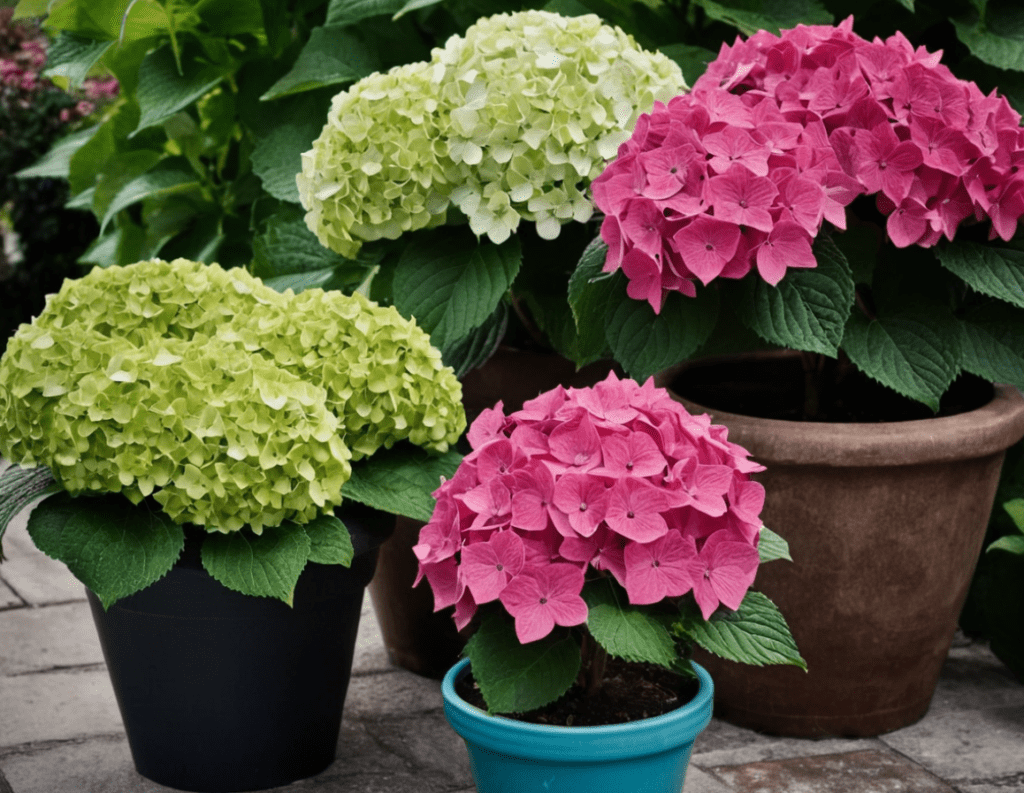
To grow hydrangeas in pots during winter, choose weatherproof containers with good drainage and place them in sheltered spots away from icy winds. Insulate the pots with mulch-like bark or pine needles to protect roots and flower buds from freeze-thaw cycles.
Water sparingly to maintain soil moisture without causing root rot. For added protection, consider moving the pots into an unheated garage or wrapping them with insulating materials. Proper winter care ensures healthy growth and abundant blooms come summer.
Growing Hydrangeas in Pots
As the crisp air of winter approaches, many gardeners wonder how to keep their beloved hydrangeas thriving in pots. Fear not, for with the proper care and attention, your potted hydrangeas can endure the chilly months and burst into abundant blooms come summer.
Let me guide you through the essential steps to ensure your hydrangeas survive and flourish during the winter season.
Container Selection and Placement
Choosing the right container is the first step in safeguarding your hydrangeas against harsh winter conditions. Opt for weatherproof containers like fiberglass, resin, or thick plastic. These materials can withstand the freeze-thaw cycles without cracking. Ensure the container is large enough to accommodate the plant’s root system, promoting healthy growth and preventing root rot.
Placement is crucial. Position your pots in a sheltered spot away from icy winter winds. A location near a wall or fence can offer additional protection from the elements. Remember, the goal is to minimize exposure to extreme temperatures while providing enough sunlight.
General Winter Care for Hydrangeas
Winter presents unique challenges for hydrangeas, whether flourishing in your garden beds or thriving in pots through container gardening. Proper care during this season is essential to ensure they burst into vibrant blooms in the summer.
Know Your Hydrangea Types
Understanding the specific needs of your hydrangea variety is the first step toward effective winter care. Bigleaf hydrangeas, panicle hydrangeas, smooth hydrangeas, and dwarf hydrangeas each have unique characteristics:
- Bigleaf Hydrangeas: Sensitive to cold; their flower buds form on old wood and are susceptible to winter damage.
- Panicle Hydrangeas: More cold-hardy and bloom on new wood.
- Smooth Hydrangeas: Tolerant of colder climates; also bloom on new wood.
- Dwarf Hydrangeas: Compact varieties may require extra protection due to their size.
Optimal Location and Protection
Choosing the right location is crucial. Select a spot sheltered from harsh winds for outdoor plants to minimize exposure to damaging freeze-and-thaw cycles. For potted hydrangeas, move them closer to your home or into a garage to provide additional warmth.
Mulching for Insulation
Apply a thick layer of bark mulch around the base of your hydrangeas. This insulates the roots against temperature fluctuations and retains soil moisture. Mulching is a simple yet effective form of winter protection that benefits both potted and garden plants.
Protecting Flower Buds
The future blooms of bigleaf hydrangeas depend on the survival of their flower buds over winter. To safeguard them:
- Wrap the shrub loosely with burlap to shield against cold winds.
- Consider constructing a frame around the plant and filling it with leaves or straw for added insulation.
Managing Snow Accumulation
While snow can act as a natural insulator, excessive snow accumulation can weigh down branches and cause breakage. Gently brush off heavy snow from your hydrangeas, especially the more delicate dwarf hydrangeas, to prevent damage.
Effective Watering Techniques
Hydration remains essential even in winter. Employ proper watering techniques:
- Water your hydrangeas thoroughly before the ground freezes to ensure they are adequately watered.
- Check the soil moisture periodically for container gardening, as pots can dry out faster.
- Avoid overwatering, which can lead to root issues in cold temperatures.
Additional Winter Protection Tips
- Shield from Freeze-and-Thaw Cycles: Sudden temperature changes can harm your plants. Mulching and proper placement help mitigate these effects.
- Monitor for Pests: Winter can bring pests seeking shelter. Keep an eye out and address any issues promptly.
- Plan for Next Season: Use this time to consider if your hydrangeas need transplanting or spacing adjustments come spring.
By giving your hydrangeas the attention they need during winter, you ensure they remain healthy and ready to produce diminished flowers and small leaves when the warm weather returns. Remember, a little care now leads to a spectacular display later.
- Protection from Snow Accumulation: Gently brush off heavy snow accumulation to prevent diminished flowers and small leaves in the next growth cycle.
Soil and Drainage Requirements
Hydrangeas prefer well-draining soil to avoid waterlogged roots. Use a high-quality potting mix blended with topsoil to provide nutrients and proper drainage. Ensure your container has adequate drainage holes to facilitate excess water escape.
Different hydrangea varieties have varying sunlight requirements:
- Bigleaf and Smooth Hydrangeas: Thrive in partial shade.
- Panicle Hydrangeas: Prefer full sun to partial shade.
- Dwarf Hydrangeas: Adaptable, but check the specific growing zone for optimal sunlight levels.
Transplanting and Spacing Considerations
As your hydrangea grows, it may outgrow its pot. When this happens, consider transplanting it into a larger container. Adequate spacing is vital for air circulation and to prevent diseases.
- Transplanting Tips:
- Gently remove the plant to avoid root damage.
- Please place it in a new pot with fresh potting mix.
- Water thoroughly to settle the soil.
Proper spacing ensures your hydrangea isn’t competing for nutrients, leading to abundant blooms and healthy foliage.
Watering Practices in Winter
Overwatering is a common mistake during winter. While keeping the soil moist is essential, excessive water can lead to root rot.
- Check Soil Moisture: Feel the soil about an inch deep before watering. If it’s dry, it’s time to water.
- Avoid Wet Leaves: Water the plant base to keep leaves dry and prevent fungal issues.
- Monitor Pot Size: Larger pots retain moisture longer than smaller ones. Adjust your watering schedule accordingly.
Winter Protection for Potted Hydrangeas
Protecting your hydrangeas from the cold ensures they enter the dormant phase of rest healthily.
- Insulation: Wrap the pot with burlap or move it into an all-weather, non-decorative container for added insulation.
- Mulch Mound: Create a mound of straw, hay, or shredded pieces of bark over the base to protect the flower buds.
- Sheltered Location: Moving the pot into an unheated garage or a similar sheltered location to shield it from extreme temperatures.
Construct a cage around the plant using chicken wire and fill it with insulating materials like pine needles or shredded leaves for additional protection.
Following these expert tips, your potted hydrangeas will be well-prepared to withstand winter’s chill. Come spring, they’ll reward your efforts with vibrant growth and stunning blooms. Happy gardening!