









There is nothing quite like walking into your own backyard, plucking a sun-warmed, juicy pear right off the branch, and taking a bite. Growing your own fruit is a rewarding experience, but if you choose the wrong tree, that dream can quickly turn into a high-maintenance nightmare.
When it comes to home orchards, the Bartlett pear tree reigns supreme. It is relatively easy to grow, produces massive yields of sweet fruit, and is perfect for both fresh eating and canning. However, many beginners make a catastrophic mistake when buying their first tree.
In this ultimate 2026 guide, we will show you exactly why you need a Bartlett, how to care for it, and step-by-step instructions on how to prune a pear tree for maximum fruit production. But first, let’s talk about the one tree you must avoid at all costs.
The “Bradford Pear” Trap: Why You Should NEVER Plant One
If you go to a local big-box garden center, you might see rows of cheap Bradford pear trees (Pyrus calleryana). They look pretty in the spring with their white flowers, but buying one is a huge mistake.
Here is why landscape architects and arborists despise the Bradford pear:
- The Bradford Pear Tree Smell: This is the number one complaint. When a Bradford pear blooms in the spring, it doesn’t smell like sweet fruit. The blossoms emit a foul odor that has been compared to rotting fish or decaying garbage. You do not want this near your patio or open windows!
- Weak Branches: They grow incredibly fast, but their wood is brittle. The branches grow at narrow “V” angles, meaning a strong summer storm or a heavy winter ice load will easily split the tree right down the middle, causing expensive property damage.
- No Edible Fruit: Despite the name, they do not produce edible pears for humans. They only produce tiny, hard berries that birds eat (and then spread the invasive seeds everywhere).
If you want a beautiful tree that actually feeds your family and smells wonderful, skip the Bradford and plant a Bartlett.
Why the Bartlett Pear Tree is the King of the Backyard
Discovered in the late 1700s, the Bartlett pear tree (known as the Williams pear in Europe) is the most popular pear variety in the United States for a reason.
When you bite into a grocery store pear and it has that quintessential, sweet, buttery pear flavor—that is a Bartlett. They are self-fruitful (meaning you can often get fruit with just one tree, though planting two increases the yield), and they are incredibly adaptable to various soil types.
Pro Planting Tip
For the fastest growth and healthiest root system, buy bare-root Bartlett pear trees in the early spring rather than potted trees. Bare-root trees establish themselves much faster in your native soil.
🔥 Pro Tip for Heavy Harvest: Most gardeners don’t realize that Bartlett pears are only partially self-fertile. To maximize your yield and get larger fruit, make sure you choose the right pollination partners for your Bartlett pear.
How to Prune a Pear Tree (Keep Your Bartlett Healthy)
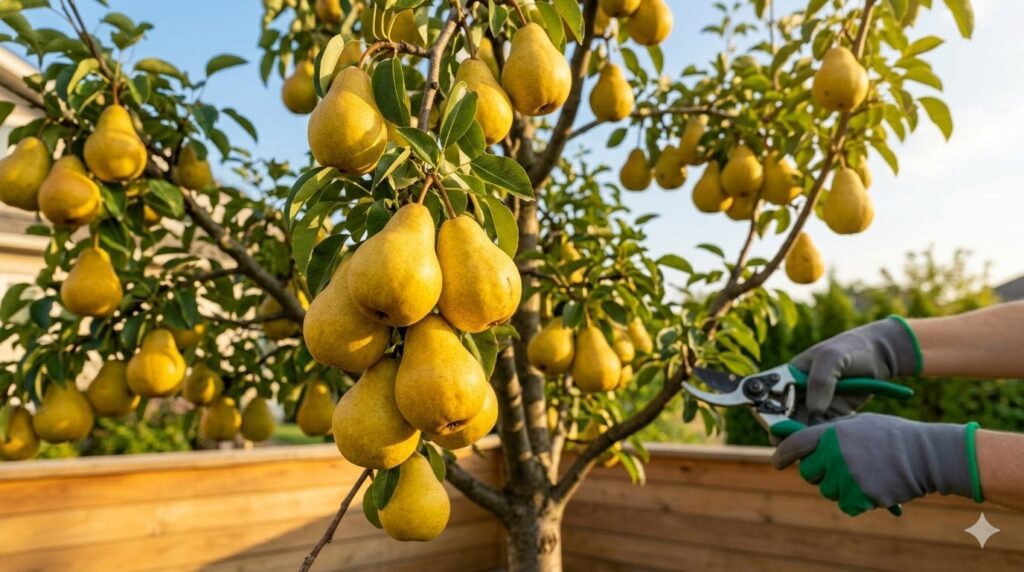
To get those giant, juicy pears, you cannot just plant the tree and walk away. Pruning is the secret to a massive harvest. If you have been wondering how to prune a pear tree, follow these crucial steps.
Step 1: Get the Right Tools
Never prune a fruit tree with dull, rusty tools. A jagged cut invites disease and pests into the wood. You need sharp, high-quality bypass pruners for small branches, and a curved pruning saw for branches thicker than an inch.
Step 2: Timing is Everything
The best time to prune a Bartlett pear tree is during its dormant season—late winter or very early spring (February or March), right before the new buds begin to swell. Pruning while the tree is asleep prevents sap from bleeding and minimizes the risk of Fire Blight infection.
Step 3: The “Three D’s” and Water Sprouts
Always start your pruning session by removing the “Three D’s”:
- Dead branches.
- Damaged branches (broken from storms).
- Diseased branches.
Next, look for “water sprouts.” These are perfectly straight, vigorous branches shooting straight up toward the sky from the main trunk or thick branches. They produce no fruit and only suck energy from the tree. Cut them off completely at their base.
Step 4: Open the Center for Sunlight
Pear trees need a lot of sunlight to ripen their fruit. If the canopy is too dense, the pears in the middle will remain small and green. Prune out branches that are rubbing against each other or crossing through the center of the tree. Your goal is to create a slightly open canopy so sunlight and air can flow freely through the branches.
🎧 Pro Gardening Hack: Make the Time Fly
Pruning a large Bartlett pear tree takes time and focus. Our favorite way to make the afternoon fly by is popping in some earbuds and listening to a good audiobook while we work in the orchard. Whether you want to learn about organic permaculture or just escape into a great fiction novel, it makes yard work incredibly relaxing.
Try Audible Premium Plus and get up to Two Free Audiobooks to listen to in the garden today!
Frequently Asked Questions
Do you need 2 pear trees to get fruit?
It depends on the variety. The Bartlett pear tree is considered partially self-fruitful, meaning one tree will produce some fruit on its own. However, if you plant a second pear tree of a different variety (like a Bosc or Anjou) within 50 feet, cross-pollination will drastically increase the size and quantity of your harvest.
How long does it take for a Bartlett pear tree to bear fruit?
If you purchase a standard 2 to 3-year-old sapling from a nursery, you can expect your Bartlett pear tree to start bearing fruit in about 3 to 5 years after planting. Dwarf varieties may produce fruit slightly sooner, often within 2 to 3 years.
What is the difference between Bartlett and Bradford pear trees?
The difference is enormous. The Bartlett is an agricultural fruit tree bred to produce large, sweet, edible pears for human consumption. The Bradford is an ornamental landscape tree that produces foul-smelling flowers, weak branches that break easily, and tiny, inedible berries.
Disclaimer: Always sterilize your pruning equipment with rubbing alcohol between cuts if you suspect your tree has a bacterial infection like Fire Blight.