



















If you live in a warm, subtropical climate and are desperately searching for a low-maintenance, drought-tolerant shrub that produces brilliant blooms almost year-round, look no further than the Thryallis shrub.
Also known commonly as “Rain of Gold” or Galphimia glauca, this evergreen shrub is a staple in South Florida, Texas, and Southern California landscapes. It is beloved by landscape contractors because it requires almost zero pampering, resists common pests, and deer refuse to eat it.
Here is your complete guide to growing and caring for Thryallis so you can enjoy its golden yellow flowers all year long.
What is a Thryallis Shrub?
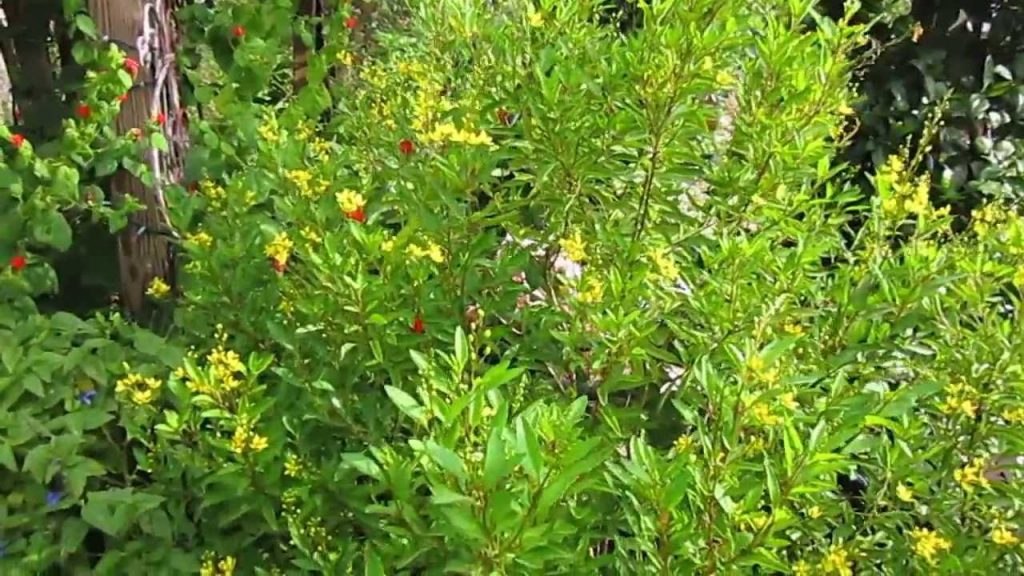
Native to Mexico and Central America, Thryallis is a fast-growing, evergreen shrub that typically reaches a mature height and width of 6 to 9 feet (2 to 3 meters). It naturally forms a dense, oval shape, making it an excellent choice for privacy hedges, foundation plantings, or a vibrant accent piece in a mixed garden bed.
Its most striking feature is the delicate, star-shaped yellow flowers that bloom in clusters at the tips of its brittle, red-tinged stems. In frost-free climates, it will literally bloom 365 days a year.
Ideal Growing Conditions
Sunlight and Soil Requirements
To maximize the golden blooms, you must plant Thryallis in full sun (at least 6 to 8 hours of direct sunlight daily). While it will survive in partial shade, the plant will become “leggy” (stretching for light) and the flower production will drop significantly.
When it comes to soil, drainage is the only strict rule. Thryallis is highly adaptable to poor, sandy, and rocky soils, but it will succumb to root rot if planted in heavy, waterlogged clay.
Care and Maintenance Guide
Watering: The Ultimate Drought-Tolerant Plant
During its first growing season, water your newly planted Thryallis deeply once or twice a week to help it establish a strong root system. However, once established, this shrub is incredibly drought-tolerant. In most subtropical regions, natural rainfall is entirely sufficient. Only supplement with water during extreme, prolonged dry spells.
Fertilizing for Maximum Blooms
While not strictly necessary in moderately fertile soil, you can boost the blooming power of your Thryallis by applying a balanced, slow-release granular fertilizer (like a 10-10-10 formulation) in the early spring.
How and When to Prune Thryallis
Because it grows so densely, Thryallis can be easily sheared into formal, geometric hedges. However, many gardeners prefer to let it maintain its natural, soft oval shape.
The best time to prune is in late winter or early spring, before the heavy growing season begins. Use sharp bypass pruners to cut back any dead or damaged stems, and lightly shape the outer canopy. Because the branches are relatively brittle, avoid planting it right next to high-traffic walkways where it might easily get snapped by passersby.
Pests and Winter Care
One of the greatest joys of growing thryallis is its resilience. It has virtually no major pest or disease problems, and it is highly deer-resistant.
The only threat to this plant is cold weather. It is highly sensitive to frost. If you live in Zone 8b and experience a rare, light freeze, the plant may drop its leaves or die back to the ground. In many cases, if you heavily mulch the root base before the freeze, the roots will survive and the plant will rapidly resprout in the spring.





Comments are closed.