




















When gardeners talk about the Cat’s Claw plant, things can get confusing very quickly. Because common plant names are often shared across completely different species, many people accidentally confuse the incredibly vigorous, flowering garden vine with the famous medicinal herb from the Amazon rainforest.
To set the record straight: The ornamental garden vine is Macfadyena unguis-cati (recently reclassified as Dolichandra unguis-cati), while the medicinal herb is Uncaria tomentosa. In this comprehensive guide, we will cover exactly how to grow and manage the beautiful (yet aggressive) ornamental vine in your landscape, and then dive into the fascinating history and health benefits of the medicinal Amazonian herb.
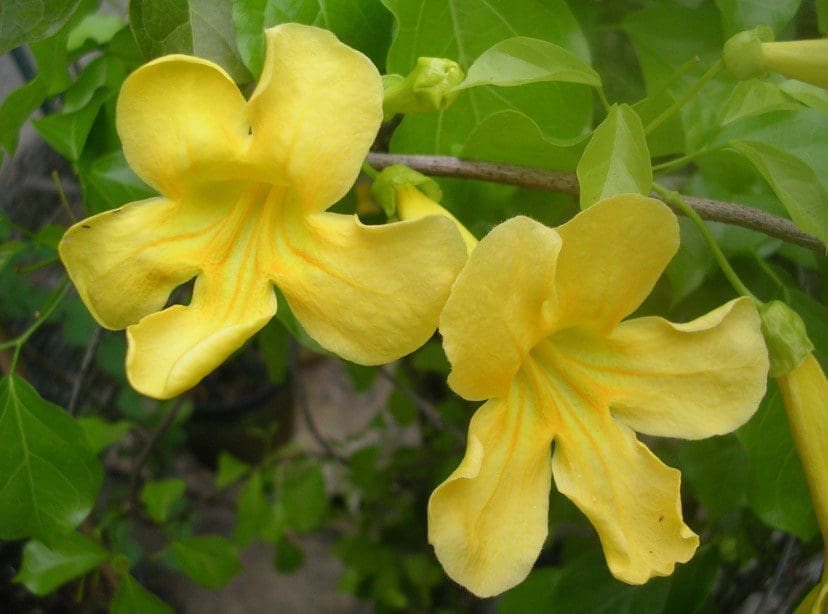
The Ornamental Vine: Dolichandra unguis-cati
The ornamental Cat’s Claw is a prolific, fast-growing evergreen vine that produces masses of bright, vibrant yellow trumpet flowers in the spring. It earns its name from the small, three-pronged, claw-like tendrils it uses to cling to almost any surface—including brick, stucco, wood, and even glass.
How to Grow and Care for Cat’s Claw Vine
Growing a Cat’s Claw vine is incredibly easy. In fact, the problem usually isn’t keeping it alive; the problem is keeping it in check!
- Hardiness Zones: It is winter-hardy in USDA Zones 8 through 12 and remains fully evergreen in Zones 9 and above.
- Light and Soil: The vines prefer full to partial sun. They love moist, well-draining soil, but they are highly adaptable and will do well in virtually any soil condition as long as it isn’t permanently soggy.
- Watering: Once established, the plant basically cares for itself and is highly drought-tolerant, requiring only occasional deep watering during extreme heat.
- Propagation: It grows very well from stem cuttings. Alternatively, you can start it from the seeds found inside its long seed pods, which turn brown and split open in the autumn. Simply press the seeds into a pot of moist growing medium, cover with plastic wrap to trap humidity, and wait 3 weeks to 3 months for germination.
Cat’s Claw vine spreads rapidly both above ground and through underground tubers. It can easily extend 20 to 30 feet in length, smothering trees and destroying native vegetation. In many regions, it is considered a noxious invasive species. The easiest way to prevent it from taking over your yard is to plant it in a restrictive, enclosed spot—such as a large concrete planter or a narrow strip between a brick wall and solid pavement—and prune it aggressively after it blooms.
The Medicinal Herb: Uncaria tomentosa
Now, let’s look at the other Cat’s Claw. Uncaria tomentosa (also known as Uña de Gato) is a thick, woody vine native to the Amazon rainforest. It also gets its name from distinct, hook-shaped thorns, but unlike the garden vine mentioned above, this plant has a profound history in traditional medicine.
Cat’s Claw Vine for Arthritis and Inflammation
In the medicinal system of the Asháninka Indians of Peru, health is considered a state of perfect harmony between the body and spirit. According to ethnobotanist Klaus Keplinger, who extensively studied the Asháninka in the Amazon, preparations of powerful plants (saventaro) are used to restore this harmony.
One of the most revered plants is Uña de Gato. A juice made from the boiled, sliced root bark is used in traditional Peruvian medicine to treat numerous inflammatory illnesses, gastric ulcers, and infections.
Modern science has begun to back up these traditional uses. Cat’s claw has been tested for use in treating knee osteoarthritis. In a multicenter, double-blind study, men randomized to receive 100 mg of freeze-dried cat’s claw daily for 4 weeks experienced significant improvements in pain associated with activity.
Researchers observed a reduction in prostaglandin (PG) production, attributing it to the inhibition of cyclooxygenase-2 (COX-2) expression. The authors noted that this Amazonian botanical might not only treat the arthritic disease process but could also help negate the harsh side effects that traditional NSAIDs have on the stomach and intestines.
While the studies regarding Uncaria tomentosa are promising, you should never attempt to harvest or ingest the ornamental garden vine (Dolichandra unguis-cati) for medical purposes. If you are interested in the anti-inflammatory benefits of Cat’s Claw, always purchase standardized supplements from a reputable source and consult with your physician before adding them to your routine.
Frequently Asked Questions
Is Cat’s Claw vine invasive?
Yes. The ornamental garden vine (Dolichandra unguis-cati) is highly invasive in warm climates. It produces deep underground tubers and aggressive climbing tendrils that can easily choke out native trees and destroy structural masonry if left unpruned.
Are the ornamental and medicinal Cat’s Claw the same plant?
No, they are two completely different species. The ornamental yellow-flowering vine grown in gardens is Dolichandra unguis-cati. The medicinal herb used for arthritis and inflammation is a woody Amazonian vine called Uncaria tomentosa.
How do you propagate the ornamental Cat’s Claw vine?
It propagates very easily from stem cuttings taken in the spring or summer. You can also grow it from the seeds found in its dried seed pods. Surface-sow the seeds in moist potting soil, cover with plastic to retain humidity, and keep them warm until they germinate in 3 to 12 weeks.







Comments are closed.