


















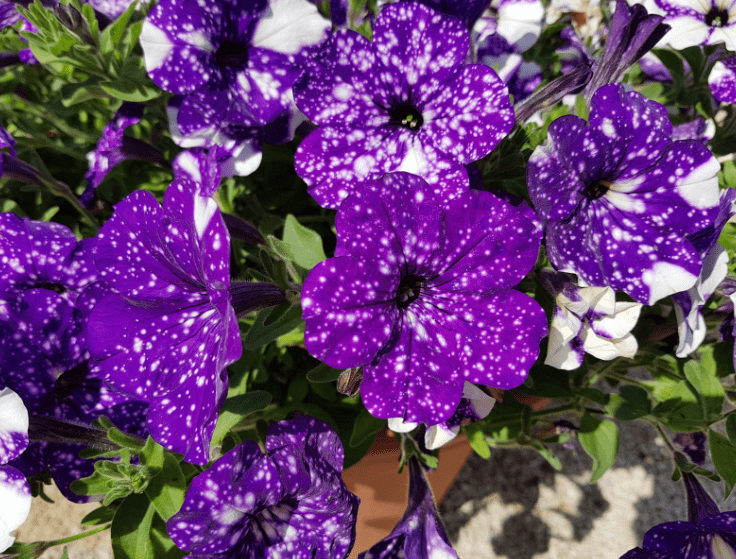
Looking to add a touch of celestial magic to your garden beds or containers? The Night Sky Petunia dazzles with its deep purple blooms, each flecked with unique white “stars”-a living reflection of the night sky. Easy to grow and a magnet for pollinators, this variety is a must-have for gardeners seeking show-stopping color and reliable performance.
But there’s more to growing these cosmic beauties! Here’s a step-by-step guide to ensure your Night Sky Petunias thrive and bloom all season long.
Choosing the Perfect Spot
Night Sky Petunias thrive in full sun, needing at least 6–8 hours of direct sunlight daily. Whether you’re planting in beds or containers, please select a location sheltered from strong winds to protect delicate blooms.
Preparing the Soil
-
Use well-draining, disease-free soil with a pH between 5.5 and 7.0.
-
Enrich the soil with compost or organic matter to boost fertility.
-
For containers, opt for a quality soilless mix to prevent waterlogging.
Planting Tips
-
Plant after the last frost, spacing each petunia 10–12 inches apart for good air circulation.
-
Keep the crown level with the soil surface.
-
Water thoroughly after planting to settle the roots.
Watering and Feeding
-
Keep soil consistently moist but never soggy-Night Sky Petunias dislike sitting in water as it can cause root rot and disease.
-
Water at the base to avoid wetting foliage and blooms.
-
Feed with a balanced fertilizer every 2–4 weeks, or use a slow-release formula at planting.
-
Supplement with iron if leaves appear yellow or growth seems stunted.
Pruning and Deadheading
-
Regularly deadhead spent blooms to encourage continuous flowering.
-
If plants become leggy, trim them back to promote bushier growth and more blooms.
Temperature and Light
-
Ideal temperatures: Nights 52–62°F (11–17°C), Days 58–75°F (14–24°C).
-
High heat can reduce flower size and alter color patterns, while low light leads to weak, stretched stems.
-
Indoors, place containers near a bright, sunny window-less than one foot from a south-facing window is ideal.
Common Problems and Solutions
| Problem | Symptoms | Solution |
|---|---|---|
| Overwatering | Yellowing leaves, wilting | Allow top inch of soil to dry between waterings |
| Underwatering | Drooping, dry soil | Water thoroughly and adjust schedule |
| Fungal Diseases | White powder, leaf spots | Ensure good air flow, avoid overhead watering |
| Temperature Extremes | Wilting, browning edges | Provide shade in heat, cover in cold |
Night Sky Petunia Varieties
-
Night Sky Blue: Deep blue petals with white speckles, compact habit, great for containers.
-
Night Sky Purple: Rich purple blooms, sprawling growth for dramatic beds.
-
Night Sky White: Larger, star-patterned white flowers are ideal as focal points.
Frequently Asked Questions
How tall and wide do Night Sky Petunias grow?
They reach about 16 inches tall and can spread up to 30 inches wide, making them perfect for both containers and garden beds.
Do Night Sky Petunias attract pollinators?
Yes! Their vibrant blooms are a favorite of hummingbirds and butterflies.
Can I grow Night Sky Petunias from seed or cuttings?
Both methods work. Start seeds indoors 8–10 weeks before the last frost, or root healthy 4–6 inch cuttings in a mix of perlite and peat moss.
Why are my Night Sky Petunia flowers losing their spots?
High day and night temperatures can cause the flowers to become more uniformly purple or white. Aim for moderate temperatures for the best color patterns.
Final Thoughts
With their starry blooms and easy-care nature, Night Sky Petunias bring a touch of the universe to any garden. Whether you’re a seasoned green thumb or just starting out, following these tips will help you enjoy a vibrant, healthy display all season long. Explore our other guides for more gardening inspiration and expert advice, or leave your Night Sky Petunia questions in the comments below!
Happy gardening, and may your nights (and days) be filled with blooms!