


















Looking to add a touch of celestial magic to your garden beds or hanging baskets? The Night Sky Petunia (part of the galaxy petunia family) dazzles with its deep, velvety purple blooms, each uniquely flecked with brilliant white “stars”—a living reflection of the cosmos.
While they are relatively easy to grow and act as a massive magnet for hummingbirds and pollinators, getting them to maintain their perfect “starry” pattern requires a bit of horticultural insider knowledge. Here is your complete, step-by-step guide to ensure your Night Sky Petunias thrive and bloom brilliantly all season long.
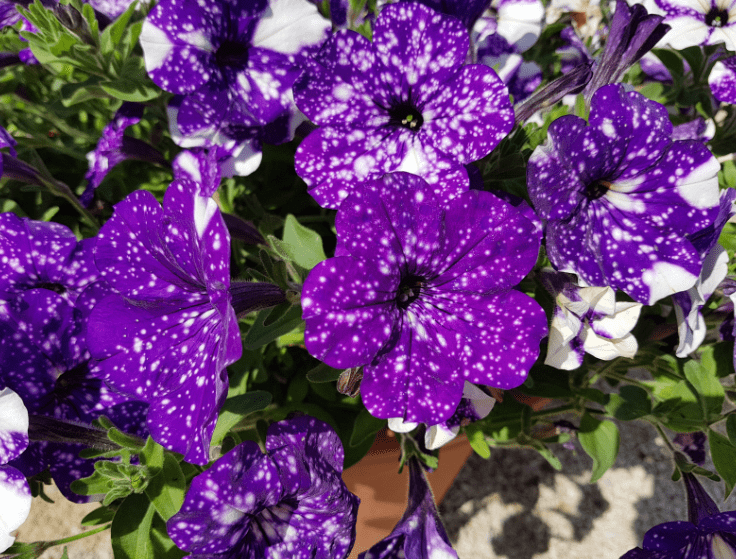
Did you know the white speckles on a Night Sky Petunia are completely controlled by temperature? To get the perfect galaxy pattern, they need warm days (around 75°F) and cool nights (around 55°F). If the weather stays too hot day and night, the flowers will turn completely solid purple. If it stays too cold, they will turn almost completely white! Don’t panic if their pattern changes during a summer heatwave; they will return to normal when the weather cools down.
Choosing the Perfect Spot & Soil
Night Sky Petunias are sun-worshippers. They require full sun—meaning at least 6 to 8 hours of direct sunlight daily—to produce massive, continuous blooms. If planted in too much shade, they will become “leggy” (stretching out with weak stems) and stop flowering.
- Soil: They need well-draining, disease-free soil with a slightly acidic pH between 5.5 and 6.5.
- Containers: If planting in pots or hanging baskets, do not use garden dirt. Opt for a high-quality, lightweight soilless potting mix enriched with perlite to prevent waterlogging.
Watering and Feeding (The Iron Secret)
Petunias are heavy feeders and drinkers, especially when confined to hanging baskets that dry out quickly in the summer breeze.
- Watering: Keep the soil consistently moist but never soggy. Water at the base of the plant; overhead watering can damage the delicate trumpet-shaped blooms and invite fungal diseases.
- Fertilizing: Feed them with a balanced liquid fertilizer every 2 weeks.
- The Iron Secret: Petunias are highly susceptible to iron deficiency. If you notice the leaves turning pale yellow while the veins remain dark green, they need an immediate dose of chelated iron.
Pruning and Deadheading
To keep the celestial show going until the first frost, you must deadhead regularly. This means pinching off the old, wilted flowers right at the stem. If you don’t remove them, the plant will waste energy producing seeds instead of creating new flowers.
Note: Don’t be alarmed if the stems and leaves feel slightly sticky to the touch. This is a perfectly normal trait of all petunia varieties and acts as a natural defense against some tiny pests.
Common Problems and Solutions
Watch out for these common issues to keep your cosmic blooms looking their best:
| Problem | Symptoms | Expert Solution |
|---|---|---|
| Overwatering | Yellowing bottom leaves, severely wilting plant despite wet soil. | Allow the top 2 inches of soil to dry completely before watering again. Ensure pots have drainage holes. |
| Underwatering | Crispy edges, drooping stems, bone-dry potting soil. | Water thoroughly until it drains out the bottom. In extreme heat, hanging baskets may need watering twice a day. |
| Fungal Diseases | White powdery spots on leaves, gray mold on dying flowers. | Improve air circulation by spacing plants properly. Avoid overhead watering to keep foliage dry. |
Frequently Asked Questions
How tall and wide do Night Sky Petunias grow?
When properly cared for, they develop a lush, trailing habit. They typically reach about 10 to 16 inches tall and can spread or trail up to 30 inches wide, making them absolutely perfect for hanging baskets or cascading over retaining walls.
Can I grow Night Sky Petunias from seed?
Technically yes, but it is highly discouraged. The unique “Night Sky” pattern is a patented cultivar. Seeds harvested from these plants are often unstable and will likely revert to solid purple or white flowers. It is much better to buy established cuttings or nursery plants.
Why are my Night Sky Petunia flowers losing their spots?
As mentioned in our pro-tip, temperature dictates the pattern! High day and night temperatures (summer heatwaves) will cause the flowers to turn uniformly purple. Conversely, extremely cold temperatures will cause them to bloom mostly white. They will regain their spots when moderate temperatures return.