



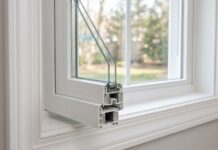














Double-pane windows — sometimes searched for as double glass window panes, dual-pane windows or double-glazed windows — look simple from the room: two pieces of glass instead of one.
The important part is everything between and around those two pieces of glass.

A modern double-pane window typically contains a sealed insulated glass unit, or IGU. Two panes of glass are separated by a spacer, the perimeter is sealed, the cavity contains dry air or an insulating gas such as argon, and many current units include a Low-E coating that controls heat transfer.
That distinction becomes very important when something fails.
If the glass becomes foggy between the panes, you may not need an entirely new window.
If the frame, sash and hardware are still sound, a glass company can often replace the failed sealed IGU while leaving most of the existing window in place.
On the other hand, if the frame is rotten, warped, leaking, drafty, difficult to operate or several parts of the window are failing together, replacing only the glass may simply preserve the wrong part of the window.
The real decision is not “repair or replace the glass?” It is: which part of the window has actually failed?
Complete double-pane window: current national planning ranges are roughly $300–$2,100 per window installed, depending heavily on size, style, frame and glass package.
Glass-only / IGU replacement: professional replacement of a standard double-pane glass unit currently averages roughly $181–$414.
Fog between panes: usually means the sealed IGU has failed. The moisture is inside the sealed cavity and cannot be cleaned from the room side.
Do you need a whole new window? Not necessarily. If the frame and sash are sound, replacing only the IGU can be the smarter repair.
Best shopping metric: compare the NFRC U-factor and SHGC for your climate rather than simply counting panes.
A local window professional can determine whether you need a replacement IGU, sash repair or a complete window replacement.
What Are Double-Pane Windows?
A double-pane window uses two sheets of glass separated by a sealed space.
The glass assembly itself is normally called an insulated glass unit, or IGU.
A typical IGU contains:
- Exterior pane of glass
- Sealed airspace
- Interior pane of glass
- Spacer around the perimeter
- Perimeter sealants
- Desiccant within or near the spacer system
- Air, argon or another insulating gas in many products
- One or more Low-E coatings in energy-efficient models
Technically, the IGU is only the sealed glass assembly.
The complete window also includes the frame, sash, glazing system, weatherstripping, locks, balances or operators and installation around the wall opening.
Why Two Panes Work Better Than One
Glass by itself is not a particularly good insulator.
The improvement comes largely from creating a controlled space between the panes and reducing heat transfer through the glazing assembly.
Modern designs can improve that performance further with:
- Low-E coatings
- Argon or other insulating gas
- Thermally improved spacers
- Better frame materials
- Improved weatherstripping
- Lower air leakage
That is why simply asking whether a window is “double pane” does not tell you enough about its energy performance.
Two different double-pane windows can have very different NFRC ratings.
Double-Pane Window Cost in 2026
Current national cost sources give different averages because they measure different project scopes.
Angi currently places most double-pane window installations around $300–$2,100 per window, with an average near $1,000.
HomeGuide reports approximately $400–$2,000 installed for many complete double-pane windows.
This Old House’s 2026 homeowner survey produced a lower average of about $529 per window, illustrating why one national “average” should never be treated as your contractor quote.
The Important Cost Difference: Glass vs Whole Window
| Problem / Scope | What Is Replaced | 2026 Planning Cost |
|---|---|---|
| Failed or broken double-pane glass | Sealed IGU | ~$181–$414 standard unit |
| Sash problem | Sash + glass where available | Varies widely by manufacturer |
| Complete window replacement | Glass + sash/frame assembly | ~$300–$2,100+ |
| Whole-house project | Multiple complete windows | ~$6,000–$40,000 for 15–20 in HomeGuide data |
See current Angi window glass replacement data and double-pane window installation data.
Double-pane windows — sometimes searched for as double glass window panes, dual-pane windows or double-glazed windows — look simple from the room: two pieces of glass instead of one.
The important part is everything between and around those two pieces of glass.
A modern double-pane window typically contains a sealed insulated glass unit, or IGU. Two panes of glass are separated by a spacer, the perimeter is sealed, the cavity contains dry air or an insulating gas such as argon, and many current units include a Low-E coating that controls heat transfer.
That distinction becomes very important when something fails.
If the glass becomes foggy between the panes, you may not need an entirely new window.
If the frame, sash and hardware are still sound, a glass company can often replace the failed sealed IGU while leaving most of the existing window in place.
On the other hand, if the frame is rotten, warped, leaking, drafty, difficult to operate or several parts of the window are failing together, replacing only the glass may simply preserve the wrong part of the window.
The real decision is not “repair or replace the glass?” It is: which part of the window has actually failed?
Complete double-pane window: current national planning ranges are roughly $300–$2,100 per window installed, depending heavily on size, style, frame and glass package.
Glass-only / IGU replacement: professional replacement of a standard double-pane glass unit currently averages roughly $181–$414.
Fog between panes: usually means the sealed IGU has failed. The moisture is inside the sealed cavity and cannot be cleaned from the room side.
Do you need a whole new window? Not necessarily. If the frame and sash are sound, replacing only the IGU can be the smarter repair.
Best shopping metric: compare the NFRC U-factor and SHGC for your climate rather than simply counting panes.
A local window professional can determine whether you need a replacement IGU, sash repair or a complete window replacement.
What Are Double-Pane Windows?
A double-pane window uses two sheets of glass separated by a sealed space.
The glass assembly itself is normally called an insulated glass unit, or IGU.
A typical IGU contains:
- Exterior pane of glass
- Sealed airspace
- Interior pane of glass
- Spacer around the perimeter
- Perimeter sealants
- Desiccant within or near the spacer system
- Air, argon or another insulating gas in many products
- One or more Low-E coatings in energy-efficient models
Technically, the IGU is only the sealed glass assembly.
The complete window also includes the frame, sash, glazing system, weatherstripping, locks, balances or operators and installation around the wall opening.
Why Two Panes Work Better Than One
Glass by itself is not a particularly good insulator.
The improvement comes largely from creating a controlled space between the panes and reducing heat transfer through the glazing assembly.
Modern designs can improve that performance further with:
- Low-E coatings
- Argon or other insulating gas
- Thermally improved spacers
- Better frame materials
- Improved weatherstripping
- Lower air leakage
That is why simply asking whether a window is “double pane” does not tell you enough about its energy performance.
Two different double-pane windows can have very different NFRC ratings.
Double-Pane Window Cost in 2026
Current national cost sources give different averages because they measure different project scopes.
Angi currently places most double-pane window installations around $300–$2,100 per window, with an average near $1,000.
HomeGuide reports approximately $400–$2,000 installed for many complete double-pane windows.
This Old House’s 2026 homeowner survey produced a lower average of about $529 per window, illustrating why one national “average” should never be treated as your contractor quote.
The Important Cost Difference: Glass vs Whole Window
| Problem / Scope | What Is Replaced | 2026 Planning Cost |
|---|---|---|
| Failed or broken double-pane glass | Sealed IGU | ~$181–$414 standard unit |
| Sash problem | Sash + glass where available | Varies widely by manufacturer |
| Complete window replacement | Glass + sash/frame assembly | ~$300–$2,100+ |
| Whole-house project | Multiple complete windows | ~$6,000–$40,000 for 15–20 in HomeGuide data |
See current Angi window glass replacement data and double-pane window installation data.
What Determines Double-Pane Window Cost?
Window Style
Operable windows generally cost more than simple fixed windows because they require more hardware, sealing and manufacturing complexity.
| Window Style | 2026 Angi Planning Range |
|---|---|
| Single-hung | $200–$900 |
| Double-hung | $250–$1,100 |
| Sliding | $250–$1,200 |
| Casement | $250–$2,000 |
| Picture | $170–$1,000 |
| Bay | $700–$6,000 |
| Bow | $1,600–$7,000 |
Frame Material
The glass package may be similar while the surrounding frame changes the total substantially.
| Frame | Typical Angi Range |
|---|---|
| Aluminum | $200–$700 |
| Vinyl | $300–$1,500 |
| Composite | $400–$1,500 |
| Wood | $400–$1,800 |
| Fiberglass | $600–$2,500 |
Glass Package
Options that can change cost include:
- Low-E coatings
- Tempered glass
- Laminated glass
- Privacy or frosted glass
- Gas-filled cavities
- Impact-resistant glazing
- Decorative grids
- Custom sizes
Access and Installation
A standard ground-floor insert installation is not comparable with replacing a large second-story picture window, bay window or unit requiring siding and trim reconstruction.
Low-E Glass: More Important Than “Two Panes” Alone
Low-E means low emissivity.
The coating is an extremely thin layer designed to control radiant heat transfer while remaining largely transparent.
Different Low-E coatings are optimized for different climates and solar exposures.
That is why a window chosen for a hot sunny climate may use a different solar-control strategy than one intended for a northern heating climate.
What Does Argon Gas Do?
Many double-pane IGUs contain argon rather than ordinary air between the panes.
Argon is commonly used because it reduces heat transfer through the cavity compared with air in an appropriately designed IGU.
ENERGY STAR data shows argon-filled double-pane windows are common among qualifying high-performance products.
The important point is that argon is part of a complete system.
A poor frame, weak spacer, incorrect installation or failed seal is not fixed simply because the original sales brochure said “argon.”
How to Read the NFRC Label
The NFRC label is one of the best tools for comparing actual window performance.
U-Factor
Measures heat transfer through the complete window.
Lower is better for insulation.
Solar Heat Gain Coefficient — SHGC
Measures how much solar heat passes through the window.
Lower SHGC blocks more solar heat.
That can be especially important in hot climates and on windows receiving strong direct sun.
Visible Transmittance — VT
Measures how much visible light enters through the window.
Higher values generally mean more daylight.
Air Leakage — AL
Measures air passing through joints in the window assembly.
Lower is better.
Condensation Resistance
Indicates the window’s resistance to condensation under standardized conditions.
Higher is better.
Use the NFRC ratings and ENERGY STAR climate guidance rather than assuming that every double-pane window performs equally.
Double Pane vs Single Pane
A single-pane window contains only one layer of glass and lacks the insulating cavity of an IGU.
Moving from old single-pane windows to modern double-pane Low-E glazing can improve:
- Interior glass temperatures in winter
- Heat-loss control
- Solar-heat control when appropriate Low-E glazing is selected
- Comfort near windows
- Condensation resistance
But window replacement should still consider the frame, air leakage and installation rather than glass alone.
Double Pane vs Triple Pane
Triple-pane windows add another glazing layer and another insulating cavity.
That can achieve lower U-factors and better cold-climate performance, but it also adds:
- Cost
- Weight
- More complicated glazing construction
Double pane remains a very practical balance for many homes.
Triple pane becomes more attractive where very low U-factors, severe winters or specific comfort goals justify the premium.
What Determines Double-Pane Window Cost?
Window Style
Operable windows generally cost more than simple fixed windows because they require more hardware, sealing and manufacturing complexity.
| Window Style | 2026 Angi Planning Range |
|---|---|
| Single-hung | $200–$900 |
| Double-hung | $250–$1,100 |
| Sliding | $250–$1,200 |
| Casement | $250–$2,000 |
| Picture | $170–$1,000 |
| Bay | $700–$6,000 |
| Bow | $1,600–$7,000 |
Frame Material
The glass package may be similar while the surrounding frame changes the total substantially.
| Frame | Typical Angi Range |
|---|---|
| Aluminum | $200–$700 |
| Vinyl | $300–$1,500 |
| Composite | $400–$1,500 |
| Wood | $400–$1,800 |
| Fiberglass | $600–$2,500 |
Glass Package
Options that can change cost include:
- Low-E coatings
- Tempered glass
- Laminated glass
- Privacy or frosted glass
- Gas-filled cavities
- Impact-resistant glazing
- Decorative grids
- Custom sizes
Access and Installation
A standard ground-floor insert installation is not comparable with replacing a large second-story picture window, bay window or unit requiring siding and trim reconstruction.
Low-E Glass: More Important Than “Two Panes” Alone
Low-E means low emissivity.
The coating is an extremely thin layer designed to control radiant heat transfer while remaining largely transparent.
Different Low-E coatings are optimized for different climates and solar exposures.
That is why a window chosen for a hot sunny climate may use a different solar-control strategy than one intended for a northern heating climate.
What Does Argon Gas Do?
Many double-pane IGUs contain argon rather than ordinary air between the panes.
Argon is commonly used because it reduces heat transfer through the cavity compared with air in an appropriately designed IGU.
ENERGY STAR data shows argon-filled double-pane windows are common among qualifying high-performance products.
The important point is that argon is part of a complete system.
A poor frame, weak spacer, incorrect installation or failed seal is not fixed simply because the original sales brochure said “argon.”
How to Read the NFRC Label
The NFRC label is one of the best tools for comparing actual window performance.
U-Factor
Measures heat transfer through the complete window.
Lower is better for insulation.
Solar Heat Gain Coefficient — SHGC
Measures how much solar heat passes through the window.
Lower SHGC blocks more solar heat.
That can be especially important in hot climates and on windows receiving strong direct sun.
Visible Transmittance — VT
Measures how much visible light enters through the window.
Higher values generally mean more daylight.
Air Leakage — AL
Measures air passing through joints in the window assembly.
Lower is better.
Condensation Resistance
Indicates the window’s resistance to condensation under standardized conditions.
Higher is better.
Use the NFRC ratings and ENERGY STAR climate guidance rather than assuming that every double-pane window performs equally.
If condensation is forming on the room-side surface of the glass rather than between the panes, indoor humidity is one of the first things worth checking.
The TempPro TP50 displays indoor temperature and relative humidity, making it inexpensive to compare room conditions before assuming the insulated glass seal has failed.
Best for: distinguishing a high-indoor-humidity problem from actual moisture trapped inside a failed IGU.
Important: a humidity monitor does not diagnose a failed window seal by itself. Visible moisture trapped between the panes remains the stronger sign of IGU failure.
Double Pane vs Single Pane
A single-pane window contains only one layer of glass and lacks the insulating cavity of an IGU.
Moving from old single-pane windows to modern double-pane Low-E glazing can improve:
- Interior glass temperatures in winter
- Heat-loss control
- Solar-heat control when appropriate Low-E glazing is selected
- Comfort near windows
- Condensation resistance
But window replacement should still consider the frame, air leakage and installation rather than glass alone.
Double Pane vs Triple Pane
Triple-pane windows add another glazing layer and another insulating cavity.
That can achieve lower U-factors and better cold-climate performance, but it also adds:
- Cost
- Weight
- More complicated glazing construction
Double pane remains a very practical balance for many homes.
Triple pane becomes more attractive where very low U-factors, severe winters or specific comfort goals justify the premium.
What Determines Double-Pane Window Cost?
Window Style
Operable windows generally cost more than simple fixed windows because they require more hardware, sealing and manufacturing complexity.
| Window Style | 2026 Angi Planning Range |
|---|---|
| Single-hung | $200–$900 |
| Double-hung | $250–$1,100 |
| Sliding | $250–$1,200 |
| Casement | $250–$2,000 |
| Picture | $170–$1,000 |
| Bay | $700–$6,000 |
| Bow | $1,600–$7,000 |
Frame Material
The glass package may be similar while the surrounding frame changes the total substantially.
| Frame | Typical Angi Range |
|---|---|
| Aluminum | $200–$700 |
| Vinyl | $300–$1,500 |
| Composite | $400–$1,500 |
| Wood | $400–$1,800 |
| Fiberglass | $600–$2,500 |
Glass Package
Options that can change cost include:
- Low-E coatings
- Tempered glass
- Laminated glass
- Privacy or frosted glass
- Gas-filled cavities
- Impact-resistant glazing
- Decorative grids
- Custom sizes
Access and Installation
A standard ground-floor insert installation is not comparable with replacing a large second-story picture window, bay window or unit requiring siding and trim reconstruction.
Low-E Glass: More Important Than “Two Panes” Alone
Low-E means low emissivity.
The coating is an extremely thin layer designed to control radiant heat transfer while remaining largely transparent.
Different Low-E coatings are optimized for different climates and solar exposures.
That is why a window chosen for a hot sunny climate may use a different solar-control strategy than one intended for a northern heating climate.
What Does Argon Gas Do?
Many double-pane IGUs contain argon rather than ordinary air between the panes.
Argon is commonly used because it reduces heat transfer through the cavity compared with air in an appropriately designed IGU.
ENERGY STAR data shows argon-filled double-pane windows are common among qualifying high-performance products.
The important point is that argon is part of a complete system.
A poor frame, weak spacer, incorrect installation or failed seal is not fixed simply because the original sales brochure said “argon.”
How to Read the NFRC Label
The NFRC label is one of the best tools for comparing actual window performance.
U-Factor
Measures heat transfer through the complete window.
Lower is better for insulation.
Solar Heat Gain Coefficient — SHGC
Measures how much solar heat passes through the window.
Lower SHGC blocks more solar heat.
That can be especially important in hot climates and on windows receiving strong direct sun.
Visible Transmittance — VT
Measures how much visible light enters through the window.
Higher values generally mean more daylight.
Air Leakage — AL
Measures air passing through joints in the window assembly.
Lower is better.
Condensation Resistance
Indicates the window’s resistance to condensation under standardized conditions.
Higher is better.
Use the NFRC ratings and ENERGY STAR climate guidance rather than assuming that every double-pane window performs equally.
Double Pane vs Single Pane
A single-pane window contains only one layer of glass and lacks the insulating cavity of an IGU.
Moving from old single-pane windows to modern double-pane Low-E glazing can improve:
- Interior glass temperatures in winter
- Heat-loss control
- Solar-heat control when appropriate Low-E glazing is selected
- Comfort near windows
- Condensation resistance
But window replacement should still consider the frame, air leakage and installation rather than glass alone.
Double Pane vs Triple Pane
Triple-pane windows add another glazing layer and another insulating cavity.
That can achieve lower U-factors and better cold-climate performance, but it also adds:
- Cost
- Weight
- More complicated glazing construction
Double pane remains a very practical balance for many homes.
Triple pane becomes more attractive where very low U-factors, severe winters or specific comfort goals justify the premium.
Final Verdict: Replace the Failed Part, Not Automatically the Whole Window
Double-pane windows are not simply two sheets of glass.
They are complete insulating systems built from glass, spacers, perimeter seals, insulating cavities, Low-E coatings where specified, frames, weatherstripping and the installation around the opening.
That is why diagnosing the failed component matters before agreeing to a repair.
If moisture is trapped between the panes but the frame and sash are still in good condition, ask about IGU replacement before agreeing to a complete window replacement.
If the frame is rotten, warped or leaking, the sash no longer operates properly, or several components are failing together, replacing only the glass may preserve a window that already needs more substantial work.
And when buying a new window, do not stop at the words “double pane.”
Compare the actual:
- NFRC U-factor
- Solar Heat Gain Coefficient (SHGC)
- Air leakage
- Low-E configuration
- Gas fill where specified
- Frame material
- Glass and seal warranty
- Installation warranty
The best repair replaces what actually failed. The best new window combines appropriate tested performance with good installation rather than relying on pane count or marketing language alone.
Compare local professionals for fogged double-pane glass, failed window seals, broken insulated glass units or complete window replacement.

On a computer? Scan the QR code with your phone to continue.
Double-Pane Windows FAQ
What are double glass window panes?
“Double glass window panes” usually refers to double-pane or double-glazed windows. The window uses two sheets of glass separated by a sealed insulating cavity rather than one exposed pane of glass.
What is an insulated glass unit?
An insulated glass unit, commonly called an IGU, is the sealed glass assembly inside many modern windows. It contains two or more panes of glass separated by spacers and one or more sealed insulating cavities.
How much do double-pane windows cost in 2026?
Current national planning data puts many complete double-pane window installations around $300–$2,100 per window. Size, window style, frame material, glass package, location and installation conditions can move the price substantially.
How much does double-pane window glass replacement cost?
Current Angi project data places professional replacement of a standard double-pane glass unit around $181–$414, although large panes, tempered glass, Low-E specifications, custom shapes and difficult access can cost more.
Can you replace the glass in a double-pane window without replacing the whole window?
Often, yes. If the window frame and sash are still structurally sound, a glazing professional can frequently remove the failed sealed IGU and install a new insulated glass unit while keeping the existing frame.
Can you replace only one pane of a double-pane window?
A conventional double-pane IGU is manufactured as one sealed assembly. When one pane breaks, the normal repair is generally replacement or remanufacture of the complete sealed IGU rather than installing one loose pane while somehow preserving the original sealed cavity.
Why is my double-pane window foggy between the glass?
Fog, haze or moisture trapped between the panes usually indicates failure of the IGU perimeter seal. Humid air has entered what was intended to be a sealed cavity.
Can fog between double-pane windows be cleaned?
Not with ordinary window cleaning. The moisture and deposits are on surfaces inside the sealed glass unit, where you cannot reach them from either side of the window.
Can a fogged double-pane window be repaired?
Yes, but the appropriate repair depends on the goal. Replacing the failed IGU restores the sealed glass assembly. Some companies also offer cosmetic defogging processes, but those do not recreate the original factory IGU or restore lost insulating gas.
Does window defogging restore the original insulation value?
No. Defogging may improve visible clarity, but it does not recreate the original factory perimeter seal, replace escaped insulating gas or return the unit to its original tested thermal performance.
Does condensation on the inside of a window mean the seal failed?
Not necessarily. Condensation on the room-facing glass commonly occurs when humid indoor air reaches a cold glass surface. Moisture trapped between the panes is a much stronger sign of IGU seal failure.
Is condensation on the outside of a double-pane window a problem?
Not necessarily. Exterior condensation can occur on efficient windows because less indoor heat reaches the exterior pane. Morning dew on the outside glass can disappear as temperature and sunlight change.
What is Low-E glass?
Low-E glass has a thin low-emissivity coating designed to control radiant heat transfer while remaining largely transparent. Different Low-E coatings can be optimized for different climates and solar exposures.
What does argon gas do in double-pane windows?
Argon is used between the panes in many insulated glass units because it reduces heat transfer through the cavity compared with ordinary air when used in a properly designed sealed window system.
Does argon gas eventually leak out?
Small amounts of gas can diffuse through glazing seals over a long period, and a failed perimeter seal can allow much greater gas loss. Gas fill is only one part of overall window performance; glass coatings, spacer design, frame construction and installation matter as well.
Are double-pane windows better than single-pane windows?
Modern double-pane windows generally provide better thermal performance and interior comfort than basic single-pane glazing because of the insulating cavity and, in many products, Low-E coatings and gas fill.
Are triple-pane windows better than double-pane windows?
Triple-pane windows can achieve lower U-factors and may be attractive in severe cold climates or high-performance homes. They also cost and weigh more. Double pane remains a practical balance for many U.S. homes.
What U-factor should I look for?
A lower U-factor indicates lower heat transfer through the complete window. The appropriate target depends on climate, so compare current ENERGY STAR requirements and NFRC ratings rather than using one number nationwide.
What is SHGC on a window?
Solar Heat Gain Coefficient measures how much solar heat passes through a window. A lower SHGC blocks more solar heat, which can be especially useful in hot climates or strongly sun-exposed locations.
What does the NFRC label tell you?
An NFRC label provides standardized performance ratings that can include U-factor, Solar Heat Gain Coefficient, Visible Transmittance and Air Leakage. These values allow more meaningful comparison than generic phrases such as “energy-efficient glass.”
Are double-pane windows soundproof?
No ordinary residential double-pane window is truly soundproof. Double glazing can reduce exterior noise compared with basic single glass, but acoustic performance also depends on pane thickness, airspace, laminated glass, frame sealing and installation quality.
How long do double-pane window seals last?
There is no reliable universal lifespan because materials, manufacturing, exposure and installation vary. When shopping, compare the manufacturer’s insulating-glass seal warranty rather than assuming every double-pane window lasts the same number of years.
Should I check the warranty before replacing fogged glass?
Yes. Some window manufacturers provide lengthy warranties against insulating-glass seal failure. Check whether the IGU or sash is covered and whether labor is included before paying for replacement yourself.
How do I know whether to replace the glass or the whole window?
If only the IGU has failed while the frame, sash, weatherstripping and operation remain sound, glass replacement can make sense. Rot, severe warping, water leakage around the frame, poor operation or several simultaneous failures can justify complete window replacement.
Is it worth replacing a fogged double-pane window?
If the fog is caused by failed insulated glass and the rest of the window is sound, replacing the IGU can restore visibility and the sealed glazing system for substantially less than replacing the entire window.
Can I replace double-pane window glass myself?
Some experienced homeowners can replace certain removable IGUs or sashes, but measurements, total glass thickness, safety-glass requirements, Low-E orientation and glazing details must be correct. Large or elevated glass also creates significant handling hazards.
Do double-pane windows need tempered glass?
Not every window requires tempered glass. Safety-glazing requirements depend on location, dimensions and applicable building codes, particularly near doors, floors, tubs, showers and other hazardous locations.
Is there a federal tax credit for replacement windows in 2026?
The federal Section 25C Energy Efficient Home Improvement Credit no longer applies to qualifying windows placed in service after December 31, 2025. State, utility and local incentive programs may still be available.
Do new double-pane windows automatically lower energy bills?
They can reduce heat transfer compared with inefficient older glazing, but actual savings depend on the existing windows, climate, window area, orientation, HVAC use, frame performance, air leakage and installation quality. Avoid treating a generic savings percentage as a guarantee for every house.
What should I ask a window contractor before signing?
Ask whether the failure is in the IGU, sash, frame or installation; whether glass-only replacement is possible; what NFRC U-factor and SHGC are specified; what Low-E and gas-fill package is included; and what product, seal and installation warranties apply.
Join Garden Frontier for practical home improvement, restoration, landscaping, gardening and homeowner advice.
100% free. No spam. Unsubscribe anytime.