

















Meyer lemon tree care is easier than growing many other citrus trees, but Meyer lemons still need the right conditions to stay healthy, flower well, and produce juicy fruit. Give the tree bright sun, steady moisture, fast-draining soil, regular citrus feeding, and protection from hard freezes, and it can become one of the most rewarding fruit trees for a patio, greenhouse, sunroom, or warm-climate garden.
A Meyer lemon is not quite the same as a standard grocery-store lemon. The fruit is usually rounder, thinner-skinned, more aromatic, and less sharply acidic. Many gardeners grow it because the tree stays relatively compact, flowers fragrantly, and works well in large containers.
The biggest problems usually come from the wrong location: too little sun, cold wind, soggy potting mix, poor drainage, skipped feeding, or trying to keep a potted tree indoors without enough light. This guide covers how to grow a Meyer lemon tree in a pot or outdoors, why leaves turn yellow, why lemons stay green, and how to protect the tree through winter.
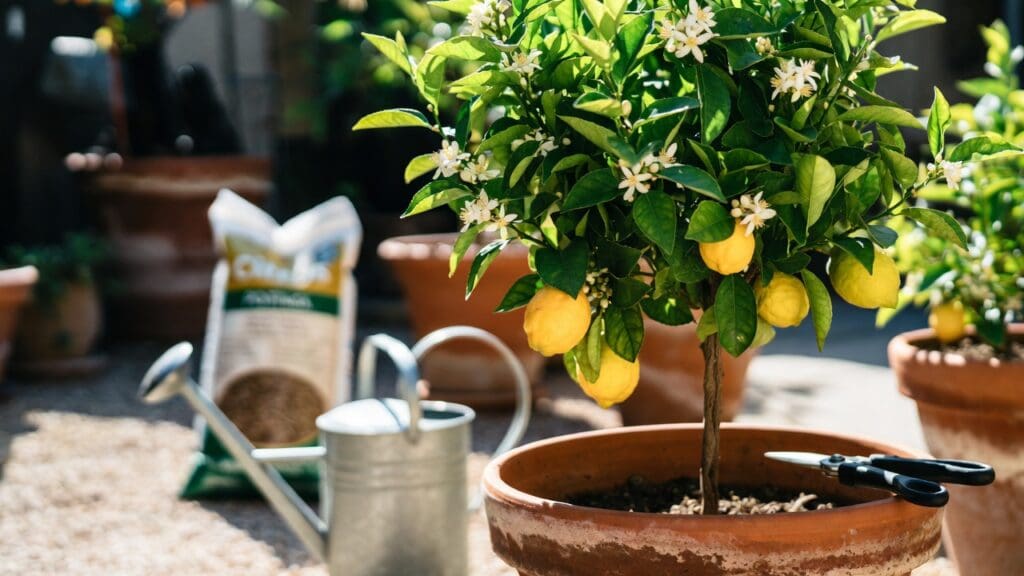
- Light: Give Meyer lemon as much direct sun as possible, ideally 6 or more hours outdoors.
- Soil: Use fast-draining citrus or container mix. Avoid heavy soil that stays soggy.
- Water: Water deeply, then let the top layer of soil dry slightly before watering again.
- Fertilizer: Feed during active growth with citrus fertilizer that includes micronutrients such as iron, magnesium, and manganese.
- Cold protection: Protect from freezing weather. Container trees should move indoors or into shelter before hard cold arrives.
- Pruning: Prune lightly to remove dead, crossing, weak, or crowded branches. Do not over-prune a young fruiting tree.
- Harvest: Pick fruit when it feels heavy, smells fragrant, and tastes juicy. Color alone is not always a perfect ripeness test.
What Is a Meyer Lemon Tree?
A Meyer lemon tree is a compact citrus tree grown for fragrant white blossoms, glossy evergreen leaves, and thin-skinned yellow to orange-yellow fruit. The fruit is usually milder and less acidic than a standard lemon, which makes it popular for lemonade, desserts, sauces, cocktails, preserved lemons, and home cooking.
Most home gardeners should look for Improved Meyer lemon, the common disease-cleaned form sold by reputable nurseries. Avoid growing grocery-store seeds if your goal is dependable fruit, because seed-grown citrus can be unpredictable and may take many years to fruit.
- Botanical name: Citrus × meyeri
- Common names: Meyer lemon, Improved Meyer lemon, dwarf Meyer lemon
- Plant type: Evergreen citrus fruit tree
- Best grown: Outdoors in warm climates or in large containers in colder regions
- Light: Full sun outdoors; brightest possible light indoors
- Soil: Well-drained citrus mix or sandy loam outdoors
- Water: Deep watering with slight drying between waterings
- Fruit: Thin-skinned, fragrant, juicy, yellow to orange-yellow lemons
- Container suitability: Excellent with dwarf or grafted trees
Where to Grow a Meyer Lemon Tree
The best place for a Meyer lemon tree is the warmest, brightest, most sheltered spot you can offer. Outdoors, that usually means full sun with protection from cold wind. In colder climates, it means a large container that can move outside for summer and indoors or into a greenhouse for winter.
Growing Outdoors
In warm citrus climates, Meyer lemon can grow in the ground as a small fruiting tree. Choose a sunny site with excellent drainage and protection from cold wind. Avoid low spots where cold air settles during winter.
Growing in Containers
Container growing is often the best choice if your winters freeze. A pot lets you move the tree to shelter before damaging cold arrives. Use a large container with drainage holes, a fast-draining citrus mix, and a plant caddy if you need to move the tree often.
Growing Indoors
A Meyer lemon can overwinter indoors, but it is not a low-light houseplant. Put it in your sunniest window, rotate the pot occasionally, keep it away from hot dry vents, and consider a grow light if winter light is weak.
How Much Sun Does a Meyer Lemon Tree Need?
Meyer lemon trees need bright light to flower and fruit well. Outdoors, aim for full sun. Indoors, place the tree at the brightest window available and use a grow light if the tree drops leaves or stretches toward the light.
Too little sun can cause weak growth, fewer flowers, poor fruit development, and green fruit that takes longer to mature. If your tree is shaded by a wall, fence, larger tree, or covered patio, move it to a brighter location if possible.
Best Soil for Meyer Lemon Trees
Drainage is more important than richness. Meyer lemon roots need moisture and oxygen at the same time. Heavy, soggy soil can lead to root problems, yellow leaves, and leaf drop.
For Potted Meyer Lemons
Use a citrus potting mix or a fast-draining container blend. The pot must have drainage holes. Do not let the container sit in a saucer full of water after watering.
For In-Ground Meyer Lemons
Plant in well-drained soil. If your garden has heavy clay, plant slightly high, improve drainage, or grow in a large container instead. Avoid burying the root crown too deeply.
How to Plant a Meyer Lemon Tree in a Pot
- Choose the right pot. Start with a container only a few inches wider than the nursery pot, then size up gradually as the tree grows.
- Use drainage. Make sure the pot has drainage holes. Citrus roots dislike standing water.
- Add citrus mix. Use a fast-draining citrus or container mix.
- Set the tree at the same depth. Do not bury the trunk deeper than it was in the nursery pot.
- Backfill gently. Firm the mix lightly around the root ball without compacting it hard.
- Water deeply. Water until excess drains from the bottom.
- Place in bright light. Move the tree to a sunny patio, balcony, greenhouse, or bright indoor window.
- Wait before heavy feeding. Let the tree settle before applying strong fertilizer.
How Often to Water a Meyer Lemon Tree
Watering is where many Meyer lemon problems begin. Citrus trees do not like to dry out completely, but they also hate constantly wet roots.
The better rule is: water deeply, then wait until the top inch or two of potting mix feels dry before watering again. In hot outdoor weather, that may be frequent. Indoors during winter, it may be much less often.
Signs You Are Underwatering
- Leaves curl inward or droop in hot weather.
- Potting mix pulls away from the sides of the container.
- Fruit shrivels or drops during heat.
- The pot feels very light.
Signs You Are Overwatering
- Leaves yellow and drop.
- Soil stays wet for many days.
- The pot smells sour or swampy.
- New growth is weak despite moist soil.
- Roots appear brown, mushy, or unhealthy when checked.
How to Fertilize a Meyer Lemon Tree
Meyer lemon trees are productive citrus plants, so they need regular nutrition during active growth. Use a citrus fertilizer that includes micronutrients, especially for container trees where nutrients wash out through drainage.
Feed mainly in spring and summer when the tree is actively growing. Reduce or stop feeding in winter if the tree is indoors, not growing much, or sitting in cooler conditions.
What to Look for in Citrus Fertilizer
- Nitrogen for leaf growth.
- Potassium for fruit development.
- Iron, magnesium, manganese, and zinc for leaf color and overall health.
- Instructions for container use if your tree is potted.
Do not overfeed. Too much fertilizer can burn roots, push soft growth, and make container problems worse. Follow the label and water normally after feeding unless the product says otherwise.
How to Prune a Meyer Lemon Tree
Prune Meyer lemon trees lightly. The goal is not to force a formal shape, but to keep the tree open, healthy, and easy to manage.
Remove These First
- Dead branches.
- Broken branches.
- Crossing branches that rub.
- Weak inward growth.
- Suckers from below the graft union.
- Branches that make the tree too crowded for light and airflow.
The best time for heavier shaping is usually after harvest or before strong spring growth, depending on your climate. Avoid removing too much healthy growth from a young tree that is still building its canopy.
Meyer Lemon Tree Care Chart
| Care Factor | Best Practice | Common Mistake |
|---|---|---|
| Light | Full sun outdoors, brightest light indoors | Keeping the tree in a dim room |
| Water | Water deeply, then let the top layer dry slightly | Watering on a fixed schedule without checking soil |
| Soil | Fast-draining citrus or container mix | Heavy soil in a pot |
| Fertilizer | Citrus fertilizer during active growth | Overfeeding a stressed tree |
| Pruning | Light shaping and removal of dead/crossing growth | Hard pruning a young fruiting tree |
| Winter | Protect from freezing and cold wind | Leaving a potted tree outside during hard freezes |
Why Are Meyer Lemon Leaves Turning Yellow?
Yellow leaves are one of the most common Meyer lemon tree problems. The cause is not always one thing. It can be cold stress, overwatering, underwatering, nutrient deficiency, poor drainage, root damage, low light, pests, or the tree carrying more fruit than it can comfortably support.
Cold Stress
If leaves yellow, curl, or drop after cold nights, the tree may need more shelter. Move potted trees to a protected spot and cover in-ground trees during cold snaps.
Overwatering
Yellow leaves with wet soil often point to overwatering or poor drainage. Let the potting mix dry slightly before watering again, and make sure water can drain freely.
Nutrient Deficiency
Citrus trees often need micronutrients. Yellowing between green veins can be linked to iron or other nutrient issues, especially in alkaline soil or stressed container trees.
Low Light Indoors
A Meyer lemon moved indoors for winter may drop leaves if the room is too dim, too dry, or too warm near heating vents. Give the tree more light and stable conditions.
Fruit Load Stress
A young tree carrying too much fruit may drop leaves or fruit. Thin some developing lemons if the tree is small and struggling.
Why Do Meyer Lemons Stay Green?
Meyer lemons can stay green for several reasons. The fruit may simply need more time, especially if the tree is not in full sun or the weather has been mild. Citrus fruit does not ripen like apples or peaches after picking. It matures gradually on the tree.
Color alone is not always a perfect ripeness test. Cool weather can help citrus color up, while warm conditions can keep mature fruit greener. A Meyer lemon may be usable before it reaches the deep yellow-orange color you expect.
How to Tell If Meyer Lemons Are Ripe
- The fruit feels heavy for its size.
- The skin has shifted from hard green toward yellow or yellow-orange.
- The fruit has a fragrant citrus smell.
- The fruit releases with a gentle twist.
- The juice tastes balanced, not harshly sour and immature.
Why Is My Meyer Lemon Dropping Fruit?
Some fruit drop is normal. Citrus trees often shed extra tiny fruit when they cannot support the full crop. Young trees, newly repotted trees, drought-stressed trees, and cold-stressed trees are more likely to drop fruit.
Fruit drop can be worse when:
- The tree is too dry.
- The tree is overwatered.
- Temperatures swing suddenly.
- The tree has too little light.
- The tree is newly transplanted or repotted.
- The tree is carrying more fruit than its canopy can support.
For young potted Meyer lemons, it is often better to let the tree build roots and leaves before expecting a heavy crop.
Meyer Lemon Cold Protection
Meyer lemon is more cold tolerant than many lemon types, but it still needs protection from freezing conditions. Container trees are especially vulnerable because their roots are exposed to colder air around the pot.
For Potted Trees
- Move the pot indoors, into a garage, greenhouse, porch, or other protected space before hard freezes.
- Keep the tree in bright light while sheltered.
- Reduce watering indoors, but do not let the root ball become bone dry.
- Keep it away from heating vents and cold drafts.
- Move it back outdoors gradually when weather warms.
For In-Ground Trees
- Plant in the warmest microclimate available.
- Use frost cloth before cold nights.
- Water the soil before a freeze if conditions are dry.
- Mulch the root zone, keeping mulch away from the trunk.
- Delay pruning freeze damage until you can see what is truly dead.
Should You Grow Meyer Lemon in the Ground or in a Pot?
The answer depends on your climate. In warm regions with mild winters, planting in the ground can give the tree more root space and a larger canopy. In colder regions, container growing is safer because you can move the tree.
Choose In-Ground Planting If:
- Your winters are mild enough for citrus.
- You have a sunny, sheltered, well-drained site.
- You can protect the tree during occasional cold snaps.
- You want a larger tree and heavier long-term harvest.
Choose Container Growing If:
- Your winters freeze.
- You rent or may move.
- Your soil drains poorly.
- You want to grow citrus on a patio, balcony, or deck.
- You need to move the tree indoors for winter.
Meyer Lemon Pests and Problems
Meyer lemons can attract common citrus pests, especially when stressed or grown indoors. Inspect leaves, stems, and the undersides of foliage regularly.
Common Pests
- Scale: Small bumps on stems or leaves, often with sticky honeydew.
- Aphids: Soft-bodied insects on new growth.
- Spider mites: Fine webbing, stippled leaves, and dry indoor conditions.
- Mealybugs: White cottony clusters on stems and leaf joints.
- Citrus leafminers: Silvery trails and curled young leaves.
Basic Pest Control
Start with the least aggressive method. Rinse pests off with water, prune heavily infested tips, wipe scale with a cotton swab, and use insecticidal soap or horticultural oil only according to label directions. Avoid spraying a drought-stressed tree or spraying in hot sun.
Common Meyer Lemon Tree Mistakes
- Overwatering indoors: Winter indoor trees use less water than summer outdoor trees.
- Too little light: Citrus needs bright light to stay healthy and fruit well.
- Using a pot with no drainage: Decorative pots can suffocate roots if water cannot escape.
- Over-fertilizing a stressed tree: Fix watering, light, and drainage first.
- Letting fruit overload a young tree: Thin fruit if the tree is small or weak.
- Moving indoors too abruptly: Sudden light and humidity changes can trigger leaf drop.
- Ignoring the graft: Remove suckers from below the graft union.
- Pruning too hard: Meyer lemons need leaves to fuel fruit development.
What About the Lemongrass Section?
The older version of this article included a section about lemongrass. That should be removed from this Meyer lemon article. Lemongrass is a completely different plant with different care, different search intent, and different reader expectations.
If you want to cover it, create a separate article such as How to Grow Lemongrass in Pots or the Garden. Keep any health-related claims conservative and carefully sourced, because home-remedy language can create trust and accuracy problems.
How to Harvest Meyer Lemons
Meyer lemons can take months to mature. Do not rush them just because the fruit has reached full size. Wait until the fruit feels heavy, smells fragrant, and tastes good.
Use pruning snips or twist gently so you do not damage the branch. If the fruit resists strongly, it may need more time. Once harvested, Meyer lemons can be used like regular lemons, but their sweeter, more floral flavor makes them especially good in desserts, lemonade, cocktails, vinaigrettes, marmalade, and preserved lemons.
Best Uses for Meyer Lemons
- Lemonade with a softer, floral flavor.
- Lemon bars, cakes, pies, and curds.
- Salad dressings and marinades.
- Preserved lemons.
- Tea and warm lemon water.
- Fish, chicken, and roasted vegetables.
- Marmalade and citrus syrups.
- Cocktails and mocktails.
Final Verdict: Is a Meyer Lemon Tree Worth Growing?
A Meyer lemon tree is worth growing if you can give it bright light, good drainage, regular citrus nutrition, and winter protection where needed. It is one of the best citrus trees for containers because it stays compact, flowers beautifully, and can produce flavorful fruit even in a patio pot.
The key is avoiding the two classic mistakes: keeping the tree too wet and keeping it too dark. If you solve light and watering, most Meyer lemon care becomes much easier.
Grow it in the ground if your climate is warm enough. Grow it in a container if you need winter mobility. Either way, a healthy Meyer lemon tree can be both ornamental and productive.
Meyer Lemon Tree FAQ
What is special about a Meyer lemon tree?
A Meyer lemon tree produces fragrant flowers and thin-skinned, juicy fruit that is usually sweeter and less acidic than a standard lemon. It also stays compact enough for container growing.
Can Meyer lemon trees grow in pots?
Yes. Meyer lemon is one of the best citrus trees for containers. Use a large pot with drainage holes and a fast-draining citrus potting mix.
How much sun does a Meyer lemon tree need?
Meyer lemon trees need bright light and fruit best in full sun. Indoors, place the tree in the sunniest window and use a grow light if natural light is weak.
How often should I water a Meyer lemon tree?
Water deeply, then wait until the top inch or two of soil feels dry before watering again. Indoor winter trees usually need less water than outdoor summer trees.
Why are my Meyer lemon leaves turning yellow?
Yellow leaves can come from overwatering, underwatering, cold stress, nutrient deficiency, poor drainage, pests, low light, or fruit-load stress. Check watering and drainage first.
Why are my Meyer lemons staying green?
The fruit may need more time, more sunlight, or cooler weather to color. Citrus color is not always a perfect ripeness test, so check weight, fragrance, juiciness, and flavor.
When should I harvest Meyer lemons?
Harvest when the fruit feels heavy, smells fragrant, has softened slightly in color, and tastes juicy. If unsure, pick one fruit and test it before harvesting the rest.
Can a Meyer lemon tree survive winter?
It can survive mild winters outdoors in suitable climates, but it needs protection from freezing weather. Container trees should be moved into shelter before hard freezes.
Should I fertilize a Meyer lemon tree?
Yes, feed during active growth with a citrus fertilizer that includes micronutrients. Avoid overfeeding in winter or when the tree is stressed.
Should I prune my Meyer lemon tree?
Prune lightly to remove dead, damaged, crossing, crowded, or rootstock growth. Avoid heavy pruning on young trees because leaves help feed fruit development.
Is Improved Meyer lemon better?
Improved Meyer lemon is the common nursery form most home growers should choose. It is preferred over unknown seed-grown citrus if you want reliable fruit.
Can I grow Meyer lemon from seed?
You can, but seed-grown citrus may take years to fruit and may not match the parent tree. A grafted nursery tree is better for dependable harvests.
Join Garden Frontier for practical fruit tree care, container gardening, edible landscaping, vegetable gardening, lawn care, outdoor tools, and home improvement tips.
100% free. No spam. Unsubscribe anytime.