












That is why dethatching belongs near the beginning of a serious spring lawn reset. If you are following a spring lawn care schedule, dethatching usually comes before overseeding, fertilizing, or aerating. Otherwise, you can spend good money feeding a layer of dead grass while the living roots underneath keep struggling.
The tricky part is choosing the right machine. A tiny 10-amp dethatcher is fine for a small city lawn. It is not what I would grab for thick, neglected fescue. A wide 15-amp dethatcher with scarifier blades can save hours, but it is heavier, louder, and needs a proper outdoor extension cord. I compare the electric dethatchers I would actually shortlist by yard size, thatch thickness, power, width, cleanup, and value.
Highest Rated Electric Lawn Dethatcher: What to Look For
The highest rated electric lawn dethatcher is usually the model that balances motor strength, working width, depth adjustment, replacement parts, and real lawn cleanup performance. Reviews matter, but match the machine to your lawn size and thatch level.
- Best overall: WEN DT1516 16-Inch 15-Amp 2-in-1 — the strongest all-around choice for most medium and large lawns.
- Best value: Sun Joe AJ805E 15-Inch 13-Amp — a proven dethatcher/scarifier that is easier to handle and usually priced well.
- Best for heavy thatch: TIECTOWN 16-Inch 15.5-Amp — worth comparing if your lawn has thick, stubborn buildup.
- Best for small lawns: Greenworks 14-Inch 10-Amp — light, simple, and easier to store for smaller yards.
- Best budget wide-path pick: Aspiron 16-Inch 15-Amp — a value option for homeowners who want width and power without premium pricing.
Want the fast version before digging into the full reviews? These are the electric dethatchers I would start with, based on lawn size, power, width, thatch level, and value.
WEN DT1516 16-Inch 15-Amp
Best overall: The strongest all-around pick for most medium and large lawns. The 16-inch path, 15-amp motor, and 2-in-1 dethatching/scarifying setup make it the first model I would buy for serious spring lawn cleanup.
Sun Joe AJ805E 15-Inch 13-Amp
Best value: The model I would choose for most small-to-medium lawns if price, handling, and proven homeowner use matter more than maximum power.
TIECTOWN 16-Inch 15.5-Amp
Best for heavy thatch: A wide, high-power option worth buying if your lawn has thick, stubborn buildup and you want more muscle than a smaller 10-amp machine can offer.
Greenworks 14-Inch 10-Amp
Best for small lawns: The easier choice for city lawns, townhomes, smaller yards, and homeowners who want something light, simple, affordable, and easy to store.
Aspiron 16-Inch 15-Amp
Best budget wide-path pick: The value option I would compare if you want a 16-inch path and strong motor specs without paying for the most established model in the category.
If you are comparing electric dethatchers, scarifiers, extension cords, cleanup bags or lawn repair supplies on Amazon, it is worth checking whether a Prime trial or discounted Prime plan is available before checkout.
Good fit for: electric dethatchers, lawn aerators, outdoor extension cords, grass seed, rake-and-bag cleanup supplies, gloves and other spring lawn reset gear.
Disclosure: Garden Frontier may earn a commission or bounty from eligible Amazon sign-ups. Prime terms, eligibility, pricing and benefits can change.
What Actually Matters in an Electric Dethatcher
Electric dethatchers are not complicated machines, but a few specs matter a lot. Buy too small and you will crawl across the lawn, empty a tiny bag every few passes, or stall the motor in thick thatch. Buy too big for a small yard and you may hate moving it around beds, trees, and tight corners.
- Motor power: For serious thatch, 13 amps is a good practical floor. A 15-amp model gives more confidence in thick buildup.
- Working width: A 16-inch machine covers more ground per pass than a 14-inch machine. Small lawns can get by with less.
- 2-in-1 function: A dethatching cylinder removes dead grass. A scarifier cylinder uses blades to cut into the surface and prep for overseeding.
- Depth settings: Look for easy adjustment so you do not scalp the lawn or dig too aggressively.
- Collection bag: Helpful, but do not expect miracles. Dethatching creates a ridiculous amount of debris.
- Extension cord needs: Corded dethatchers need a properly rated outdoor extension cord, usually 12-gauge for longer runs.
- Storage: Folding handles matter if your garage or shed is already packed.
Electric Dethatchers I’d Compare First in 2026
1. WEN DT1516 16-Inch 15-Amp 2-in-1 — Best Overall
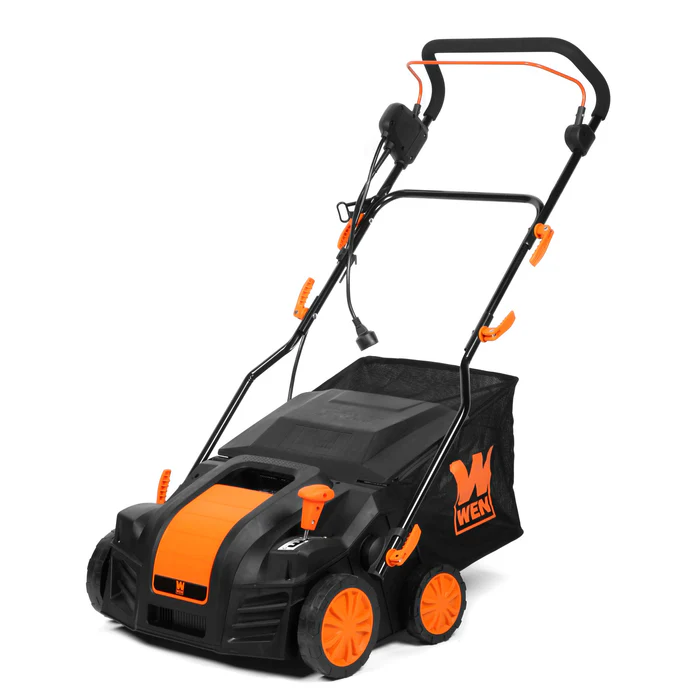
The WEN DT1516 is the best overall electric dethatcher for homeowners who want power, width, and scarifier capability in one machine. WEN lists this model with a 15-amp motor, 16-inch clearing path, 5-position height adjustment from +1/4 inch to -1/2 inch, a 24-tine dethatching head, and a 20-blade scarifying head.
That combination is exactly what I want for medium to larger lawns with real thatch. The wider path saves time, the 15-amp motor gives it more breathing room, and the included scarifier cylinder makes it more useful for overseeding prep than a dethatcher-only tool.
- Best for: Medium lawns, thick thatch, homeowners who want the strongest all-around corded pick.
- Pros: 16-inch path, 15-amp motor, 2-in-1 dethatching/scarifying, 5 depth positions.
- Cons: Larger and heavier than small-yard machines.
2. Sun Joe AJ805E 15-Inch 13-Amp — Best Value

The Sun Joe AJ805E is the safe value pick because it has been one of the most recognizable electric dethatcher/scarifier models for years. Sun Joe lists it as a 15-inch, 13-amp electric scarifier and dethatcher with a 5-position depth control and AirBoost spring steel tines for thatch pickup.
It is not as wide or powerful as the WEN, but it is easier to recommend for the average small-to-medium lawn because it is manageable, proven, and usually priced competitively. If your yard is not a total disaster and you want a reliable corded unit without overbuying, this is the model to compare closely.
- Best for: Small to medium lawns, value shoppers, homeowners who want a known brand.
- Pros: 15-inch path, 13-amp motor, scarifier function, 5 depth positions, easy handling.
- Cons: The bag fills quickly when the lawn has heavy thatch.
Check Sun Joe AJ805E on Amazon
3. TIECTOWN 16-Inch 15.5-Amp — Best for Heavy Thatch

The TIECTOWN 16-inch dethatcher is the heavy-thatch pick to compare if your lawn has not been dethatched in years. The appeal is obvious: wide path, high amp rating, scarifier-style capability, and a larger debris bag than many small units.
The reason it is not my overall number one is brand history. WEN and Sun Joe are easier to evaluate because they have more established product footprints. But if your priority is brute-force value and thick thatch removal, this is a serious contender.
- Best for: Thick thatch, neglected lawns, homeowners who want a wide high-power unit.
- Pros: Strong power-to-width appeal, useful for heavier buildup, fewer passes than 14-inch models.
- Cons: Less established than WEN or Sun Joe, so check current reviews and warranty details before buying.
Check TIECTOWN Dethatcher on Amazon
4. Greenworks 14-Inch 10-Amp — Best for Small Lawns

The Greenworks 14-inch 10-amp dethatcher is the one I would consider for small lawns, city yards, townhomes, and homeowners who want something light and simple. Greenworks 14-inch 10-amp models are commonly listed with a 14-inch dethatching path and 3-position tine depth adjustment.
This is not the machine I would choose for a half-acre of thick thatch. It is the machine I would choose when storage, weight, and price matter more than maximum torque.
- Best for: Small lawns, light seasonal dethatching, tight storage, budget shoppers.
- Pros: Lightweight, easy to store, affordable, simple to use.
- Cons: Smaller motor, narrower path, and less suited for heavy scarifying work.
Check Greenworks Dethatcher on Amazon
5. Aspiron 16-Inch 15-Amp — Best Budget Wide-Path Option
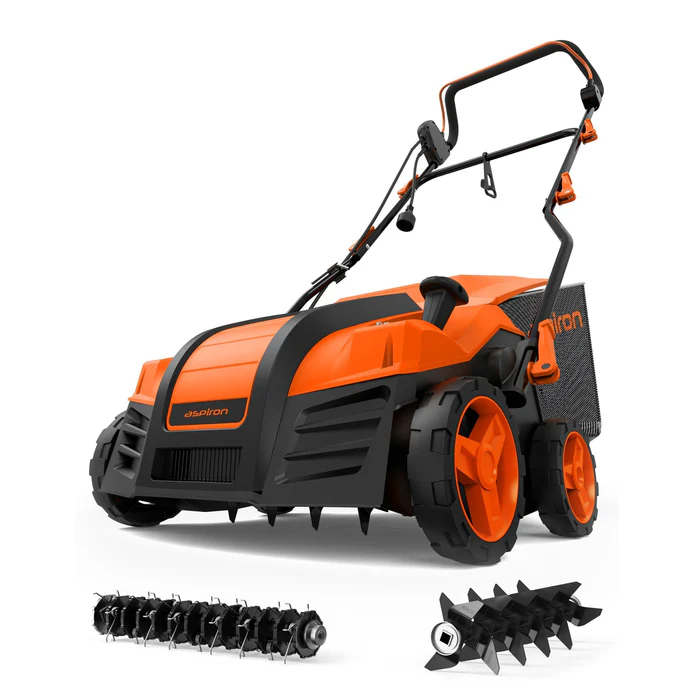
The Aspiron 16-inch 15-amp dethatcher is the budget wide-path pick. It is for the homeowner who wants a 16-inch working width and strong motor specs but does not want to pay for the most established model in the category.
As with any value-focused tool, look carefully at current listing details, warranty support, included cartridges, bag size, and recent reviews. If the price is right, it can make sense for a seasonal dethatching job where you need width and power more than premium build feel.
- Best for: Budget shoppers who still want a wide 16-inch path.
- Pros: Strong price-to-spec appeal, wide coverage, useful for larger DIY jobs.
- Cons: Build feel and long-term support may not match older established brands.
Check Aspiron Dethatcher on Amazon
Electric Dethatcher Comparison Table
| Rank | Model | Width | Motor | Best For | Amazon |
|---|---|---|---|---|---|
| 1 | WEN DT1516 | 16 in. | 15 amp | Best overall performance | Check price |
| 2 | Sun Joe AJ805E | 15 in. | 13 amp | Best value and reliability | Check price |
| 3 | TIECTOWN | 16 in. | 15.5 amp | Heavy or thick thatch | Check price |
| 4 | Greenworks | 14 in. | 10 amp | Small and city lawns | Check price |
| 5 | Aspiron | 16 in. | 15 amp | Budget wide-path option | Check price |
Corded vs Battery Dethatcher: Which Should You Buy?
For heavy dethatching, I still prefer corded electric dethatchers. Dethatching is a continuous torque job. The machine is fighting dead grass, soil contact, roots, and debris the entire time. Corded units give steady power as long as you manage the extension cord safely.
Battery dethatchers can make sense for light maintenance on small lawns, especially if you already own batteries in that brand’s ecosystem. But if your lawn has real thatch, damp buildup, or you plan to scarify before overseeding, corded is usually the safer buy.
Before You Dethatch: Cleanup Supplies Worth Having
A dethatcher pulls up far more debris than most people expect. Even models with collection bags leave some thatch behind, and the bag can fill fast when the lawn is neglected.
- Heavy-duty lawn or garden bags for dead thatch
- A wide lawn rake for debris the bag misses
- Garden gloves for emptying the bag and handling piles
- A small tarp for dragging thatch to the curb or compost area
- Safety glasses if your lawn has sticks, acorns, or loose debris
- A properly rated outdoor extension cord for corded models
When Should You Dethatch?
Dethatch only when the lawn actually needs it. A thin thatch layer is normal. The problem starts when that layer gets thick enough to block water, air, and nutrients.
- Cool-season grasses: Early fall is often ideal; spring can work if the lawn is actively growing and not heat-stressed.
- Warm-season grasses: Late spring to early summer is usually better once the grass is actively growing.
- Avoid: Dethatching during drought, heat stress, winter dormancy, or right before extreme weather.
If you are not sure whether to dethatch or aerate first, dethatching usually comes before aeration when the thatch layer is blocking soil access. After dethatching, read our guide to the best lawn aerators if compaction is also a problem.
How to Use an Electric Dethatcher Without Destroying Your Lawn
- Mow first: Cut the grass lower than usual, but do not scalp it.
- Clear debris: Remove sticks, stones, toys, acorns, and irrigation parts.
- Start shallow: Use a higher setting for the first pass.
- Make one test strip: Check how much living grass vs dead thatch comes up.
- Adjust depth carefully: Go deeper only if the first pass is too light.
- Work in straight passes: Overlap slightly, like mowing.
- Rake leftovers: Bags never catch everything.
- Water and recover: Give the lawn time to bounce back before piling on more stress.
Common Electric Dethatcher Mistakes
- Going too deep on the first pass: This can rip up living turf and leave the lawn looking scalped.
- Dethatching when grass is dormant: The lawn needs active growth to recover.
- Using a weak extension cord: Undersized cords can cause voltage drop and poor performance.
- Expecting the bag to catch everything: Plan to rake after dethatching.
- Dethatching wet grass: Wet thatch is heavier, messier, and harder on the motor.
- Skipping blade/tine inspection: Bent or worn tines reduce performance.
- Overusing the scarifier cylinder: Scarifying is more aggressive than light dethatching.
Final Verdict
The WEN DT1516 is my top electric dethatcher pick for most homeowners who need real power and a wide path. The Sun Joe AJ805E remains the value pick because it balances price, handling, and scarifier function so well. Choose Greenworks for small lawns, compare TIECTOWN for heavy thatch, and consider Aspiron if you want wide-path specs on a tighter budget.
Whatever model you choose, remember this: dethatching is not just about buying a machine. Mow first, start shallow, use the right extension cord, clean up the debris, and time the job when your grass can recover.
Frequently Asked Questions About Electric Dethatchers
What is the best electric dethatcher for most homeowners?
The WEN DT1516 is the best overall pick for most medium to larger lawns because it combines a 16-inch path, 15-amp motor, dethatching tines, scarifier blades, and adjustable depth settings.
Is Sun Joe AJ805E still worth buying?
Yes. The Sun Joe AJ805E remains one of the strongest value picks because it has a 15-inch path, 13-amp motor, scarifier function, and a long track record with homeowners.
Should I buy a corded or cordless dethatcher?
For heavy dethatching, corded is usually better because it provides steady power. Battery dethatchers can work for small lawns and light maintenance, but they may drain quickly or struggle in thick thatch.
How often should I dethatch my lawn?
Dethatch only when the thatch layer is thicker than about half an inch or is clearly blocking water and air. Many lawns do not need dethatching every year.
Should I mow before dethatching?
Yes. Mow before dethatching so the tines can reach the thatch layer more easily. Do not scalp the lawn; just cut it lower than normal for the job.
Is a scarifier the same as a dethatcher?
No. A dethatcher uses tines to pull up thatch. A scarifier uses blades to cut more aggressively into the surface, which can help with overseeding but is harder on the lawn.
What amp electric dethatcher should I buy?
For serious thatch, choose at least 13 amps. A 15-amp model is better for thicker buildup and larger lawns. A 10-amp unit is better suited to small, lightly thatched lawns.
Do electric dethatcher bags work?
They help, but they do not catch everything and they fill quickly. Plan to rake or collect leftover thatch after the machine pass.
Can I dethatch wet grass?
It is better to avoid dethatching wet grass. Wet thatch is heavy, messy, and harder on the motor. Wait until the lawn is dry enough to work cleanly.
What should I do after dethatching?
Rake up loose thatch, water appropriately, and consider aeration, overseeding, or light fertilizing depending on your grass type and season.
What Is the Best Electric Dethatcher and Scarifier?
The best electric dethatcher and scarifier for most lawns is a corded model with enough motor power, adjustable depth settings, and both dethatching tines and scarifying blades. For most homeowners, the best choice is not the cheapest unit, but the one that can remove thatch without staling or tearing the lawn too aggressively.
Join our gardening community for lawn care schedules, mower and dethatcher comparisons, tool guides, and seasonal yard advice.
100% Free. No spam. Unsubscribe anytime.