





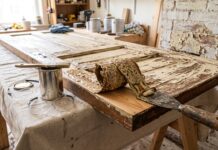

The best wood for bookshelves depends on what you care about most: strength, price, appearance, paint quality, stain quality, shelf sag, weight, or beginner-friendly cutting. A shelf that looks good empty can still bow under hardcovers if the material is too thin, too wide, or poorly supported.
For most DIY bookshelves, our practical pick is 3/4-inch cabinet-grade plywood with edge banding or a 1×2 front nosing. It is stable, strong enough for normal books when the shelf span is reasonable, and easier to keep flat than cheap solid pine. If you want a stained furniture look, upgrade to birch, oak, maple, or walnut plywood instead of using rough construction panels.
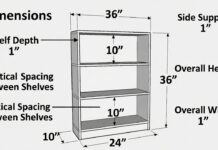
If you are building your first bookcase, start with sensible dimensions before obsessing over the species. A 30- to 32-inch shelf span in 3/4-inch material is much more forgiving than a 48-inch shelf span in thin board. For a full beginner build with dimensions, cut list, tools, and assembly steps, see our how to build a bookshelf plan.

3/4-inch plywood is the best all-around wood for bookshelves because it is stable, strong, widely available, and easier to work with than many solid boards. Use birch or maple plywood for a cleaner painted or stained look, pine for budget painted shelves, poplar for paint-grade trim, and oak or walnut plywood when the bookshelf needs to look like furniture.
3/4-Inch Cabinet-Grade Plywood
Best for: Beginner and intermediate DIY bookshelves where strength, straightness, and predictable cuts matter more than solid-wood bragging rights. Add edge banding or 1×2 trim to hide the plywood edges.
Iron-On Wood Edge Banding
Best for: Covering raw plywood edges on shelves, sides, and top panels. It gives plywood a cleaner furniture look without adding bulky trim.
1×2 Front Nosing or Trim
Best for: Making shelves stiffer and hiding plywood edges. A 1×2 front nosing is one of the simplest ways to reduce sag on bookshelves loaded with real books.
Anti-Tip Furniture Anchors
Best for: Securing tall bookshelves to wall studs after the build. Material choice matters, but wall anchoring is what keeps a tall bookcase from becoming a tip-over hazard.
Best Wood for Bookshelves: Side-by-Side Comparison
The table below is the fastest way to choose material. The main question is not simply “what wood is strongest?” It is whether the material matches the bookshelf style, load, finish, tools, and budget.
| Material | Best Use | Strength | Finish | Watchouts |
|---|---|---|---|---|
| 3/4-inch plywood | Most DIY bookshelves | Very good when span is reasonable | Paint or stain depending on veneer | Raw edges need banding or trim |
| Pine | Budget painted bookshelves | Fair to good | Paints fine; stains unevenly unless conditioned | Soft, dents easily, boards can cup or twist |
| Poplar | Paint-grade shelves and trim | Good for trim and shorter shelves | Excellent for paint | Not the prettiest stained wood |
| MDF | Smooth painted built-ins | Good in short spans, weaker at edges | Very smooth paint surface | Heavy, dusty to cut, vulnerable to moisture |
| Oak plywood | Stained traditional bookshelves | Very good | Strong grain, classic stained look | More expensive; grain is not subtle |
| Birch plywood | Modern plywood bookshelves | Very good | Paints well; can be clear coated | Quality varies a lot by panel grade |
| Maple plywood | Clean modern furniture look | Very good | Smooth, light, refined | Can be pricier and harder to match with trim |
| Walnut plywood | Premium display bookcases | Very good | Rich dark furniture look | Expensive; mistakes cost more |
Our Pick for Most DIY Bookshelves: 3/4-Inch Plywood
For a normal DIY bookshelf, 3/4-inch plywood is the most practical material. It stays flatter than many budget solid boards, handles screws better than thin sheet goods, and makes it easier to cut identical sides and shelves.
The exposed edge is the one drawback. Plywood edges show layers, so they need edge banding, a face frame, or solid front trim. That is not a deal-breaker. In fact, a 1×2 front strip can make shelves look better and help reduce sag.
Use plywood when you want:
- A painted bookshelf with clean lines
- A beginner-friendly build
- A stable material that is less likely to cup than cheap pine
- Wide panels for sides and shelves
- A practical balance of strength and cost
Best Budget Wood: Pine
Pine is cheap, easy to find, and friendly to beginner tools. It is a good choice for a painted bookshelf, a kids’ room bookcase, a garage bookcase, or a casual farmhouse-style project.
The problem is that pine is soft. It dents easily, can stain blotchy, and boards from big-box racks are not always straight. If you use pine, take time at the store. Sight down every board. Reject anything that is twisted, bowed, cupped, cracked, or full of loose knots.
Do not buy pine boards just because the label says they are the right size. Straight boards matter more than pretty end labels. A twisted side panel will make the whole bookshelf fight you during assembly.
Best Paint-Grade Upgrade: Poplar
Poplar is a strong choice for painted bookshelves, especially for trim, face frames, and visible front edges. It machines cleanly, paints better than cheap pine, and gives a more furniture-like finish without jumping to expensive hardwood.
Poplar is not usually the wood I would choose for a stained bookshelf. It can have green, brown, purple, or gray streaks that look uneven under clear finish. Under primer and paint, though, poplar is excellent.
Use poplar when you want:
- Painted face frames
- 1×2 front nosing on shelves
- Cleaner trim than pine
- A smoother painted furniture look
Best for Smooth Painted Built-Ins: MDF
MDF has one major advantage: it paints beautifully. The surface is smooth, flat, and free of grain. That is why it is common in painted built-ins, cabinet parts, and trim-heavy projects.
For freestanding bookshelves loaded with heavy books, MDF needs more caution. It is heavy, creates fine dust when cut, does not like moisture, and screws near edges can be less forgiving. Long MDF shelves can sag if they are not properly supported.
MDF can work well for short painted shelves, built-ins with face frames, or decorative bookcases. For a beginner freestanding bookshelf that will hold hardcovers, plywood is usually the safer pick.
Best Stained Look: Oak, Birch, Maple, or Walnut Plywood
If the bookshelf will be stained or clear-coated, start with better-looking material. Paint-grade plywood and cheap pine can technically be stained, but the result often looks uneven or underwhelming.
Oak plywood gives a traditional grain pattern. Birch plywood gives a cleaner modern look. Maple plywood feels lighter and more refined. Walnut plywood is the premium option when the bookcase is meant to look like a serious furniture piece.
| Look You Want | Best Material | Finish Advice |
|---|---|---|
| Modern light wood | Birch or maple plywood | Clear coat or light stain after testing on scrap. |
| Traditional bookcase | Oak plywood | Stain works well if you like visible grain. |
| Painted built-in | Plywood, MDF, and poplar trim | Prime first, then use durable enamel or trim paint. |
| Premium dark furniture | Walnut plywood | Clear finish often looks better than heavy stain. |
How Thick Should Bookshelf Wood Be?
For real books, 3/4-inch material is the safest starting point. Thin 1/2-inch shelves may look fine for decor, but they are more likely to flex under hardcovers, binders, textbooks, or cookbooks.
Thickness is only part of the story. Span matters just as much. A 3/4-inch shelf that is 30 inches wide is much stronger than the same shelf stretched across 48 inches. If you want a wide bookshelf, add center dividers or vertical supports instead of relying on a long unsupported shelf.
For normal books, use 3/4-inch shelf material and keep unsupported spans around 30 to 32 inches. For wider shelves, add a center divider, 1×2 front nosing, or stronger construction.
How to Stop Bookshelves From Sagging
Sag is the number one reason a bookshelf looks cheap after a few months. The shelf may be too thin, too wide, overloaded, or made from a material that does not handle long spans well.
To reduce shelf sag:
- Use 3/4-inch material: Avoid thin shelves for heavy books.
- Keep spans short: Around 30 inches is a good beginner target.
- Add front nosing: A 1×2 strip on the front edge stiffens the shelf.
- Add a back panel: Fastening shelves to a back panel helps reduce movement.
- Use fixed shelves: Fixed shelves strengthen the case more than loose adjustable shelves.
- Add dividers: Vertical dividers cut long shelf spans into shorter spans.
- Load heavy books low: This also improves bookshelf stability.
Plywood vs Solid Wood for Bookshelves
Solid wood sounds better, but plywood often behaves better. A wide solid board can cup, twist, shrink, expand, or split. Plywood is built in layers, so it tends to stay flatter and more stable across wider panels.
Solid wood still has its place. It is great for trim, face frames, front nosing, and high-end furniture builds. But for beginner bookshelf sides and shelves, plywood is often less frustrating.
| Choice | Best For | Pros | Cons |
|---|---|---|---|
| Plywood | Sides, shelves, tops, bottoms | Stable, flat, efficient sheet layout | Edges need treatment |
| Solid wood | Trim, nosing, face frames, premium shelves | Real wood edges, attractive when finished well | Can warp, cup, or move with humidity |
Best Wood for Painted Bookshelves
For painted bookshelves, use plywood or MDF for flat panels and poplar for trim. Pine can work when the budget is tight, but poplar looks cleaner under paint and dents less easily than soft pine.
Best painted bookshelf combinations:
- Budget painted bookcase: Pine boards, wood filler, primer, and paint.
- Cleaner painted DIY bookshelf: 3/4-inch plywood with poplar front trim.
- Built-in painted shelves: Plywood or MDF boxes with poplar face frames.
- Modern painted plywood bookcase: Birch plywood with clean edge banding.
Best Wood for Stained Bookshelves
For stained bookshelves, avoid low-grade pine unless you specifically like a rustic, uneven look. Better choices are oak plywood, birch plywood, maple plywood, walnut plywood, or solid hardwood trim over a plywood case.
Stain every material on a scrap first. Plywood veneer can react differently from matching solid trim. If you mix oak plywood with solid oak trim, test both pieces before finishing the entire bookshelf.
Best Wood for Built-In Bookshelves
For built-ins, stability and finish matter more than portability. Plywood boxes with poplar face frames are a proven combination. MDF can also work well for painted built-ins, especially when the design includes strong face frames and short shelf spans.
Built-ins usually need filler strips, baseboard integration, wall scribing, and careful anchoring. The wood choice is only one part of the project. The installation details make the built-in look intentional instead of just shoved against the wall.
Best Wood for Floating Bookshelves
Floating bookshelves need more strength than they appear to need. The shelf material, wall bracket, stud connection, and load rating all matter. Do not use weak shelf boards with hidden brackets and then load them with heavy hardcovers.
For floating shelves that hold books, use thick solid wood, high-quality plywood construction, or a torsion-box style shelf with strong wall mounting. Always anchor into studs or a proper structural support system.
Best Wood for Kids’ Bookshelves
Kids’ bookshelves need durable paint, rounded edges, and serious anti-tip hardware. Pine, plywood, and poplar can all work. The finish and safety details matter more than using expensive hardwood.
Keep kids’ bookcases lower when possible. If the bookshelf is tall, anchor it to studs and keep heavy books on the bottom shelves.
Bookshelf Material Mistakes to Avoid
- Using 1/2-inch shelves for heavy books: They may sag faster than expected.
- Building too wide without support: Long shelves need front nosing or dividers.
- Buying twisted pine: Crooked boards make the entire bookcase harder to assemble.
- Skipping edge treatment on plywood: Raw edges look unfinished unless the design is intentionally industrial.
- Staining paint-grade material: Cheap pine and low-grade plywood often stain unevenly.
- Ignoring moisture: MDF is a poor choice for damp basements, garages, or laundry rooms.
- Skipping the back panel: A back panel helps stiffen and square the bookcase.
- Not anchoring tall furniture: A good bookshelf material does not prevent tip-over risk.
Best Wood by Bookshelf Type
| Bookshelf Type | Best Wood Choice | Why |
|---|---|---|
| Beginner freestanding bookshelf | 3/4-inch plywood | Stable, strong, predictable, and easy to trim. |
| Budget bookshelf | Pine | Low cost and easy to find, but choose straight boards. |
| Painted built-in | Plywood or MDF with poplar trim | Smooth paint-grade surfaces and clean face frames. |
| Stained bookcase | Oak, birch, maple, or walnut plywood | Better veneer and more attractive finished grain. |
| Heavy book storage | 3/4-inch plywood with 1×2 front nosing | Good strength and improved sag resistance. |
| Garage or utility bookshelf | Plywood or construction lumber | Strength matters more than a perfect furniture finish. |
How to Choose Wood at the Store
Good material selection starts before cutting. Do not grab the first board or panel from the pile. A few minutes of inspection saves hours of fighting warped parts later.
- Check for straightness: Sight down each board from one end.
- Look for cup: Avoid boards with edges curling upward.
- Reject twist: Twisted side panels are a nightmare for square assembly.
- Inspect knots: Tight knots are manageable; loose knots can fall out or weaken edges.
- Check plywood faces: Look for dents, patch quality, veneer damage, and voids.
- Buy extra trim: A little extra 1×2 or edge banding helps when cuts go wrong.
- Plan transport: Plywood bends and chips if handled badly.
What About Wood Grades?
Plywood grade matters because bookshelf sides and shelves are visible. A better face veneer saves sanding, filling, and frustration. For paint, you can get away with more patching. For stain, you need a cleaner face.
For a painted DIY bookshelf, a smooth sanded plywood or birch plywood is usually enough. For stained shelves, choose a hardwood plywood with a face veneer you actually like before finishing. Do not assume stain will hide defects. It usually highlights them.
Should You Use Shelf Pins?
Shelf pins are useful if you want adjustable shelves, but the shelf material still needs to be strong enough. A removable shelf sitting on pins can sag just like a fixed shelf if the span is too wide.
For a first bookshelf, fixed shelves are simpler and stronger. For a more flexible bookcase, use fixed top, bottom, and middle shelves, then make the remaining shelves adjustable.
Back Panel Material Matters Too
The back panel is easy to overlook because it is thin and hidden. But it helps keep the bookshelf square and reduces racking. For most DIY bookcases, 1/4-inch plywood or hardboard works well.
If the bookshelf will hold heavy books or move around often, a plywood back is better than flimsy cardboard. Fasten it around the perimeter and along shelf lines so it does more than just cover the wall behind the books.
Material Setup for Our Beginner Bookshelf Plan
For the beginner build linked earlier, this is the material setup I would use:
- Sides: 3/4-inch plywood
- Top and bottom: 3/4-inch plywood
- Shelves: 3/4-inch plywood
- Back: 1/4-inch plywood or hardboard
- Front edges: Iron-on edge banding for a modern look or 1×2 trim for extra stiffness
- Finish: Primer and paint for the easiest result
- Safety: Anti-tip anchors fastened to studs
That combination is boring in the best way. It is predictable, strong enough for normal book storage, and easier to build than a fussy hardwood project. Once you are comfortable, upgrade the veneer, trim, or joinery on the next one.
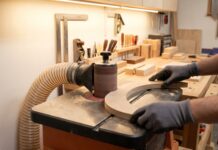
Fine dust is one of the hidden downsides of sanding tools. If you are adding curve-sanding equipment to the shop, see our spindle sander guide for dust collection, sleeve size, and buying advice.
After choosing the wood, use our full bookshelf plan for the dimensions, cut list, tool list, shelf spacing, assembly steps, finishing advice, and wall-anchor safety.
Official Wood and Furniture Safety References
For wood properties, plywood behavior, moisture movement, and furniture material basics, the USDA Forest Products Laboratory’s Wood Handbook is a useful technical reference. For tall furniture safety, see the U.S. Consumer Product Safety Commission’s Anchor It campaign.
Frequently Asked Questions
What is the best wood for bookshelves?
The best all-around wood for bookshelves is 3/4-inch plywood because it is stable, strong, widely available, and beginner-friendly. Use edge banding or solid front trim to hide plywood edges.
Is plywood good for bookshelves?
Yes. Plywood is one of the best materials for DIY bookshelves because it stays flatter than many solid boards and works well for sides, shelves, tops, and bottoms.
Is MDF good for bookshelves?
MDF can work for painted built-ins and short shelf spans, but it is heavy, dusty to cut, vulnerable to moisture, and more prone to edge-screw issues. For heavy books, plywood is usually a better choice.
Is pine strong enough for bookshelves?
Pine can be strong enough for budget bookshelves if the shelf span is short and the boards are straight. It dents easily and can warp, so inspect boards carefully before buying.
What thickness should bookshelf wood be?
Use 3/4-inch material for most bookshelves. Thin 1/2-inch shelves are more likely to sag under heavy books unless the span is very short or well supported.
How wide can a bookshelf shelf be without sagging?
For 3/4-inch material, a 30- to 32-inch span is a good beginner-friendly target. Wider shelves should have a center divider, thicker construction, or 1×2 front nosing.
What wood is best for painted bookshelves?
Plywood with poplar trim is a strong choice for painted bookshelves. MDF also paints smoothly, but plywood is usually better for freestanding shelves that need strength and lighter weight.
What wood is best for stained bookshelves?
Oak plywood, birch plywood, maple plywood, walnut plywood, and matching hardwood trim are better choices for stained bookshelves. Test stain on scrap before finishing the entire project.
Should I use solid wood or plywood for bookshelves?
Plywood is usually better for beginner bookshelf cases because it is more stable in wide panels. Solid wood is excellent for trim, front nosing, face frames, and premium furniture details.
How do I make bookshelf shelves stronger?
Use 3/4-inch material, keep spans short, add 1×2 front nosing, fasten shelves to a back panel, and add vertical dividers for wide shelves.
Can I use particle board for bookshelves?
Particle board can work for very light-duty shelves, but it is not the best choice for heavy books or long spans. It is weaker at screw connections and can fail badly if exposed to moisture.
Is oak good for bookshelves?
Oak is a strong, attractive choice for stained bookshelves. Oak plywood with solid oak trim gives a traditional furniture look without the cost and movement issues of wide solid oak panels.
Is birch plywood good for bookshelves?
Birch plywood is a good choice for modern bookshelves, painted shelves, or clear-coated plywood designs. Quality varies, so inspect the faces and edges before buying.
Final Verdict
The best wood for most DIY bookshelves is 3/4-inch plywood. It gives you the best balance of strength, stability, cost, and beginner-friendly construction. Add edge banding for a clean modern look or 1×2 front trim if you want extra stiffness.
Use pine if the budget is tight and the bookshelf will be painted. Use poplar for better paint-grade trim. Use MDF only when you want a smooth painted surface and the shelf spans are well supported. Use oak, birch, maple, or walnut plywood when the bookshelf will be stained or clear-coated.
The material matters, but the design matters just as much. Keep shelf spans reasonable, use 3/4-inch stock, add a back panel, reinforce long shelves, and anchor tall furniture to the wall. That is how you get a bookshelf that still looks straight after it is loaded with actual books.
Join Garden Frontier for practical home improvement, woodworking, garden projects, tool picks, and weekend DIY ideas.
100% free. No spam. Unsubscribe anytime.