















Multisowing vegetables means sowing several seeds in one module cell, plug tray, or planting station, then transplanting the seedlings as one small clump. Instead of raising one beetroot, onion, radish, or pea plant per cell, you grow a cluster and let the plants mature close together.
The method is simple, but the benefits are bigger than most gardeners expect. Multisowing can save seed-starting space, reduce compost use, speed up transplanting, and give you more harvests from the same tray. It works especially well for crops that naturally tolerate close spacing or can be harvested gradually from a clump.
It does not work for every vegetable. Large brassicas, squash, tomatoes, peppers, eggplants, celery, celeriac, swede, and most big-heading crops usually perform better as single plants. But for beetroot, onions, spring onions, leeks, radishes, turnips, peas, chard, spinach, coriander, parsley, and many baby-leaf crops, multisowing can be one of the most efficient ways to start vegetables.
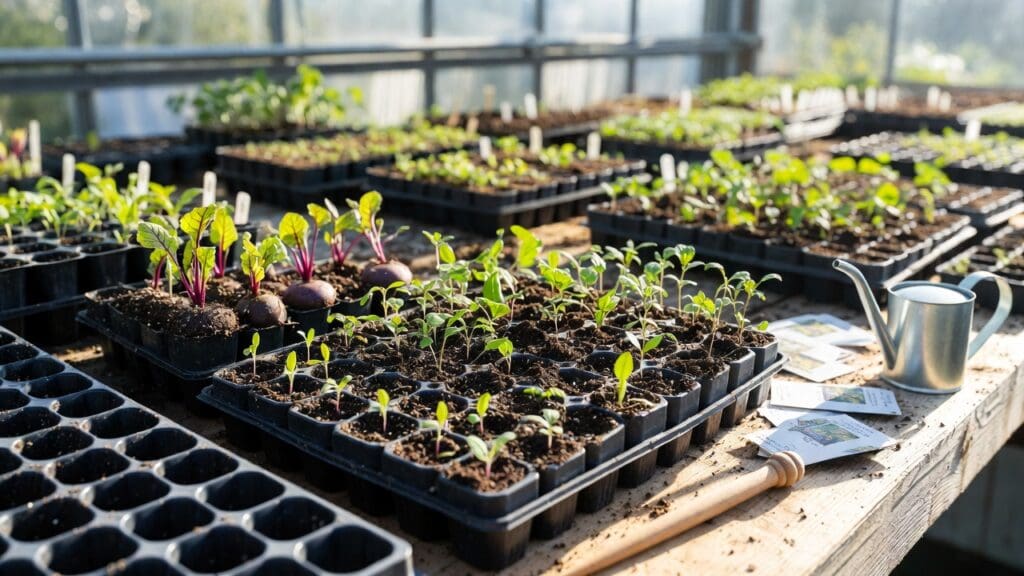
- Definition: Multisowing is sowing several seeds in one module or planting hole and transplanting the group as one clump.
- Best crops: Beetroot, onions, spring onions, leeks, peas, radishes, turnips, chard, spinach, coriander, parsley, and some salad crops.
- Main benefit: More plants from the same tray space, with less compost and faster transplanting.
- Best for: Raised beds, no-dig beds, small gardens, succession sowing, and gardeners who want efficient seed starting.
- Avoid for: Large individual plants that need room to size up, such as tomatoes, peppers, eggplants, squash, cabbage, broccoli, celery, and celeriac.
What Are the Benefits of Multisowing?
Multisowing is popular because it makes seed starting more efficient. Instead of using one cell for one plant, you use one cell for a small group of plants that tolerate growing together.
1. You Grow More Plants in the Same Tray Space
A 40-cell tray can hold 40 single plants, or it can hold 160 beetroot seedlings if each cell grows a clump of four. That is a huge advantage when your greenhouse bench, windowsill, or propagation area is limited.
2. You Use Less Compost
When four plants grow in one module instead of four separate modules, you use far less seed starting mix for the same number of plants. This matters if you start a lot of vegetables every spring.
3. Transplanting Is Faster
You plant one clump instead of several separate seedlings. That makes transplanting onions, beetroot, leeks, radishes, and peas much quicker.
4. Seedlings Can Be Stronger in Groups
Some crops seem to grow well in small clusters. Onions, spring onions, leeks, beetroot, peas, and radishes often establish quickly when transplanted as a group.
5. Harvesting Becomes More Flexible
With crops like beetroot, turnips, radishes, and onions, you can harvest the largest plant from a clump first and leave the smaller ones to continue swelling. This staggered harvest is one of the best practical benefits of multisowing.
Best Vegetables to Multisow
The best vegetables for multisowing are crops that either grow naturally in narrow groups, tolerate close spacing, or can be harvested young. They should also transplant well from modules.
Use these numbers as a starting point. Adjust for your variety, seed freshness, germination rate, growing season, and the harvest size you want.
| Crop | Seeds Per Module | Final Plants Per Clump | Typical Spacing Between Clumps | Notes |
|---|---|---|---|---|
| Beetroot | 2–4 | 3–4 | 8–12 in | Harvest the largest roots first and let smaller ones size up. |
| Bulb onions | 5–6 | 3–5 | 10–12 in | Produces more medium onions rather than fewer large ones. |
| Spring onions / scallions | 8–10 | 6–10 | 6–10 in | Excellent for bunching harvests. |
| Leeks | 5–6 | 3–5 | 10–12 in | Good for medium leeks; single plants make larger leeks. |
| Radishes | 4–6 | 3–5 | 4–6 in | Best for quick spring or autumn crops. |
| Turnips | 3–4 | 2–3 | 6–10 in | Great for baby turnips and late-season sowing. |
| Peas for shoots | 5–8 | 5–8 | 4–6 in | Cut young shoots repeatedly. |
| Peas for pods | 3–5 | 3–5 | 6–8 in | Provide support early. |
| Spinach | 3–4 | 2–4 | 8–12 in | Harvest leaves regularly to prevent crowding. |
| Chard | 2–3 | 1–2 | 12–15 in | Thin to fewer plants for larger leaves. |
| Coriander / cilantro | 5–8 | 5–8 | 6–8 in | Good for leaf harvests and succession sowing. |
| Parsley | 4–6 | 3–5 | 8–10 in | Slow to germinate; keep evenly moist. |
How to Multisow Vegetables in Modules
The basic technique is the same for most vegetables. You sow a small group of seeds in one cell, raise them together, and transplant the entire cell as one plug.
- Fill the module tray. Use seed starting mix or fine compost. Firm it lightly so there are no large air pockets.
- Water before sowing. Moist compost helps small seeds settle without being washed away later.
- Sow the seeds. Place the recommended number of seeds in each cell. Spread them slightly rather than stacking them in one spot.
- Cover lightly. Follow the seed packet depth. Small seeds usually need only a thin covering.
- Label the tray. Include crop, variety, and sowing date.
- Keep evenly moist. Do not let the modules dry out during germination.
- Thin only if needed. If too many seeds germinate, snip extras at soil level instead of pulling them.
- Harden off seedlings. Move trays outdoors gradually before transplanting.
- Plant the whole clump. Do not separate seedlings unless the crop specifically needs it.
- Water in well. Keep clumps moist while they establish.
When to Transplant Multi-Sown Seedlings
Most multi-sown vegetables are ready to transplant when the plug holds together and seedlings have developed their first true leaves. The roots should be visible enough to bind the compost, but not so crowded that the plants are starving in the tray.
Transplant sooner for fast crops like radishes and turnips. Give onions, leeks, parsley, and other slower crops more time. If seedlings are yellowing, drying too quickly, or becoming tangled, move them into the bed.
How to Harvest Multi-Sown Clumps
One of the best parts of multisowing is selective harvesting. You do not always pull the whole clump at once.
- Beetroot: Twist out the largest root first and leave smaller roots to swell.
- Onions: Pull small onions early as green onions, then leave the rest to bulb.
- Leeks: Harvest the largest stems first or lift the whole clump when needed.
- Radishes: Pull mature radishes before they become woody.
- Turnips: Harvest baby turnips first and leave smaller ones briefly.
- Pea shoots: Cut shoots above the growing point for regrowth.
- Herbs: Cut leaves regularly to keep clumps productive.
Crop Notes: What to Multisow and What to Avoid
Beetroot
Beetroot is one of the classic multisown vegetables. A “beet seed” is often a cluster that can produce more than one seedling, so germination can be uneven. Sow two to four seeds per module and aim for three or four plants per clump. Harvest the largest roots first.
Onions for Bulbs
Bulb onions grow well in small groups. You usually get more medium-sized onions rather than fewer giant onions. This is useful for home kitchens because medium onions are often easier to use than oversized ones.
In humid climates, crowded onions can be more prone to mildew or fungal leaf problems. Give onion clumps enough airflow and avoid overhead watering late in the day.
Spring Onions and Scallions
Spring onions are one of the easiest crops to multisow. Sow generously, transplant the clump, and harvest as bunches. They are forgiving, space-efficient, and excellent for succession sowing.
Leeks
Leeks can be multisown for medium stems. If you want show-sized or very thick leeks, grow them singly. For everyday kitchen use, clumps of three to five leeks are often more useful.
Radishes
Radishes are fast and work well in small clumps, especially in spring and autumn. Do not let them sit too long after maturity, or they can become woody or pithy.
Turnips
Small salad turnips and baby turnips can be multisown successfully. They are useful for late-season sowing after summer crops have been cleared.
Peas
Peas can be sown in clumps for shoots or pods. Pea shoots can be sown more densely. Peas grown for pods need more space and support.
Spinach and Chard
Spinach can work well in small clumps for leaf harvests. Chard is stronger and larger, so keep clumps smaller or thin to fewer plants if you want big leaves.
Parsley and Coriander
Herbs can be multisown for bunching harvests. Coriander is especially useful for succession sowing because it can bolt quickly in warm weather.
Vegetables That Usually Should Not Be Multisown
Some vegetables need their own space from the beginning. They may compete too heavily, become stunted, or produce smaller harvests if grown in clumps.
- Tomatoes: Grow as single plants for strong roots and airflow.
- Peppers: Grow singly because they need time, warmth, and root space.
- Eggplants: Grow singly; they dislike crowding and need strong early growth.
- Squash and zucchini: Large plants with big root systems.
- Cucumbers and melons: Usually better as single plants.
- Broccoli, cabbage, cauliflower: Grow as singles for full heads and airflow.
- Celeriac and celery: Need careful spacing and steady growth.
- Parsnips: Best direct sown because transplanting can fork the root.
- Long carrots: Usually better direct sown in rows; transplanting can cause forking.
Multisowing vs Direct Sowing
Multisowing is usually done in module trays, but you can also sow clusters directly in the ground. This is called station sowing. It works well for larger seeds like peas, beans, radishes, turnips, and beetroot.
Module multisowing gives you more control. You can germinate seeds in protected conditions, avoid empty gaps in the bed, and transplant only the strongest clumps. Direct sowing is faster and simpler, but germination can be more uneven because of weather, pests, crusted soil, or dry conditions.
Use Modules When:
- You want earlier starts.
- You have slug, bird, or pest pressure.
- Your soil is cold or wet.
- You want exact spacing in raised beds.
- You want to fill gaps after another crop.
Direct Sow When:
- The crop dislikes transplanting.
- You are sowing long rows of small seeds.
- The soil is warm and workable.
- You want quick succession sowing with minimal tray work.
Common Multisowing Mistakes
- Sowing too many seeds: Crowded modules can become weak, leggy, and hard to transplant.
- Using heavy compost: Dense, wet compost can reduce germination and root growth.
- Not thinning when needed: If every seed germinates, some crops need snipping down to the right number.
- Waiting too long to transplant: Overcrowded clumps run out of nutrients and water quickly.
- Choosing the wrong crop: Large vegetables usually need to grow singly.
- Separating the clump: The point is to plant the group together. Separating roots can slow growth.
- Planting too close in the bed: Clumps need more spacing than single seedlings.
- Ignoring airflow: Dense onion or leafy clumps can struggle in humid weather.
Multisowing Troubleshooting
Seedlings Are Leggy
They need more light. Move trays to brighter conditions, reduce warmth after germination, and avoid starting too early indoors.
Clumps Dry Out Quickly
Too many plants may be growing in a small cell, or the seedlings may be ready to transplant. Water evenly and plant out before the plug becomes rootbound.
Roots Are Tangled
Transplant sooner next time. Multi-sown clumps should hold together but not become a dense root knot.
Plants Are Too Small at Harvest
Reduce the number of plants per clump or increase spacing between clumps. For larger onions, leeks, chard, and beetroot, fewer plants per clump usually works better.
Onion Leaves Have Mildew
Improve airflow, avoid wet leaves late in the day, reduce crowding, and choose resistant varieties where disease pressure is common.
Final Verdict: Is Multisowing Worth It?
Multisowing is worth it for gardeners who want more efficient seed starting, better use of tray space, quicker transplanting, and flexible harvests. It is especially useful in small gardens, raised beds, no-dig beds, and intensive vegetable plots.
Start with easy crops such as beetroot, spring onions, bulb onions, leeks, radishes, turnips, peas, spinach, coriander, and parsley. Use moderate seed numbers, transplant the whole clump, and harvest the largest plants first when possible.
The key is choosing the right crop. Multisowing is brilliant for some vegetables and a mistake for others. Once you learn which crops tolerate clumps, it becomes one of the simplest ways to grow more food from the same space.
Multisowing FAQ
What does multisowing mean?
Multisowing means sowing several seeds in one module, cell, plug, or planting station and growing the seedlings together as one clump.
What are the main benefits of multisowing?
The main benefits are saving propagation space, using less compost, transplanting faster, growing more plants from the same tray, and harvesting flexibly from each clump.
Which vegetables are best for multisowing?
Beetroot, onions, spring onions, leeks, radishes, turnips, peas, spinach, chard, coriander, parsley, and some salad crops are good candidates.
Can you multisow beetroot?
Yes. Beetroot is one of the best vegetables for multisowing. Sow two to four seeds per module and aim for three or four plants per clump.
Can you multisow onions?
Yes. Bulb onions and spring onions both grow well in clumps. Bulb onions usually produce more medium-sized bulbs, while spring onions can be harvested in bunches.
Can carrots be multisown?
Round or baby carrots may be grown in small clumps, but long carrots are usually better direct sown in rows because transplanting can cause forked roots.
Should I thin multi-sown seedlings?
Thin only if too many seeds germinate. Snip extra seedlings at soil level instead of pulling them, so you do not disturb the roots of the remaining plants.
Do you separate multi-sown seedlings before planting?
No. In most cases, plant the whole module as one clump. Separating seedlings defeats the purpose and can damage roots.
How far apart should multisown clumps be planted?
Spacing depends on the crop and desired harvest size. As a general rule, clumps need more space than single seedlings because each clump contains several plants.
Is multisowing good for beginners?
Yes, if you start with forgiving crops such as beetroot, spring onions, radishes, turnips, peas, and herbs. Avoid large vegetables that need to grow as single plants.
Join Garden Frontier for practical vegetable gardening, seed starting, raised bed ideas, lawn care, outdoor tools, and home improvement tips.
100% free. No spam. Unsubscribe anytime.