











The best basement dehumidifiers on Amazon can turn a damp, musty basement into a cleaner, drier, more usable space. Basements naturally collect moisture because they sit below grade, have cooler surfaces, and often suffer from poor ventilation, foundation seepage, or seasonal humidity.
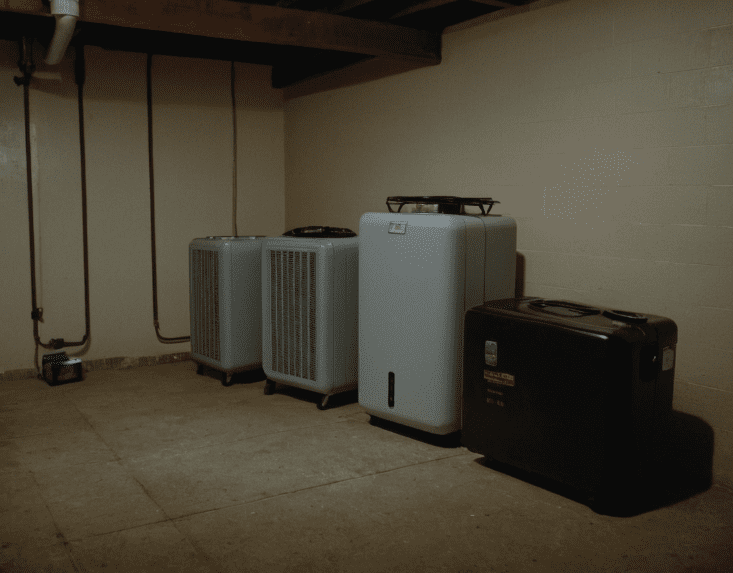
A good basement dehumidifier helps lower humidity, reduce musty odors, protect stored items, and make conditions less favorable for mold, mildew, dust mites, pests, and moisture damage. But it is important to be clear: a dehumidifier helps with moisture control, not full mold removal.
If you already see mold on wood, drywall, carpet, furniture, or stored items, read our guide on dehumidifier and mold removal. A dehumidifier can help prevent mold from returning, but existing mold still needs cleaning, removal, and moisture-source correction.
For most damp basements, a 50-pint Energy Star basement dehumidifier with a continuous drain hose option is the best starting point. Choose a smaller 22- to 35-pint unit for small finished basements or isolated damp rooms, and choose a pump model or commercial-grade unit if the basement is very wet, lacks a floor drain, or has repeated water problems.
A basement dehumidifier is for humidity control. If you have standing water, foundation leaks, wet carpet, moldy drywall, or moldy wood, fix the water problem and cleanup first. Then use the dehumidifier to keep the space dry.
Why Basements Need Dehumidifiers
Basements are prone to high humidity because they are surrounded by soil and concrete. Cool foundation walls can collect condensation, and humid outdoor air can enter through gaps, windows, stairways, rim joists, and mechanical penetrations.
High basement humidity can lead to:
- Mold and mildew conditions: Mold needs moisture, and damp basements provide plenty of it.
- Musty odors: Damp air, stored cardboard, carpet, and old wood can create strong basement smells.
- Damage to stored items: Books, clothes, tools, furniture, and decorations can absorb moisture.
- Wood and metal damage: Excess moisture can contribute to rust, swelling, rot, and decay.
- Pest activity: Many insects and pests prefer dark, damp environments.
- Uncomfortable finished spaces: A basement office, gym, bedroom, or family room feels better when humidity is controlled.
The EPA recommends keeping indoor relative humidity below 60%, ideally between 30% and 50% when possible. A basement hygrometer makes this easy to monitor.
Best Basement Dehumidifiers on Amazon: Quick Pick Guide
The old version of this article used a wide comparison table. I replaced that with a mobile-friendly quick pick guide because basement dehumidifier shoppers usually need a simple decision: large basement, small basement, pump, quiet operation, or heavy moisture control.
Best Overall Large Basement Pick
Frigidaire FFAD5033W1: A strong 50-pint basement dehumidifier choice with simple controls, washable filter, and continuous drain option.
Best Value Large-Room Pick
hOmeLabs HME031003N: A popular 50-pint option for larger basements, finished basements, and general whole-room humidity control.
Best Small Basement Pick
Senville SENDH-22AEN1: A compact choice for smaller basements, laundry rooms, offices, and damp lower-level spaces.
Best Mid-Size Budget Pick
HOGARLABS PD08GS: A practical mid-size dehumidifier for moderate dampness, garages, RVs, and smaller basement zones.
Best Dehumidifiers for Large Basements
For large basements, unfinished basements, or spaces that smell musty after rain, I usually start with a 50-pint class dehumidifier. A smaller unit may run constantly and still fail to keep humidity under control.
1. Frigidaire FFAD5033W1 50-Pint Dehumidifier

The Frigidaire FFAD5033W1 is a strong large-basement option for homeowners who want a simple, proven 50-pint dehumidifier. It is best for damp lower levels, musty storage areas, finished basements, and spaces where you want automatic humidity control without constant adjustment.
Why It Stands Out
Best for: Large basements, finished basements, laundry rooms, and damp lower-level storage spaces.
Capacity: 50-pint class.
Useful features: Washable filter, humidity control, bucket option, and continuous drainage when connected to a hose.
My take: This is the kind of basement dehumidifier I would choose when I want reliable moisture control without moving into commercial equipment.
Watch out for: For unattended basement use, connect a drain hose instead of relying on the bucket.
2. hOmeLabs HME031003N 50-Pint Dehumidifier

The hOmeLabs HME031003N is another popular 50-pint basement dehumidifier for larger rooms and damp lower-level spaces. It is a good fit when you want a modern-looking unit that can handle a finished basement, home gym, office, or storage area.
Why It Stands Out
Best for: Large rooms, finished basements, home offices, basement gyms, and general moisture control.
Capacity: 50-pint class.
Useful features: Large-room capacity, bucket collection, continuous drain option, and easy controls.
My take: A practical value pick for homeowners who want a basement unit that does not look too industrial in a finished space.
Watch out for: Confirm the exact listing features before buying, especially if you need a built-in pump rather than gravity drain.
Best Dehumidifiers for Small to Medium Basements
Not every basement needs a 50-pint machine. If your basement is smaller, partially finished, or only damp in one area, a compact unit can make more sense. Smaller units are usually easier to move, cheaper to buy, and less intrusive in finished rooms.
3. Senville SENDH-22AEN1 22-Pint Dehumidifier

The Senville SENDH-22AEN1 is a compact dehumidifier for smaller basement rooms, laundry areas, storage corners, or finished spaces where humidity is moderate rather than severe.
Why It Stands Out
Best for: Small basements, basement offices, laundry rooms, and smaller damp zones.
Capacity: 22-pint class.
Useful features: Compact size, simple controls, and automatic shutoff when the bucket fills.
My take: A good choice if you are not fighting a full basement moisture problem and only need help in a smaller area.
Watch out for: Too small for large, wet, musty basements.
4. HOGARLABS PD08GS 30-Pint Dehumidifier

The HOGARLABS PD08GS is a mid-size dehumidifier option for basements, garages, RVs, and utility spaces with moderate humidity. It is not the unit I would choose for a large wet basement, but it can make sense for localized dampness.
Why It Stands Out
Best for: Mid-size basement rooms, garages, utility rooms, RVs, and moderate humidity issues.
Capacity: 30-pint class.
Useful features: Adjustable humidity setting, bucket collection, and compact footprint.
My take: Best as a budget or zone-control option, not as the main solution for severe basement moisture.
Watch out for: If your basement smells musty after every rain, step up to a larger model.
How to Choose the Right Basement Dehumidifier
The best basement dehumidifier depends on more than square footage. A clean, finished 1,000-square-foot basement may need less power than a smaller unfinished basement with seepage, musty odors, wet carpet, or poor drainage.
Capacity: Choose 50-pint class for large or very damp basements.
Drainage: Continuous drain hose is strongly recommended for basements.
Pump option: Useful if there is no floor drain or the water must move upward.
Energy Star: Certified models can reduce operating costs during humid months.
Auto-restart: Important after power outages.
Auto-defrost: Useful in cooler basements.
Filter access: Easy cleaning helps the unit run efficiently.
Noise: More important if the basement is used as an office, bedroom, gym, or TV room.
For a broader feature breakdown, read our guide on choosing the best electric dehumidifier for your space.
What Size Dehumidifier Do I Need for a Basement?
Use square footage as a starting point, then adjust for dampness. A mildly damp finished basement can use a smaller unit than a wet, unfinished basement with musty odors and condensation.
Small Basement or Single Damp Room
A 20- to 30-pint class unit may work if moisture is mild and the space is not large.
Medium Basement
A 35- to 50-pint class unit is a safer choice when humidity is persistent or the basement smells musty.
Large or Very Damp Basement
Start with a 50-pint unit, and consider a pump model or commercial-grade unit if the basement has repeated water issues.
Basement Dehumidifier With Pump vs Drain Hose
A drain hose is usually enough if your basement has a floor drain, utility sink, sump pit, or another lower drainage point. The hose must slope downward continuously so water can flow by gravity.
A pump model is better when the dehumidifier must push water upward to a sink, window, drain line, or other elevated discharge point. This matters in basements where there is no convenient floor drain.
If you have recurring water in the lower level or water entering from below grade, also read our guide to water in crawl spaces. Many of the same exterior drainage principles apply to basement moisture.
Basement Dehumidifier and Mold Prevention
A basement dehumidifier can help prevent mold by lowering humidity. It makes the space less friendly to mold, mildew, and dust mites. But it does not clean mold already growing on surfaces.
If mold is on wood framing, furniture, stairs, or trim, see our guide on how to get rid of mold on wood. For the bigger prevention and cleanup picture, read Conquering Mold: A Guide to Removal and Prevention.
Do not paint over mold or assume a dehumidifier has removed it. Clean or remove the affected material, dry the area completely, and fix the source of moisture.
When a Basement Needs a Commercial Dehumidifier
Most homes can start with a standard 50-pint basement dehumidifier. But if your basement has repeated flooding, major water intrusion, large wet areas, or structural drying needs, you may need commercial equipment.
Commercial and LGR dehumidifiers are built for heavier moisture loads, longer runtime, and restoration work. If you are dealing with severe moisture, compare options in our best commercial crawl space dehumidifier guide. The same commercial drying principles often apply to flooded basements.
Basement vs Crawl Space Moisture
Basements and crawl spaces often share the same moisture sources: bad grading, short downspouts, foundation seepage, plumbing leaks, soil moisture, and poor ventilation. A basement dehumidifier controls air moisture in the basement, while a crawl space dehumidifier is built for tighter, rougher under-home environments.
If the musty odor seems to come from below the living area rather than the basement itself, read our crawl space dehumidifier essentials guide. If exposed soil is part of the problem, a crawl space vapor barrier may be needed before the dehumidifier can keep up.
How to Maintain a Basement Dehumidifier
Regular maintenance keeps a dehumidifier working efficiently and helps prevent the unit itself from becoming musty.
Clean the filter: Check monthly during humid season and clean according to the manual.
Wash the bucket: If you use the tank, clean it with mild soap and water so it does not smell musty.
Check the drain hose: Look for kinks, clogs, algae, or poor slope.
Inspect for frost: Cooler basements may cause coil icing if the unit lacks proper defrost protection.
Clean around the unit: Dust and lint reduce airflow.
Use a hygrometer: Confirm that the basement is actually staying in the target humidity range.
When to Call a Pro Instead of Buying Another Dehumidifier
A bigger dehumidifier is not always the answer. Call a professional if the basement has standing water, wet carpet, sewage contamination, repeated foundation seepage, widespread mold, soft drywall, rotten wood, or a musty odor that keeps coming back after cleanup.
If your basement has widespread mold, wet drywall, water damage, or musty odors that keep returning, get a professional inspection or remediation estimate instead of relying only on a dehumidifier.
Official Humidity and Energy References
For safety and efficiency guidance, review EPA’s mold and moisture guide and ENERGY STAR’s dehumidifier buying and efficiency guidance.
Frequently Asked Questions
What is the best basement dehumidifier size?
For most damp basements, a 50-pint dehumidifier is the safest starting point. Smaller 20- to 35-pint models can work for small rooms or mild humidity, while large or wet basements may need a pump model or commercial-grade unit.
What humidity should a basement be?
A good target is 30% to 50% relative humidity when possible. At minimum, keep basement humidity below 60% to reduce mold, mildew, dust mites, and musty odors.
Should I buy a basement dehumidifier with a pump?
Buy a pump model if you do not have a floor drain or if the water must be moved upward to a sink, window, or drain line. If you have a good floor drain, a gravity drain hose may be enough.
Can a dehumidifier remove basement mold?
No. A dehumidifier can help prevent basement mold by lowering humidity, but it will not remove existing mold from wood, drywall, carpet, or stored items.
Is a 50-pint dehumidifier enough for a basement?
A 50-pint dehumidifier is enough for many basements, especially if the main problem is high humidity. It may not be enough if the basement has standing water, repeated seepage, wet carpet, or active leaks.
Are Energy Star basement dehumidifiers worth it?
Yes. Basement dehumidifiers can run for long periods during humid months, so an Energy Star certified model can reduce electricity use while removing moisture effectively.
Should a basement dehumidifier run all the time?
It may run often during humid weather, but it should cycle once the target humidity is reached. If it runs constantly and humidity stays high, the unit may be undersized or the basement may have an active water problem.
Where should I place a dehumidifier in a basement?
Place it where air can circulate freely, away from walls, curtains, boxes, and furniture. Keep it near a drain if using continuous drainage.
Do I need a hygrometer with a basement dehumidifier?
Yes. A hygrometer tells you the actual humidity level so you can confirm whether the dehumidifier is working and adjust the target setting.
What is better for mold, an air purifier or a dehumidifier?
A dehumidifier controls moisture, which helps prevent mold growth. A HEPA air purifier may help capture airborne particles, but it does not remove mold from surfaces or fix humidity problems.
Final Verdict
For most homeowners, the best basement dehumidifier on Amazon is a 50-pint Energy Star model with continuous drainage. The Frigidaire FFAD5033W1 is the strongest all-around pick in this article, while the hOmeLabs HME031003N is a practical value pick for larger finished spaces.
For smaller basement zones, the Senville SENDH-22AEN1 and HOGARLABS PD08GS can make sense if the humidity problem is moderate.
The real answer is not just buying the biggest dehumidifier. Measure the humidity, fix water sources, use continuous drainage when possible, keep the unit clean, and choose a model that matches your basement’s actual moisture load.
Join the free Garden Frontier list for basement moisture control, crawl space care, mold prevention, home repair, and practical equipment guides.
100% free. No spam. Unsubscribe anytime.