




















From the sweeping steppes of Central Asia to the ancient Roman Empire, the Mulberry Tree (Morus) is steeped in thousands of years of rich history. Revered for bringing luscious, dark berries and priceless silk to the Western world, this incredibly long-lived tree is making a massive comeback in modern edible landscapes.
Whether you want to harvest baskets of sweet, blackberry-like fruit, create a fast-growing shade canopy, or simply enjoy a piece of living history in your backyard, the mulberry tree is surprisingly easy to cultivate. Here is your complete guide to the different varieties, their incredible health benefits, and how to properly care for them.
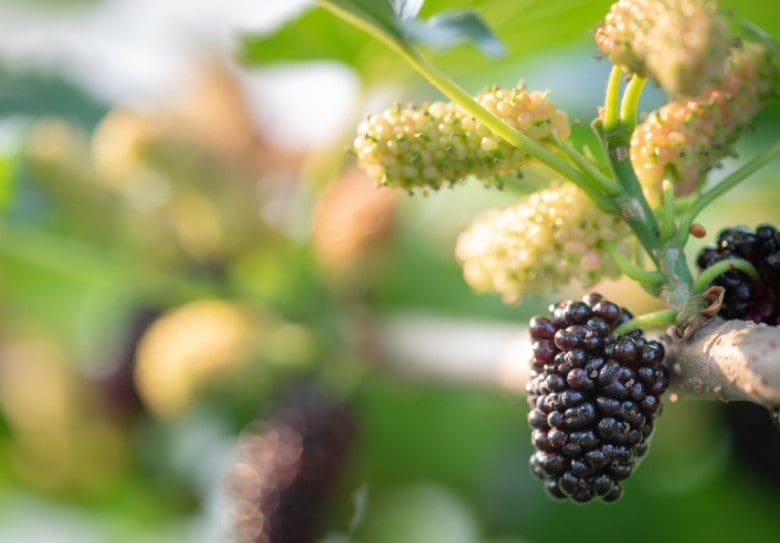
The 3 Main Types of Mulberry Trees
While there are several cultivars, practically all mulberry trees grown in home gardens fall into one of three distinct species:
- Black Mulberry (Morus nigra): Originating from Western Asia, this is the tree prized by chefs and gardeners. It produces the largest, juiciest, and absolute best-tasting fruit, perfectly balancing tartness and deep, rich sweetness.
- White Mulberry (Morus alba): Originally from China, its berries range from pure white to pale purple. They are intensely sweet but often lack the complex tartness of the black mulberry. Historically, its leaves are the sole food source for the industrious silkworm.
- Red Mulberry (Morus rubra): Native to North America, this variety thrives in rich woodland soils. It is a fantastic ornamental shade tree that produces slightly tart, deep red berries beloved by local wildlife and birds.
The Silk Road Connection
The White Mulberry has been cultivated in China for over 5,000 years for one specific reason: Silk. The precious thread is spun by the Chinese silkworm (Bombyx mori), which feeds exclusively on mulberry leaves.
Silk was such a valuable commodity that in 524 AD, it was sold in Europe for its exact weight in gold. The Chinese fiercely protected the secret of its production, enforcing heavy penalties on anyone caught smuggling trees or silkworms abroad. Legend has it that the secret was finally broken when a Chinese princess smuggled Morus seeds and silkworm eggs out of the country hidden inside her elaborate headdress, sparking the global expansion of the Silk Road.
Incredible Health Benefits of Mulberries
Mulberries are widely considered a nutritional powerhouse. They are packed with Vitamin C, Vitamin K, potassium, calcium, and surprisingly high levels of iron (which is rare for a fruit). Here is what modern research and traditional medicine say about this superfood:
- Rich in Resveratrol: Much like red wine grapes, mulberries are a natural source of resveratrol, a potent antioxidant widely studied for its anti-inflammatory properties and its potential to promote cardiovascular health.
- Digestive Health: A single serving of mulberries provides roughly 10% of your daily recommended dietary fiber, aiding in digestion and reducing bloating.
- Traditional Blood Sugar Support: In traditional Chinese medicine, white mulberry leaf extract has been used for centuries to help manage diabetes. Compounds in the leaves are believed to help suppress blood sugar spikes following carbohydrate-rich meals.
Because concentrated mulberry leaf extract can have a marked effect on lowering blood glucose levels, it must be approached with caution. If you are currently taking prescription medication for diabetes or blood pressure, you must consult your physician before consuming medicinal quantities of mulberry tea or supplements.
How to Grow and Care for a Mulberry Tree
Mulberry trees are remarkably fast growers, often shooting up 10 to 20 feet in just their first four to six years. Depending on the variety, they are hardy in USDA Zones 4 through 8.
Planting and Placement
Plant your mulberry tree in full sun with at least 15 feet of spacing between other trees. They prefer deep, warm, well-draining loam but are incredibly adaptable and salt-tolerant.
Crucial Placement Tip: The dark berries will severely stain concrete, brick, and paving stones when they drop. Never plant a fruiting mulberry tree directly over a driveway or sidewalk. If you want the shade without the mess, seek out a “fruitless” male cultivar.
Watering and Feeding
While quite drought-tolerant once established, providing consistent deep watering during prolonged summer dry spells will significantly increase your berry harvest. They do not strictly require heavy feeding, but a yearly application of a balanced 10-10-10 fruit tree fertilizer in early spring will keep the canopy lush and healthy.
Pruning a Mulberry Tree
Young trees should be pruned gently to develop a strong framework of main branches. However, older trees only require minimal, judicious pruning to remove dead or crossing wood.
Mulberry trees are notorious for “bleeding” large amounts of sap from their wounds if cut during the active growing season. This severe sap loss can weaken the tree and invite pests. You should only prune a mulberry tree while it is fully dormant (in the dead of winter) to prevent excessive bleeding, and avoid making structural cuts larger than 2 inches in diameter.
Frequently Asked Questions
Are mulberry trees messy?
Yes, fruiting female mulberry trees are notoriously messy. As the berries ripen, they drop continuously, which can stain patios, cars, and shoes. Furthermore, birds love the berries and will leave purple droppings nearby. It is best to plant them in open lawn areas or at the back of the property.
Can I grow a mulberry tree in a pot?
Yes! If you are short on space, look for dwarf varieties like the ‘Dwarf Everbearing’ Mulberry. They perform beautifully in large containers and can easily be pruned to stay under 6 feet tall while still producing bowls of sweet berries.
How long does it take for a mulberry tree to produce fruit?
If you purchase a grafted sapling from a nursery, it will often begin producing small crops of fruit within its first 2 to 3 years in the ground. Trees grown entirely from seed may take up to 10 years to reach fruiting maturity.







Comments are closed.