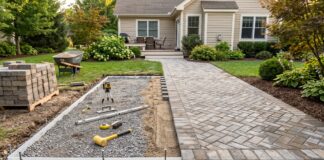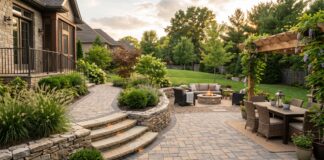















Walking to the trash cans at night feels safer. Pulling into the driveway is easier. The side yard no longer feels like a dark blind spot. And if someone walks near your garage, gate, shed, or back door, the sudden burst of light gets attention fast.
The best part is that motion-activated lights do not need to burn all night.
They turn on only when movement enters the sensor zone, then shut off after a short period. That makes them useful for security, convenience, outdoor safety, and energy efficiency.
But choosing the right fixture matters.
A cheap solar light may work fine for a narrow walkway, but it may be too weak for a driveway. A hardwired LED floodlight can be excellent for security, but it may require a junction box and professional installation. A multi-pack of small solar lights may be perfect for fences, sheds, and side yards, but not for lighting a large backyard.
This guide breaks down the best outdoor motion sensor lights by use case, including solar lights, hardwired floodlights, driveway lights, garage security lights, and budget-friendly options.
Quick Answer: What Is the Best Outdoor Motion Sensor Light?
For most homeowners, the best outdoor motion sensor light is a weather-resistant LED fixture with adjustable sensitivity, a wide detection angle, and enough brightness for the area you want to cover. Solar lights are easiest for sheds, fences, pathways, and small dark corners, while hardwired LED floodlights are better for garages, driveways, and serious security lighting.
Best Outdoor Motion Sensor Lights: Quick Comparison
Before choosing a specific product, think about where the light will go and how much illumination you actually need.
A side gate needs a different light than a two-car driveway. A shed needs a different fixture than a front porch. And a dark backyard corner does not always require a heavy-duty hardwired floodlight.
| Best For | Recommended Type | Why It Works | Watch Out For |
|---|---|---|---|
| Easy DIY install | Solar motion sensor lights | No wiring, simple mounting, low operating cost | Needs enough sun to recharge |
| Garage and driveway security | Hardwired LED floodlight | Strong brightness and reliable power | May require an electrician |
| Fence lines and side yards | Solar multi-pack | Lets you cover multiple dark spots affordably | Individual lights may be less powerful |
| Pathways and entryways | Lower-lumen solar or battery lights | Adds safety without blinding guests | Too much brightness can create glare |
| Large backyard coverage | Dual-head or triple-head fixture | Covers wider angles and larger areas | Placement and sensor direction matter |
Our Top Outdoor Motion Sensor Light Picks
These picks cover the main situations most homeowners care about: easy solar installation, budget multi-pack coverage, and serious hardwired security lighting.
1. URPOWER Outdoor Solar Motion Lights — Best Overall Solar Pick

For most homeowners who want simple outdoor lighting without wiring, a compact solar motion light is the easiest place to start.
URPOWER-style solar motion lights work well around fences, side yards, sheds, garage corners, patios, and narrow walkways where you need a light to turn on automatically when someone approaches.
They are especially useful when you do not want to run electrical wiring or pay for installation.
- Easy DIY installation.
- No wiring required.
- Good for sheds, side yards, patios, and fences.
- Low operating cost because they recharge from sunlight.
- Performance depends on sun exposure.
- Not as powerful as hardwired floodlights.
- Cloudy winter weather can reduce runtime.
Best for easy DIY outdoor lighting:
2. Super-Bright Solar Motion Light Multi-Pack — Best Value for Coverage
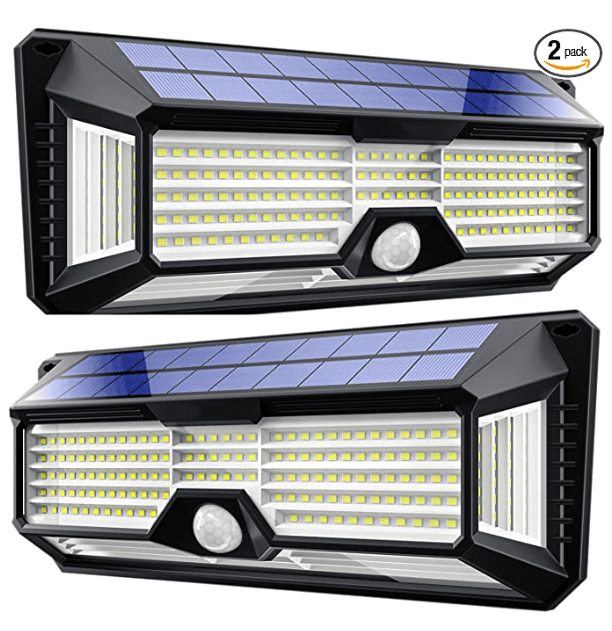
If you want to cover multiple dark areas without buying one expensive fixture, a solar motion light multi-pack is usually the better value.
This style works well when you need lights on the side of the house, along a fence, near a gate, around a shed, or beside a trash-bin area.
Instead of relying on one powerful floodlight, you spread smaller fixtures where they are actually needed.
- Great value for multiple locations.
- Useful for fence lines and dark side yards.
- Simple mounting process.
- Good option for renters or low-commitment installs.
- Individual lights may not cover large open areas.
- Mounting height affects performance.
- Some models require mode adjustments after installation.
Best for covering multiple dark spots around the house:
3. Hardwired LED Motion Floodlight — Best for Driveways and Security

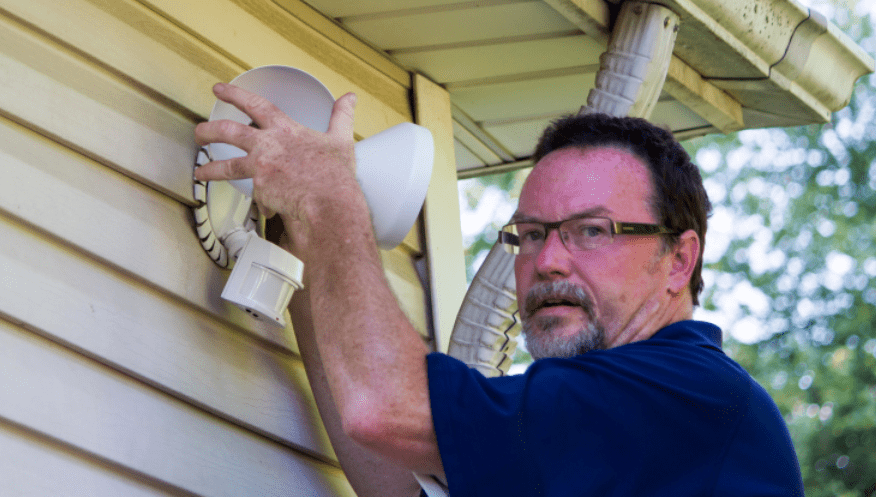
If your priority is serious brightness for a garage, driveway, backyard, or side entrance, a hardwired LED motion floodlight is usually the strongest choice.
Unlike solar lights, hardwired fixtures do not depend on daily sun exposure. They can provide stronger, more consistent illumination and are usually better for high-security zones.
The tradeoff is installation complexity.
Electrical Safety Warning
If a motion sensor light requires hardwiring into a junction box, hire a licensed electrician unless you are qualified to do electrical work safely and legally in your area. Outdoor electrical work must be weather-safe and code-compliant.
- Strongest option for security lighting.
- Reliable power source.
- Better for driveways and garages.
- Often includes adjustable heads and sensor settings.
- Usually requires wiring.
- May need a licensed electrician.
- Too much brightness can annoy neighbors if aimed poorly.
Best for garages, driveways, and serious security lighting:
Solar vs Battery vs Hardwired Motion Sensor Lights
The power source is one of the most important decisions.
A light can have great brightness and detection range, but if the power source does not fit the location, you will be frustrated.
| Power Source | Best For | Pros | Cons |
|---|---|---|---|
| Solar | Fences, sheds, paths, side yards | No wiring, no electricity cost, easy install | Needs sunlight and may weaken in cloudy weather |
| Battery | Temporary lighting or low-use areas | Flexible placement and no wiring | Battery changes become annoying |
| Plug-In | Covered patios or areas near outlets | Easy power without hardwiring | Outdoor cords can look messy or create trip hazards |
| Hardwired | Garages, driveways, large yards | Strongest and most reliable | Usually requires electrical work |
My Practical Recommendation
Use solar lights for small dark spots and simple DIY coverage. Use hardwired floodlights for areas where brightness and reliability matter most, such as garages, driveways, and main security zones.
How Many Lumens Do You Need?
Brightness is one of the easiest specs to misunderstand.
More lumens are not always better.
A very bright floodlight can be perfect over a driveway but obnoxious beside a bedroom window. A softer light may be safer and more pleasant along a walkway.
| Area | Suggested Brightness Range | Best Type |
|---|---|---|
| Pathway or steps | 100–400 lumens | Small solar or battery motion light |
| Porch or entryway | 400–800 lumens | Wall-mounted motion light |
| Side yard or shed | 400–1,000 lumens | Solar multi-pack or compact floodlight |
| Driveway or garage | 1,000–3,000+ lumens | Hardwired or high-output LED floodlight |
Also pay attention to beam spread. A narrow beam can look bright but cover very little area. A wider beam can feel more useful even if the lumen rating is lower.
Where to Place Outdoor Motion Sensor Lights
Placement matters as much as brightness.
A great light mounted in the wrong place can miss motion, blind guests, or shine into your own windows.
The best locations include:
- Above the garage: helps illuminate driveways and vehicles.
- Near side gates: lights up common dark entry points.
- Along pathways: improves safety when walking at night.
- Near trash bins: makes late-night trips less annoying.
- On sheds and outbuildings: improves visibility away from the house.
- Near back doors and patios: adds convenience and security.
- Along fence lines: helps identify movement in dark corners.
Placement Mistake
Do not aim a powerful motion floodlight directly at a neighbor’s window, your own bedroom window, or a public road. Good security lighting should illuminate your property without creating glare or nuisance light.
Weather Resistance and Durability
Outdoor motion sensor lights need to survive rain, snow, heat, dust, wind, and temperature swings.
At minimum, look for a fixture described as weather-resistant or suitable for outdoor use. For exposed areas, stronger water resistance and a durable housing are worth paying for.
Pay attention to:
- Outdoor rating: the fixture should be designed for exterior use.
- Water resistance: important for uncovered walls, fences, and sheds.
- Heat resistance: important in hot southern or desert climates.
- Adjustable heads: useful for aiming light exactly where needed.
- Solar panel angle: solar lights need direct sun exposure to recharge well.
- Mounting hardware: cheap screws can rust or loosen outdoors.
If the light will be mounted under an eave, it has more protection. If it will be mounted on an exposed fence post, shed, or outer wall, durability matters more.
Common Mistakes to Avoid
Outdoor motion sensor lights are simple, but a few mistakes can make them frustrating.
- Buying too little brightness: a tiny solar light may not be enough for a driveway.
- Buying too much brightness: excessive floodlight glare can annoy everyone.
- Ignoring sunlight: solar lights fail when installed in deep shade.
- Mounting too low: low placement can reduce detection area and create glare.
- Aiming at moving trees: branches can trigger false alarms in wind.
- Ignoring sensor settings: sensitivity and timer adjustments matter.
- Using indoor-rated lights outside: outdoor fixtures must handle moisture.
- Hardwiring without proper skill: electrical mistakes are not worth the risk.
When to Hire an Electrician
Solar motion lights are usually a simple DIY project.
Hardwired motion sensor lights are different.
If the fixture connects to a junction box, replaces an existing floodlight, or requires new wiring, hiring a licensed electrician is often the safer choice.
You should consider hiring a pro if:
- there is no existing outdoor junction box
- the wiring is old or damaged
- you need a new switch or circuit
- the light is mounted high above a garage
- you are unsure how to weatherproof the connection
- local code requires licensed electrical work
Need a Hardwired Security Light Installed?
A licensed electrician can install outdoor motion sensor lights safely, aim them correctly, weatherproof the wiring, and make sure your garage, driveway, or backyard lighting is code-compliant.
Find Local Electricians on Angi
Sponsored affiliate link. Professional availability and services vary by location.
Final Thoughts
The best outdoor motion sensor light depends on where you need light and how much installation work you are willing to do.
For simple DIY coverage, solar motion sensor lights are hard to beat. They are affordable, easy to mount, and great for sheds, side yards, fences, gates, and smaller dark spots.
For serious driveway, garage, or backyard security, a hardwired LED motion floodlight is usually the better long-term option.
My honest recommendation is simple:
Use solar lights for convenience and coverage. Use hardwired lights for power and reliability.
If you combine both strategically, you can eliminate dark corners around your home without wasting electricity or leaving bright lights burning all night.
Frequently Asked Questions
Are solar motion sensor lights worth it?
Yes, solar motion sensor lights are worth it for sheds, fences, pathways, side yards, and areas where running wiring is difficult. They are easy to install and cost nothing to operate, but they need enough sunlight to recharge properly.
Are hardwired motion sensor lights better than solar?
Hardwired motion sensor lights are usually better for driveways, garages, and serious security lighting because they provide more reliable power and stronger brightness. Solar lights are better for quick DIY installation and smaller areas.
How many lumens do I need for an outdoor motion sensor light?
For pathways, 100 to 400 lumens may be enough. For entryways, 400 to 800 lumens often works well. For driveways, garages, and larger areas, 1,000 to 3,000 or more lumens may be appropriate depending on the space.
Where should outdoor motion sensor lights be placed?
Good locations include above garages, near driveways, beside gates, along pathways, near sheds, around back doors, and in dark side yards. Aim the light so it covers your property without shining into windows or roads.
Why does my motion sensor light stay on?
A motion sensor light may stay on because the timer setting is too long, the sensitivity is too high, the sensor is aimed at moving branches or traffic, or the fixture is in manual override mode.
Why does my motion sensor light turn on slowly?
Slow activation can happen if the sensor sensitivity is too low, the detection angle is poorly aimed, the batteries are weak, or the fixture is mounted too far from the motion path.
Do motion sensor lights scare away intruders?
Motion sensor lights can help deter unwanted activity by removing darkness and drawing attention to movement. They work best as part of a broader security setup that may include locks, cameras, clear sightlines, and good visibility.
Can motion sensor lights work in winter?
Yes, motion sensor lights can work in winter, but solar models may have reduced runtime because of shorter days, weaker sunlight, snow cover, and cloudy weather. Hardwired lights are more reliable in winter conditions.