


















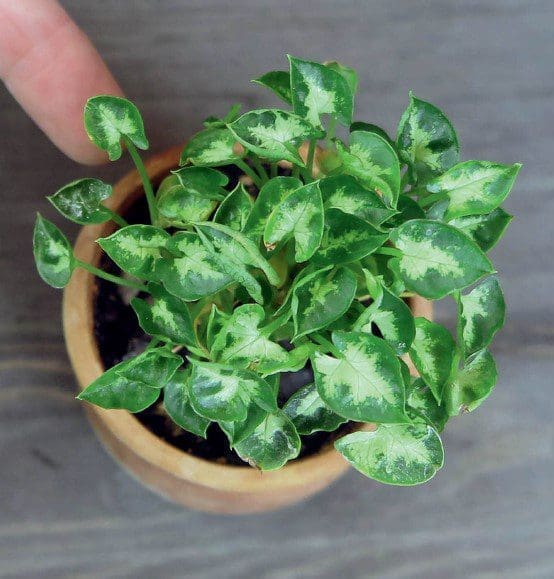
The dwarf arrowhead plant, often sold as Syngonium ‘Mini Pixie’, is one of the cutest tiny houseplants you can grow indoors. It looks like a standard juvenile arrowhead plant, but everything is miniaturized: tiny heart-shaped leaves, creamy white variegation, compact growth, and a small footprint that fits perfectly on shelves, desks, windowsills, and terrarium displays.
If you already love arrowhead plants but do not have room for a large climbing Syngonium, this miniature version is a perfect choice. It gives you the same tropical aroid look in a tiny package.
This guide explains how to care for a dwarf arrowhead plant, including light, watering, humidity, soil, pot size, terrarium growing, pruning, propagation, common problems, and pet safety.
Quick Answer: How Do You Care for a Dwarf Arrowhead Plant?
A dwarf arrowhead plant grows best in bright indirect light, a small pot with drainage, lightly moist but not soggy soil, and average to moderately high humidity. Let the top layer of soil dry slightly between waterings. Syngonium ‘Mini Pixie’ stays compact, but it can produce small trailing stems as it matures.
What Is a Dwarf Arrowhead Plant?
The dwarf arrowhead plant is a miniature form of Syngonium, commonly known as the arrowhead plant. The name comes from the arrow-shaped or heart-shaped juvenile leaves. Standard arrowhead plants can eventually trail or climb, but dwarf forms such as ‘Mini Pixie’ stay much smaller and more compact.
‘Mini Pixie’ is especially loved by collectors because the leaves look like tiny versions of a variegated Syngonium. The leaves often have creamy white or pale green centers with darker green edges, giving the plant a soft, delicate look.
Although small, it is still a tropical aroid. That means it appreciates warmth, indirect light, gentle moisture, and a loose potting mix.
Dwarf Arrowhead Plant Size
Syngonium ‘Mini Pixie’ usually stays very small compared with regular arrowhead plants. It often remains only a few inches tall and wide for a long time, making it ideal for small-space plant collections.
Typical size:
- Height: Usually around 2 to 4 inches when kept compact
- Width: Often 2 to 5 inches in a small pot
- Leaf size: Tiny leaves, often under 1 inch long
- Growth habit: Compact clump when young, lightly trailing as it matures
As the plant ages, it may produce tiny running stems. This is normal. You can prune them to keep the plant compact or let them trail slightly.
Light Requirements
A dwarf arrowhead plant grows best in bright indirect light. This helps keep the plant compact and supports stronger variegation. Too little light can make the plant stretch, lose its tight shape, and produce longer spaces between leaves.
Good light locations include:
- Near an east-facing window
- A few feet from a bright south or west window
- Under LED grow lights
- On a bright shelf away from direct afternoon sun
- Inside a terrarium with gentle supplemental light
Avoid harsh direct sun. Strong afternoon sun can scorch the tiny leaves or bleach the variegation.
Light Tip
More bright indirect light usually keeps Syngonium ‘Mini Pixie’ tighter and more compact. Lower light can make it stretch and look less miniature.
How Often to Water a Dwarf Arrowhead Plant
Watering is the most important part of dwarf arrowhead plant care. These plants like moisture, but they do not like sitting in soggy soil.
Water when the top layer of soil begins to feel slightly dry. In a tiny 2-inch or 3-inch pot, this may happen faster than with larger houseplants. However, the exact timing depends on light, humidity, potting mix, and room temperature.
Watering tips:
- Keep the soil lightly moist, not wet.
- Let the top layer dry slightly between waterings.
- Use a pot with drainage holes.
- Do not let the plant sit in standing water.
- Water less often in cooler, darker rooms.
- Check tiny pots more often because they dry faster.
If the leaves wilt but the soil is dry, the plant likely needs water. If the leaves yellow and the soil is wet, the plant may be overwatered.
Best Soil for Syngonium Mini Pixie
Because Syngonium is an aroid, it prefers a loose, airy, well-draining potting mix. A standard indoor plant mix can work, but it is even better if you add materials that improve drainage and airflow.
A good dwarf arrowhead plant mix may include:
- Indoor potting mix
- Perlite or pumice
- Coco coir
- Fine orchid bark
- A small amount of worm castings, optional
The goal is to hold enough moisture for the small roots while still allowing oxygen to reach them. Dense, wet soil can cause root rot.
Best Pot Size
Dwarf arrowhead plants do best in small pots. A 2-inch or 3-inch pot is usually enough for a young ‘Mini Pixie’. Moving it into a much larger pot can cause the soil to stay wet too long.
Choose a pot that:
- Has drainage holes
- Is only slightly larger than the root ball
- Does not hold excess water
- Fits the scale of the tiny plant
If you want to display it in a decorative ceramic pot, keep the plant in a nursery pot and place that inside the decorative container. Remove it for watering and let it drain before putting it back.
Humidity and Temperature
Dwarf arrowhead plants usually tolerate normal home humidity, but they look best with moderate humidity. Very dry air can cause crispy edges or slow growth, especially in winter.
Good humidity options include:
- Grouping small plants together
- Using a small humidifier nearby
- Growing the plant in a terrarium
- Keeping it away from heating vents
- Avoiding cold drafts
Occasional misting may freshen the foliage, but it does not raise humidity for long. A small humidifier or terrarium setup is more effective.
Keep the plant in normal indoor temperatures, ideally around 65°F to 80°F. Avoid temperatures below 55°F.
Can You Grow Dwarf Arrowhead Plant in a Terrarium?
Yes. Syngonium ‘Mini Pixie’ is an excellent terrarium plant because it stays small, likes gentle moisture, and appreciates higher humidity. It works especially well in open or semi-closed terrariums with good airflow.
Terrarium tips:
- Use a loose, well-draining substrate.
- Avoid waterlogged conditions.
- Give bright indirect light or a small grow light.
- Prune tiny runners to keep the plant compact.
- Open closed terrariums occasionally for airflow.
- Watch for mold if moisture is too high.
In a sealed terrarium, be extra careful with watering. The plant may need much less water than it would on a windowsill.
Fertilizer
Dwarf arrowhead plants do not need heavy feeding. Because the plant is tiny, too much fertilizer can burn roots or cause weak, stretched growth.
Feed lightly during spring and summer with a balanced liquid houseplant fertilizer diluted to half strength or weaker. Fertilize once a month at most during active growth, and stop or reduce feeding in fall and winter.
If the plant is growing inside a terrarium, fertilize even less often.
Pruning and Shaping
Syngonium ‘Mini Pixie’ usually stays compact, but it may eventually produce small runners. If you prefer a tight clump, prune these stems back with clean scissors.
Pruning helps:
- Keep the plant miniature
- Encourage fuller growth
- Remove leggy stems
- Remove yellow or damaged leaves
- Maintain terrarium size
Always use clean scissors or small pruning snips to avoid damaging the tiny stems.
How to Propagate Dwarf Arrowhead Plant
Dwarf arrowhead plants can be propagated from stem cuttings, but because the plant is so small, you need to be gentle.
Propagation steps:
- Find a tiny stem with at least one node.
- Cut below the node with clean scissors.
- Place the cutting in water, moist sphagnum moss, or a light potting mix.
- Keep it in bright indirect light.
- Maintain gentle humidity but avoid soggy conditions.
- Pot the cutting once roots are established.
For very tiny cuttings, sphagnum moss or a humid propagation box can work well, but airflow is important to prevent rot.
Repotting Syngonium Mini Pixie
Because this plant stays tiny, it does not need frequent repotting. Repot only when the roots have filled the pot, the soil breaks down, or the plant dries out too quickly.
Signs it may need repotting:
- Roots circling the pot
- Roots coming through drainage holes
- Soil drying extremely fast
- Plant becoming unstable
- Soil compacted or staying wet too long
When repotting, move up only one small pot size. Do not jump from a 2-inch pot to a large planter.
Common Dwarf Arrowhead Plant Problems
| Problem | Likely Cause | Fix |
|---|---|---|
| Yellow leaves | Overwatering, old leaves, poor drainage | Check soil moisture and drainage |
| Crispy edges | Dry air, underwatering, too much direct sun | Increase humidity, adjust watering, move from harsh sun |
| Leggy growth | Too little light | Move to brighter indirect light or use grow light |
| Mushy stems | Overwatering or rot | Remove affected parts and improve drainage |
| Faded variegation | Not enough light | Provide more bright indirect light |
Pests to Watch For
Dwarf arrowhead plants can occasionally attract the same pests as other houseplants. Because the plant is tiny, inspect it closely.
Common pests include:
- Spider mites
- Mealybugs
- Aphids
- Fungus gnats
- Scale insects
If you notice pests, isolate the plant, wipe the leaves gently, and treat with insecticidal soap or another houseplant-safe product according to label directions.
Is Dwarf Arrowhead Plant Toxic to Pets?
Yes. Like other Syngonium plants, dwarf arrowhead plant is considered toxic to cats, dogs, and humans if chewed or eaten. It contains calcium oxalate crystals, which can irritate the mouth, tongue, throat, and digestive system.
Keep it away from pets and children who may chew plants. If a pet eats part of the plant, contact your veterinarian.
Pet Safety Note
Do not place Syngonium ‘Mini Pixie’ where cats, dogs, or small children can chew the leaves. The plant is beautiful, but it is not pet-safe.
Dwarf Arrowhead Plant vs Regular Arrowhead Plant
The main difference is size and growth habit. A regular arrowhead plant can become a trailing or climbing houseplant with larger leaves. A dwarf arrowhead plant stays much smaller and is better for compact spaces.
| Feature | Dwarf Arrowhead Plant | Regular Arrowhead Plant |
|---|---|---|
| Size | Tiny, compact, often just a few inches tall | Much larger over time |
| Best Use | Terrariums, desks, shelves, mini plant collections | Hanging baskets, moss poles, tabletops, floor pots |
| Growth Habit | Compact clump, may produce tiny runners | Trailing or climbing as it matures |
| Care Difficulty | Easy to moderate due to small pot watering | Easy and forgiving |
If you want a larger trailing houseplant, a regular Syngonium is a better choice. If you want a tiny collectible plant, ‘Mini Pixie’ is the winner.
Where to Display a Mini Pixie Arrowhead Plant
Because it stays tiny, Syngonium ‘Mini Pixie’ is perfect for places where normal houseplants are too large.
Good display ideas include:
- Desk plant
- Bookshelf plant
- Windowsill plant with filtered light
- Terrarium plant
- Mini greenhouse cabinet
- Plant shelf under grow lights
- Small decorative pot on a nightstand
Just remember to keep it away from pets and direct harsh sun.
Should You Let It Flower?
Indoor arrowhead plants are grown for foliage, not flowers. Syngonium can produce aroid-style flowers in ideal conditions, but this is uncommon indoors and not the main reason to grow the plant.
For a dwarf arrowhead plant, the tiny variegated foliage is the real feature. If the plant ever blooms, you can enjoy the novelty or remove the flower to help the plant focus energy on leaves.
Final Thoughts
The dwarf arrowhead plant is a tiny but charming houseplant for collectors, terrarium growers, and anyone who loves miniature foliage. Syngonium ‘Mini Pixie’ gives you the tropical arrowhead plant look without needing much space.
Give it bright indirect light, a small pot with drainage, loose soil, gentle moisture, and moderate humidity. Keep it away from pets, avoid soggy soil, and prune tiny runners if you want to maintain its compact shape.
For more Syngonium help, read next: How to Propagate Arrowhead Plant.
Frequently Asked Questions About Dwarf Arrowhead Plant
What is a dwarf arrowhead plant?
A dwarf arrowhead plant is a miniature Syngonium, often sold as Syngonium ‘Mini Pixie’. It has tiny variegated leaves and stays much smaller than a regular arrowhead plant.
How big does Syngonium Mini Pixie get?
Syngonium ‘Mini Pixie’ usually stays only a few inches tall and wide, especially when grown in a small pot with bright indirect light.
Does dwarf arrowhead plant need bright light?
It grows best in bright indirect light. It can tolerate lower light, but growth may stretch and variegation may fade.
How often should I water a dwarf arrowhead plant?
Water when the top layer of soil feels slightly dry. Keep the soil lightly moist but never soggy.
Can Syngonium Mini Pixie grow in a terrarium?
Yes. It is an excellent terrarium plant because it stays small and appreciates humidity. Avoid soggy soil and provide airflow.
Why is my Mini Pixie getting leggy?
Leggy growth usually means the plant needs more light. Move it to brighter indirect light or use a small grow light.
Is dwarf arrowhead plant toxic to cats and dogs?
Yes. Like other Syngonium plants, it contains calcium oxalate crystals and should be kept away from pets and small children.
Can I propagate dwarf arrowhead plant?
Yes. It can be propagated from tiny stem cuttings with at least one node. Root cuttings in water, sphagnum moss, or a light potting mix.
Should I mist Syngonium Mini Pixie?
Misting is not harmful if airflow is good, but it only raises humidity briefly. A small humidifier or terrarium is more effective for consistent humidity.
Is dwarf arrowhead plant good for beginners?
Yes, but tiny pots dry out quickly and can also be overwatered easily. Beginners should check soil moisture carefully and use a pot with drainage.







Comments are closed.