





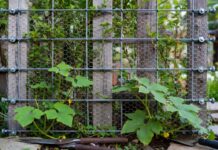











A wire trellis is one of the cleanest ways to support climbing plants without building a bulky wood frame. It can be a simple chicken wire panel for cucumbers, a stainless steel cable grid on a wall, a welded wire mesh panel in a vegetable bed, or a tensioned wire system for vines.
The best choice depends on the plant. Cucumbers and peas can climb chicken wire or welded wire mesh. Star jasmine, clematis, climbing roses, and ornamental vines usually look better on a tensioned cable trellis. Grapes and heavy fruiting vines need stronger posts, heavier wire, and proper tensioning.
For most home gardens, the best wire trellis setup is either a stainless steel wire trellis kit for walls or a welded wire/chicken wire trellis for vegetables. The mistake is treating every climbing plant the same. A light annual vine and a mature woody vine do not put the same load on the wire.

- Best for walls: Stainless steel cable trellis kit with eye screws, anchors, cable, and turnbuckles
- Best cheap option: Chicken wire trellis for cucumbers, peas, beans, and light annual vines
- Best for vegetable beds: Welded wire mesh panel or cattle-panel-style support
- Best for jasmine and clematis: Tensioned wire trellis with 8 to 12 inches of spacing
- Best for roses: Strong wall wire trellis with air space and sturdy anchors
- Best for grapes: Heavier trellis wire, posts, bracing, and proper tensioning
Acemaker Wire Trellis Kit for Climbing Plants
Best for: A clean wall wire trellis where you want a ready-made cable grid instead of buying every cable, anchor, and fitting separately.
Stainless Steel Cable Trellis Kit
Best for: Permanent wall trellis systems for star jasmine, clematis, roses, and ornamental vines where corrosion resistance and a clean look matter.
Chicken Wire for Garden Trellis
Best for: Cheap cucumber trellises, peas, beans, lightweight annual vines, and quick vegetable garden supports.
Welded Wire Mesh Trellis Panel
Best for: Stronger vegetable supports where chicken wire feels too flimsy. Welded wire mesh works well for cucumbers, peas, beans, squash training, and raised bed trellises.
Turnbuckles, Cable Clamps, and Trellis Hardware
Best for: DIY trellis wiring where you are building your own cable trellis system and need tension control, wall attachment, and clean wire ends.
What Is a Wire Trellis?
A wire trellis is a plant support made from wire, cable, mesh, fencing, or tensioned hardware. The wire gives climbing plants something to grab, wrap around, or be tied to as they grow upward.
Wire trellises can be simple or polished. A roll of chicken wire stapled to a wood frame is a wire trellis. So is a stainless steel cable grid mounted to a brick wall with turnbuckles. The right version depends on plant weight, wall material, garden style, and whether the trellis is temporary or permanent.
Wire Trellis vs Trellis Wire vs Cable Trellis
These terms overlap, but they are not exactly the same. Knowing the difference helps you buy the right supplies.
| Term | What It Usually Means | Best For | Watchout |
|---|---|---|---|
| Wire trellis | Any trellis made from wire, cable, mesh, or fencing | General climbing plant support | Can mean many different products. |
| Trellis wire | Wire used to build a trellis system | Grapes, vines, espalier, garden rows | Gauge and tension matter. |
| Cable trellis | Tensioned cable grid, usually stainless steel | Walls, patios, jasmine, clematis, roses | Needs solid anchors and proper spacing. |
| Chicken wire trellis | Chicken wire attached to a frame, posts, or fence | Cucumbers, peas, beans, annual vines | Not ideal for heavy woody vines. |
| Welded wire mesh trellis | Rigid or semi-rigid welded wire panel or fencing | Vegetables, raised beds, stronger annual support | Edges can be sharp; frame it securely. |
Best Plants for a Wire Trellis
A wire trellis works best when the plant can naturally climb, twine, lean, or be tied to the support. Some plants grip tightly on their own. Others need soft ties, clips, or regular training.
| Plant | Best Wire Trellis Type | Spacing | Notes |
|---|---|---|---|
| Cucumbers | Chicken wire, welded wire, mesh panel | 4 to 6 inch openings work well | Use a sturdy frame so fruit weight does not pull it down. |
| Peas | Chicken wire, garden wire, netting | Small openings are fine | Lightweight and easy to support. |
| Beans | Wire mesh, vertical wire, string-and-wire support | 6 to 8 inches | Pole beans need height more than fancy hardware. |
| Star jasmine | Stainless cable wall trellis | 8 to 12 inches | Train young stems while they are flexible. |
| Clematis | Thin wire grid, mesh, cable with cross lines | 6 to 8 inches | Clematis likes thinner supports it can wrap around. |
| Climbing roses | Strong cable trellis or wire wall trellis | 12 to 18 inches | Roses need tying and pruning, not just a place to cling. |
| Grapes | Heavy trellis wire on posts | System-dependent | Use a stronger vineyard-style support, not light wall hardware. |
Best Wire Trellis Kit Options
A wire trellis kit makes sense when you want a clean wall installation and do not want to piece together cable, anchors, screws, sleeves, and turnbuckles separately. Kits are especially useful for patios, exterior walls, privacy screens, and ornamental vines.
The better kits usually include stainless steel cable or coated wire, wall anchors, eye screws, cable clamps, and tensioning hardware. The exact hardware matters because a cable trellis is only as strong as the wall connection.
- Choose stainless steel for permanent outdoor setups: It handles weather better than cheap bare wire.
- Use turnbuckles when tension matters: They let you tighten the wire after installation.
- Match anchors to the wall: Wood, masonry, brick, stucco, and siding do not use the same fastening method.
- Leave space behind the vine: Airflow helps reduce moisture problems against walls.
- Do not overtension weak surfaces: A wire trellis can pull poor anchors loose.
How to Build a Wire Trellis on a Wall
A wall wire trellis works best when it is planned like a small cable system, not just random wire stretched across a wall. The goal is to create a grid that gives vines regular contact points while keeping the plant slightly off the surface.
Materials
- Stainless steel cable or garden trellis wire
- Eye screws, eye bolts, or wall-mount trellis anchors
- Turnbuckles for tensioning
- Cable clamps or crimp sleeves
- Masonry anchors if attaching to brick, block, or concrete
- Drill and correct drill bits for the wall material
- Level, tape measure, and pencil
- Wire cutters or cable cutters
- Soft plant ties or clips
Step 1: Choose the Wall Location
Pick a wall with enough light for the plant. A trellis can be built perfectly and still fail if the plant is in the wrong sun exposure. Also check gutters, windows, vents, utility lines, siding seams, irrigation spray, and future access for pruning.
Step 2: Plan the Grid
For most ornamental vines, space vertical and horizontal wires about 8 to 12 inches apart. For roses, 12 to 18 inches can work better because you need room to tie canes and prune. For fine twining plants like clematis, smaller spacing gives more grip points.
Step 3: Mark Anchor Points
Use a level and tape measure to mark anchor points. Keep the layout symmetrical if the trellis will stay visible before plants fill in. A clean grid looks intentional even during the first growing season.
Step 4: Install Wall Anchors
Use anchors made for the wall material. Wood posts and framing can take eye screws. Brick and concrete usually need masonry anchors. Stucco, siding, and veneer surfaces need extra caution because the visible surface may not be the structural support.
Step 5: Run the Wire or Cable
Thread the wire through eye screws or attach it with cable hardware. Keep the lines straight, but do not overtighten before everything is connected.
Step 6: Tension the Trellis Wire
Use turnbuckles to tighten the wire until it is firm, not guitar-string tight. A little tension keeps the trellis clean. Too much tension can strain anchors, bend hardware, or damage weaker surfaces.
Step 7: Train the Plant
Guide new stems toward the wire and tie them loosely. Do not cinch plant ties tightly around stems. Vines thicken as they grow, and tight ties can cut into the plant.
Do not attach a heavy vine trellis only to thin siding, loose stucco, or weak veneer. The plant gets heavier every season, especially after rain and wind. Attach to solid framing, masonry, or properly rated anchors.
Stainless Steel Wire Trellis for Permanent Vines
A stainless steel wire trellis is the best-looking option for a permanent wall trellis. It is clean, modern, weather-resistant, and strong enough for many ornamental vines when installed correctly.
Use stainless steel cable or stainless wire when the trellis will stay outside year-round, especially near patios, entryways, exterior walls, and visible garden structures. Cheap wire may work at first but can rust, stain walls, loosen, or look rough after one or two seasons.
Stainless steel wire works well for:
- Star jasmine
- Confederate jasmine
- Clematis
- Climbing roses when the hardware is strong enough
- Evergreen vines
- Espalier-style training
- Modern patio walls
Can You Use Chicken Wire as a Trellis?
Yes, you can use chicken wire as a trellis, especially for lightweight vegetable crops and annual vines. It is cheap, flexible, easy to cut, and gives plants many places to grab.
Chicken wire is not the best choice for heavy woody vines, permanent wall trellises, or high-end visible installations. It can bend, sag, rust, and look messy if it is not framed or stretched well.
| Chicken Wire Trellis Works Well For | Not Ideal For | Why |
|---|---|---|
| Cucumbers | Climbing roses | Roses need stronger support and pruning access. |
| Peas | Grapes | Grapes need posts, heavy wire, and tension. |
| Beans | Permanent wall trellis | Chicken wire can look rough and may sag over time. |
| Morning glories | Large woody vines | Heavy stems can overwhelm light wire. |
Chicken Wire Trellis for Cucumbers
A cucumber chicken wire trellis is one of the cheapest vegetable garden supports. The best version uses a frame instead of loose chicken wire. Loose wire can fold, sag, and become hard to harvest through.
For cucumbers, build a simple rectangular frame from wood stakes, garden posts, or metal T-posts, then stretch the chicken wire tight across it. Angle the trellis slightly or build an A-frame if you want easier harvesting and better airflow.
- Use a frame: Chicken wire needs support on the edges.
- Keep the bottom anchored: Cucumbers can pull lightweight wire forward.
- Train early: Guide young cucumber vines before they sprawl.
- Watch fruit weight: Large cucumbers need a sturdier trellis than pea vines.
- Use gloves: Cut chicken wire edges are sharp.
Welded Wire Mesh Trellis
A welded wire mesh trellis is usually stronger and cleaner than chicken wire. The wire openings stay more consistent, the panel resists sagging better, and the trellis feels more stable when attached to posts or a frame.
Welded wire works especially well in vegetable gardens. It is a good option for cucumbers, peas, beans, small melons with slings, and raised bed trellis panels. For a permanent ornamental wall, stainless cable still looks better, but welded wire is hard to beat for practical garden support.
Wire Trellis for Star Jasmine and Jasmine
A wire trellis for star jasmine should be strong, tidy, and slightly offset from the wall. Star jasmine can become dense over time, so give it a grid it can be trained across instead of a single loose wire.
Use stainless steel cable or coated garden wire with horizontal and vertical spacing around 8 to 12 inches. Start tying young stems early. Once jasmine becomes woody and tangled, reshaping it is more work.
For jasmine on a wall:
- Use corrosion-resistant wire or cable.
- Leave space between the wall and the plant for airflow.
- Train stems sideways and upward for fuller coverage.
- Prune lightly to avoid a heavy, tangled mat.
- Use soft ties instead of tight plastic zip ties around stems.
Wire Trellis for Clematis
Clematis climbs by wrapping leaf stems around thin supports. Thick cable can be harder for it to grip, so a finer wire grid, mesh, or closely spaced trellis is often better than a few heavy wires.
If you want clematis on a cable trellis, add enough cross lines so the plant has many contact points. Spacing around 6 to 8 inches is usually more useful than a wide open grid.
Wire Trellis for Roses
Climbing roses do not cling like ivy or twine like beans. They need to be tied to the wire trellis. The trellis must be strong enough for woody canes, wind movement, pruning, and the added weight of wet foliage and flowers.
For roses, use a strong wall wire trellis with larger spacing, usually around 12 to 18 inches. Train canes horizontally or diagonally when possible because that can encourage more flowering shoots along the cane.
Do not mount rose wire too tight against a wall. Airflow matters, and you need room to tie, prune, and remove dead canes.
Wire for Grape Trellis and Vineyard-Style Support
Grapes are a different category from light ornamental vines. A grape wire trellis needs posts, end bracing, strong wire, and tension. A decorative wall wire kit is usually not the right support for productive grape vines.
For grapes, the important questions are wire gauge, post spacing, end-post bracing, row length, training system, and fruit load. If you are planting more than one or two vines, treat it like a small vineyard-style support instead of a patio trellis.
If the main goal is grapes, make a dedicated grape trellis plan. Heavy fruiting vines need stronger posts and wire than a typical ornamental wire wall trellis.
Wire Trellis Spacing Guide
Wire spacing should match the plant’s growth habit. Fine climbers need closer contact points. Large woody plants need larger spacing and more room for tying, pruning, and airflow.
| Plant Type | Suggested Wire Spacing | Best Trellis Type |
|---|---|---|
| Peas and light annuals | 2 to 6 inches | Chicken wire, mesh, netting |
| Cucumbers and beans | 4 to 8 inches | Welded wire, chicken wire, framed mesh |
| Clematis | 6 to 8 inches | Fine wire grid or mesh |
| Star jasmine | 8 to 12 inches | Stainless cable wall trellis |
| Climbing roses | 12 to 18 inches | Strong cable or wire wall trellis |
| Grapes | Training-system dependent | Post-and-wire grape trellis |
Trellis Wire Tension
Trellis wire should be firm enough to support the plant without sagging, but not so tight that it damages anchors or pulls posts out of alignment. This is where turnbuckles help. They let you fine-tune the tension after the trellis is assembled.
For a wall trellis, the goal is neat and firm. For grapes or long runs of trellis wire, tension is more structural and must work with proper end-post bracing. Do not use the same tensioning approach for a jasmine wall grid and a grape row.
Wire Trellis on Brick Walls
A wire trellis for a brick wall can look excellent, but the anchors matter. Use masonry anchors or hardware rated for brick or mortar, and avoid drilling blindly near weak joints, cracked masonry, or areas where water intrusion could become a problem.
Many gardeners prefer mounting the trellis wire into masonry anchors with a slight standoff from the wall. That keeps vines from sitting flat against the brick and gives you more room for tying and pruning.
Wood and Wire Trellis
A wood and wire trellis is a good compromise when you want the strength of a frame and the low visual weight of wire. The wood frame keeps the trellis square, while chicken wire, welded wire, or garden wire provides the climbing surface.
This style is especially useful for vegetable gardens because it is easy to move, repair, and store. It also keeps sharp wire edges contained inside a frame.
Common Wire Trellis Mistakes
- Using light wire for heavy vines: Mature woody vines can overpower flimsy wire.
- Skipping tension hardware: Loose wire sags and looks messy.
- Overtightening the wire: Too much tension can pull anchors loose.
- Attaching to weak surfaces: Thin siding, loose stucco, and poor masonry are risky attachment points.
- Using chicken wire for permanent ornamental walls: It works, but it rarely looks polished long term.
- Ignoring plant habit: Clematis, jasmine, grapes, roses, cucumbers, and peas climb differently.
- Leaving no airflow: Vines pressed tightly against walls can trap moisture.
- Not training early: Young flexible stems are easier to guide than older woody growth.
- Forgetting pruning access: A trellis should support the plant and let you maintain it.
Frequently Asked Questions
What is the best wire for a trellis?
For permanent outdoor trellises, stainless steel wire or stainless cable is usually the best choice because it resists rust and looks cleaner over time. For cheap vegetable trellises, chicken wire or welded wire mesh can work well.
Can you use chicken wire as a trellis?
Yes, chicken wire can be used as a trellis for cucumbers, peas, beans, morning glories, and other light annual vines. It is not the best choice for heavy woody vines, grapes, or polished wall installations.
Is a wire trellis good for climbing plants?
Yes, a wire trellis is good for many climbing plants as long as the wire type, spacing, tension, and anchor strength match the plant. Light vines need less support than roses, jasmine, or grapes.
How do you make a wire trellis?
To make a wire trellis, choose a frame or wall location, mark anchor points, install eye screws or anchors, run wire or cable between the anchors, tension the wire, and train the plant with soft ties.
How do you build a wire trellis for climbing plants?
Build a wire trellis by matching the design to the plant. Use chicken wire or welded wire for vegetables, stainless cable for ornamental wall vines, and heavier post-and-wire systems for grapes or large fruiting vines.
What is the best wire trellis for jasmine?
The best wire trellis for jasmine is a stainless steel cable wall trellis with 8 to 12 inches of spacing and enough standoff from the wall for airflow and pruning.
What is the best wire trellis for star jasmine?
Star jasmine does well on a tensioned stainless wire trellis or cable grid. Train young stems early and use soft ties until the plant starts covering the grid.
Can clematis grow on a wire trellis?
Yes, clematis can grow on a wire trellis, but it usually prefers thinner supports and closer spacing. A fine wire grid or mesh is better than a few thick cables spaced far apart.
Can climbing roses grow on a wire trellis?
Yes, climbing roses can grow on a wire trellis, but they need to be tied to the wire because they do not cling on their own. Use strong anchors and leave enough room for pruning.
What wire should I use for a grape trellis?
Grapes need heavier trellis wire, sturdy posts, end bracing, and proper tension. A light wall wire trellis kit is usually not enough for productive grape vines.
How far apart should trellis wires be?
For many ornamental vines, 8 to 12 inches works well. Clematis may need closer spacing, around 6 to 8 inches. Climbing roses often work better with 12 to 18 inches between wires.
How tight should trellis wire be?
Trellis wire should be firm and straight but not overtightened. Use turnbuckles for cable trellises so you can adjust the tension without straining anchors or posts.
Can I attach a wire trellis to brick?
Yes, but use masonry anchors or hardware suited for brick or mortar. Check the wall condition first and avoid weak, cracked, or loose areas.
Is welded wire better than chicken wire for a trellis?
Welded wire is usually stronger and cleaner than chicken wire. Chicken wire is cheaper and flexible, but welded wire mesh holds its shape better and works well for vegetable trellises.
Final Verdict
A wire trellis is worth using when you want strong plant support without a bulky wood structure. For walls and ornamental vines, a stainless steel cable trellis kit is usually the cleanest choice. For vegetables, chicken wire or welded wire mesh is cheaper and easier to install.
The right wire trellis depends on the plant. Cucumbers and peas can climb simple mesh. Jasmine and clematis need a well-spaced wall grid. Roses need strong wire and tying. Grapes need a heavier post-and-wire system.
If the trellis will stay in place for years, do not cheap out on anchors, wire quality, or tension hardware. A wire trellis looks simple, but the plant gets heavier every season. Build it for the mature plant, not just the starter vine in the pot.
For a clean wall trellis, start with a stainless steel cable trellis kit. For a cheap vegetable trellis, use chicken wire or welded wire mesh on a simple frame. Match the wire, spacing, and anchors to the plant before planting.
Join Garden Frontier for practical gardening, landscaping, DIY trellis ideas, plant care tips, and outdoor project guides.
100% free. No spam. Unsubscribe anytime.