
















Polycrylic vs polyurethane is one of those finishing choices that looks simple until you are standing over a painted dresser, stained tabletop, cabinet door, or floor and realizing the wrong clear coat can ruin the look.
Both finishes protect wood. Both can come in clear sheens. Both are common on furniture and DIY projects. But they do not behave the same. Polycrylic is usually the safer choice for painted furniture, white or light colors, crafts, and low-odor indoor projects. Polyurethane is usually the better choice when durability matters more, especially for floors, tabletops, cabinets, stained wood, and high-wear surfaces.
The easiest way to choose is not by brand name first. Choose by project: painted furniture, stained wood, floors, cabinets, tabletops, outdoor wood, crafts, or trim. Once you know the surface and wear level, the right clear finish becomes much easier to pick.
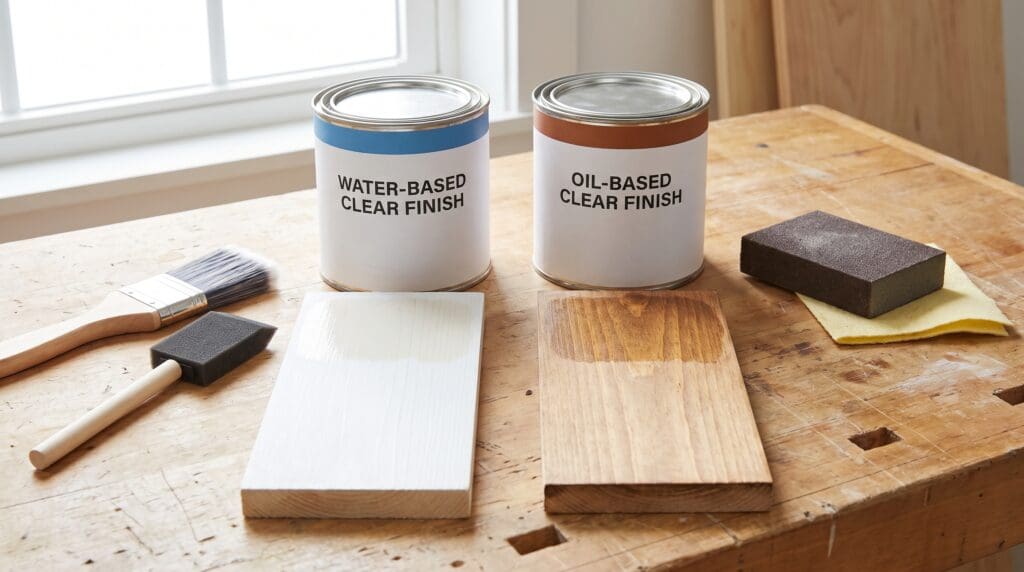
- Use Polycrylic for: painted furniture, white paint, light woods, crafts, shelves, trim, and low-odor indoor projects.
- Use water-based polyurethane for: a clearer tough finish on furniture, cabinets, trim, doors, and some floors when the product label allows it.
- Use oil-based polyurethane for: stained wood, tabletops, floors, doors, and high-wear projects where a warmer amber tone is acceptable.
- Do not use Polycrylic for: floors or heavy-traffic surfaces unless the product label specifically allows it.
- Do not use oil-based polyurethane if: you need a crystal-clear finish over white paint or pale colors.
- Best rule: Polycrylic protects without much color change. Polyurethane protects harder, but oil-based versions can warm or amber the surface.
If the project is painted white or light, start with Polycrylic or a clear water-based polyurethane. If the project is stained wood, a tabletop, floor, or high-wear surface, compare polyurethane options first.
What Is Polycrylic?
Polycrylic is a water-based clear protective finish often used over painted furniture, stained wood, crafts, cabinets, doors, trim, shelves, and smaller indoor wood projects. It is popular because it dries clear, has lower odor than oil-based finishes, and cleans up with soap and water.
The biggest reason DIYers choose Polycrylic is color control. If you painted a dresser white, pale gray, cream, blue, green, or another light color, you usually do not want the clear coat to turn warm yellow. Polycrylic is designed for a clearer finish and is less likely to amber than oil-based polyurethane.
Polycrylic Works Best For
- Painted furniture.
- White or light-colored paint.
- Light woods such as maple, ash, or birch.
- Craft projects.
- Shelves and bookcases.
- Trim and small interior woodwork.
- Projects where low odor and water cleanup matter.
Polycrylic Is Not the Best Choice For
- Floors.
- Heavy-use tabletops.
- Outdoor furniture.
- Exterior doors exposed to weather.
- High-moisture exterior projects.
- Deep red mahogany stain projects where the label warns against it.
- Projects where maximum abrasion resistance matters more than clarity.
Best for Painted Furniture: Minwax Polycrylic Protective Finish
Best for: Painted furniture, light colors, crafts, and indoor wood projects where a clear finish matters.
Polycrylic is the finish most DIY furniture painters compare first because it stays clearer than oil-based polyurethane and cleans up with soap and water. Use thin coats and avoid overbrushing.
What Is Polyurethane?
Polyurethane is a clear protective finish used on wood projects that need stronger wear protection. It comes in water-based and oil-based versions. That difference matters because water-based polyurethane behaves more like a clear modern finish, while oil-based polyurethane adds warmth and ambering.
Oil-based polyurethane is often chosen for stained wood, doors, floors, tabletops, and high-wear projects. It tends to add a warmer tone to the wood and can make stained wood look richer. The tradeoff is stronger odor, mineral spirits cleanup, longer dry times, and more risk of yellowing over light paint.
Water-based polyurethane is a good middle ground when you want more durability than Polycrylic but still want a clearer finish and easier cleanup than oil-based polyurethane.
Polyurethane Works Best For
- Floors.
- Tabletops.
- Stained wood furniture.
- Cabinets.
- Doors.
- Trim and woodwork.
- High-wear indoor projects.
- Projects where a warm amber look is acceptable or desired.
Polyurethane Is Not Always Best For
- White painted furniture.
- Pale painted surfaces.
- Projects that need the clearest possible topcoat.
- Small indoor projects where odor is a major concern.
- Fast soap-and-water cleanup.
- Exterior projects unless the product is rated for exterior use.
Best for Stained Wood: Minwax Fast-Drying Polyurethane
Best for: Stained wood, doors, cabinets, furniture, floors, and projects where a warmer durable finish is acceptable.
Oil-based polyurethane is the direction to compare when durability and a warm wood tone matter more than a perfectly clear finish. It is not the finish to grab for white painted furniture.
The Main Difference Between Polycrylic and Polyurethane
The main difference is how each finish balances clarity, durability, odor, cleanup, and color change.
Polycrylic is usually clearer, lower odor, faster to recoat, and easier to clean up. Polyurethane is usually tougher, more wear-resistant, and better for high-use wood surfaces, especially in oil-based or floor-rated formulas.
| Feature | Polycrylic | Polyurethane |
|---|---|---|
| Base | Water-based | Water-based or oil-based |
| Color change | Usually stays clearer | Oil-based versions add amber warmth |
| Durability | Good for light to moderate use | Better for high-wear surfaces |
| Cleanup | Soap and water | Soap and water for water-based; mineral spirits for oil-based |
| Best surface | Painted furniture and light wood | Floors, tabletops, stained wood, cabinets |
Polycrylic vs Water-Based Polyurethane
This is the closest comparison because both are water-based and both can dry clearer than oil-based polyurethane. The difference is that water-based polyurethane is usually chosen when you want a tougher finish, while Polycrylic is often chosen when clarity, low odor, and painted furniture are the priority.
Still comparing clear water-based finishes? Read our focused guide to Polycrylic vs water-based polyurethane for painted furniture, cabinets, tabletops, floors, and white paint.
Choose Polycrylic When:
- You are sealing painted furniture.
- The project is white, cream, pale gray, or another light color.
- You want low odor.
- You want easy soap-and-water cleanup.
- The project is not a floor or heavy-use tabletop.
- You want a clear finish over light wood.
Choose Water-Based Polyurethane When:
- You want a clear finish with more durability.
- You are finishing cabinets, doors, trim, or furniture.
- You want less ambering than oil-based polyurethane.
- The product label supports the surface you are finishing.
- You need a floor-rated water-based finish for floors.
Polycrylic vs Oil-Based Polyurethane
This comparison is easier. Polycrylic is clearer and better for light painted surfaces. Oil-based polyurethane is tougher and warmer-looking, but it can change the color of the project.
Oil-based polyurethane can be beautiful on stained wood because it adds warmth and depth. That same amber tone can be a problem over white paint, pale gray, raw maple, or any project where you want the color to stay cool and clean.
Choose Polycrylic When:
- You want the clearest finish.
- The project is painted white or light.
- You want fast cleanup.
- You are working indoors and odor matters.
- The project has light-use wear.
Choose Oil-Based Polyurethane When:
- You want a warmer amber finish.
- The project is stained wood.
- The surface gets more wear.
- You are finishing floors, doors, tabletops, or cabinets.
- You can manage ventilation and mineral spirits cleanup.
Best Clear Coat for Painted Furniture
For painted furniture, Polycrylic is usually the safer starting point. It dries clearer than oil-based polyurethane and is less likely to yellow a white or pale painted surface.
This matters most on:
- White dressers.
- Painted nightstands.
- Light-colored cabinets.
- Kids’ furniture.
- Painted shelves.
- Craft furniture.
- Farmhouse-style furniture with pale paint.
Water-based polyurethane can also work well on painted furniture when you want more durability, but always test first. Some paints, stains, tannins, or previous finishes can react under a clear coat.
Best Setup for Painted Furniture
Best for: DIY painted dressers, nightstands, shelves, and cabinets.
Use Polycrylic or a clear water-based finish, a high-quality synthetic brush, 220-grit sanding sponge, tack cloth, and thin coats. Do not shake the can, and do not overbrush the finish as it starts drying.
Best Clear Coat for White Paint
White paint is where the wrong clear coat shows immediately. Oil-based polyurethane can add amber warmth, which often looks like yellowing over white paint. That may be acceptable on stained oak, but it usually looks wrong on a white dresser or painted cabinet.
For white paint, choose Polycrylic or a clear water-based polyurethane and test in a hidden area before coating the whole piece.
White Paint Rule
Best Finish for Stained Wood
For stained wood, polyurethane often makes more sense than Polycrylic, especially when durability matters. Oil-based polyurethane can deepen the color and add warmth, which many people want on stained furniture, doors, trim, and floors.
Polycrylic can be used over some stained wood projects, but it is usually chosen when you want clarity and less color change. If the wood is dark, warm, rustic, or traditional, oil-based polyurethane may create a richer look.
Polycrylic vs Polyurethane for Floors
For floors, use polyurethane, not Polycrylic. Floors need a harder finish built for foot traffic, shoes, pets, furniture, rugs, cleaning, and repeated wear. Polycrylic is better for furniture and smaller indoor projects, not hardwood floors.
Floor polyurethane comes in water-based and oil-based formulas. Water-based floor polyurethane dries clearer and usually has lower odor. Oil-based floor polyurethane adds warmth and is often chosen for a traditional amber wood tone.
Choose Floor Polyurethane When:
- You are finishing hardwood floors.
- The surface gets foot traffic.
- You need a finish rated for flooring.
- You want a product designed for abrasion resistance.
- You can follow the cure-time rules before furniture and rugs return.
Best for Floors: Floor-Rated Polyurethane
Best for: Hardwood floors, stair treads, and high-traffic wood surfaces.
Do not use a furniture clear coat just because it looks similar in the can. Floors need a finish rated for floors and a curing schedule that keeps rugs, furniture, and heavy traffic off the surface long enough.
Polycrylic vs Polyurethane for Tabletops
For tabletops, polyurethane usually wins. Tabletops see plates, cups, laptops, elbows, spills, cleaning, heat, and abrasion. Polycrylic can work on light-use tables or decorative furniture, but a dining table, coffee table, or desk usually needs a tougher finish.
Water-based polyurethane is a good option when you want a clearer finish. Oil-based polyurethane is a good option when the tabletop is stained wood and a warmer tone is welcome.
Tabletop Rule
- White painted tabletop: Clear water-based finish, test first.
- Stained wood tabletop: Polyurethane is usually better.
- Heavy daily use: Choose a durable polyurethane finish.
- Decorative side table: Polycrylic may be enough.
Polycrylic vs Polyurethane for Cabinets
Cabinets sit between furniture and heavy-wear surfaces. They are touched constantly, exposed to kitchen grease, bathroom humidity, cleaning, fingerprints, and daily use. Polycrylic can work on lightly used painted cabinets, but water-based polyurethane is often the stronger clear option when durability matters.
For kitchen cabinets, test adhesion and appearance before committing. Painted cabinets can discolor under the wrong clear coat, while stained cabinets often look better with polyurethane.
Cabinet Decision
- White painted cabinets: Polycrylic or clear water-based polyurethane, test first.
- Stained wood cabinets: Polyurethane is usually the better direction.
- Bathroom cabinets: Consider humidity and cleaning exposure.
- High-use kitchen cabinets: Choose durability over convenience.
Polycrylic vs Polyurethane for Outdoor Wood
For outdoor wood, do not use standard Polycrylic as your first choice. Outdoor wood needs a finish that can handle sun, moisture, temperature swings, and weather exposure. That usually means an exterior-rated polyurethane, spar urethane, exterior clear coat, deck finish, or outdoor wood sealer.
Spar urethane is often used for exterior doors, trim, railings, outdoor furniture, and wood exposed to moisture or sunlight. It is designed to move more with temperature changes than a typical hard indoor finish.
Best for Outdoor Wood: Exterior Spar Urethane
Best for: Exterior doors, outdoor furniture, trim, windows, railings, and wood exposed to weather.
For exterior exposure, look for a product specifically rated for outdoor use. Standard indoor Polycrylic is not the right shortcut for sun, rain, humidity, and temperature movement.
Application Differences
Polycrylic and polyurethane both reward patience. Thin coats, proper sanding, clean surfaces, and enough cure time matter more than most people think.
Applying Polycrylic
- Stir gently. Do not shake the can.
- Use a high-quality synthetic bristle brush or recommended applicator.
- Apply thin coats.
- Brush in the direction of the grain when working on wood.
- Do not overbrush as the finish starts to set.
- Sand lightly between coats if the label recommends it.
- Remove all dust before the next coat.
Applying Polyurethane
- Choose water-based or oil-based depending on the project.
- Use a synthetic brush for water-based formulas.
- Use a natural bristle or foam brush for many oil-based formulas.
- Apply thin coats.
- Sand lightly between coats when the label requires it.
- Use good ventilation, especially with oil-based polyurethane.
- Dispose of oil-based rags safely according to label warnings.
Common Mistakes
- Using oil-based polyurethane over white paint: It can amber and make the finish look yellow.
- Using Polycrylic on floors: Floors need a finish rated for floor traffic.
- Shaking the can: This can create bubbles in the finish.
- Applying coats too thick: Thick coats can cloud, drip, bubble, or cure poorly.
- Overbrushing Polycrylic: It dries quickly, so too much brushing can leave marks.
- Skipping sanding between coats: Light sanding helps adhesion when the label calls for it.
- Not testing over paint or stain: Some combinations discolor or react.
- Using indoor finish outdoors: Exterior wood needs exterior-rated protection.
- Rushing cure time: Dry to touch is not the same as ready for full use.
Best Product Setup by Project
| Project | Best Starting Finish | Why |
|---|---|---|
| White painted dresser | Polycrylic | Clear finish with less ambering risk |
| Stained oak table | Polyurethane | More durability and warmer stained-wood look |
| Hardwood floor | Floor-rated polyurethane | Designed for foot traffic |
| Painted cabinets | Polycrylic or water-based polyurethane | Clearer finish, but durability still matters |
| Outdoor bench | Exterior spar urethane or outdoor-rated finish | Built for sun, moisture, and temperature changes |
| Craft project | Polycrylic | Low odor, clear look, easy cleanup |
- Polycrylic or polyurethane matched to the project.
- High-quality synthetic brush for water-based finishes.
- Natural bristle or foam brush for many oil-based finishes.
- 220-grit and 320-grit sanding sponges.
- Tack cloth or lint-free cloth.
- Gloves and eye protection.
- Respirator or ventilation setup for solvent-based products.
- Mineral spirits for oil-based cleanup, if required by the label.
Final Verdict: Should You Use Polycrylic or Polyurethane?
Use Polycrylic when the project needs a clear, low-odor, water-based finish and the surface will not take heavy abuse. It is the safer starting point for painted furniture, white paint, light woods, crafts, shelves, and smaller indoor projects.
Use polyurethane when durability matters more. For stained wood, floors, tabletops, doors, cabinets, and high-wear surfaces, polyurethane is usually the stronger direction. Choose water-based polyurethane when you want a clearer look and easier cleanup. Choose oil-based polyurethane when you want a warmer wood tone and strong protection.
Do not force one product onto every project. A white painted dresser, oak floor, outdoor bench, and kitchen table do not need the same clear coat.
Polycrylic vs Polyurethane FAQ
What is the difference between Polycrylic and polyurethane?
Polycrylic is a water-based clear protective finish often used on painted furniture, light wood, and smaller indoor projects. Polyurethane can be water-based or oil-based and is usually chosen for stronger durability on floors, tabletops, cabinets, doors, and stained wood.
Is Polycrylic better than polyurethane?
Polycrylic is better when you want a clear, low-odor finish over paint or light wood. Polyurethane is better when you need more durability for floors, tabletops, stained wood, and high-wear surfaces.
Should I use Polycrylic or polyurethane over white paint?
Use Polycrylic or a clear water-based polyurethane over white paint. Avoid oil-based polyurethane because it can amber and make white or light paint look yellow.
Can you use polyurethane over painted furniture?
Yes, but choose carefully. Water-based polyurethane is usually safer over painted furniture than oil-based polyurethane if you want to avoid ambering. Always test first.
Can you use Polycrylic over paint?
Yes. Polycrylic is commonly used over painted furniture and light-colored projects. Let the paint fully dry, apply thin coats, and test first if the paint color is white or pale.
Is Polycrylic good for floors?
No. Polycrylic is not the best choice for floors. Use a polyurethane finish specifically rated for hardwood floors or floor traffic.
Is polyurethane good for floors?
Yes. Floor-rated polyurethane is one of the standard choices for hardwood floors because it is designed for wear, traffic, cleaning, and abrasion.
Does Polycrylic yellow?
Polycrylic is designed to dry clearer and resist ambering better than oil-based polyurethane. However, discoloration can still happen from the paint, stain, wood tannins, old finish, or surface contamination, so always test first.
Does polyurethane yellow?
Oil-based polyurethane can add a warm amber tone, which can look yellow over white or pale paint. Water-based polyurethane usually stays clearer.
Which is more durable, Polycrylic or polyurethane?
Polyurethane is generally the more durable choice, especially for floors, tabletops, doors, cabinets, and high-wear wood surfaces. Polycrylic is better for clarity and lighter-use projects.
Can Polycrylic be used outside?
Standard Polycrylic is not the right choice for exterior wood. Use an exterior-rated clear finish, spar urethane, or outdoor wood sealer for outdoor exposure.
What is better for cabinets, Polycrylic or polyurethane?
For painted cabinets, Polycrylic or water-based polyurethane can work. For stained wood cabinets or higher-wear kitchen use, polyurethane is often the stronger choice.
What is better for a tabletop?
Polyurethane is usually better for tabletops because tables see spills, dishes, cleaning, abrasion, and daily wear. Polycrylic may be enough for a lightly used decorative table.
Can you put polyurethane over Polycrylic?
Sometimes, but do not layer finishes casually. The first finish should be fully cured, clean, lightly sanded if required, and compatible with the next product. Test first and follow the label.
Can you put Polycrylic over polyurethane?
Sometimes, but only after the polyurethane is fully cured and properly prepared. Adhesion can fail if the surface is glossy, contaminated, or not sanded as directed. Test before coating the whole piece.
How many coats of Polycrylic should I use?
Many projects use three thin coats, but follow the product label. Thin coats are better than one heavy coat.
How many coats of polyurethane should I use?
Many furniture projects use two or three coats, while floors often need more careful product-specific directions. Follow the label for coat count, sanding, dry time, and cure time.
Do I need to sand between coats?
Usually yes when the product label recommends it. Light sanding between coats can improve smoothness and adhesion. Remove all dust before applying the next coat.
What brush should I use for Polycrylic?
Use a high-quality synthetic bristle brush or the applicator recommended by the label. Avoid overbrushing as the finish starts to dry.
What brush should I use for polyurethane?
Use a synthetic brush for water-based polyurethane and a natural bristle or foam brush for many oil-based polyurethane products, unless the label recommends something else.
Join Garden Frontier for practical home improvement, furniture refinishing, woodworking, painting, tools, and seasonal maintenance advice.
100% free. No spam. Unsubscribe anytime.