



















With its tiny five-petaled blooms, woody stems, and aromatic evergreen foliage, wax flower has become one of the most beloved filler flowers in both professional floristry and ornamental gardening. My wife absolutely loves them and insists on picking up a bundle whenever we pass by the local floral market because they last forever in a vase.
But despite its immense popularity, there is still a surprising amount of confusion surrounding the name “Wax Flower.”
In gardening circles, the term is commonly used to describe two completely different Australian native shrubs:
- Chamelaucium — the famous florist wax flower used in bouquets
- Philotheca — a hardy ornamental shrub often grown in landscapes
While both produce delicate star-like flowers and evergreen foliage, they grow differently and are used for very different purposes.
This guide covers everything you need to know about white wax flowers, including identification, growing conditions, pruning, soil requirements, pest management, landscaping uses, and why florists rely on them so heavily.
Quick Answer: What Is a White Wax Flower?
White wax flowers are evergreen flowering shrubs native to Australia, most commonly from the genus Chamelaucium. They are prized for their delicate blooms, excellent drought tolerance, incredibly long vase life, and ability to thrive in hot, sunny climates with sandy, well-draining soil.
1. Chamelaucium (The Florist’s Wax Flower)
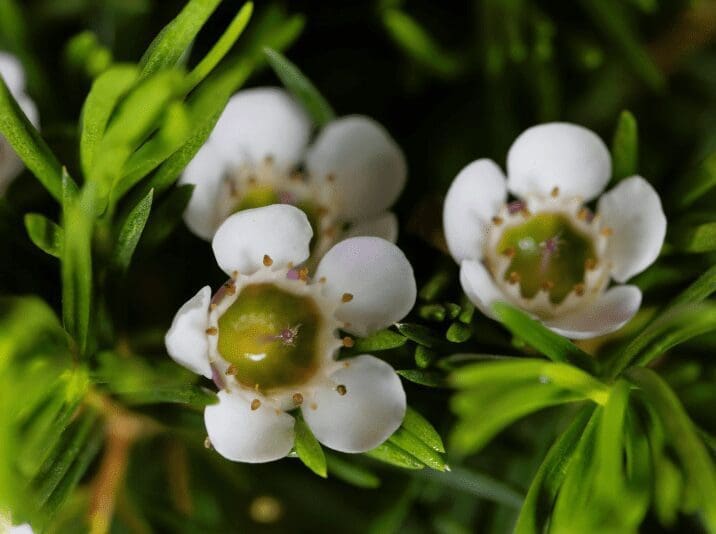
Chamelaucium uncinatum, commonly known as the Geraldton Waxflower, is the wax flower most people recognize from high-end floral arrangements.
Native to Western Australia, this evergreen shrub belongs to the myrtle family (Myrtaceae) and naturally grows in hot, dry coastal regions with sandy, nutrient-poor soil.
In ideal garden conditions, mature shrubs usually reach between 4 and 6 feet tall, although some modern cultivars have been bred to remain smaller and more compact for container growing.
The plant produces absolute masses of tiny waxy blooms during late winter through spring, often covering entire branches with flowers.
While white varieties remain the most requested for weddings, wax flowers also bloom in:
- Soft pink
- Deep pink
- Lavender
- Purple
- Bi-color shades
One reason florists love wax flowers is their incredible vase life. Fresh cut stems commonly last between 14 and 21 days in water, making them one of the most reliable filler flowers available commercially.
Why Florists Love Wax Flowers
- Extremely long vase life
- Delicate, romantic appearance
- Excellent structural filler flower for bouquets
- Light, pleasant, lemony fragrance when crushed
- Works beautifully in rustic and boho floral designs
In recent years, wax flower has largely replaced traditional Baby’s Breath in modern wedding arrangements because it looks softer, more organic, and less “stiff” or overly formal.
2. Philotheca (The Landscape Wax Flower)

Philotheca, sometimes called “Native Daphne,” is a distinct genus that is often mistakenly grouped under the general “wax flower” name at local nurseries.
Unlike the florist’s Chamelaucium, Philotheca varieties are usually grown strictly for ornamental landscaping rather than commercial floral use.
These shrubs are especially valued for their incredibly dense foliage, fragrant blooms, and ability to handle harsh, salty coastal conditions surprisingly well.
Most varieties bloom heavily during winter and spring, producing clusters of white or pale pink star-shaped flowers that contrast beautifully against their dark, leathery evergreen leaves.
Popular landscape varieties include:
- Philotheca myoporoides ‘Profusion’ — a heavy flowering, bushy landscape shrub
- P. buxifolius ‘Cascade of Stars’ — graceful cascading habit ideal for tall containers
- Eriostemon australasius — attractive grey-green foliage with showy pink blooms
These shrubs work especially well in:
- Coastal gardens exposed to salt spray
- Drought-tolerant “xeriscape” planting schemes
- Mixed native shrub borders
- Pollinator gardens
Ideal Growing Conditions for White Wax Flowers
One of the biggest reasons wax flowers fail in home gardens is poor drainage.
These shrubs evolved in extremely dry Australian climates and absolutely hate sitting in wet, heavy soil for prolonged periods. If the roots remain constantly moist, the plant quickly becomes vulnerable to fungal disease and fatal root rot.
How Often Should You Water Wax Flowers?
Young wax flower shrubs definitely need regular watering while establishing their root systems during their first year in the ground.
However, once mature, these plants become surprisingly drought tolerant. The biggest mistake home gardeners make is watering them too frequently alongside their thirsty annuals.
In hot climates, it is usually much better to water deeply once the soil becomes completely dry, rather than keeping the soil constantly damp.
Important Warning
White wax flowers are highly sensitive to root rot. Planting them in heavy clay soil combined with automatic daily sprinkler watering is the fastest way to kill the plant.
Pruning and Maintenance

Wax flowers respond very well to light pruning immediately after their flowering cycle ends.
Pruning helps maintain a denser, bushier shape and encourages significantly stronger blooming the following season.
When pruning your wax flower:
- Remove any dead, crossing, or weak branches first.
- Trim the green growth lightly after flowering ends.
- Crucial: Avoid cutting back into the thick, old, leafless wood.
- Maintain good airflow through the center of the shrub to prevent fungal issues.
Heavy pruning straight into mature woody stems often prevents regrowth and can shock the plant. Light, annual shaping works far better than aggressive, drastic cutting.
Pests and Common Problems
One reason gardeners and landscapers love wax flowers is that they are generally low-maintenance and naturally resistant to many common garden pests. The aromatic oils in their leaves act as a natural deterrent.
Still, occasional issues can appear, especially in humid climates or poorly ventilated garden corners.
Common Wax Flower Problems:
- Scale insects
- Root rot (from overwatering)
- Fungal disease from excess humidity
- Poor flowering due to insufficient sunlight
- Branch dieback from unexpected hard frosts
Scale insects are probably the most common visible pest problem. They appear as tiny, hard white or brown bumps attached tightly to the stems and branches.
Fortunately, they are usually manageable with horticultural oils or Neem oil applications.
The safest and most effective way to treat scale on wax flowers:
For serious infestations, apply the treatment thoroughly to the stems and repeat again after 7 to 14 days to target newly hatched insects.
Need Help Designing a Drought-Tolerant Landscape?
If you want to incorporate native shrubs like Philotheca into a stunning, low-water garden design, a professional landscaper can help you amend your soil for perfect drainage and pair the right plants together.
Find Local Landscaping Experts on Angi
Sponsored affiliate link. Professional availability and services vary by location.
Why White Wax Flowers Are So Popular in Wedding Design

Over the past decade, white wax flowers have become one of the defining flowers of rustic, farmhouse, cottagecore, and boho wedding aesthetics.
Their small blooms create wonderful softness and texture without overwhelming larger focal flowers like garden roses, ranunculus, peonies, or dahlias.
Designers also love that the woody wax flower stems create excellent structural movement and airy spacing inside hand-tied arrangements. Unlike Baby’s Breath, which can sometimes look overly dense or traditional, wax flowers feel lighter, wilder, and more natural.
Their subtle lemony fragrance and excellent longevity (meaning they won’t wilt halfway through a summer wedding reception) only add to their immense popularity.
Final Thoughts
White wax flowers are among the rare plants that successfully bridge the gap between ornamental gardening and professional floral design.
Whether you are growing Chamelaucium for gorgeous spring cut flowers or planting Philotheca as a tough landscape shrub, both reward gardeners with elegant blooms, evergreen foliage, and excellent drought tolerance.
The key to success is simply remembering where these plants come from. They evolved in dry Australian climates with sandy soil, intense sunlight, and excellent drainage. If you recreate those conditions as closely as possible and avoid the urge to overwater, wax flowers are surprisingly resilient.
And honestly, few flowering shrubs deliver the same combination of delicate beauty and florist-level elegance with so little maintenance once established.
Frequently Asked Questions
Is white wax flower a perennial?
Yes. Wax flower shrubs are evergreen perennials in warm climates (usually USDA zones 9-11) and can live for many years with proper care and good drainage.
Does wax flower smell good?
Yes. Many wax flower varieties have a light, fresh, lemony or pine-like fragrance, especially when the woody stems or needle-like foliage are brushed or crushed.
How long do wax flowers last in a vase?
Fresh-cut wax flowers commonly last between 14 and 21 days in water, making them one of the longest-lasting filler flowers available.
Can wax flowers grow in pots?
Yes, especially the more compact Philotheca varieties and specific dwarf Chamelaucium cultivars. However, they require a very fast-draining potting mix (like a cactus or citrus blend) and a pot with large drainage holes.
Do wax flowers attract pollinators?
Yes. Bees, butterflies, and other native pollinators are strongly attracted to flowering wax shrubs during their peak blooming season.