















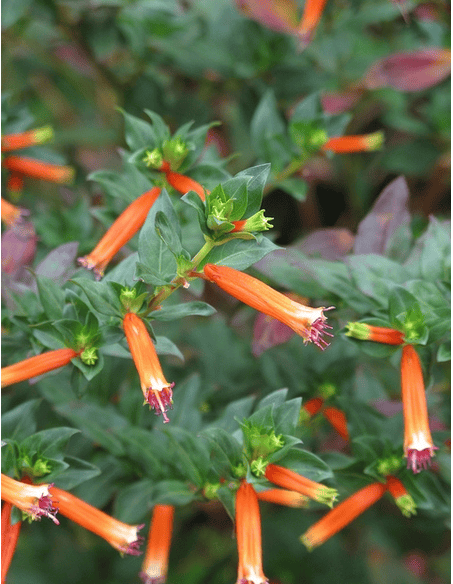
The cigar plant, also called Mexican cigar plant, firecracker plant, or botanically Cuphea ignea, is a compact flowering shrub loved for its bright red tubular blooms. Each flower has a dark tip with a pale rim, making it look like a tiny lit cigar—hence the name.
This easy-care plant is especially valuable in summer gardens because it blooms heavily, handles heat well, and attracts hummingbirds, butterflies, and bees. In warm climates, cigar plant grows as a tender perennial. In cooler regions, gardeners usually grow it as a colorful annual or bring it indoors before frost.
Quick Answer: What Is a Cigar Plant?
A cigar plant is a tender perennial flowering plant, Cuphea ignea, known for red-orange tubular flowers that resemble tiny lit cigars. It grows as a perennial in warm climates and as an annual in colder zones. It thrives in full sun to partial shade, well-drained soil, and regular watering, and it is excellent for attracting hummingbirds.
Cigar Plant Quick Care Guide
| Care Factor | Best Conditions |
|---|---|
| Botanical name | Cuphea ignea |
| Common names | Cigar plant, Mexican cigar plant, firecracker plant |
| Plant type | Tender perennial, often grown as an annual |
| Light | Full sun to partial shade |
| Soil | Average, well-drained soil |
| Water | Regular watering; avoid soggy soil |
| Mature size | About 2 to 3 feet tall and wide |
| Bloom season | Summer to frost in cooler climates; nearly year-round in warm climates |
| Best use | Containers, borders, pollinator gardens, hummingbird gardens |
Why It Is Called a Cigar Plant
The cigar plant gets its name from its distinctive flowers. The blooms are narrow, tubular, and usually bright red to orange-red. Their dark tips and pale ends make them resemble small glowing cigars or firecrackers.
This unusual flower shape is also what makes the plant so attractive to hummingbirds. Tubular flowers are easy for hummingbirds to feed from, and the bright color helps them find the plant quickly in the garden.
Is Cigar Plant an Annual or Perennial?
The cigar plant is technically a tender perennial. In warm climates, especially frost-free or nearly frost-free areas, it can live for several years and bloom off and on throughout the year.
In colder climates, frost will usually kill the plant outdoors. Gardeners in cooler zones often grow cigar plant as a summer annual or keep it in a container so it can be moved indoors for winter.
If you want the easiest approach, treat it like a warm-season annual. If you want to save it from year to year, grow it in a pot and overwinter it indoors before the first frost.
Where to Plant Cigar Plant
Cigar plant is versatile and works well in several garden settings:
- Pollinator gardens: The tubular flowers attract hummingbirds, butterflies, and bees.
- Container gardens: Its compact shape makes it excellent for patio pots.
- Sunny borders: It adds bright red color from summer into fall.
- Mixed annual beds: It pairs well with lantana, salvia, pentas, zinnias, and verbena.
- Warm-climate landscapes: In mild regions, it can be used as a small flowering shrub.
Because the plant naturally forms a rounded, mounded shape, it looks especially good near the front or middle of a flower bed.
Light Requirements
Cigar plant grows best in full sun to partial shade. In most regions, full sun produces the heaviest flowering and most compact growth.
In very hot climates, afternoon shade can help prevent stress during extreme summer heat. If your plant becomes leggy or produces fewer flowers, it may need more light.
Soil Requirements
Cigar plant is not fussy about soil, but drainage is important. It prefers average garden soil that drains well. Constantly wet soil can lead to root rot, especially in containers.
If your garden soil is heavy clay, improve drainage with compost and plant slightly higher than the surrounding soil. For containers, use a quality potting mix rather than dense garden soil.
For more soil improvement ideas, see our guide to peat-free gardening and compost.
How Often to Water Cigar Plant
Water cigar plant regularly while it is establishing. Once mature, it can handle short dry periods, but it blooms best with consistent moisture.
For garden beds:
- Water deeply when the top inch or two of soil feels dry.
- Avoid keeping the soil constantly soggy.
- Mulch around the plant to reduce moisture loss.
For containers:
- Check soil more often because pots dry faster.
- Water until excess drains from the bottom.
- Never let the pot sit in standing water.
Fertilizer Needs
Cigar plant is not a heavy feeder, but light feeding can encourage stronger growth and more flowers.
Use a balanced slow-release fertilizer at planting time, or feed container plants with a diluted liquid fertilizer during the growing season. Avoid overfeeding with high-nitrogen fertilizer, which may encourage leafy growth at the expense of blooms.
Pruning and Pinching
Cigar plant naturally grows into a neat mound, but it can become leggy if grown in too much shade or left untrimmed. Pinching back the tips of young stems encourages bushier growth.
Pruning tips:
- Pinch young plants early to encourage branching.
- Trim leggy stems during the growing season.
- Remove damaged or weak growth.
- Cut back lightly if the plant becomes untidy.
Regular light pruning helps the plant stay compact and flower more evenly.
Does Cigar Plant Need Deadheading?
Cigar plant usually does not require heavy deadheading. It blooms continuously without much effort. However, removing tired stems or lightly trimming the plant can improve its shape and encourage fresh growth.
If your plant slows down in midsummer, give it a light trim, water well, and apply a gentle feeding. It will often respond with new growth and more blooms.
Growing Cigar Plant in Containers
Cigar plant is excellent for containers because it stays relatively compact and flowers for a long season. A container also makes it easier to move the plant indoors before frost.
Container growing tips:
- Use a pot with drainage holes.
- Choose a high-quality potting mix.
- Place the container in full sun or bright partial sun.
- Water when the top layer of soil feels dry.
- Feed lightly during active growth.
- Pinch or trim stems to keep the plant bushy.
For a colorful pollinator container, combine cigar plant with trailing verbena, lantana, calibrachoa, or compact salvia.
How to Overwinter Cigar Plant
If you live where frost is common, you can save a container-grown cigar plant by moving it indoors before the first frost.
Overwintering steps:
- Move the plant indoors before nighttime temperatures drop too low.
- Place it near a bright, sunny window.
- Trim back leggy growth if needed.
- Water less often during winter, but do not let the root ball completely dry out.
- Do not fertilize heavily during the low-light season.
- Move it back outdoors gradually in spring after frost danger has passed.
Do not worry if the plant slows down indoors. It may not bloom much in winter, but it can resume strong growth when warmth and longer days return.
How to Propagate Cigar Plant
Cigar plant can be propagated from seed or stem cuttings.
Growing From Seed
Start seeds indoors before warm weather arrives, or sow them outdoors after frost danger has passed. Keep the seed-starting mix lightly moist and warm until germination.
Growing From Cuttings
Stem cuttings are a good way to save a favorite plant. Take a healthy non-flowering stem cutting, remove the lower leaves, and place it in moist potting mix. Keep it warm and humid until roots develop.
Cuttings are especially useful if you want to overwinter a smaller plant instead of bringing in a large container.
Do Cigar Plants Attract Hummingbirds?
Yes. Cigar plant is one of the best small flowering plants for attracting hummingbirds. The bright red tubular flowers are easy for hummingbirds to spot and feed from.
For a stronger hummingbird garden, plant cigar plant with other tubular flowers such as salvia, bee balm, cardinal flower, trumpet honeysuckle, firebush, and pentas.
Common Problems
Cigar plant is generally easy to grow and not especially prone to serious pest problems. Most issues are related to water, light, or cold temperatures.
Leggy Growth
Leggy growth usually means the plant needs more light or more frequent pinching. Move it to a brighter location and trim long stems.
Few Flowers
Low bloom production can be caused by too much shade, too much nitrogen fertilizer, or inconsistent watering.
Yellow Leaves
Yellowing leaves may point to overwatering, poor drainage, or stress from sudden temperature changes.
Root Rot
Root rot can happen if the plant sits in soggy soil. Use well-drained soil and containers with drainage holes.
Frost Damage
Cigar plant is frost tender. Cold damage may cause blackened leaves, wilting, or stem dieback. Protect it or bring it indoors before frost.
Best Companion Plants for Cigar Plant
Cigar plant pairs well with other heat-loving annuals and pollinator plants. Good companions include:
- Salvia
- Lantana
- Pentas
- Zinnias
- Verbena
- Mexican heather
- Calibrachoa
- Angelonia
- Firebush
For the strongest visual effect, combine cigar plant with purple, yellow, or white flowers that contrast with its red-orange blooms.
Is Cigar Plant Good for Beginners?
Yes. Cigar plant is a great beginner plant because it is forgiving, compact, colorful, and low maintenance. It does not need complicated pruning, and it flowers for a long period with basic care.
Its only serious weakness is cold. If you live in a frost-prone region, grow it as an annual or keep it in a container so you can overwinter it indoors.
Final Thoughts
The cigar plant is a small but powerful performer in the garden. With its red tubular flowers, long bloom season, compact growth, and hummingbird appeal, Cuphea ignea deserves a spot in containers, borders, and pollinator gardens.
Give it sun, well-drained soil, regular water, and occasional pinching, and it will reward you with months of fiery blooms. In warm climates, it can behave like a small perennial shrub. In cooler zones, it is still worth growing as a bright summer annual.
Frequently Asked Questions About Cigar Plant
What is a cigar plant?
A cigar plant is a tender perennial flowering plant known botanically as Cuphea ignea. It produces red tubular flowers with dark tips that look like tiny lit cigars.
Is cigar plant the same as firecracker plant?
Yes, cigar plant is often called firecracker plant because its red tubular flowers look like tiny fireworks or firecrackers. However, several other plants may also share the common name firecracker plant.
Is cigar plant an annual or perennial?
Cigar plant is a tender perennial in warm climates. In colder regions, it is usually grown as a summer annual or overwintered indoors in a container.
How tall does cigar plant grow?
Most cigar plants grow about 2 feet tall and wide, though they can reach around 3 feet in warm climates and ideal conditions.
Does cigar plant attract hummingbirds?
Yes. The bright red tubular flowers are highly attractive to hummingbirds. The plant also attracts butterflies and bees.
Does cigar plant need full sun?
Cigar plant grows best in full sun to partial shade. Full sun usually produces the most flowers, while afternoon shade can help in very hot climates.
How often should I water cigar plant?
Water when the top inch or two of soil feels dry. Container plants may need water more often than plants in the ground. Avoid soggy soil.
Can cigar plant grow in pots?
Yes. Cigar plant grows very well in containers. Use a pot with drainage holes, quality potting mix, and a sunny location.
How do you overwinter cigar plant?
Bring container-grown cigar plant indoors before frost. Place it in a bright window, reduce watering slightly, and move it back outside in spring after frost danger passes.
Can you grow cigar plant from cuttings?
Yes. Cigar plant can be propagated from stem cuttings. Take healthy cuttings, remove lower leaves, and root them in moist potting mix.







Comments are closed.