











But eucalyptus pruning is not a casual weekend job once the tree becomes large. Mature gum trees can be heavy, brittle, and unpredictable when cut. If the tree is tall, leaning, storm-damaged, or close to your house, hire a qualified arborist instead of trying to reduce it yourself.
Quick Guide: Eucalyptus Pruning
- Best Time to Prune: Late winter to early spring, before strong new growth begins.
- Primary Methods: Coppicing for shrub-like regrowth or pollarding for a controlled trunk-and-canopy shape.
- Coppicing Height: Typically 3 to 12 inches above ground level.
- Pollarding Height: Usually around 5 to 6 feet, depending on the desired structure.
- Primary Benefit: Controls extreme vertical growth and encourages fresh, round, silver-blue juvenile foliage.
- Safety Warning: Mature, top-heavy eucalyptus trees should only be pruned by qualified tree professionals.
Why Prune Eucalyptus? The Problem with Fast Growth
Eucalyptus trees are beloved for their aromatic, menthol-scented leaves, striking bark, and fast-growing evergreen structure. However, that same fast growth can quickly become a problem in a small residential landscape.
Many eucalyptus trees grow faster than homeowners expect. A young tree that looked manageable at planting can become tall, dense, and difficult to control within a few growing seasons.
Strategic pruning helps by:
- Reducing wind sail: A smaller canopy catches less wind, which may reduce stress on the trunk and root system.
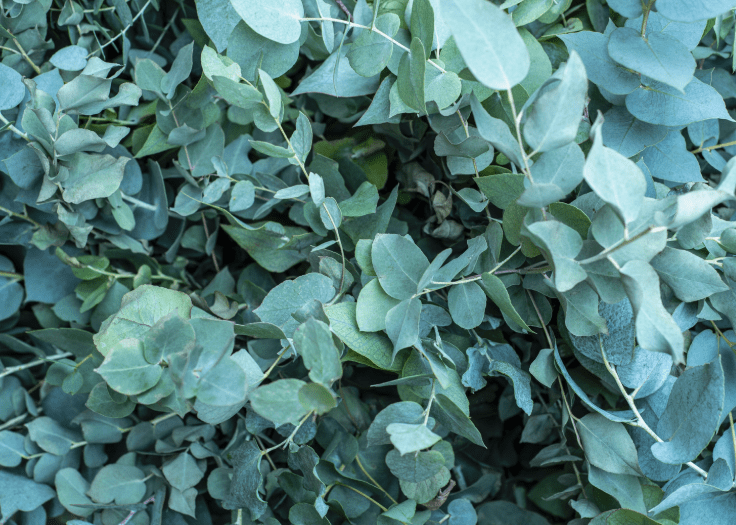
- Encouraging juvenile foliage: The round, silver-blue leaves prized by florists usually appear on young growth. Hard pruning can encourage that fresh juvenile foliage.
- Improving garden scale: Coppicing or pollarding can keep a eucalyptus from overwhelming a small yard.
- Protecting nearby structures: Regular management can help keep branches away from rooflines, fences, walkways, and neighboring properties.
Pro Tip: Do Not Throw Away the Branches
When you prune eucalyptus, tie the freshly cut leafy branches into small bundles and hang them from your showerhead. The steam from a hot shower helps release the natural eucalyptus aroma, creating a simple spa-like effect in the bathroom.
Coppicing vs. Pollarding: What Is the Difference?
Coppicing and pollarding are both forms of hard pruning, but they create very different results.
Coppicing cuts the tree low and encourages bushy regrowth from near the ground. Pollarding keeps a taller trunk and repeatedly manages the upper canopy from a fixed cutting point.
| Method | Where to Cut | Best Used For | Visual Result |
|---|---|---|---|
| Coppicing | 3 to 12 inches above ground level | Converting a tall tree into a dense, manageable shrub-like plant | Explosive, multi-stemmed regrowth directly from the stump |
| Pollarding | Usually 5 to 6 feet high on the main trunk | Keeping foliage at a harvestable height while preserving a clear trunk below | A controlled trunk with a dense upper crown |
Important Difference
Coppicing is meant to encourage regrowth. If your goal is to permanently remove a eucalyptus tree, do not coppice it and expect the stump to die on its own. You will need stump removal, stump grinding, or a proper stump-killing method.
How to Coppice Eucalyptus
Coppicing is a traditional woodland technique. By cutting the tree close to the ground, you force the established root system to push energy into new shoots.
This method is best for younger, healthy eucalyptus trees that are still small enough to manage safely. It is not a safe DIY method for large mature trees.
- Time the cut correctly: Perform this cut in late winter or very early spring, just before the tree begins active growth. Avoid heavy autumn pruning because fresh cuts can be more vulnerable to cold damage.
- Make the main cut: Using a sharp, heavy-duty pruning saw, cut cleanly through the main trunk, leaving a stump about 3 to 12 inches high. Make the cut at a slight downward angle so rainwater runs off instead of pooling on top.
- Manage the regrowth: Within weeks of spring warmth, multiple red-tinged shoots may emerge from the stump. Once they reach about 12 inches long, thin them out. Select the 3 or 4 strongest, best-placed stems and remove the rest.
What If You Do Not Want the Eucalyptus to Grow Back?
Coppicing is designed to trigger regrowth from the stump. If your goal is permanent removal instead of controlled regrowth, you need a different strategy. Read this guide on what to put on a tree stump to kill it before treating or removing the stump.
How to Pollard Eucalyptus
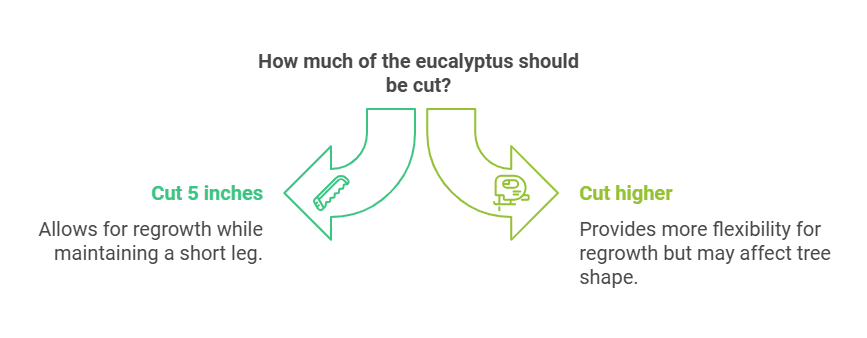
Pollarding is ideal if you want to maintain the look of a tree trunk while keeping the leafy canopy at a more manageable height.
Instead of cutting the eucalyptus near ground level, pollarding creates a higher permanent cutting point called a pollard head.
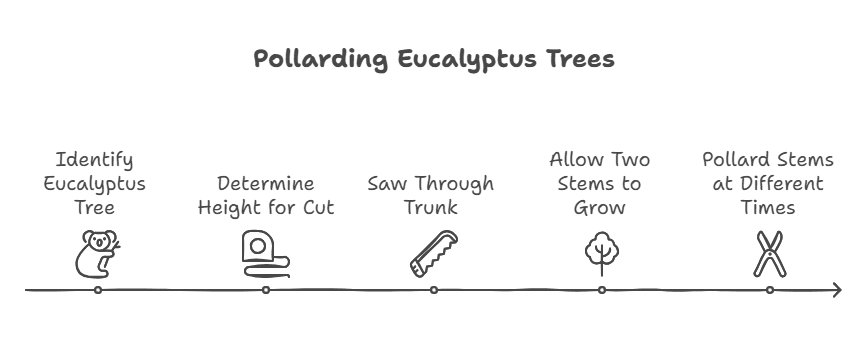
- Select the height: Decide how high you want the pollard head to form. Most gardeners choose chest height or just above head height, usually around 5 to 6 feet.
- Make the primary cut: Saw cleanly through the trunk at the chosen height. Keep the cut neat and slightly angled so water does not sit on the wound.
- Manage the crown: Shoots will emerge just below the cut. Allow them to grow for a full season. The following late winter, cut those shoots back close to the main trunk. Over time, the pollard head will swell and become the point where future growth returns.
Do Not Start Pollarding Too Late
Pollarding should begin when the tree is young and manageable. Trying to pollard an old, tall eucalyptus for the first time can create large wounds, weak regrowth, and serious safety risks.
Essential Tools for Eucalyptus Pruning
Eucalyptus wood can be tough, stringy, and surprisingly difficult to cut cleanly. Dull tools tear bark, leave ragged wounds, and make the job more dangerous.
- Heavy-duty bypass loppers: Useful for thinning regrowth after coppicing or pollarding.
- Curved pruning saw: The best tool for controlled cuts on thicker young stems and trunks.
- Work gloves: Protects your hands from bark, splinters, and branch snapback.
- Wraparound safety glasses: Eucalyptus shoots can whip back unexpectedly while cutting.
- Stable ladder or platform: Only for small work. Do not use a ladder for large tree reduction unless you are trained and properly equipped.
Best tool for clean eucalyptus pruning cuts:
When to Hire a Professional Arborist
Small eucalyptus pruning can be manageable for careful homeowners, but mature eucalyptus trees are a different story.
Large gum trees can have heavy limbs, brittle wood, sudden limb drop, and unpredictable branch tension. Cutting the wrong limb can cause splitting, tearing, or uncontrolled movement.
Hire a professional if the eucalyptus is:
- taller than you can safely manage from the ground
- leaning toward a house, fence, road, or neighbor’s property
- near powerlines
- storm-damaged or splitting
- too large for hand pruning tools
- being removed permanently rather than maintained
Need Help With a Large Eucalyptus Tree?
If your eucalyptus is mature, leaning, storm-damaged, or close to your home, a local tree professional can prune or remove it safely before it becomes a bigger hazard.
Find Local Tree Trimming Pros on Angi
Sponsored affiliate link. Professional availability and services vary by location.
Best Eucalyptus Species for Smaller Gardens
If you are planning to plant a new gum tree and want to reduce future pruning headaches, choose a naturally smaller or more manageable species.
- Eucalyptus gunnii (Cider Gum): Popular for its silver-blue juvenile leaves and strong response to coppicing.
- Eucalyptus nicholii (Willow Peppermint): A graceful, aromatic species with narrow foliage and a softer garden look.
- Eucalyptus gregsoniana (Wolgan Snow Gum): A more compact option known for peeling bark, red stems, and white blossoms.
Even with smaller species, think carefully about mature size, root space, wind exposure, and distance from structures before planting.
Frequently Asked Questions
When should eucalyptus be pruned?
The best time for aggressive pruning, such as coppicing or pollarding, is late winter to early spring before strong new growth begins. Avoid heavy pruning in autumn because cold snaps can damage fresh cuts.
Will a eucalyptus tree grow back if cut to the ground?
Yes, a healthy eucalyptus tree can often grow back vigorously after coppicing. If it is cut to a low stump, new shoots may emerge from the base when warm spring conditions return.
Can I prune a mature, large eucalyptus tree myself?
No. Mature eucalyptus trees can be heavy, brittle, and dangerous to cut. If the tree is tall, leaning, near powerlines, or close to your home, hire a licensed and insured arborist.
How do I stop eucalyptus from growing back after cutting it down?
If you want to stop eucalyptus regrowth, do not coppice it. Coppicing encourages new shoots from the stump. For permanent removal, the stump usually needs to be ground out, physically removed, or treated using a proper stump-killing method. See our full guide on what to put on a tree stump to kill it.
Is coppicing the same as killing a eucalyptus tree?
No. Coppicing is a pruning method designed to keep the tree alive and encourage fresh regrowth. If the goal is permanent removal, you need stump removal or stump treatment rather than coppicing.
Can I pollard an old eucalyptus tree?
It is usually not wise to start pollarding an old, large eucalyptus for the first time. Pollarding should begin when the tree is young. Mature reductions should be assessed by a professional arborist.
Affiliate Disclosure: As an Amazon Associate and Angi affiliate partner, GardenFrontier earns from qualifying purchases and sponsored leads. This means we may receive a small commission at no extra cost to you if you purchase products or request services through links on this page. We only recommend products and services that fit the topic and our editorial standards.