















I make no apology for repeating my favorite description of bulbs: they are the garden’s ‘firework plants.’ The fact that someone else has already done all the hard work in terms of their flowering capability means that all you, as the gardener, have to do is metaphorically light the blue touchpaper and stand well back to enjoy the show!
That much is valid for the first year at least, but if bulbs are planted in a spot they truly enjoy, that spectacular display will reliably return for subsequent years as well. I absolutely love bulbs, not only for their rapid response after planting but also for their incredible variety of shapes, colors, and flowering times that can fill any gap in your borders.
- ⏱️ Timing is Everything: Spring-flowering bulbs are planted in the autumn, while summer-flowering bulbs go into the ground during the spring.
- 📏 Rule of Depth: Always plant your bulbs at a depth equal to three times the height of the bulb itself.
- ✂️ Leave the Foliage: Never chop off the foliage immediately after flowering! Let it die back naturally for at least six weeks to recharge the bulb for next year.
- 💧 Summer Watering: If drought conditions prevail during their flowering time, keep your bulbs well-watered so they don’t abort next year’s internal buds.
Understanding Your Bulbs, Corms, and Tubers
I use the term “bulb” loosely to encompass various underground food storage organs that plants have brilliantly adapted to survive climate extremes. However, there are actually a few distinct types you will encounter:
- True Bulbs: A condensed shoot or bud containing layers of fleshy scales (e.g., snowdrops, daffodils, and tulips).
- Corms: A condensed, swollen stem base bearing a shoot at its apex, rather than being surrounded by leaf scales (e.g., cyclamen and crocus).
- Tubers: Swollen underground structures that can be root tubers (like dahlias) or stem tubers (like potatoes). Buds or ‘eyes’ occur all over a stem tuber, whereas root tubers only have buds at their top end.
- Rhizomes: Swollen but elongated underground stems that grow horizontally just below the soil surface (e.g., bearded irises and winter aconites).

Plan Your Planting: Filling the Gaps
Spring-flowering bulbs naturally push out their flowers before the overhead canopy of trees and shrubs becomes inhospitably dense. However, what is often overlooked is that bulbs are not just for the spring!
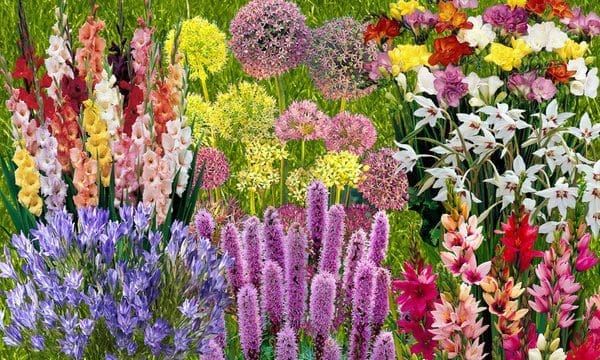
Many summer-flowering bulbs offer tremendous value and variety, brightening up parts of the garden exactly when earlier flowers have gone over. Hardworking lilies, gladioli, alliums, crocosmia, bearded irises, and the good old dahlia are now justifiably well-established as valuable summer residents.
Summer bulbs can be beautifully shoe-horned in between beefier border plants so that not a single square inch of your soil is deprived of its flowering potential. They do not always need to be committed to the ground, either. They are phenomenal in pots for displaying on terraces or patios. Just make sure you use large pots (a good 25-30cm in diameter) so they do not dry out rapidly in the warm weather.
Plant Bulbs in Half the Time
Stop breaking your back digging individual holes. A heavy-duty, long-handled bulb planter lets you drop dozens of bulbs into the soil in minutes.
6 Spectacular Summer-Flowering Bulbs to Plant Now
Don’t be too timid when it comes to bulb planting—boldness always pays off. Plant in generous-sized groups for maximum impact. Here are my absolute favorite summer bloomers to get into the ground this spring:
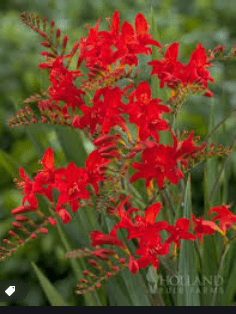
1. Crocosmia (Montbretia)
Crocosmia used to have a slight image problem, as older varieties were not always prolific flowerers. Many new varieties are absolutely brilliant, producing massive swathes of elegant orange flowers alongside incredibly handsome, sword-like foliage. I love planting them in snaking rivulets through my borders.
Flowers: Jun-Aug | Height x Spread: 90cm x 10cm
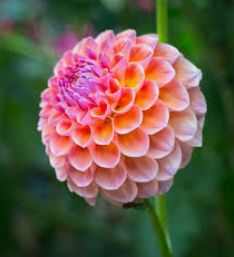
2. Dahlia
Don’t just stick with the boring old ‘Bishop of Llandaff’ whose deep red foliage can be hard to place. Look for modern varieties with warm orange blooms that instantly light up a sunny border. Dahlias are very greedy feeders, so be sure to enrich their soil with well-rotted garden compost or manure to keep them happy!
Flowers: Jul-Oct | Height x Spread: 75cm x 75cm
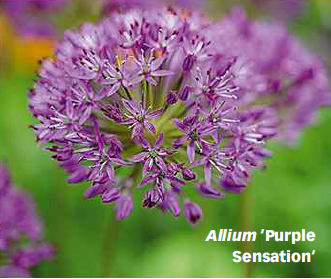
3. Allium ‘Purple Sensation’
I know this is a highly prevalent variety, but it is genuinely one of the best and most reasonably priced, meaning you can afford to plant them in massive bulk. Stud a border with these drumsticks from end to end so they rise beautifully above the ground-hugging foliage of their neighbors. It self-seeds generously!
Flowers: Jun | Height x Spread: 100cm x 50cm

4. Gladiolus byzantinus
Many of the larger-flowered gladioli are best grown strictly in a vegetable patch for use as cut flowers, as they often look clumsy and angular in a natural garden setting. But this little Mediterranean beauty is much more elegant. I love tucking their bright cerise flowers into the foot of a hedgerow for a touch of wild charm.
Flowers: May-Jun | Height x Spread: 60cm x 20cm

5. Lilium ‘Star Gazer’
A stunning oriental lily with a glorious, room-filling scent. It will enjoy some nearby shrub support to protect it from strong winds, but the stems are generally sturdy enough to hold the massive blooms. They are fantastic to grow in pots for portability, allowing you to pop them into tired beds for a splash of instant late-summer color.
Flowers: Jun-Aug | Height x Spread: 1-1.5m x 30cm
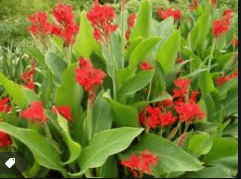
6. Canna indica
Invaluable for bringing a dramatic touch of the tropics to your borders with their lush green or plum-purple foliage and bright red, orange, or yellow flowers. Because they are not totally hardy, you must either mulch them heavily in autumn and take a chance, or dig up the rhizomes and overwinter them in a frost-free greenhouse.
Flowers: Jun-Sep | Height x Spread: 1.5m x 50cm
🌷 Plan Your Perfect Garden
Join our growing community and get my best bulb planting guides, seasonal landscaping tips, and organic gardening advice sent straight to your inbox.
100% Free. No spam. Unsubscribe anytime.







Comments are closed.