




















The first time I helped install a shower standing handle, I realized how many people treat bathroom safety like an afterthought. They pick the tile, showerhead, curtain, shelves, and towel bars first. Then someone slips, grabs a towel rack that was never meant to hold body weight, and suddenly the grab bar becomes the most important fixture in the room.
A proper shower standing handle, also called a shower grab bar or bathroom grab bar, provides a secure handhold while entering, exiting, turning, washing, or standing on a wet shower floor. It can help older adults, people recovering from surgery, anyone with balance issues, and even healthy people who simply want a safer bathroom.
The key is choosing the right type and installing it correctly. A suction handle stuck to tile is not the same as a permanent grab bar anchored into framing. A towel rack is not a safety bar. And a grab bar installed in the wrong place may not help when you actually need it.

🚿 Quick Answer: What Shower Standing Handle Should You Use?
- Best overall safety: A permanent wall-mounted grab bar anchored into studs or approved blocking.
- Best for temporary use: A suction shower handle used only for light balance support, not full body weight.
- Best material: Stainless steel or corrosion-resistant metal.
- Best shower entry support: A vertical grab bar near the shower or tub entrance.
- Best standing support: A horizontal grab bar along the shower wall.
- Best toilet support: A grab bar mounted near the toilet at a height that fits the user.
- Biggest mistake: Using a towel bar, suction handle, or decorative rail as a true weight-bearing grab bar.
What Is a Shower Standing Handle?
A shower standing handle is a support bar installed in or near a shower, bathtub, or toilet area to help a person maintain balance. It is designed to be held while standing, stepping, turning, sitting, or rising.
The most reliable shower standing handles are permanent grab bars mounted securely to wall studs, blocking, or approved grab bar anchors. These are designed to support real force when someone leans, pulls, or grabs during a slip.
Temporary suction shower handles can help with light balance, but they should not be trusted as the only support for someone who needs serious fall protection.
Shower Standing Handle vs Grab Bar vs Assist Bar
These terms are often used interchangeably, but they do not always mean the same thing.
| Type | Best Use | Main Warning |
|---|---|---|
| Permanent Grab Bar | Real support in showers, tubs, and toilet areas | Must be anchored correctly |
| Suction Shower Handle | Temporary balance aid on smooth surfaces | Not for full body weight or emergency grabbing |
| Assist Bar | Light support near toilets, tubs, or entry points | May not meet the same strength level as a true grab bar |
| Safety Towel Bar | Combines towel storage with rated support | Only safe if specifically rated as a grab bar |
Why Bathroom Grab Bars Matter
Bathrooms are one of the most dangerous rooms in the home because they combine water, smooth surfaces, soap, awkward movements, and hard fixtures. A person can lose balance while stepping over a tub wall, reaching for shampoo, turning under the shower, drying off, or standing up from the toilet.
A properly placed bathroom grab bar gives the user a secure handhold at the exact moment balance is most likely to fail.
Grab bars are especially useful for:
- Older adults
- People with limited mobility
- People recovering from surgery
- Anyone with knee, hip, ankle, or back problems
- Pregnant users
- Children learning safe bathroom habits
- Guests who may not know the bathroom layout
- Anyone who wants safer shower access
Never use a regular towel rack as a grab bar. Most towel racks are not designed to support body weight and can rip out of the wall during a fall.
Permanent Grab Bars vs Suction Shower Handles
Permanent Shower Grab Bars
A permanent shower grab bar is the safest choice when the user needs reliable support. It is mounted into studs, blocking, or approved anchors and is designed to handle pulling, leaning, and sudden grabbing.
Pros:
- Strongest and most reliable option
- Better for long-term bathroom safety
- Available in many lengths and finishes
- Can support real force when properly installed
- Works for showers, tubs, and toilet areas
Cons:
- Requires drilling into tile, wallboard, or surround material
- Needs proper anchoring
- May require professional installation
- Placement must be planned carefully
Suction Shower Handles
A suction shower handle attaches to a smooth, non-porous surface with suction cups. It is easy to install and remove, which makes it attractive for travel, temporary recovery, renters, or guests.
But suction handles should be treated as light balance aids, not true weight-bearing grab bars. They can lose suction if installed over grout lines, textured tile, curved surfaces, dirty tile, or wet residue.
Pros:
- No drilling required
- Easy to move or reposition
- Useful for temporary balance support
- Good for some renters or short-term needs
Cons:
- Not as secure as permanent grab bars
- Only works on smooth, flat surfaces
- Can fail if installed over grout lines
- Should not be used for full body weight
- Must be checked frequently
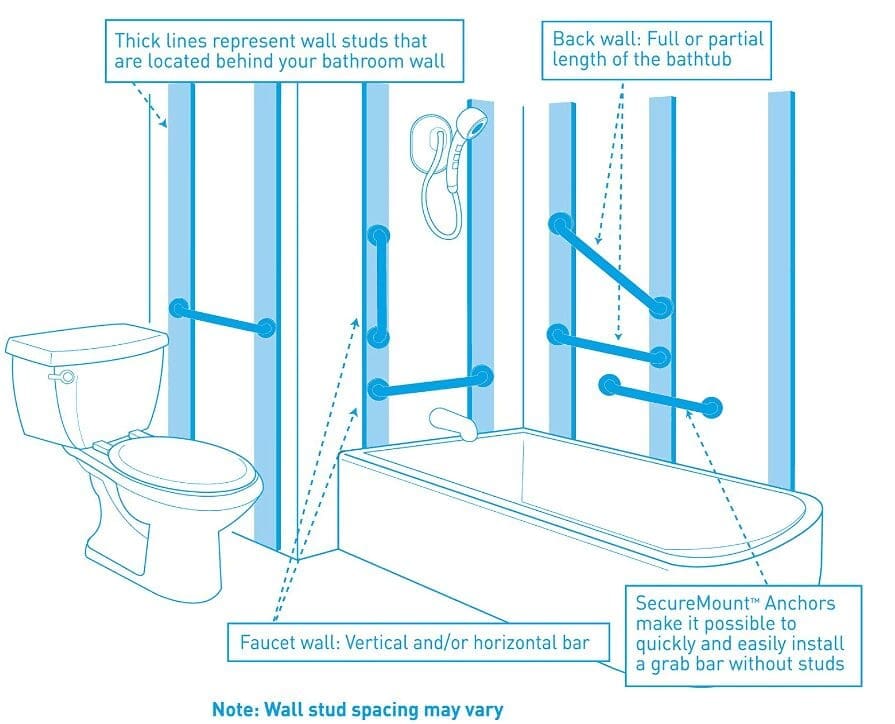
Where to Install Grab Bars in a Shower
The best grab bar placement depends on the user, the shower layout, and how the person moves. Watch where the user naturally reaches when stepping in, standing, turning, or sitting. That tells you more than a generic diagram.
1. Vertical Bar at the Shower Entrance
A vertical grab bar near the shower or tub entrance helps when stepping in and out. This is one of the most useful placements because many slips happen during entry and exit.
For a tub/shower combination, a vertical bar near the outer edge of the tub can help the user step over the tub wall with better balance.
2. Horizontal Bar Along the Back Wall
A horizontal grab bar along the back wall provides support while standing, washing, and turning. This is helpful in walk-in showers and tub/shower combinations.
3. Angled Bar for Mixed Support
An angled grab bar can provide both pulling support and standing balance. Some users like angled placement because the hand can slide naturally along the bar as they sit, stand, or shift position.
4. Grab Bar Near the Shower Valve
A bar near the shower valve helps users stabilize while turning water on, adjusting temperature, or reaching for a handheld shower wand.
5. Grab Bar Near the Toilet
A grab bar beside the toilet supports sitting and standing. This can be a wall-mounted bar, fold-down bar, or safety rail system depending on the bathroom layout.
Vertical, Horizontal, or Diagonal: Which Grab Bar Orientation Is Best?
| Orientation | Best For | Common Location |
|---|---|---|
| Vertical | Stepping in and out, reaching, balance at entry | Shower entrance or tub edge |
| Horizontal | Standing support, side-to-side movement, toilet support | Back wall, side wall, toilet wall |
| Diagonal | Sit-to-stand motion and mixed hand positions | Tub wall or shower side wall |
There is no single perfect orientation for every person. The best placement is the one that supports the user’s real movement pattern.
How High Should a Shower Standing Handle Be?
Many bathroom grab bars are installed around waist height, often in the general range of 33 to 36 inches from the finished floor for horizontal bars. But home bathrooms should also be adjusted to the actual user.
For a vertical bar at a shower entrance, place it where the person naturally reaches while stepping in and out. For a toilet grab bar, height should support the sit-to-stand motion. For a tub, placement should help the user lift one leg over the tub wall without twisting or reaching too far.
When in doubt, have the user carefully simulate the movement while standing outside the wet area. Mark where the hand naturally wants support before drilling.
How Long Should a Bathroom Grab Bar Be?
Grab bars come in many lengths, including 12-inch, 16-inch, 18-inch, 24-inch, 32-inch, and 36-inch options. The right length depends on location and purpose.
- 12 to 16 inches: Good for tight spaces and vertical entry support.
- 18 to 24 inches: Useful for shower entrances, tub walls, and compact shower support.
- 24 to 36 inches: Better for horizontal support along larger shower or tub walls.
- Longer bars: Helpful where the user moves along a wall or needs multiple hand positions.
For the grip diameter, many grab bars are around 1 1/4 to 1 1/2 inches. Smaller hands may prefer a thinner bar, while some users with arthritis or grip issues may prefer a textured surface or a shape that feels easier to hold.
What Material Is Best for Shower Grab Bars?
The best shower grab bars are usually made from corrosion-resistant metal. Bathrooms are wet, humid spaces, so durability matters.
Stainless Steel
Stainless steel is one of the most popular options because it is strong, rust-resistant, and easy to clean.
Brass
Brass can be durable and attractive, especially in decorative bathroom finishes. It is often used in higher-end bathroom hardware.
Aluminum
Aluminum is lightweight and corrosion-resistant, but check the product’s rated capacity and intended use.
Plastic
Plastic safety handles may be inexpensive and useful for light support, but they are usually not my first choice for permanent, weight-bearing shower safety.
Textured vs Smooth Grab Bars
A textured grab bar can be easier to grip with wet hands. Smooth bars are easier to clean and may look more modern, but they can feel slippery if the user has weak grip strength.
If safety is the top priority, I prefer a bar with either a peened, knurled, or textured grip surface, especially inside the shower.
How to Install a Shower Standing Handle Safely
Installation is where the grab bar either becomes a safety feature or a false sense of security. A strong bar installed poorly is still dangerous.
Step 1: Choose the Location
Watch the user’s movement. Mark the spot where support is actually needed, not just where the bar looks symmetrical.
Step 2: Find the Studs or Blocking
The safest installation is into wall studs or solid backing. A stud finder can help, but tile and cement board can make detection harder. In remodels, adding blocking behind the wall before tile is ideal.
Step 3: Check the Surface
Tile, fiberglass surrounds, drywall, and cement board all require different installation methods. Use fasteners and anchors rated for grab bars and the wall type.
Step 4: Drill Carefully
When drilling tile, use the correct bit and go slowly to avoid cracking. Tape can help prevent the bit from wandering.
Step 5: Seal Penetrations
In a shower, every screw hole is a potential water path. Use the manufacturer’s instructions and proper sealant where required.
Step 6: Test Firmly Before Use
After installation, the bar should not wiggle, flex, shift, or sound loose. If there is any movement, do not use it until corrected.
If you are remodeling the shower, add wood blocking behind the walls before tile or shower panels go up. It makes future grab bar placement much stronger and easier.
Waterproofing Matters When Installing Grab Bars in a Tiled Shower
If the shower standing handle is installed inside a tiled shower, the screws penetrate the wall surface. That means the shower’s waterproofing system matters.
Tile and grout are not the true waterproof layer. The membrane behind or under the tile protects the wall cavity. If you drill through tile without sealing properly, or if the shower was never waterproofed correctly, water can migrate behind the wall over time.
Planning a bathroom remodel? Start with waterproofing, not tile color. See our full guide to waterproof membrane for shower walls, floors, pans, and niches.
Can You Install a Grab Bar Without Drilling?
Yes, but you need to understand the limitations. No-drill grab bars, adhesive-mounted bars, and suction shower handles can be useful in certain situations, but they are not always equivalent to permanent grab bars.
Suction Handles
Suction handles are the easiest option. They require smooth, flat, non-porous surfaces and must be checked often. Do not install them over grout lines or textured tile.
Adhesive-Mounted Grab Bars
Some no-drill systems use special adhesive mounting plates. These can be stronger than basic suction cups when installed exactly as directed, but surface prep and cure time are critical.
Adhesive-mounted systems usually require a clean surface, proper alignment, no load during curing, and careful removal if you ever take them down.
When I Would Not Use No-Drill Handles
I would not rely on no-drill handles as the primary safety support for someone with serious fall risk, poor balance, or significant mobility limitations. For that situation, permanent, properly anchored grab bars are the safer choice.
What to Look for When Buying Bathroom Grab Bars
1. Rated Weight Capacity
Look for a bar with a clearly stated weight rating. Many permanent grab bars are rated to support substantial force when installed correctly, but the rating depends on proper mounting.
2. Installation Type
Decide whether you need permanent installation, suction mounting, adhesive mounting, or a toilet safety rail system. For real fall protection, permanent mounting is usually best.
3. Length
Choose length based on placement. A short vertical bar may work at the shower entrance, while a longer horizontal bar may be better along a tub or shower wall.
4. Grip Texture
Wet hands need traction. A textured grip can be helpful for users with weaker hands or balance concerns.
5. Material and Finish
Stainless steel is practical and durable. Decorative finishes can match other bathroom hardware, but safety should come before style.
6. Screw Covers and Concealed Mounts
Concealed screws look cleaner and help the grab bar blend with bathroom fixtures.
7. User Needs
The right bar for a tall, strong adult may not be right for a shorter person, someone with arthritis, or a person recovering from hip surgery.
Recommended Shower Standing Handles and Grab Bars
Use these as product-type examples rather than one-size-fits-all answers. Always confirm dimensions, mounting method, surface compatibility, and weight rating before buying.
1. Moen Home Care Grab Bar
Why I like it: Moen grab bars are widely used, available in multiple lengths, and designed for permanent bathroom safety installation.
Best for: Showers, tubs, toilet areas, and long-term bathroom safety upgrades.
Watch out for: It must be mounted properly. A permanent grab bar is only as safe as its installation.
2. Suction Shower Grab Bar

Why I like it: A suction shower handle can be useful for temporary balance support, travel, short-term guests, or recovery situations where drilling is not possible.
Best for: Light balance support on smooth, clean, flat surfaces.
Watch out for: Do not use suction bars as the only support for someone who needs full weight-bearing assistance. Check suction before every use.
3. Franklin Brass Concealed Mount Grab Bar
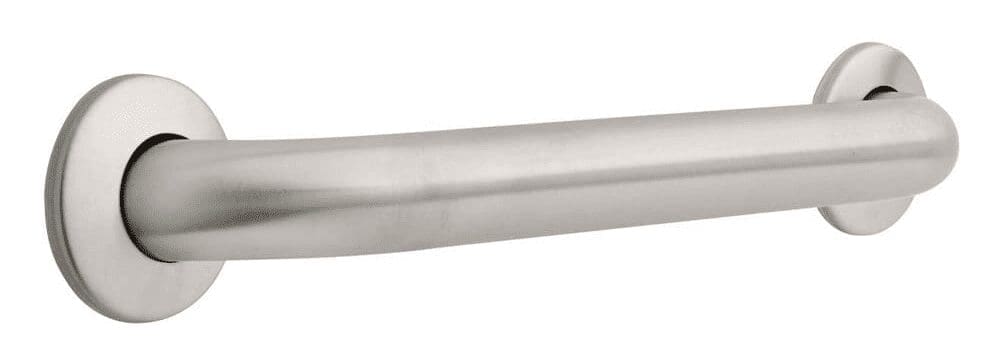
Why I like it: Concealed mount grab bars look cleaner because the screw plates are covered. They are good when you want safety without making the bathroom feel clinical.
Best for: Permanent bathroom safety upgrades where style also matters.
Watch out for: Check diameter, finish, length, and installation requirements before ordering.
Three Places You Should Consider Adding Grab Bars
1. Tub or Shower Entrance
This is the first place I check. Stepping into or out of a tub or shower is one of the most awkward bathroom movements. A vertical grab bar near the entrance can give support while the user lifts a foot over the tub wall or shower curb.
2. Inside the Shower or Tub
A horizontal or angled bar inside the wet area helps while standing, turning, washing, or reaching for soap and shampoo. This is especially helpful if the shower has a slick floor.
3. Beside the Toilet
A toilet grab bar helps with sitting down and standing up. This is useful for older adults, people with knee or hip problems, and anyone recovering from surgery.
Bathroom Safety Upgrades That Work Well with Grab Bars
A shower standing handle is only one part of a safer bathroom. For better protection, consider combining it with:
- Non-slip shower mat or textured shower floor
- Handheld shower wand
- Shower chair or built-in bench
- Good bathroom lighting
- Low-threshold or curbless shower entry
- Anti-scald shower valve
- Safety-rated towel bars
- Toilet safety rails
- Clutter-free floor space
If you are planning a larger bathroom remodel, also consider the hidden waterproofing system before tile installation. It matters just as much as the visible safety hardware.
Common Shower Standing Handle Mistakes
1. Installing a Suction Handle Over Grout Lines
Suction cups need smooth, flat, non-porous surfaces. Grout lines break the seal.
2. Trusting a Towel Rack
A regular towel rack is not a grab bar. It can pull loose when someone grabs it during a slip.
3. Installing the Bar Where It Looks Good Instead of Where It Helps
Grab bar placement should match the user’s movement, not just the tile layout.
4. Skipping Studs or Approved Anchors
A grab bar mounted only into weak wall material can fail under load.
5. Forgetting Waterproofing Around Screw Holes
Inside a shower, screw penetrations must be sealed correctly to reduce water intrusion risk.
6. Choosing a Smooth Bar for Weak Hands
A smooth bar may look nicer, but textured grip can be safer for wet hands.
7. Buying Without Measuring
Check wall space, stud location, user height, and shower layout before choosing bar length.
When to Hire a Professional
Installing a grab bar may look simple, but professional installation is smart when:
- You are drilling through tile or stone
- You cannot locate studs
- The wall has no blocking
- The user needs serious weight-bearing support
- The shower has waterproofing concerns
- You are installing bars for aging-in-place safety
- The bathroom is being remodeled anyway
A properly installed grab bar is not just a bathroom accessory. It is safety equipment.
Final Verdict: Which Shower Standing Handle Should You Choose?
For the safest long-term solution, choose a permanent wall-mounted shower grab bar made from corrosion-resistant metal and install it into studs, blocking, or approved grab bar anchors. Place it where the user actually needs support: near the shower entrance, inside the wet area, and beside the toilet if needed.
Suction shower handles can be useful for temporary balance support, but I would not rely on them as the main safety device for someone at real risk of falling.
My simple rule is this: if someone may need to pull, lean, or catch themselves, use a permanent grab bar. If they only need a light reminder for balance, a suction handle may help, but it must be checked constantly.
📚 More Bathroom & Home Improvement Guides
Planning a safer bathroom or shower remodel? These guides can help:
Frequently Asked Questions
What is a shower standing handle?
A shower standing handle is a support bar installed in or near a shower to help with balance while entering, exiting, standing, turning, or washing. It is also commonly called a shower grab bar.
Are suction shower grab bars safe?
Suction shower grab bars can help with light balance support, but they are not as secure as permanent grab bars. They should not be used as the only support for someone who needs full weight-bearing assistance.
Where should grab bars be placed in a shower?
Common locations include a vertical bar near the shower entrance, a horizontal bar along the shower wall, and a bar near the shower valve. Placement should match the user’s real movement pattern.
How high should a shower grab bar be?
Many horizontal grab bars are installed around waist height, often near 33 to 36 inches from the floor, but home placement should be adjusted to the user’s height, reach, and mobility needs.
Can I install a grab bar into tile?
Yes, but it must be drilled carefully and anchored securely into studs, blocking, or approved grab bar anchors. Screw penetrations inside a shower should also be sealed properly.
Can a towel bar be used as a grab bar?
No. A regular towel bar is not designed to support body weight and may pull out of the wall during a slip. Use a safety-rated grab bar instead.
What length shower grab bar should I buy?
Short bars around 12 to 18 inches can work near entry points, while 24 to 36 inch bars are better for horizontal support along shower or tub walls. Choose length based on user movement and available wall space.
Are vertical or horizontal grab bars better?
Vertical bars are often best for stepping in and out. Horizontal bars help with standing balance and movement along a wall. Many bathrooms benefit from both.
Do grab bars need to be installed into studs?
Stud or blocking installation is usually the strongest option. If studs are not in the right place, use approved grab bar anchors or consult a professional installer.
Should I hire someone to install a shower grab bar?
Hire a professional if you are drilling through tile, cannot find studs, need serious weight-bearing support, or are unsure how to protect the waterproofing behind the shower wall.







Comments are closed.