


















 If you need one shovel for digging, planting, landscaping, and breaking into tough soil, a round point shovel is usually the first tool to buy. Its curved, pointed blade is designed to bite into soil more easily than a flat shovel, making it one of the most useful tools for homeowners, gardeners, landscapers, and DIY yard projects.
A good round point shovel can help you dig planting holes, edge beds, move soil, cut through roots, and work in compacted ground. But not all shovels are built the same. Blade gauge, handle material, grip design, step width, and socket strength all matter.
Let’s see what a round point shovel is used for, how to choose the right one, and which types are best for gardening, landscaping, rocky soil, and heavy-duty digging.
🛠️ Quick Picks: Best Round Point Shovels
- Best Overall: Long Fiberglass Handle Round Point Shovel
- Best Heavy-Duty Option: 14-Gauge Steel Round Point Shovel
- Best for Contractors: Bully Tools 14-Gauge Round Point Shovel
- Best for Homeowners: Ames Round Point Shovel with Long Fiberglass Handle
- Best for Tight Spaces: D-Grip Round Point Shovel
Is a Round Point Shovel Good for Planting Trees?
Yes, a round point shovel works well for planting small trees and shrubs because the pointed blade cuts into soil easily and helps dig a wide planting hole. It is one of the best all-around tools for general tree planting.
However, if you are planting seedlings, working with bare-root trees, or working around delicate roots, a narrower transplanting spade may give you better control. For a full breakdown, see my guide to the best shovel for planting trees.
What Is a Round Point Shovel?
A round point shovel is a digging shovel with a curved blade and pointed tip. The pointed end helps the blade penetrate soil, clay, mulch, gravel, compost, and loose material more easily than a square point shovel.
Round point shovels are often used for general digging and excavation tasks around the yard. They are especially useful when you need to cut into soil rather than simply scoop loose material.
What Is a Round Point Shovel Used For?
A round point shovel is used for digging, planting, trenching, edging, lifting soil, and breaking into compacted ground. It is one of the most versatile outdoor tools because it can both penetrate soil and move material.
- Digging planting holes: Great for shrubs, small trees, perennials, and garden beds.
- Breaking compacted soil: The pointed blade bites into hard ground better than a square shovel.
- Moving soil or compost: Useful for basic landscaping and garden cleanup.
- Cutting small roots: A sharp steel blade can help slice through smaller roots.
- Trenching and edging: Useful for rough trenching, bed shaping, and border cleanup.
- Rocky or clay soil: Heavy-duty models handle tougher digging conditions better.
Round Point Shovel vs Square Shovel
The easiest way to choose between a round point shovel and a square shovel is to think about the job. If you need to dig into the ground, choose a round point shovel. If you need to scoop loose material from a flat surface, choose a square shovel.
| Tool | Best For | Blade Shape |
|---|---|---|
| Round Point Shovel | Digging, planting, trenching, compacted soil | Curved blade with pointed tip |
| Square Shovel | Scooping mulch, gravel, soil, debris, snow, loose material | Flat front edge |
| Trenching Shovel | Narrow trenches, irrigation lines, drainage work | Long narrow blade |
Best Round Point Shovels Reviewed
1. Best Overall: Long Fiberglass Handle Round Point Shovel
For most homeowners, a long fiberglass handle round point shovel is the best all-around choice. Fiberglass handles are weather-resistant, comfortable, and less likely to splinter than wood. A long handle also gives better leverage when digging planting holes or working in compacted soil.
Best for: General garden digging, planting, yard work, and landscaping.
- Pros: Good leverage, weather-resistant handle, comfortable for most yard work.
- Cons: Long handles can be awkward in tight spaces.

2. Best Heavy-Duty Option: 14-Gauge Round Point Shovel
If you dig in clay, rocky soil, roots, or compacted ground, look for a 14-gauge round point shovel. The lower gauge number usually indicates a thicker, stronger blade than lighter-duty models.
A 14-gauge steel blade is a smart choice for frequent digging, landscaping jobs, and tougher soil conditions where a cheaper lightweight shovel may bend or flex.
Best for: Clay soil, rocky ground, root-heavy areas, and frequent yard work.
- Pros: Stronger blade, better durability, useful for tough soil.
- Cons: Usually heavier than light-duty garden shovels.

3. Best Contractor-Style Pick: Bully Tools 14-Gauge Round Point Shovel
The Bully Tools 14-gauge round point shovel is a popular heavy-duty option for people who want a stronger digging shovel for lawn, garden, roots, rocks, and tough soil. It is the type of shovel to consider if you want something more rugged than a basic homeowner shovel.
Best for: Contractors, serious gardeners, and homeowners who frequently dig in difficult soil.
- Pros: Heavy-duty feel, strong steel blade, good for demanding digging tasks.
- Cons: May be more shovel than casual gardeners need.

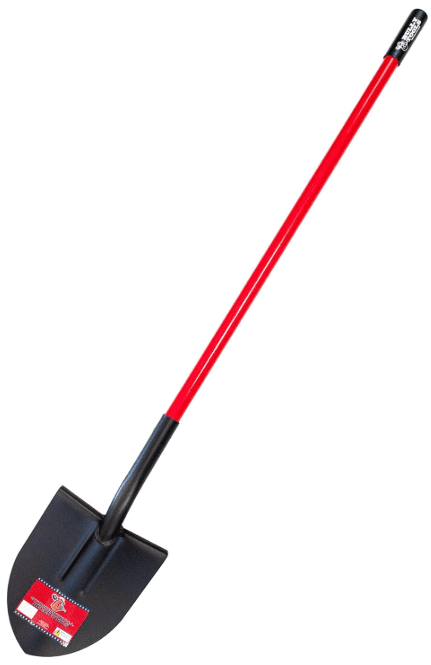
4. Best Homeowner Pick: Ames Round Point Shovel with Long Fiberglass Handle
The Ames round point shovel with a long fiberglass handle is a good homeowner-friendly option for common digging and gardening jobs. It is designed for yard maintenance, planting, and digging in harder soil.
Best for: Homeowners who want a reliable digging shovel for regular garden and landscape work.
- Pros: Good general-purpose design, fiberglass handle, useful for frequent yard tasks.
- Cons: Not as specialized as contractor-grade options.

5. Best for Tight Spaces: D-Grip Round Point Shovel
A D-grip round point shovel has a shorter handle with a D-shaped grip at the end. It provides greater control in tight areas, such as raised beds, trenches, foundations, trailers, and small garden spaces.
Best for: Raised beds, tight digging spots, short users, and controlled digging.
- Pros: Better control, easier in tight spaces, compact storage.
- Cons: Less leverage than a long-handle shovel.

How to Choose the Best Round Point Shovel
1. Blade Gauge
Blade gauge matters because it affects strength and weight. A 14-gauge round point shovel is a strong choice for tough soil and frequent use. Lighter-gauge shovels may be easier to handle but can bend more easily under heavy pressure.
2. Handle Material
Round point shovels usually come with wood, fiberglass, or steel handles.
- Fiberglass: Weather-resistant, strong, and comfortable for most homeowners.
- Wood: Traditional feel, good shock absorption, but can splinter or weather over time.
- Steel: Very durable, but heavier and less comfortable for long sessions.
3. Long Handle vs D-Grip
A long handle gives better leverage and is usually better for deep digging. A D-grip handle is better for control, tight spaces, and shorter digging jobs.
4. Step Design
Look for a wide forward step or comfort step if you dig often. This gives your boot a better place to press down and reduces foot fatigue.
5. Socket Strength
The socket is where the blade connects to the handle. This area takes a lot of stress when prying or digging in hard ground. A reinforced or extended socket is better for heavy-duty work.
If you only buy one shovel for general yard work, choose a fiberglass handle round point shovel with a steel blade and comfortable step. It gives you the best mix of digging power, durability, and usability.
Common Round Point Shovel Mistakes
1. Using It as a Pry Bar
A round-point shovel can handle digging and light root work, but it is not a demolition bar. Excessive prying can bend the blade, crack the handle, or loosen the socket.
2. Buying Too Light of a Blade
Cheap lightweight shovels may work in soft soil, but they often struggle in clay, rocks, and roots. If your soil is tough, choose a heavier-duty blade.
3. Ignoring Handle Length
A long handle is better for leverage, while a D-grip is better for control. Choose based on how and where you dig.
4. Leaving It Outside
Even good shovels last longer when stored dry. Leaving tools in rain and sun can damage handles, rust blades, and weaken connections.
How to Maintain a Round Point Shovel
- Rinse off soil after use.
- Dry the blade before storage.
- Sharpen the edge occasionally for easier digging.
- Apply light oil to the blade to reduce rust.
- Store indoors or in a dry shed.
- Check the handle and socket for cracks or looseness.
Final Verdict: What Is the Best Round Point Shovel?
For most homeowners, the best round point shovel is a long fiberglass handle round point shovel with a durable steel blade and comfortable step. It is versatile enough for planting, digging, landscaping, and general yard maintenance.
If you work in hard clay, rocky soil, or root-heavy ground, upgrade to a 14-gauge round point shovel. If you work in tight areas or raised beds, choose a D-grip round point shovel for better control.
The right shovel depends on your soil, your strength, your projects, and how often you dig. But if you want one reliable digging tool, a good round point shovel is hard to beat.
📚 More Garden Tool Guides
Building a better garden tool setup? These guides can help:
Frequently Asked Questions
What is a round point shovel?
A round point shovel is a digging shovel with a curved blade and pointed tip. It is designed to penetrate soil, clay, compost, mulch, and packed material more easily than a flat shovel.
What is a round point shovel used for?
A round point shovel is used for digging planting holes, breaking compacted soil, trenching, edging, cutting small roots, and moving soil or compost.
Is a round point shovel better than a square shovel?
A round point shovel is better for digging into soil. A square shovel is better for scooping loose material from flat surfaces, such as mulch, gravel, or debris.
What is the strongest handle for a round point shovel?
Fiberglass and steel handles are usually the strongest options. Fiberglass is a good balance of strength, weather resistance, and comfort, while steel is very durable but heavier.
What does 14-gauge mean on a round point shovel?
Gauge refers to blade thickness. A 14-gauge shovel generally has a thicker, stronger blade than lighter-duty models, making it better for tough soil and frequent use.
Should I choose a long handle or D-grip round point shovel?
Choose a long handle for leverage and deeper digging. Choose a D-grip handle for tight spaces, raised beds, and better control.