











Bottle palm care is not difficult, but it is specific. This is a slow-growing tropical palm that wants warmth, bright light, excellent drainage, moderate water, and protection from hard freezes. It is not a cold-hardy palm you can plant anywhere and forget.
The true bottle palm is Hyophorbe lagenicaulis. It is grown for its swollen bottle-shaped trunk, smooth gray stem, green crownshaft, and compact crown of feather-like fronds. In warm climates, it works as a specimen palm near patios, pool areas, entry beds, and tropical landscapes. In cooler regions, it is safer as a container palm that can be moved or protected during cold weather.
If you are still comparing size, roots, and buying options, start with the main bottle palm overview. This page focuses on the practical care routine: watering, sun, soil, fertilizer, pots, pruning, winter protection, and common problems.

Bottle palm care comes down to full sun outdoors, very bright light indoors, well-drained soil, moderate watering, light palm fertilizer, and cold protection. Let the soil dry slightly between waterings, avoid soggy containers, remove only mostly dead fronds, and protect the palm before freezing weather arrives.
Use these related Garden Frontier guides for size, roots, buying, and the full bottle palm plant profile.
Slow-Release Palm Fertilizer
Best for: Feeding bottle palms during the warm growing season without guessing with lawn fertilizer or random all-purpose plant food.
Palm and Cactus Potting Mix
Best for: Container bottle palms because the mix drains better than heavy garden soil and helps reduce soggy-root problems.
Plant Moisture Meter
Best for: Checking container moisture before watering, especially when indoor light, cool weather, or large pots slow drying.
Large Planter With Drainage
Best for: Patio bottle palms, poolside containers, and marginal climates where the palm needs to move before cold weather.
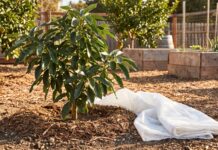
Garden Frost Cloth
Best for: Short cold events in warm-zone gardens. Bottle palm is cold-sensitive, so protection should happen before the cold hits.
Bottle Palm Care at a Glance
Bottle palm is best treated as a warm-climate specimen palm or a high-value tropical container plant. It is slower and more sensitive than many common palms, so care should be steady rather than aggressive.
| Care Factor | Best Practice | Common Mistake |
|---|---|---|
| Light | Full sun outdoors; very bright light indoors | Keeping it in a dim indoor corner. |
| Water | Moderate watering with slight drying between sessions | Keeping the root zone constantly wet. |
| Soil | Well-drained soil or palm/cactus-style mix | Using heavy garden soil in a pot. |
| Fertilizer | Light palm fertilizer during active growth | Trying to force fast growth with heavy feeding. |
| Cold | Protect before frost or grow in a movable container | Treating it like a hardy landscape palm. |
How Much Sun Does a Bottle Palm Need?
Bottle palm grows best outdoors in full sun once established. In very hot patio locations, young container palms may appreciate some light afternoon relief, but deep shade is not a good long-term setup.
Indoors, the light requirement is harder to meet. A bottle palm needs very bright light near a sunny window, sunroom, greenhouse-style space, or strong supplemental grow light. A bright-looking room to your eyes can still be too dim for a tropical palm.
Signs Your Bottle Palm Needs More Light
- Weak new growth
- Slow decline indoors
- Leaning strongly toward a window
- Pale or stretched-looking leaves
- Soil staying wet too long because the plant is not using water quickly
Best Soil for Bottle Palm
Bottle palm needs well-drained soil. Outdoors, avoid low wet spots and heavy compacted soil that stays soggy after rain. In containers, use a loose palm or cactus-style potting mix instead of dense garden soil.
Drainage matters because bottle palm roots do not like sitting in cold, wet, oxygen-poor soil. A slightly dry, well-aerated root zone is easier to correct than a saturated pot with declining roots.
How to Water a Bottle Palm
Watering is where many bottle palm problems start. The goal is not bone-dry soil and not constantly wet soil. The best routine is moderate watering, then a slight drying period before the next watering.
Newly planted bottle palms need regular water while the roots establish. Established outdoor palms in warm climates need water during dry spells. Container palms need closer attention because pots dry faster in heat and stay wet longer indoors or in cool weather.
| Growing Situation | Watering Approach | Best Check |
|---|---|---|
| New outdoor planting | Water regularly while roots establish | Root ball should not dry completely during establishment. |
| Established outdoor palm | Water during dry spells | Soil should drain well after rain or irrigation. |
| Outdoor container | Check often in warm weather | Water when the upper mix starts drying. |
| Indoor container | Water less often than outdoors | Check moisture before watering because indoor pots dry slowly. |
Overwatered Bottle Palm Signs
- Yellowing leaves with wet soil
- Soft or sour-smelling potting mix
- Slow decline after repeated watering
- Pot has no drainage or water sits in a saucer
- New growth looks weak while the root zone stays wet
Underwatered Bottle Palm Signs
- Dry potting mix pulling away from the container edge
- Brown crispy tips during hot weather
- Fronds folding or looking dull
- Container feels very light
- Plant wilts more often in afternoon heat
Do not water bottle palm on autopilot. Check the soil first. A sunny outdoor pot in summer and a cool indoor pot in winter do not dry at the same speed.
Should You Fertilize Bottle Palm?
Yes, but lightly. Bottle palm is slow-growing, so fertilizer will not turn it into a fast palm. Use a palm fertilizer during active growth and follow the label. Avoid heavy feeding and avoid lawn fertilizer near the root zone.
A good palm fertilizer is usually a better choice than a random all-purpose plant food because palms can need specific nutrients. Container palms may need small, steady feeding because nutrients wash out of pots over time.
Fertilizer Mistakes to Avoid
- Using high-nitrogen lawn fertilizer near bottle palms
- Fertilizing a stressed, cold-damaged, or newly shocked palm too aggressively
- Adding more fertilizer when the real problem is poor drainage or low light
- Fertilizing dry roots without watering properly
- Expecting fertilizer to fix cold damage
Bottle Palm in Pots
Bottle palm is one of the better palms for containers because it grows slowly and stays smaller than many landscape palms. A pot also gives you winter flexibility in marginal climates.
The container needs drainage holes, enough weight to resist tipping, and a loose mix that does not stay soggy. A decorative sealed pot may look good for a week and then cause long-term root trouble.
For broader planning before buying a container specimen, see bottle palm tree for sale.
Best Pot Setup
- Use a pot with drainage holes.
- Choose a stable container that will not tip easily.
- Use palm/cactus-style potting mix.
- Do not let water sit in the saucer after watering.
- Move containers before cold weather arrives.
- Repot only when the palm truly needs more root space.
Repotting Bottle Palm
Repot bottle palm when the roots have filled the pot, the container dries too quickly, or the plant becomes unstable. Do not repot constantly just because growth is slow. Slow growth is normal for this palm.
Move up one reasonable pot size, not a huge jump. Oversized pots can hold too much wet mix around the roots, especially indoors or in cool weather.
Can Bottle Palm Grow Indoors?
Bottle palm can grow indoors, but only with enough light. It is not the easiest indoor palm for a dark room. If the plant is several feet from a small window, expect weak performance.
The best indoor setup is a bright sunroom, greenhouse window, very sunny exposure, or strong grow light. Indoor bottle palms also need careful watering because low light and cool rooms slow moisture use.
Indoor Bottle Palm Care Checklist
- Place it in the brightest spot available.
- Use a draining pot and loose mix.
- Check moisture before watering.
- Keep it away from cold drafts.
- Rotate the pot occasionally so growth does not lean one way.
- Watch for spider mites or dry-air stress.
Bottle Palm Outdoor Care
Outdoors, bottle palm looks best in a warm sunny spot where the trunk is visible. It is a specimen palm, not a privacy screen. Give it room, drainage, and cold protection if your region is marginal.
Avoid planting it in a low wet area, tight foundation pocket, or cold inland location where a hardier palm would be more realistic. If spacing near hardscape is your main concern, read are bottle palm roots invasive.
Bottle Palm Cold Protection
Bottle palm is cold sensitive. It should be planted outdoors only where cold risk is low, or grown in a container where it can be protected. Hard freezes can badly damage or kill this palm.
In marginal climates, do not wait until after the cold event. Move container palms before the temperature drops. For in-ground palms, use frost cloth for short events and protect the crown without crushing it.
- Move containers early: Bring potted palms into a protected area before the cold arrives.
- Use frost cloth: Cover the palm during short cold snaps, especially young plants.
- Avoid wet cold soil: Saturated soil plus cold weather increases stress.
- Do not overprune after cold: Wait to see what is truly dead.
- Do not fertilize cold-damaged palms aggressively: Let the plant stabilize first.
Pruning Bottle Palm
Bottle palm does not need heavy pruning. Remove fronds only when they are mostly dead. Green fronds still feed the palm, and cutting too many can weaken the plant.
Do not cut into the crownshaft or growing point. A palm does not recover from that kind of damage like a shrub would.
Why Are My Bottle Palm Leaves Turning Brown?
Brown leaves or brown tips can come from cold damage, watering stress, dry indoor air, overfertilizing, low light, transplant shock, or normal aging of older fronds. The pattern matters.
One old lower frond turning brown is not an emergency. Several fronds browning after a cold night points to cold damage. Brown tips in a dim indoor room may be low light and watering stress. Yellowing with wet soil points toward poor drainage or overwatering.
| Symptom | Likely Cause | Best First Fix |
|---|---|---|
| Brown leaf tips indoors | Dry air, low light, or watering stress | Move to brighter light and check soil moisture before watering. |
| Yellow leaves with wet soil | Overwatering or poor drainage | Improve drainage and let the mix dry slightly. |
| Brown fronds after a cold night | Cold damage | Protect from future cold and wait before heavy pruning. |
| Older lower frond browning | Natural aging | Remove only when mostly dead. |
Common Bottle Palm Problems
Most bottle palm problems come from cold, water, drainage, light, or overcorrection. Because the palm grows slowly, recovery can also be slow.
- Cold damage: Brown or collapsed fronds after low temperatures.
- Overwatering: Yellowing, weak growth, and wet soil that does not dry.
- Low indoor light: Gradual decline in rooms that are too dim.
- Fertilizer burn: Brown tips or stressed roots after heavy feeding.
- Transplant shock: Slowdown after planting or repotting.
- Dry container stress: Crispy tips and wilting in hot patio pots.
Bottle Palm Roots and Spacing
Bottle palm roots are fibrous like other palms and are not usually considered aggressive like large woody tree roots. Still, spacing matters. Leave enough room for the trunk, crown, root ball, maintenance, irrigation, and future growth.
Do not plant bottle palm tight against walls, pool edges, foundations, or underground utilities just because the roots are not usually invasive. For spacing around hardscape and pipes, use the dedicated guide to bottle palm roots.
How Big Will a Well-Cared-For Bottle Palm Get?
Good care helps bottle palm reach its natural potential, but it will still be slow. Warmth, sun, drainage, and steady watering support growth. Cold stress, low light, container restriction, and poor drainage slow it down.
For height ranges, container limits, and landscape spacing, see how big does a bottle palm get.
Official Bottle Palm References
For botanical and landscape profile details, see the UF/IFAS bottle palm profile. For Florida-specific notes on container use, cold sensitivity, full sun, drainage, and warm-zone placement, see the UF/IFAS Extension Charlotte County bottle palm article.
Frequently Asked Questions
How do you care for a bottle palm?
Care for bottle palm by giving it full sun outdoors, very bright light indoors, well-drained soil, moderate water, light palm fertilizer during active growth, and protection from hard freezes.
How often should I water a bottle palm?
Water when the soil begins to dry slightly. Outdoor containers may need frequent checks in summer, while indoor pots need less water because they dry more slowly.
Does bottle palm need full sun?
Bottle palm grows best in full sun outdoors once established. Indoors, it needs very bright light to stay healthy long term.
Can bottle palm grow in shade?
Bottle palm can tolerate some moderate shade, but deep shade is not ideal. Too little light can cause weak growth and slow decline, especially indoors.
What soil does bottle palm need?
Bottle palm needs well-drained soil. For containers, use a loose palm or cactus-style potting mix instead of heavy garden soil.
What fertilizer is best for bottle palm?
Use a palm fertilizer lightly during active growth and follow the label. Avoid high-nitrogen lawn fertilizer and heavy feeding.
Can bottle palm grow indoors?
Yes, bottle palm can grow indoors if it gets very bright light, good drainage, careful watering, and protection from cold drafts. It is not ideal for dim rooms.
Can bottle palm grow in pots?
Yes, bottle palm grows well in pots because it is slow-growing and stays smaller than many palms. Use a stable container with drainage holes.
Why are my bottle palm leaves turning brown?
Brown leaves can be caused by cold damage, underwatering, overwatering, low indoor light, dry air, fertilizer burn, transplant shock, or natural aging of older fronds.
Should I cut off brown bottle palm leaves?
Remove fronds only when they are mostly dead. Avoid cutting healthy green fronds because they still help feed the palm.
Can bottle palm survive winter?
Bottle palm can survive winter outdoors only in warm climates with little cold exposure. In marginal zones, grow it in a container and protect it before cold weather.
Are bottle palm roots invasive?
Bottle palm roots are not usually considered aggressive, but the palm still needs sensible spacing from hardscape, foundations, pools, and utilities.
Final Verdict
Bottle palm care is simple when the location is right and frustrating when the location is wrong. This palm wants warmth, sun, drainage, and careful watering. It does not want hard freezes, soggy soil, dim indoor corners, or heavy fertilizer.
For outdoor landscapes, plant bottle palm where the trunk can be seen and where cold risk is low. For patios and marginal climates, use a draining container so the palm can be moved or protected. For indoor growing, give it the brightest spot you have and water only after checking the soil.
For the full plant profile, go back to bottle palm. For size planning, see how big does a bottle palm get. For spacing near hardscape, use are bottle palm roots invasive. Before ordering a specimen, read bottle palm tree for sale.
The safest bottle palm care setup is a warm sunny location, well-drained soil or palm/cactus potting mix, moderate watering, light slow-release palm fertilizer, and frost protection before cold nights.
Join Garden Frontier for practical palm care, tropical landscaping, container plants, and seasonal garden tips.
100% free. No spam. Unsubscribe anytime.