












That is not a flaw. It is the point. Magnolia acuminata, also called cucumber tree magnolia, is one of the largest native magnolias in North America. It is valued for its tall shade-tree form, big tropical-looking leaves, unusual cucumber-shaped fruit, furrowed bark, wildlife value, and role in breeding yellow-flowered hybrid magnolias.
The key is knowing what you are planting. Cucumber magnolia is not the best choice if you want a small ornamental tree covered in obvious spring flowers. It is a better fit for larger landscapes, native plantings, woodland edges, parks, and properties where a long-lived canopy tree has room to grow into an impressive tree over time.
⚡ Quick Guide: Cucumber Magnolia At a Glance
- Botanical Name: Magnolia acuminata
- Common Names: Cucumber magnolia, cucumber tree magnolia, cucumbertree, blue magnolia.
- Hardiness Zones: USDA Hardiness Zones 3 through 8.
- Sunlight: Full sun to partial afternoon shade.
- Soil Preference: Rich, deep, moist, and well-drained loam.
- Mature Size: 50 to 80 feet tall with a canopy spreading 30 to 55 feet wide.
- Pest Risks: Highly resilient, though occasionally prone to magnolia scale.

What Exactly Is a Cucumber Magnolia?
The cucumber magnolia is a massive, deciduous canopy tree in the family Magnoliaceae. Native to the Appalachian region and stretching across eastern North America, this species grows into a true forest giant rather than a compact landscape shrub.
Unlike the Southern Magnolia (Magnolia grandiflora), which features thick, evergreen leaves, the cucumbertree drops its foliage every single autumn after a subtle display of yellow-gold color. Furthermore, unlike the popular Saucer or Star magnolias, the flowers on Magnolia acuminata appear after the leaves have already expanded in late spring. Because the blooms are a muted chartreuse or yellow-green and sit high up in the mature canopy, they blend into the foliage, making them understated and quiet from a distance.
Why Is It Called a Cucumber Tree?
The common name comes entirely from the young, unripe fruit. After the late-spring flowers are successfully pollinated, the tree develops small, elongated, bumpy green seed cones. Throughout mid-summer, these seed structures hang from the branches looking a bit like small cucumbers.
By late August and September, the green “cucumbers” gradually transition into a pinkish-red or deep reddish-orange color. The seed pods then split open to reveal brilliant, waxy crimson seeds dangling on slender, thread-like filaments, providing a valuable food source for migrating birds.
⚠️ Understanding the Nicnkame
The fruit of the cucumber tree is purely an ornamental seed cone. It has absolutely nothing to do with edible garden cucumbers, it does not taste like a cucumber, and it is not a grocery item. It is simply a botanical nickname based on the shape of the developing fruit.
Cucumber Magnolia Identification Key
Because young trees in a nursery setting can look remarkably similar to other forest giants, use this breakdown of physical characteristics to verify your tree’s identity.
| Botanical Feature | What to Look For | How It Confirms Identity |
|---|---|---|
| Leaves | Ovate to oblong, 6 to 10 inches long, alternate arrangement, smooth margins with a sharply pointed tip (acuminate). | Much larger and softer than Oaks or Cherries, creating a distinctly bold, tropical texture in mid-summer. |
| Flowers | Tulip-shaped, 2 to 3 inches long, subtle yellow-green petals sitting upright on branch tips. | Blends into emerging summer leaves; completely lacks the white/pink contrast of ornamental magnolias. |
| Fruit Type | Bumpy, cylindrical green aggregate fruit (2-3 inches long) that matures to a glossy red or pinkish-orange. | The definitive indicator for Magnolia acuminata. No other shade tree produces this exact shape. |
| Trunk Bark | Dark gray to gray-brown, developing narrow, flaky ridges and deep, longitudinal furrows with age. | Older specimen trunks look rugged and ancient, texturally distinct from the smooth bark of a Tulip Tree. |
| Canopy Form | Strictly pyramidal and formal when young, broadening into a massive, stately, rounded crown at maturity. | Grows into a massive single-trunk canopy shade tree, never a multi-stemmed landscape shrub. |
Pre-Purchase Checklist: What to Know Before Buying
The smartest aluminum pergola or native shade tree purchase starts with the boring specs: anchoring surface, roof system, drainage, published load ratings, warranty, and whether the kit can realistically be assembled without a contractor. Those details matter more than the staged patio furniture in the listing photos. For a cucumber magnolia, use this pre-purchase evaluation:
- The Spatial Footprint: Ensure your yard can realistically accommodate a tree that reaches 60+ feet tall. Squeezing it close to structural rooflines, foundation walls, or overhead power lines will lead to expensive maintenance battles down the road.
- The Anchoring Surface: This tree forms a large, expansive root system that demands deep, uncompacted soil. It can struggle or crack nearby concrete if crammed into a tight, restrictive sidewalk cutout.
- Soil Chemistry and Drainage: Perform a basic soil test. The cucumbertree prefers an acidic to neutral pH. If your soil is highly alkaline or composed of dense, poorly drained heavy construction clay, the roots can quickly suffocate.
- Xeriscaping Limitations: While mature trees can withstand moderate dry spells thanks to their deep root systems, young trees have limited drought tolerance. If you live in an area with strict water restrictions and blazing summer heat, keep a regular watering plan ready for its first three seasons.
Selecting Your Ideal Landscape Size
Because they grow into true canopy giants, matching the tree’s dimensions to your specific landscape zone is essential for a balanced design.
| Landscape Area | Recommended Tree Size & Use | Why It Works |
|---|---|---|
| Large Subdivisions & Estates | Full Standby Native Magnolia acuminata | Provides massive architectural shade, lowering summer cooling costs for the home. |
| Medium Suburban Lawns | Yellow Hybrid Cultivars (e.g., ‘Elizabeth’ or ‘Butterflies’) | These popular hybrids use cucumber magnolia genetics for hardiness but stay compact with showy yellow flowers. |
| Woodland Edges & Rain Gardens | Wild-Simulated Species Planting | Thrives near natural water runoff zones and blends into a mature forest canopy. |
Cucumber Magnolia vs. Other Common Magnolias
If you are confused about which magnolia is right for your property, it helps to see how the cucumbertree stacks up against its famous family relatives.
| Magnolia Type | Growth & Foliage Habit | Flower & Fruit Style | Core Landscape Role |
|---|---|---|---|
| Cucumber Magnolia (M. acuminata) |
Deciduous forest tree; huge, thin, pointed green leaves. Highly cold-hardy. | Subtle yellow-green flowers; unique cucumber-shaped green-to-red fruit. | Massive native shade tree for parks, campuses, and expansive lawns. |
| Southern Magnolia (M. grandiflora) |
Broadleaf evergreen; stiff, leathery leaves with a rusty brown underside. | Massive, heavily scented white flowers blooming throughout the summer. | Classic Southern feature tree or privacy screen for warm climates. |
| Saucer Magnolia (M. x soulangeana) |
Small deciduous multi-stemmed tree or large spreading shrub. | Explosive pink, purple, and white chalice-shaped spring flowers on bare wood. | High-visibility front yard ornamental specimen for spring drama. |
| Sweetbay Magnolia (M. virginiana) |
Semi-evergreen to deciduous; slender leaves with a silvery-white underside. | Creamy-white, lemon-scented cup-shaped flowers blooming in late spring. | Excellent choice for wet, boggy soils, rain gardens, and compact yards. |
Complete Step-by-Step Planting Guide
Magnolias possess a delicate, fleshy root system that does not tolerate rough handling or improper planting depths. Follow this protocol to ensure your cucumbertree establishes without going into severe shock.
- Time It Right: Plant bare-root saplings or container trees in the early spring before the leaf buds begin to swell. This allows the root system to settle into the native soil before dealing with summer evaporation stress.
- Dig Wide, Not Deep: Dig a hole that is two to three times wider than the tree’s root ball, but exactly the same depth. The structural roots must sit on firm, un-dug soil so the tree does not settle too deep over time.
- Check the Root Flare: Find the point where the main trunk begins to widen out into the root network. This root flare must sit completely flush with, or up to an inch above, the surrounding lawn grade. Burying the root flare under soil is a common cause of long-term trunk rot.
- Backfill with Native Soil: Do not fill the hole with rich, store-bought potting soil or pure compost. This creates a “pot effect” where the roots refuse to grow outward into the tougher native ground. Fill the hole with the original soil you dug out, breaking up any large dirt clods.
- Eliminate Air Pockets: Fill the hole halfway with soil, then run a garden hose at a gentle trickle into the pit to settle the dirt around the roots naturally. Avoid stamping down heavily with your work boots, as this compresses the soil and tears the delicate root tips. Fill the remaining space with soil.
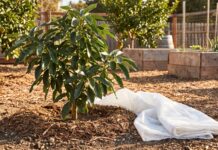
- Establish a Correct Mulch Ring: Apply a 3-inch layer of organic hardwood or bark mulch over the entire root zone to retain moisture. Crucial step: Keep the mulch pulled back at least 3 to 4 inches away from the bark of the trunk. Creating a “mulch volcano” traps moisture against the wood, inviting insect infestations and fungal blights.
Everything you need for successful native tree establishment:
Managing Common Problems & Maintenance Care
While the cucumber magnolia is generally a resilient native species once fully established, it is highly sensitive to site changes and poor cultural care. Watch for these common issues:
Drought Stress and Leaf Scorch
If you experience an extended, blistering heat wave in July or August, the massive leaves of a young cucumbertree may begin to droop, curl, or develop crispy, brown edges (leaf scorch). In severe cases, the tree will drop its foliage early as a survival mechanism. To prevent this, hook up a slow-release tree watering bag around the trunk during extended dry periods to deliver deep, steady hydration straight to the root network.
Soil Compaction and Heavy Traffic
The fleshy roots of Magnolia acuminata require steady oxygen exchange within the soil. If your planting site faces heavy construction traffic, parked vehicles, or constant foot traffic from lawn care equipment, the soil will compress, suffocating the roots. This leads to slow dieback in the upper canopy. Keep lawn mowers and string trimmers far away from the trunk flare by expanding your mulch ring annually.
Battling Magnolia Scale
This is the most common insect pest you will encounter when growing magnolias. Magnolia scale looks like small, bumpy, waxy white or gray coatings attached to the young twigs. These insects suck sap out of the tree, secreting a sticky fluid called honeydew that leads to the growth of unsightly black sooty mold over the glossy leaves.
Inspect the lower branches regularly. For mild infestations, scrub the bumps loose using a soft brush dipped in soapy water. For wider infestations, apply a thorough coating of organic horticultural oil or cold-pressed Neem oil in the late fall or early spring when the insects are in their mobile “crawler” stage.
Keep your magnolia foliage healthy and pest-free naturally:
The Reality of DIY vs. Professional Installation
Planting a small, 3-foot container-grown cucumber tree sapling is a straightforward, rewarding DIY project for a Saturday morning. However, if you are investing in a large, field-grown B&B (balled-and-burlapped) specimen that weighs several hundred pounds, do not attempt to wrestle it into the ground alone. You can easily damage the delicate root ball or injure your back.
Furthermore, because the cucumbertree grows into a massive canopy giant, long-term structural integrity is crucial. If your property requires deep land clearing, extensive soil grading, or professional trenching around existing utilities, calling in a professional is the smartest move.
Need Help Installing Large Native Shade Trees?
Proper tree placement, structural root flare alignment, and heavy lifting require professional expertise. A local landscaping or tree-planting crew can ensure your native canopy giant is installed correctly for decades of healthy shade.
Final Thoughts on the Cucumbertree
The cucumber magnolia is a tree for gardeners who appreciate the natural rhythms of the forest beyond a brief, flashy spring flower display. Its bold summer foliage, unique cucumber-like fruit, deep gray furrowed bark, and clean shade-tree symmetry make it an exceptional addition to large home landscapes, parks, and native woodland borders.
Just give it the space it craves. Plant it in moist, rich, acidic soil away from heavy concrete compaction, keep it hydrated through its early summers, and Magnolia acuminata will easily reward your property with majestic native character for generations to come.
Frequently Asked Questions About Cucumber Magnolia
What is a cucumber magnolia tree?
The cucumber magnolia (Magnolia acuminata) is a large, deciduous native shade tree in the magnolia family. It is known for its tall pyramidal growth, large green leaves, subtle yellow-green flowers, and unique fruit that resembles small green cucumbers before ripening red in the fall.
Is the fruit of the cucumber tree edible?
No. While the bumpy, cucumber-shaped green-to-red aggregate fruits are highly attractive to local birds and wildlife, they are not edible for humans and have no culinary value. They are strictly an ornamental seed cone.
How big does a cucumber magnolia grow?
The cucumber tree grows into a massive canopy shade tree, reaching a mature height of 50 to 80 feet tall with a leaf canopy spreading 30 to 55 feet wide. Because of its large size, it is unsuitable for small suburban yards or narrow street beds.
Does a cucumber magnolia produce showy flowers?
No. Unlike Star or Saucer magnolias, the flowers on a cucumber magnolia are a subtle yellow-green color and emerge high up in the tree canopy after the large summer leaves have already uncurled, meaning they are frequently hidden from view.
Is cucumber magnolia hard to grow?
Once established in the correct location, it is a hardy, low-maintenance native tree. However, it is sensitive to poor drainage, severe drought stress, and heavy soil compaction, so proper site selection is essential for long-term survival.
Are cucumber tree seeds toxic to dogs?
Yes. Like many members of the magnolia family, the seeds, cones, and bark contain saponins and other chemical compounds that can cause moderate gastrointestinal distress, vomiting, and lethargy in dogs and cats if consumed in large quantities.