














How To Manage Pests The Natural Way
Biodiversity offers a pesticide-free option for protecting your garden from pests without introducing toxins.
In the wild, the natural food chain keeps populations of plant-damaging pests in balance, and you can create the same conditions in your garden.
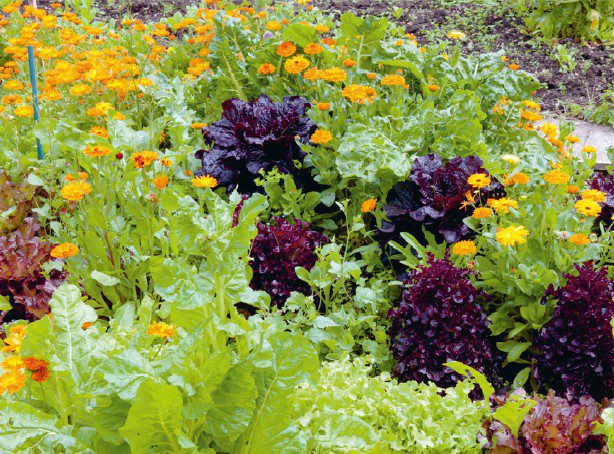
Plant a wide variety of healthy plant types and species to support plenty of wildlife, choose disease-resistant varieties, and experiment with companion planting to protect from pests.
Simultaneously, attract pest predators to your garden with a range of different strategies, such as installing a bug hotel or building a wildlife pond, or introducing natural organisms (called nematodes) that help fight pests.
Integrated Pest Management (IPM)
Integrated Pest Management (IPM) is a comprehensive strategy that balances various pest control methods to achieve effective, long-term pest management while reducing the reliance on chemical pesticides. This approach emphasizes ecosystem management by understanding the pest life cycle and integrating biological controls, such as beneficial insects, with sustainable techniques like botanicals and horticultural oils.
A key aspect of IPM is creating a tailored plan that addresses specific pest challenges without harming the surrounding environment. Spot treatments and insect growth regulators are often used to target pests precisely, minimizing the impact on non-target species. Chemical controls are included only as a last resort and in carefully measured applications to ensure they complement other methods rather than dominate them.
Long-term pest control is achieved through continuous monitoring, which includes follow-up visits to assess progress and make adjustments as needed. By focusing on sustainable pest control practices, IPM protects plants and crops and preserves the health of the broader ecosystem, making it a responsible and effective solution for managing pests.
A variety of healthy plants
Aim for diversity in your garden—this will attract a range of wildlife and make plants less likely to succumb en masse to disease or attack by pests.
Opt for disease-resistant types of vulnerable species if you’re concerned about viral, fungal,
or bacterial infection.
Rotate vegetable crops each year to help prevent pest build-up in specific areas, as pests tend to reappear annually in the spots where their favorite species were last planted.
Monitor the number of pests in your garden by checking your plants regularly. Picking off
pests from your plants before populations take hold may be all that’s needed.
Bring in the Predators
Many garden pests have predators to prey on them. Create the optimum conditions for predators by providing suitable habitats and a water source.
If you see a spike in a pest’s population, find out if there are any of the pest’s predators in your garden, as they may naturally reduce pest numbers.
If pests persist, they are probably outnumbering your predators. In some cases, such as codling moth, you can then use pheromone traps.
Pheromones are chemicals that insects and other animals use to communicate with individuals of the same species. Pheromone traps attract specific pest species.
Controls as a last resort
If you have sustained periods of increased pest numbers and plant destruction, you may need to turn to organic products made from natural ingredients, including soaps and oils, which smother pests.
These are considered less damaging to the environment but can still harm beneficial organisms and pests, so use them as sparingly as possible.
Choose disease-resistant plants
Healthy plants well suited to their conditions will always cope with disease best, but you
can buy many plants that are bred with resistance to certain diseases—ask for information at your garden center.
For instance, a wide range of roses now have a genetic resistance to problems such as
blackspot and powdery mildew, such as the English shrub rose ‘The Lady Gardener.’
Alternatively, choose plants that look similar and provide the same function in your planting
scheme but are not prone to a problem pest or disease.
One example is the Japanese holly, which is not afflicted by the blight that affects boxwood species.
Plants That Protect
There are two main strategies for using plants to protect other plants—companion planting
and sacrificial planting.
The former is the practice of growing two species of plants together to protect one of them from pest damage—the idea being that the protecting plant repels or draws pests away from the desired plant.
Although there is little scientific evidence for companion planting effectiveness (apart from marigolds controlling root-knot nematodes), some gardeners swear by it.
It may work because, by having more diversity in the garden, it’s less likely that one invertebrate pest becomes a problem.
Plants are said to repel in different ways:
insects dislike some pungent companion plants, such as alliums, because of their strong volatile oils. Other companion plants, such as marigolds, may make it harder for pests by masking their target plant’s odors with their volatile oils or visually camouflaging the target plant.
Sacrificial planting uses two plantings that appeal to the same pest: one is the crop, and
the other is the same, or similar, plant, which pests can reach more easily.
Other noninvasive pest controls include physical barriers such as netting around or over
plants, keeping out pests such as carrot root fly.
While mulching may protect plants against weeds, there is little evidence that mulch, egg
shells or horticultural grit will prevent pest damage.
Recent research by the RHS, for example, found that physical barriers, such as pine bark mulch or copper tape, made no difference to slug and snail damage sustained by lettuce crops.
Making Friends With Pest Predators
The least invasive way to keep pest populations in check is to make the most of their natural predators.
Many predators visit our gardens, including birds, mammals (such as hedgehogs), and amphibians (frogs and toads).
If you have space, installing a pond will prove to be a huge magnet for wildlife, particularly pest predators such as amphibians, which live near water.
Vast numbers of invertebrates—a huge group that includes insects, spiders, and worms—also come into our gardens, and they can prove to be invaluable pest predators too.
Use the chart below to find the predator to solve your insect pest problem and create
the habitats that will appeal to them.
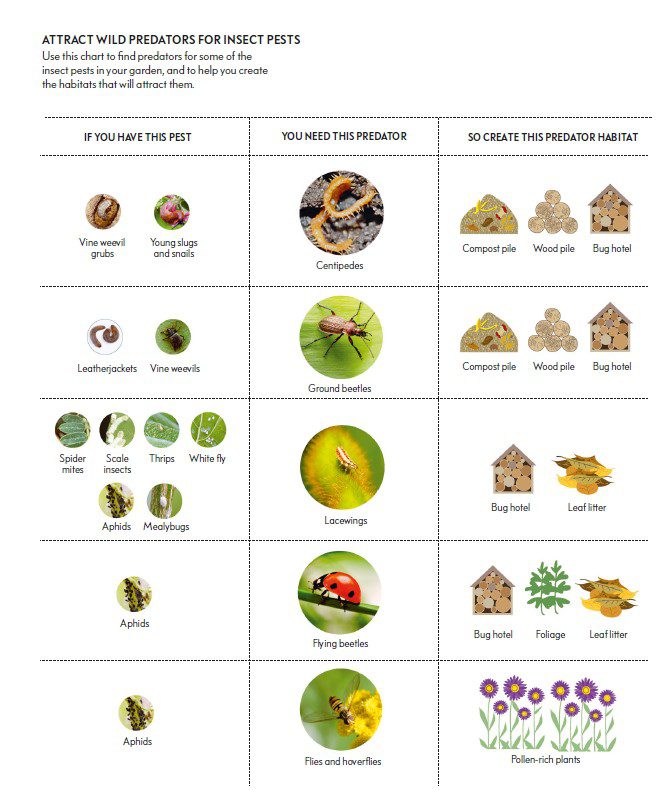
You can provide shelter for many of these predators with densely planted borders, bug hotels, compost, and log piles.
You might also try to attract specific predators with their preferred food—for instance, open pollen-rich flowers provide nutrition for hoverflies, whose larvae eat aphids.
Welcoming In Wildlife
A wildlife pond is a wildlife magnet, which can help defend against pests.
It will attract invertebrate predators as well as cater to the huge variety of other, larger predators that visit or live in gardens:
Birds (which need insects to feed themselves and their young), mammals (such as hedgehogs), amphibians (such as frogs and toads), and reptiles (such as slow worms).
Many of nature’s pest controllers, such as frogs, toads, newts, damselflies, and dragonflies,
need water to breed in, and with fewer wetlands and bodies of water in the countryside, a garden pond can help support local populations.
It can become a feeding ground for insect-eating birds, and bats and hedgehogs may visit to drink and eat slugs hiding among the waterside plants.
There’s no need to introduce any animals to a new pond artificially: wildlife will soon appear, with damselflies, dragonflies, pond skaters, and water boatmen likely to be the first
visitors to arrive.
Don’t add fish to your pond— they’ll eat other wildlife, particularly larvae.
All Sizes Fit The Bill
Almost all shapes and sizes of ponds can be a home for wildlife, as long as the water is at least 8–12in (20–30cm) deep and kept oxygenated by one or two specific submerged plants (see illustration below).
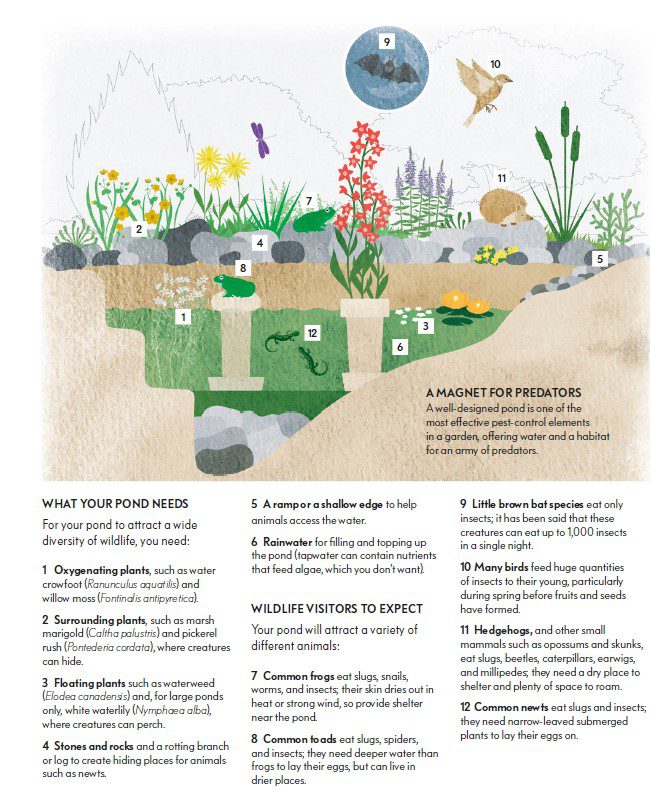
Sink a watertight container into the ground or set it on the ground. Alternatively, dig
a pond-sized hole and use a pond liner to make it watertight.
Use rainwater to fill your pond where possible—tap water is treated to make it safe to drink. ‘
A shallow “beach” area or ramp gives creatures safe access to the
water with large ponds. Water 2ft (60cm) deep or more in places will provide winter shelter for frogs, toads, and newts during icy spells.
GOOD COMPANIONS
These are some of the most commonly used companion plants that are also easy to grow:
1. Sunflower (Helianthus) can create a barrier around crops, shielding them
from pests.
2. Nasturtiums (Tropaeolum majus) are thought to be magnets for aphids— particularly blackflies, keeping them off your neighboring vegetable plants.
3. Marigolds (Tagetes) are commonly planted next to vegetables and are said to repel whitefly, root-knot nematodes and carrot root fly and attract pollinators with their scent.
4. Chives (Allium schoenoprasum) are often used as companion plants to lure aphids away from ornamentals.
Physical and Mechanical Controls: Solutions for Pest Management Without Chemicals
Physical and mechanical controls provide a practical, nonchemical way to manage pests. They are great for homes, gardens, and businesses that want to use fewer chemicals. These methods use barriers, traps, and manual techniques to keep pests out and catch or remove them from the area.
Barriers like window screens and physical repellents create a strong line to stop pests from getting in. For pests that are already inside, traps and catchers offer a good way to remove them without using harmful chemicals. Vacuuming and suction are great for smaller insects. They give a fast and kind way to get rid of pests.
Mechanical removal methods, like picking pests from plants by hand or using special tools, often work well with checking levels to decide when to act. This helps make sure we respond on time. Barrier sprays can help in outdoor areas, too. They create a zone to keep pests out.
People can use these methods or help from pest experts who create plans based on the type of bugs. By using kind methods and physical control techniques, pest management helps to protect the environment. It also supports a better way to manage pests.v
Prevention Tips: Simple Ways to Stop Pest Problems
Prevention plans are a key part of suitable pest management. They try to stop pest issues before they begin. It is essential to keep things clean. You can do this by using tight lids on containers and taking out the trash often. When you do these tasks, it is harder for pests to find what they need to survive.
Sealing entry points with barriers, like screens and covers, keeps pests away. This protects important areas and crops. Good practices help in farming and gardening, too. Crop rotation and picking the right spot can break pest life cycles and lower their numbers.
Monitoring is very important to stop problems. Methods like checking often, setting up glue boards, and keeping clear records help catch issues early. This lets us take quick action. A good way to manage pests is to use natural enemies, like ladybugs or helpful mites. They provide extra help against pests.
The best time for things like planting or harvesting lower the chance of pest issues. By using these simple steps, people can create a strong and lasting plan to manage pests. This keeps spaces healthy over time.
Final Word
I hope You have found the answer to How To Manage Pests, natural ways described above will surely help.



Comments are closed.