













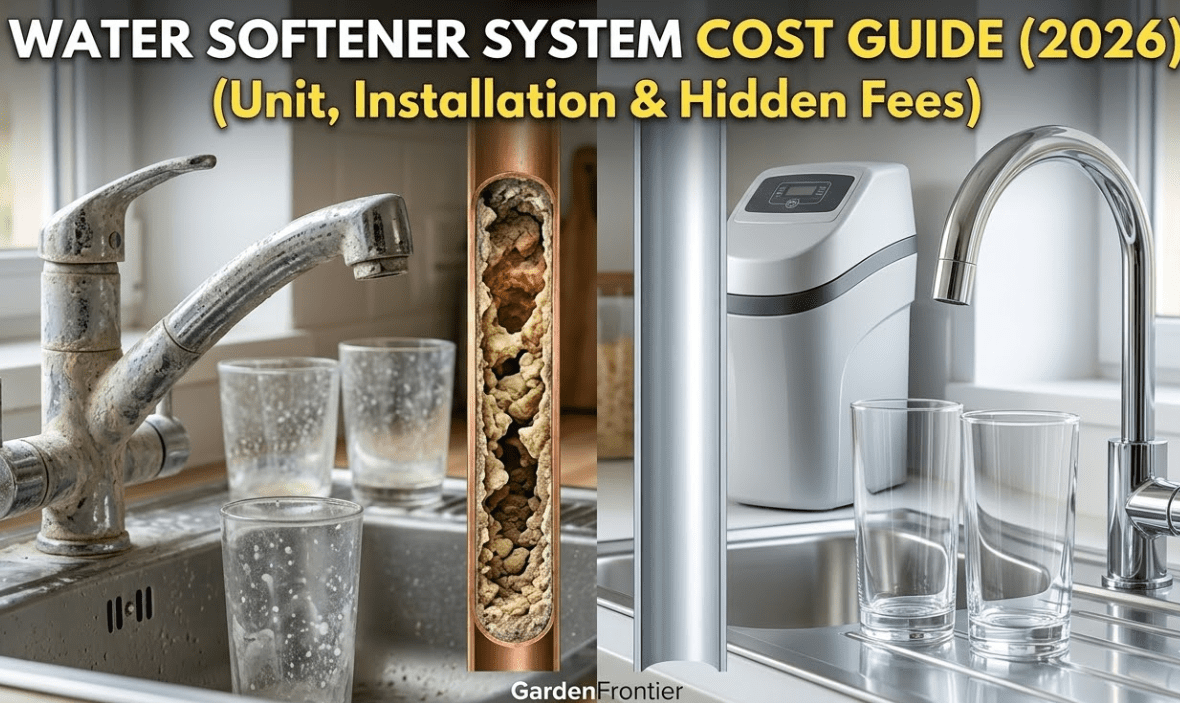
If your glasses come out cloudy, your faucets have white crust, and your shower feels like it leaves a film on your skin, hard water is probably costing you more than you think. The next question is simple: how much does a water softener system cost in 2026?
Most homeowners should expect to spend $1,200 to $3,800 for a water softener system installed. A basic DIY-friendly setup can cost less, while a larger dual-tank system, difficult plumbing layout, permit requirement, well-water prefilter, or premium brand can push the total much higher.
In 2026, a whole-house water softener system usually costs $1,200 to $3,800 installed. The softener unit itself often runs $500 to $2,500, while professional installation commonly adds $300 to $1,500+ depending on pipe access, drain setup, electrical needs, permits, and whether your home already has a softener loop.
A water softener install usually means cutting into the main water line, connecting a drain, setting up a bypass valve, and checking local plumbing rules. If you are not comfortable with plumbing work, compare local pros before buying the unit.
Water Softener System Cost in 2026
The total cost of a water softener system depends on the type of softener, system capacity, water hardness level, household size, plumbing access, drain location, and whether you hire a plumber or install it yourself.
| Cost Item | Typical 2026 Range | What Changes the Price |
|---|---|---|
| Water softener unit | $500 – $2,500+ | Capacity, brand, salt-based vs. salt-free, smart controls, dual tanks. |
| Professional installation | $300 – $1,500+ | Pipe material, drain access, electrical outlet, permits, softener loop, labor rates. |
| DIY installation parts | $50 – $250+ | PEX, copper, fittings, valves, drain tubing, tools, extra adapters. |
| Salt and maintenance | $60 – $250/year | Water hardness, household use, salt type, regeneration frequency. |
| Total installed cost | $1,200 – $3,800 typical | Higher for difficult plumbing, large homes, dual tanks, well-water treatment, or premium systems. |
Water Softener Cost by System Type
The system type is the biggest price driver. Salt-based ion exchange systems are the classic choice for actually softening hard water. Salt-free systems are usually water conditioners, not true softeners, because they do not remove calcium and magnesium the same way.
| System Type | Unit Cost | Installed Cost | Best For |
|---|---|---|---|
| Salt-Based Ion Exchange | $500 – $1,800 | $1,200 – $3,500 | Homes with real hard water problems, scale buildup, and appliance protection goals. |
| Salt-Free Conditioner | $800 – $3,000 | $1,500 – $4,500 | Scale reduction with lower maintenance, but not true mineral removal. |
| Dual-Tank Softener | $1,500 – $3,500+ | $2,500 – $6,000+ | Large families, high water use, and homes that need soft water around the clock. |
| Magnetic / Electronic Descaler | $80 – $400 | Usually DIY | Low-cost scale-control experiments, not a substitute for a true softener in very hard water. |
| RO Drinking Water Add-On | $150 – $700 | $300 – $1,200 | Better drinking water taste at one faucet, usually installed alongside other water treatment. |
Best Monetized Shopping Options
Before buying a full system, test your water hardness. A softener that is too small will regenerate constantly. A system that is too large may cost more than necessary. A basic hardness test kit is a cheap way to avoid buying the wrong unit.
Step 1: Test Your Water Hardness
Best for: Avoiding the wrong softener size.
A water hardness test kit helps you estimate grains per gallon before you buy. That number affects system capacity, regeneration frequency, salt use, and long-term cost.
Step 2: Compare Whole-House Water Softeners
Best for: Homes with hard water throughout the house.
Look for grain capacity, flow rate, bypass valve, warranty terms, installation requirements, and whether the unit is sized for your household.
Step 3: Budget for Salt
Best for: Salt-based softener owners.
Salt is not a one-time purchase. Harder water and higher household use mean more frequent regeneration and more salt over the year.
Step 4: Add Reverse Osmosis for Drinking Water
Best for: Homeowners who want better-tasting drinking water at the kitchen sink.
A whole-house softener protects plumbing and appliances. An under-sink RO system is a separate drinking-water upgrade many homeowners add later.
Professional Water Softener Installation Cost
Professional installation is where many homeowners underestimate the budget. The softener may look simple in the box, but a proper installation can involve pipe cutting, a bypass valve, drain routing, electrical access, code requirements, and testing after startup.
Expect professional installation to add roughly $300 to $1,500+. The low end is more realistic when your home already has a softener loop, drain access, and nearby electrical outlet. The high end is more realistic when the plumber has to reroute old pipes, work in a tight crawlspace, add a drain path, or correct older plumbing.
Before buying a unit online, ask a local plumber what system sizes and connection styles are easiest to install in your home. A cheap unit can become expensive if it requires awkward plumbing changes.
What Raises Installation Cost?
- No softener loop: Homes without a prepared loop may need extra pipe work.
- Difficult pipe access: Tight utility closets, crawlspaces, and old basements add labor.
- Drain location: Salt-based softeners need a proper discharge point for regeneration water.
- Electrical access: Many systems need a nearby outlet for the control valve.
- Pipe material: Copper, PEX, CPVC, and older plumbing can change the parts and labor needed.
- Permits or local code: Some areas require specific installation details or inspections.
- Well water: Sediment, iron, sulfur odor, or bacteria concerns may require pretreatment.
DIY Water Softener Installation Cost
DIY installation can cost much less if you already have the tools, plumbing skill, and a simple connection point. Parts may run $50 to $250+, depending on pipe type and what comes in the box.
The risk is that mistakes can leak, damage flooring, violate local rules, or void the manufacturer’s warranty. DIY also becomes more difficult if you need copper soldering, drain routing, an outlet, or a bypass arrangement that does not match your existing plumbing.
Do not make a water softener your first plumbing project. A bad connection on the main water line can cause expensive water damage. If you are not comfortable cutting and adapting plumbing, hire a plumber.
Water Softener Cost by Home Size
Household size matters because larger households use more water. Water hardness matters because harder water uses more softening capacity. A family of four with very hard water may need a bigger unit than a family of five with moderately hard water.
| Household Size | Common Capacity Range | Notes |
|---|---|---|
| 1–2 people | 24,000 – 32,000 grains | Works for smaller homes with moderate hardness and normal water use. |
| 3–4 people | 32,000 – 48,000 grains | Common range for many average households. |
| 5+ people | 48,000 – 64,000+ grains | Better for high water use, large tubs, multiple bathrooms, or very hard water. |
Use this only as a starting point. The better sizing method is to test hardness, estimate daily water use, and choose a capacity that does not regenerate too often.
Salt-Based vs. Salt-Free: Which Costs More?
A salt-based water softener is usually the better choice if your goal is true soft water. It removes hardness minerals through ion exchange and requires salt refills. The system itself can be cheaper than many salt-free conditioners, but the maintenance cost continues every month.
A salt-free conditioner usually costs more upfront and has lower maintenance, but it does not soften water the same way. It is better described as a scale-control system. That can be enough for some homes, but it is not the same as removing calcium and magnesium.
Choose Salt-Based If:
- You have obvious scale buildup on fixtures.
- Your dishes and shower glass spot badly.
- You want softer-feeling water for bathing and laundry.
- You want the most proven option for hard water removal.
- You are comfortable buying salt and maintaining the system.
Choose Salt-Free If:
- You mainly want scale reduction, not true soft water.
- You want less routine maintenance.
- You cannot discharge softener brine where you live.
- You prefer not to add sodium or potassium to the softening process.
- Your water is not extremely hard.
Hidden Costs Homeowners Miss
The sticker price of the softener is not the full cost. These extra expenses can change your real budget.
- Water hardness test: Usually inexpensive, but important before sizing a unit.
- Salt: Salt-based systems need regular sodium chloride or potassium chloride refills.
- Pre-filter: Well water with sediment or iron may need filtration before the softener.
- Bypass valve: Some kits include one; others require additional parts.
- Drain tubing: The softener needs a proper drain path during regeneration.
- Electrical outlet: A control head may need power near the installation point.
- Permit or inspection: Depends on local plumbing rules.
- Annual service: Resin cleaning, valve checks, and troubleshooting can add cost.
- Old unit removal: Replacing an existing softener may include haul-away or disposal cost.
Is a Water Softener Worth the Cost?
A water softener is worth it when hard water is causing scale buildup, appliance wear, cloudy dishes, stiff laundry, or annoying cleaning problems. It is less urgent if your water hardness is mild and you only notice small cosmetic issues.
Hard water contains dissolved minerals, mainly calcium and magnesium. Those minerals can leave scale on fixtures and inside appliances. A softener can reduce that scale burden, making it easier to clean and helping water-using appliances operate with less mineral buildup.
Common Signs You May Need One
- White scale around faucets and showerheads.
- Cloudy glasses and spotted dishes.
- Soap that does not lather well.
- Dry-feeling skin or dull hair after showering.
- Scale inside kettles, coffee makers, and humidifiers.
- Water heater efficiency concerns from mineral buildup.
- Stiff laundry or detergent that seems less effective.
How to Save Money on a Water Softener System
The cheapest softener is not always the best deal. The real goal is to avoid overspending on capacity you do not need while also avoiding an undersized unit that wastes salt, regenerates constantly, and wears faster.
- Test hardness first: Do not guess based on stains alone.
- Size the unit correctly: Match capacity to hardness and household use.
- Ask about installation before ordering: Some units are harder to install in certain homes.
- Compare salt cost: Potassium chloride usually costs more than sodium chloride.
- Check warranty terms: Some brands may require professional installation.
- Look for included parts: A bypass valve, fittings, and drain tubing can reduce extra purchases.
- Do not skip prefiltration for problem well water: Iron or sediment can shorten softener life.
Water Softener vs. Whole-House Water Filter
A water softener and a whole-house water filter do different jobs. A softener targets hardness minerals. A filter targets sediment, chlorine taste, odor, iron, or other contaminants depending on the filter type.
Some homes need both. For example, a home with hard municipal water may only need a softener. A home on well water with sediment, iron staining, and hardness may need a sediment filter, iron treatment, and a softener in the right order.
| System | Main Job | Best For |
|---|---|---|
| Water softener | Reduces hardness minerals. | Scale, spotting, soap issues, appliance protection. |
| Whole-house filter | Filters sediment, chlorine, odor, or specific water problems. | Taste, odor, sediment, well-water treatment, chlorine reduction. |
| Reverse osmosis | Treats drinking water at one faucet. | Kitchen drinking water and cooking water. |
When to Hire a Plumber
Hire a plumber if your home does not already have a softener loop, if you need to cut copper pipe, if drain routing is unclear, if local code is strict, or if the manufacturer warranty requires professional installation.
A plumber can also help you avoid buying the wrong style of unit. That matters because the cheapest online softener can become expensive if the fittings, drain requirements, or installation layout do not match your home.
If your plumbing layout is simple, compare systems and test your hardness first. If your layout is older, tight, or unclear, get a plumber’s installation opinion before buying the unit.
Official Water Hardness Reference
For a plain definition of hard water, see the U.S. Geological Survey resource on water hardness. USGS explains that water hardness is mainly related to dissolved calcium and magnesium. For local rules about softener discharge, permits, or plumbing code, check your municipality or ask a licensed local plumber.
Frequently Asked Questions
How much does a water softener system cost in 2026?
A water softener system usually costs $1,200 to $3,800 installed in 2026. Simple systems can cost less, while difficult installations, large homes, dual-tank systems, and well-water treatment can cost more.
How much does a whole-house water softener cost?
A whole-house water softener typically costs $500 to $2,500 for the unit alone, with total installed cost often landing between $1,200 and $3,800 depending on labor and system size.
How much does water softener installation cost?
Professional water softener installation often adds $300 to $1,500 or more. Homes with existing softener loops cost less to install than homes needing pipe rerouting, drain work, or electrical changes.
Is a salt-based or salt-free system cheaper?
Salt-based systems often cost less upfront than premium salt-free conditioners, but they require ongoing salt purchases. Salt-free systems often cost more upfront and need less routine maintenance, but they do not truly soften water the same way.
Does a salt-free water conditioner remove hard minerals?
Usually no. A salt-free conditioner is designed to reduce scale behavior, not remove calcium and magnesium through ion exchange. For true soft water, most homes use a salt-based ion exchange softener.
How do I know what size water softener I need?
Test your water hardness and estimate household water use. The harder your water and the more people in your home, the more grain capacity you need.
Can I install a water softener myself?
You can install a water softener yourself if you have strong plumbing skills and the installation point is straightforward. Hire a plumber if you need to cut into the main line, add a drain, modify copper pipe, or protect the system warranty.
How much does water softener salt cost per year?
Many homeowners spend about $60 to $250 per year on salt, depending on water hardness, household water use, softener efficiency, and whether they use sodium chloride or potassium chloride.
Is a water softener worth it?
A water softener is worth it when hard water is causing scale, appliance wear, cleaning problems, dry-feeling skin, or spotted dishes. It is most valuable in homes with moderate to very hard water.
Do I need a water softener if I have city water?
Possibly. City water can still be hard depending on the source and local geology. Test the water at your home instead of assuming municipal water is soft.
Do I need a water softener if I have well water?
Many well-water homes need softening, but you should test for hardness, iron, sediment, sulfur odor, and other issues first. Well water may need prefiltration before the softener.
Should I buy a water softener online or from a plumber?
Buying online can save money, but a plumber can help confirm the right size and installation requirements. The safest approach is to test hardness, compare units, and check installation details before ordering.
Final Verdict
The average water softener system cost in 2026 is usually $1,200 to $3,800 installed, with the final price depending on system type, grain capacity, plumbing access, drain setup, electrical needs, permits, and whether you install it yourself or hire a plumber.
For most homes with hard water, a salt-based ion exchange softener is still the most practical choice. Salt-free conditioners can help with scale control and maintenance concerns, but they are not the same as true water softeners. Test your water first, size the system correctly, and make sure the installation requirements fit your home.
If your plumbing layout is simple and you have experience, DIY can save money. If not, professional installation is usually the safer route because the system connects to your main water line and a mistake can become expensive fast.
Test your water hardness before buying, compare softener systems by grain capacity and install requirements, then talk to a plumber if your home does not already have a simple softener loop.
Join Garden Frontier for practical home, garden, plumbing, and maintenance cost guides.
100% free. No spam. Unsubscribe anytime.