














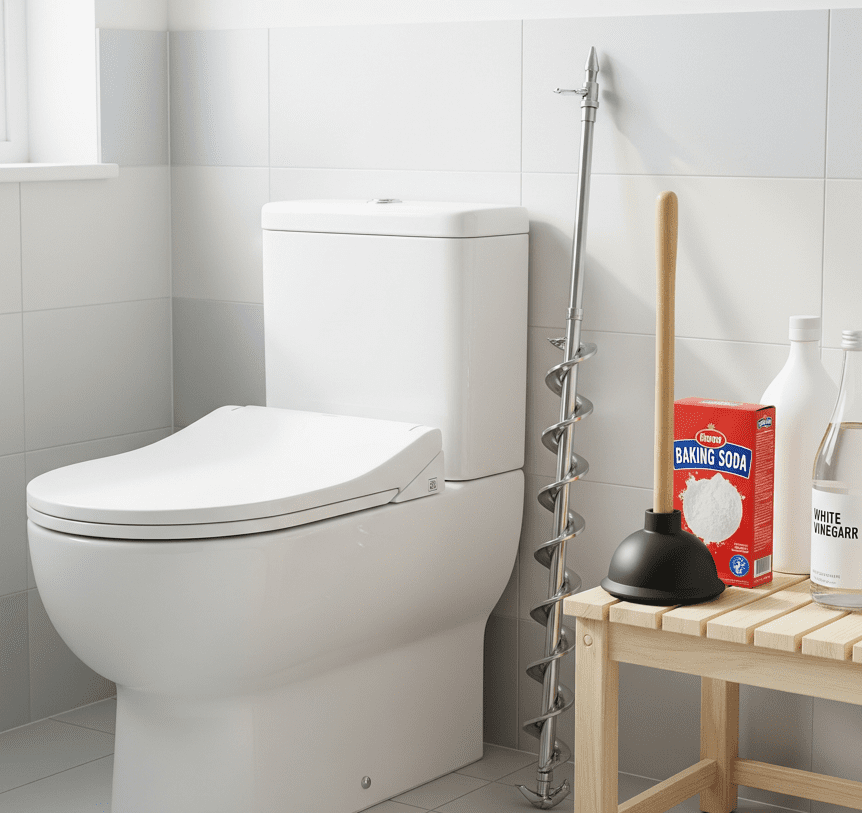
It’s always the worst timing. You flush, the water rises instead of falling, and suddenly you’re standing there frozen, wondering if you’re about to have a bathroom flood on your hands. Whether it’s 2 PM or 2 AM, a clogged toilet is something nobody wants to deal with, but here’s the truth: you can fix most toilet clogs yourself without calling a plumber.
I’ve been in the plumbing game long enough to see every kind of clog imaginable, from the classic “too much toilet paper” jam to mystery blockages caused by kids experimenting with flushable toys (spoiler: they’re not actually flushable). Here, you’ll learn every method I’ve used in the field, from the fastest plunging tricks to stubborn-clog warfare. Let’s get your toilet back in business.
Understanding Toilet Clogs
Why Toilets Get Clogged
Most blockages come down to one of these culprits:
-
Excess Toilet Paper – A big wad can act like a dam in your pipes.
-
Non-Flushable Items – Wipes, cotton balls, paper towels, feminine hygiene products, toys.
-
Low-Flow Toilet Design – Older models have stronger flushes; some modern low-flow toilets don’t push waste as effectively.
-
Sewer Line Issues – Tree roots, collapsed pipes, or buildup deeper down the line.
Signs of a Minor vs. Major Clog
-
Minor: Water drains slowly or partially flushes.
-
Major: Water rises to the rim and stays there, or multiple fixtures in your home are backing up.
Quick Reference
| Cause | Symptom | Best Fix |
|---|---|---|
| Too much TP | Slow flush | Plunger + hot water/soap |
| Wipes/objects | Full backup | Auger or snake |
| Low-flow issue | Recurring slow drain | Adjust flush volume |
| Sewer blockage | Multiple drains slow | Call plumber |
Safety & Preparation Before You Start
Before you roll up your sleeves, save yourself from a bigger mess:
-
Grab Your Gear – Rubber gloves, plunger, bucket, and old towels.
-
Protect the Floor – Lay down towels or rags to catch drips and splashes.
-
Avoid a Second Flush – If the bowl’s already full, flushing again can cause an overflow.
-
Know the Shut-Off Valve – Usually behind the toilet near the floor; turn clockwise to stop water flow if needed.
[azonpress template=”list” asin=”B09PDJXC5T”][azonpress template=”list” asin=”B0DHCSLKK8″][azonpress template=”list” asin=”B001003FM4″]
The Quick Fix: Using a Plunger
Choosing the Right Plunger
Not all plungers are created equal. The flange plunger (with the extra rubber lip) is made for toilets and creates a better seal than the flat cup type, which is meant for sinks.
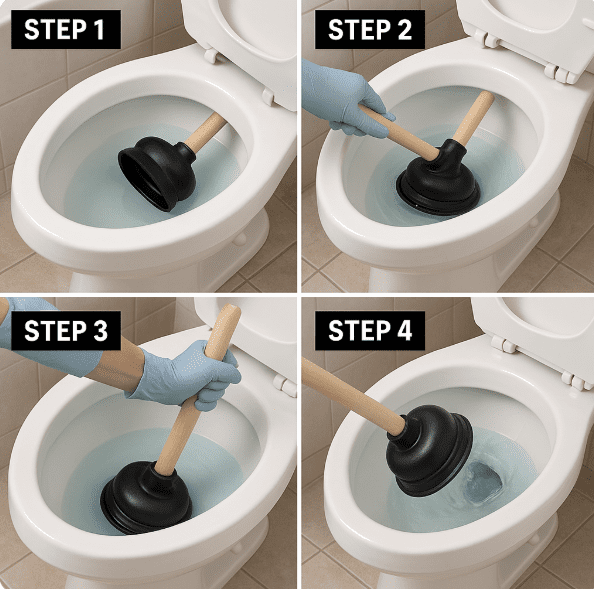
Plunging Technique That Works
-
Fill the Bowl Enough – There should be enough water to cover the plunger cup.
-
Create a Seal – Fit the flange into the drain opening, making sure no air escapes.
-
Controlled Push & Pull – Start gently to avoid splashing, then increase force.
-
Check Results – After 10–15 pumps, lift the plunger to see if the water drains.
Pro Tip: Pour a kettle of hot (not boiling) water mixed with a few squirts of dish soap into the bowl before plunging. This lubricates the clog and helps break it down faster.
How to Unclog a Toilet Without a Plunger
Sometimes you’re caught without the one tool that makes life easier. No problem, try these proven no-plunger fixes:
1. Hot Water & Dish Soap
-
Pour half a cup of dish soap into the bowl.
-
Follow with 1–2 liters of hot water (not boiling).
-
Wait 10–15 minutes, then flush.
2. Baking Soda + Vinegar
-
Pour 1 cup of baking soda into the toilet.
-
Add 2 cups of vinegar; it will fizz and foam.
-
Let it sit 30 minutes, then flush with hot water.

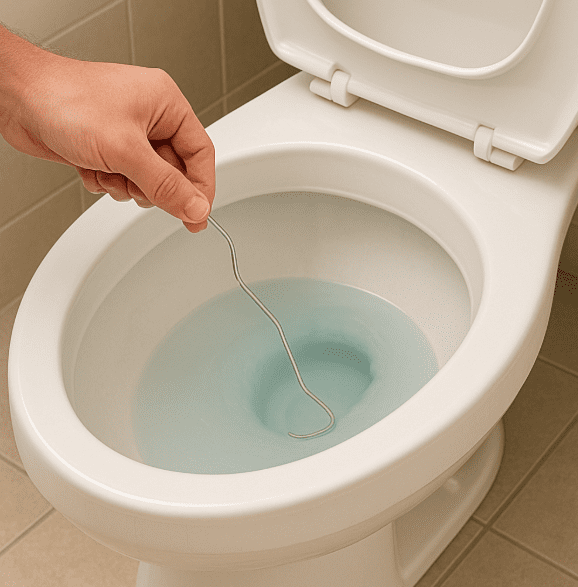
3. Wire Coat Hanger
-
Straighten the hanger and wrap the end in a rag to avoid scratching porcelain.
-
Push gently into the drain and twist to break up the clog.
4. Wet/Dry Shop Vacuum
-
Set it to liquid mode.
-
Remove most water from the bowl, then insert the hose into the drain.
-
Create a seal with a wet rag around the hose and turn on the vacuum.

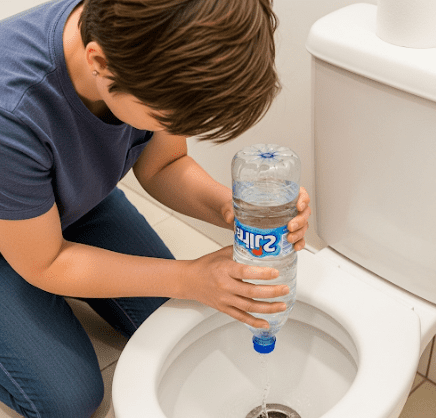
5. Plastic Bottle Pressure Trick
-
Fill a 2-liter bottle with warm water.
-
Fit the bottle opening into the drain and squeeze hard to create pressure.
For Stubborn Clogs: Advanced Methods
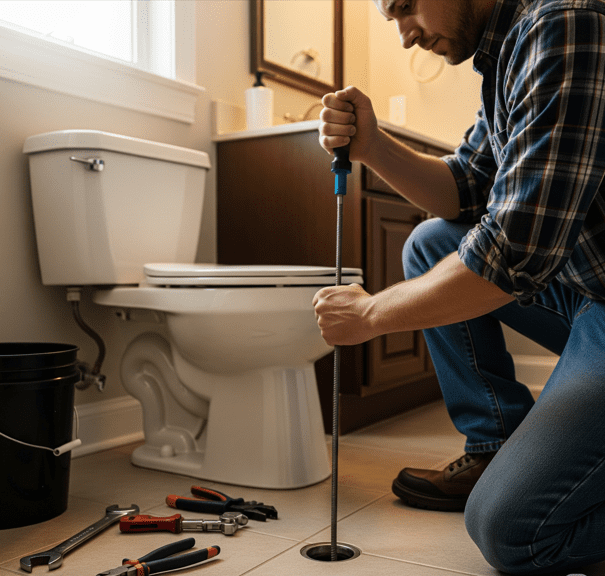
Plumbing Snake/Auger
-
Insert the auger’s coil into the toilet drain.
-
Crank the handle clockwise until you feel resistance.
-
Twist to break up or hook the clog, then pull it out.
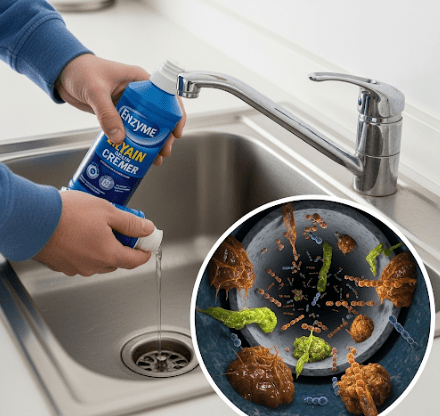
Enzyme Drain Cleaners
-
Safe for pipes and septic systems.
-
They use bacteria to eat organic waste, but they work slowly, best for maintenance, not emergencies.
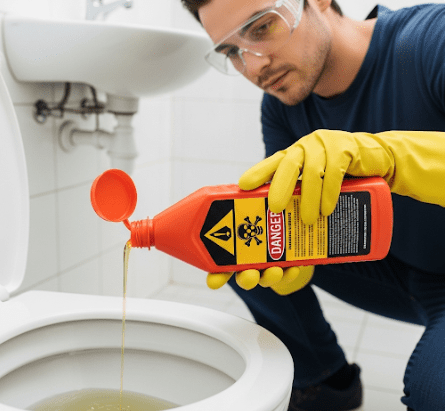
Chemical Drain Cleaners—Proceed with Caution
-
They can damage toilet porcelain and pipes, especially PVC.
-
Use only if other methods fail and you have no immediate plumber access.
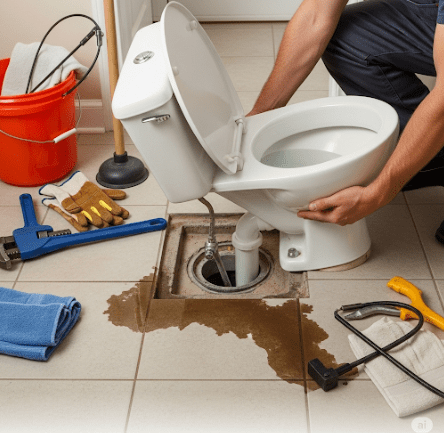
Removing the Toilet (Last Resort)
If the clog is lodged in the trap inside the toilet itself, you may need to disconnect the toilet from the floor and remove it. Unless you’re confident in resealing it afterward, call a pro for this step.
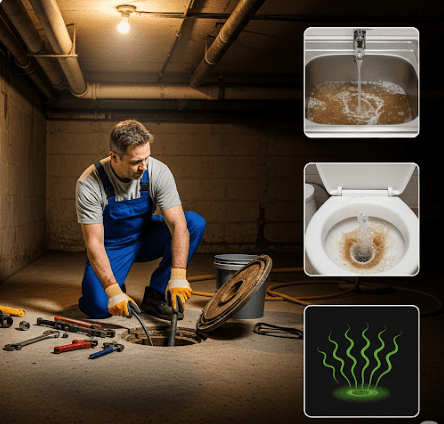
When the Clog Is in the Sewer Line
You might be dealing with more than a toilet problem if:
-
Multiple drains are backing up.
-
You hear gurgling from sinks or tubs when you flush.
-
There’s a sewage smell in the bathroom.
Fix: Locate your home’s clean-out (a capped pipe outside or in the basement) and attempt to clear it with a sewer auger, or better yet, get a plumber to perform hydro jetting to blast the line clear.
Preventing Future Toilet Clogs
-
Flush Only the 3 Ps – Pee, poo, and paper. Nothing else.
-
Adjust Water Flow – If you have a low-flow toilet, you may be able to increase the tank water level slightly for a stronger flush.
-
Routine Maintenance – Use enzyme cleaners monthly to keep pipes clear.
-
Teach Toilet Etiquette – Especially to kids and guests. A small laminated card near the toilet works wonders.
Eco-Friendly & Safe Practices
-
Skip harsh chemicals—they’re bad for your pipes, your health, and the environment.
-
Opt for natural cleaners like vinegar, baking soda, or enzyme-based solutions.
-
If replacing your toilet, choose a high-efficiency model with a strong flush.
FAQs
Q: Can flushing multiple times unclog a toilet?
No, it usually just makes things worse by risking overflow.
Q: Is it safe to use bleach to unclog a toilet?
Bleach disinfects but doesn’t dissolve clogs, so it’s ineffective for this job.
Q: Why does my toilet keep clogging repeatedly?
Common reasons: partial blockages, low water flow, or deeper sewer issues.
Q: Will a clogged toilet unclog itself?
Minor clogs might dissolve over several hours, but waiting risks a bigger mess if it doesn’t clear.
Troubleshooting Quick Reference Table
| Problem | Likely Cause | Best Solution | Time Needed |
|---|---|---|---|
| Water rises & stays | Major clog | Plunger → Auger | 5–15 mins |
| Water drains slowly | Partial clog | Hot water + dish soap | 10 mins |
| The toilet clogs every few days | Sewer problem | Call plumber | N/A |
Conclusion
A clogged toilet isn’t just inconvenient; it can feel like a small disaster in the making. But with the right know-how, most clogs can be cleared in minutes without panic, mess, or chemicals. Keep a flange plunger, a few household tools, and a little know-how on hand, and you’ll never have to make that awkward “emergency plumber” call at 2 AM again.
💡 Pro Tip: Bookmark this guide. The best time to learn how to unclog a toilet is before you need it.