









But once you actually start gardening regularly, the differences become very obvious.
A hand rake is primarily designed for surface-level garden work like smoothing soil, spreading mulch, removing debris, and leveling planting beds.
A cultivator, on the other hand, is built for deeper soil penetration, aeration, loosening compact ground, and breaking apart hardened dirt.
In practical gardening terms:
- Hand rakes move and organize soil
- Cultivators break and loosen soil
Quick Answer: Hand Rake vs Cultivator
A hand rake is best for leveling soil, spreading compost, mulch, and cleaning debris, while a cultivator is better for loosening compacted soil, aerating garden beds, and breaking up tough dirt before planting.
What Is a Hand Rake?
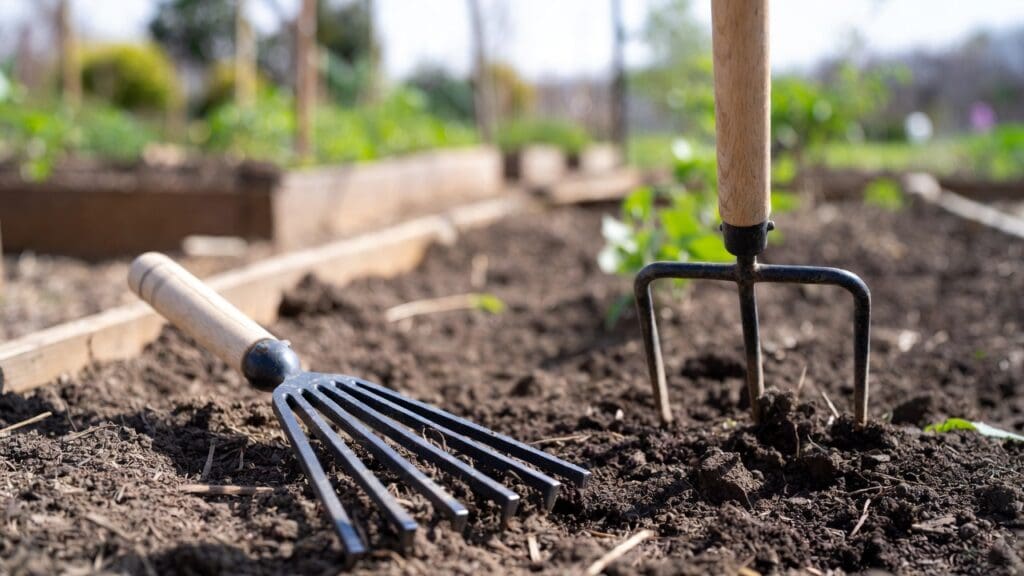
A hand rake is a small gardening tool with short tines designed for surface-level garden maintenance.
Most hand rakes feature:
- Short rigid metal tines
- Wide rake head
- Compact ergonomic handle
- Lightweight design for close gardening work
Gardeners mainly use hand rakes for:
- Leveling soil in raised beds
- Spreading compost evenly
- Distributing mulch around plants
- Cleaning leaves from flower beds
- Smoothing seed-starting rows
- Removing shallow weeds and debris
Hand rakes are especially useful in compact gardening spaces where full-size tools feel awkward and oversized.
If you work heavily with raised beds, this guide pairs perfectly with:
Best choice for leveling raised beds and spreading compost:
What Is a Cultivator?

A cultivator is designed specifically for breaking up and loosening soil.
Unlike hand rakes, cultivators use thicker curved tines that dig deeper into the dirt.
Their primary job is improving soil structure and aeration.
Cultivators are commonly used for:
- Breaking compacted soil
- Aerating raised beds
- Mixing compost into existing soil
- Preparing planting areas
- Loosening hardened dirt after rainfall
- Removing tougher weeds with deeper roots
If your soil feels dense, clay-heavy, or crusted over, a cultivator is usually far more effective than a hand rake.
Pro Gardening Insight
Most experienced gardeners actually use both tools together. The cultivator loosens and aerates the soil first, while the hand rake smooths and finishes the surface afterward.
Best tool for loosening compact soil before planting:
Hand Rake vs Cultivator: Side-by-Side Comparison
| Feature | Hand Rake | Cultivator |
|---|---|---|
| Main Purpose | Surface leveling and cleanup | Soil loosening and aeration |
| Tine Shape | Straight or slightly curved | Curved claw-like tines |
| Best Soil Condition | Loose or prepared soil | Compact or hardened soil |
| Best For | Mulch, compost, leaves, leveling | Aeration, cultivation, weed removal |
| Raised Beds | Excellent | Excellent |
| Precision Around Plants | Very good | Moderate |
My Practical Recommendation
If you garden in raised beds, the smartest setup is not choosing one tool over the other. Use a cultivator first to loosen compact soil, then finish with a hand rake to smooth the surface, spread compost, and create cleaner planting rows.
Which Tool Is Better for Raised Beds?

Raised bed gardening is probably the situation where the difference between these tools matters most.
For freshly built raised beds filled with loose soil blends, a hand rake usually gets used more often because the soil is already soft and workable.
Hand rakes are excellent for:
- Leveling soil before planting
- Spreading compost evenly
- Creating seed rows
- Refreshing mulch layers
- Cleaning debris between crops
However, once the soil becomes compacted over time, cultivators become extremely valuable for restoring airflow and loosening the upper layers of soil.
In reality, serious gardeners typically keep both tools nearby during planting season.
Can You Use a Hand Rake Instead of a Cultivator?
Technically yes — but not efficiently.
A hand rake can scratch and loosen very shallow surface soil, especially in soft raised beds.
But once the ground becomes compacted, clay-heavy, or densely packed, hand rakes struggle to penetrate deeply enough.
This is where cultivators dramatically outperform them.
The curved tines of a cultivator create leverage that breaks apart dense soil much faster while reducing strain on your wrists and hands.
Common Beginner Mistake
Many beginner gardeners buy only a hand rake and then wonder why loosening compact soil feels exhausting. A cultivator is specifically engineered for that type of work.
Best Gardening Situations for Each Tool
Choose a Hand Rake If You:
- Use raised garden beds heavily
- Spread compost or mulch frequently
- Need precision around plants
- Want cleaner seed rows
- Maintain flower borders
- Work mostly with loose soil
Choose a Cultivator If You:
- Have compact clay soil
- Need deeper aeration
- Break up hardened dirt regularly
- Prepare new planting zones
- Remove deeper-rooted weeds
- Mix compost deeply into soil
Final Thoughts
The truth is that hand rakes and cultivators are not competing tools.
They are complementary tools designed for different stages of gardening work.
A cultivator prepares and loosens the soil.
A hand rake refines, smooths, and finishes the planting area.
If you only garden casually in raised beds with already-soft soil, a hand rake may be enough for most tasks.
But if you regularly deal with compact ground, clay soil, or heavy seasonal bed preparation, adding a cultivator to your gardening setup makes a massive difference.
And honestly, once you use both tools together properly, you quickly realize why experienced gardeners rarely rely on just one.
Frequently Asked Questions
What is the difference between a hand rake and cultivator?
A hand rake is used mainly for leveling and moving soil, while a cultivator is designed for loosening compacted soil and aerating garden beds.
Is a cultivator better than a rake?
Not necessarily. Cultivators are better for breaking soil apart, while hand rakes are better for smoothing and finishing garden surfaces.
Can you use a cultivator in raised beds?
Yes. Cultivators work extremely well in raised beds, especially when soil becomes compacted over time.
Do I need both a hand rake and cultivator?
Most serious gardeners benefit from having both because each tool serves different gardening purposes.
What tool is best for loosening soil?
A cultivator is usually the best handheld tool for loosening compact soil and improving aeration.